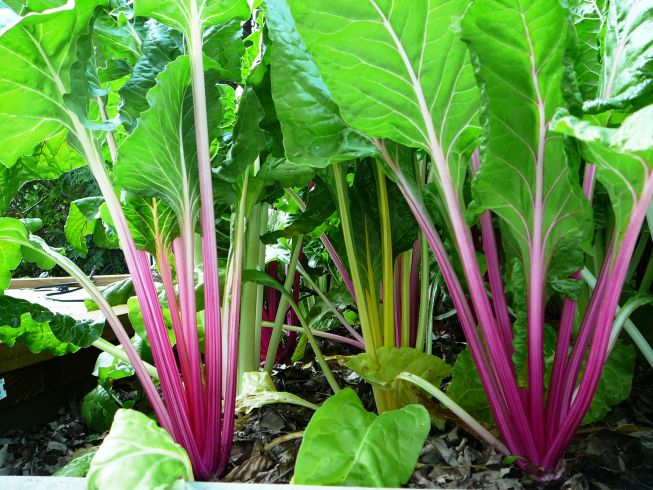
Bright Lights Swiss Chard
Greens are simple things. In a world of chaotic schedules, hurried meals and gourmet foods, it’s pleasant to contemplate eating something as simple and wholesome as chard or kale. Besides, with the constant nattering about eating less fat and more vegetables, who can argue with getting a solid dose of cancer-fighting vitamins in something that tastes so good?
I wasn’t always a greens aficionado. I hail from the South where the preferred method of cooking the common greens, collards and turnips, is to boil them until they turn gray and then flavor them with bacon drippings. As a child, the last thing I was willing to put in my mouth was a pile of slimy, gray-green glop. At least my mother always provided a bottle of hot sauce to liberally sprinkle on top to disguise the flavor ( I discovered long after I became an adult that she didn’t like the gray-green glop either.)
I suppose greens were literally cooked to death because we had the notion that vegetables should be soft to be palatable. The recent culinary trend of steaming or sauteing vegetables until just slightly crunchy is the best thing that has happened to greens, not only for taste but also for nutritional value.
I’ve matured, at least according to rumor, and since I no longer have to eat greens, I’ve discovered how much I enjoy them. It took a while to get past the specter of the sodden mass, but I’ve learned to cook them well, which makes a world of difference.
My favorite way of preparing greens is to gently sauté the tender, sweet inner leaves with onion, garlic, lots of pepper, fresh tomatoes and top it all with romano cheese. I also manage to get my family to eat greens of all sorts by putting them in things. I never make a soup or stew without chard or kale, and I add finely chopped turnip, beet or mustard greens to potato pancakes, rice pilaf, omelets and pasta.
One reason these basic, almost mundane, vegetables appeal to me is that they are carefree growers. You sow some seeds, sometimes right on the snow in early spring, and the plants grow. They take little care except thinning early on and then harvesting. I like that in a plant.
Some vegetables, like beets, turnips and mustard, give you delectable greens while the rest of the plant is busy developing other edible parts. With a little caution to not harvest too many greens at once, you can start using beet, turnip and mustard greens as soon as they are big enough to provide a bowlful.
Late last summer I planted Italian kale, a variety called ‘Lacinato,’ which grows to about two and a half feet tall. Even after fall took most of the garden down, the plants were still standing stalwart in December, with their matte blue-green leaves offering themselves to be plucked to cook up “a mess of greens”.
I’m a great fan of dual-purpose plants, and these kale plants were as beautiful as any of the perennials. This year I’m growing ‘Red Russian’ which has stems and veins that turn purple-red in cold weather and blue kale with dusty blue leaves. I’ve planted it with Bright Lights Swiss chard, which produces beautiful leaves on stems of purple, yellow, pink, red and white. What more could you want for color in the garden?

Saucy Greens for Two
- 1 small bunch of Swiss chard or other greens
- 1 clove garlic, minced
- ¼ c. onion, sliced
- 1 T. olive oil
- 1 T. balsamic vinegar
- 1 t. sugar
- Salt and pepper to taste
- ½ c. chopped tomatoes
- 2 T. sour cream or plain yogurt
- 1 T. Sriracha sauce if desired
- 2 large eggs if desired
Rinse the greens liberally and remove tough stems. Stack the leaves and roll them into a “cigar” and slice thinly. Add garlic and onion to olive oil in a heavy pan and saute until tender. Fry eggs in a separate pan if you intend to use them. Add greens, vinegar and sugar and saute for about 5 minutes until greens are tender. Turn off the heat and stir in tomatoes and sour cream or yogurt. Salt and pepper to taste.
 Kate's Garden Kitchen