Homemade Yogurt

Everyone I know is complaining these days about how expensive groceries are. There’s not much we can do about coffee and olive oil, but there are a few ways to cut costs. And fun ways if you enjoy being in the kitchen.

A staple in our house, yogurt, has gone up in price along with everything else. Store-bought yogurt is between $4.00 and $7.00 for 32 oz. A 5-8 oz container runs from $1.00 to $1.50. The cost depends on whether you purchase organic or non-organic, Greek or regular yogurt. 

One of our favorite breakfasts is homemade yogurt with a splash of elderberry syrup, blueberries and a handful of granola. Good for our gut and our brains because it tastes so good. 

Making your own yogurt is simple. It will take four to five hours to set but once it’s made, you don’t have to do anything except wait for it to do its yogurt thing – the bacteria will thicken the milk and make a delicious, creamy homemade product that you can use in a myriad of ways. 

To make it thick like Greek or yogurt cheese, simply spoon it into a strainer and let it sit to drain for an hour or so. 

The type of milk you use is also up to you. Whole, 2% and skim all work well. I like to use organic whole milk, but any will do. Try not to use ultra-pasteurized if you can get it as sometimes the pasteurization process impedes the bacterial growth necessary to thicken it. 

I’ve not made yogurt from oat, soy or almond milk, but it might be worth trying. You will have to start with yogurt with live cultures which is a dairy milk product. Or you can purchase live cultures online if you want to try non-dairy milk.

This makes 4-5 pints. I tend to cut it in half just so I don’t have so much in the fridge at one time.

You’ll need a heavy-bottomed pan, glass jars and lids and a cooking thermometer. I use a candy thermometer.

½ gallon milk (whole, 2% or skim)

¼ c. room temperature plain yogurt as the starter (just take it out of the fridge for half an hour or so)

If you don’t already have yogurt in the fridge, purchase a small cup of plain yogurt. Make sure it lists live cultures on the label. Don’t be tempted to use one that is sweetened or with fruit as this can stop the fermentation process. Once your yogurt is made, you can sweeten and fruit it up as you desire. 

Heat the milk until it reaches 180 degrees, stirring occasionally to keep it from scorching. Hold at 180 for one minute. This scalds the milk to kill any unwanted bacteria. Remove from the heat and allow it to drop to 115 to 120 degrees. 

Remove 1/3 c. of the milk and add to the yogurt starter. Blend well with a whisk and return to the milk, whisking to mix well. It will form a skin, so use a strainer and pour it into glass jars. 

Cap the jars and put them in a cooler or something with a tight-fitting lid that will keep them insulated. You can also use a pot that will accommodate the jars and surround them with a towel. I use a small insulated cooler and put a folded towel on top for the fermentation process. 

Fill another jar with boiling water, close the cooler and let sit for 4-5 hours. Voila! You have your own homemade yogurt! Be sure to save the bottom of the last jar to make your next batch.

Gluten-Free 3

It’s amazing how, when we heard “go gluten-free,” I thought “I absolutely can’t give up bread”. But then I whipped into gear to start looking at the options. I bought the ingredients to start baking without gluten and cruised the internet for advice about why we shouldn’t be consuming it.

Basically the advice, in a nutshell, is that if you are sensitive, you should stay away from gluten. However, if not diagnosed with Celiac disease or an actual allergy, then it’s not critical to buy oatmeal that is certified gluten-free or to avoid anything that might have even come into contact with wheat. The anecdotal take is that you should stay away from gluten no matter what because it is inflammatory. The medical advice is that it hasn’t been proven to be inflammatory and it’s fine to eat bread. The most important piece of advice to remember is to read your own body’s response.

Now that we’re several weeks into a gluten-free diet, we realize that if we have to continue this way, it’s not all that hard. We’re waiting on blood tests to see if gluten is causing the digestive issues, so will take all the advice with a grain of salt until we know the final diagnosis.

Meanwhile, commercial gluten-free hamburger buns, bagels, bread and wraps are perfectly edible. Okay, the bread doesn’t taste quite like a crusty sourdough loaf, but it’s certainly okay on a sandwich. And I like to pride myself on being adaptable. No adolescent pouting here.

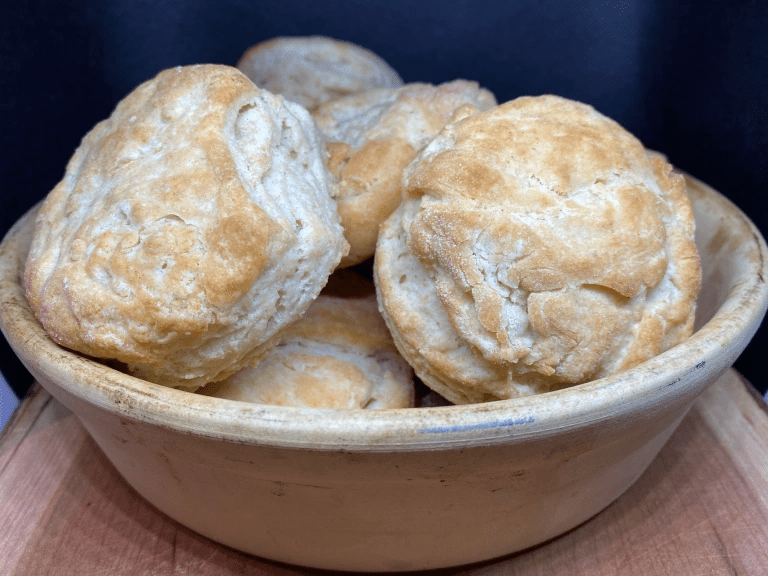
I’ve had several failed loaves of bread using my own mix, so my advice is that, even though expensive, buy the ready-made baking and bread mixes. Try several and figure out which one you like the best. And enjoy your biscuits, pancakes and avocado toast!

2 c. gluten-free baking mix (Bob’s Red MIll, KIng Arthur, Pillsbury)
1 T. baking powder
½ t. salt
¼ t. baking soda
6 T. butter
1 c. buttermilk

Blend dry the dry ingredients. Cut in butter with two forks or a pastry cutter until it resembles a coarse meal. Add buttermilk and mix lightly, just enough to incorporate the ingredients. Be sure not to overmix. Pat into a loose ball, turn onto a floured board and roll out to about ½” thick. Cut with a biscuit cutter and place on an ungreased cookie sheet covered with parchment paper or a silicone mat. Brush the tops with milk for browning. Bake at 400 for 15-20 minutes.

Spanish omelet

Tortilla Espanola

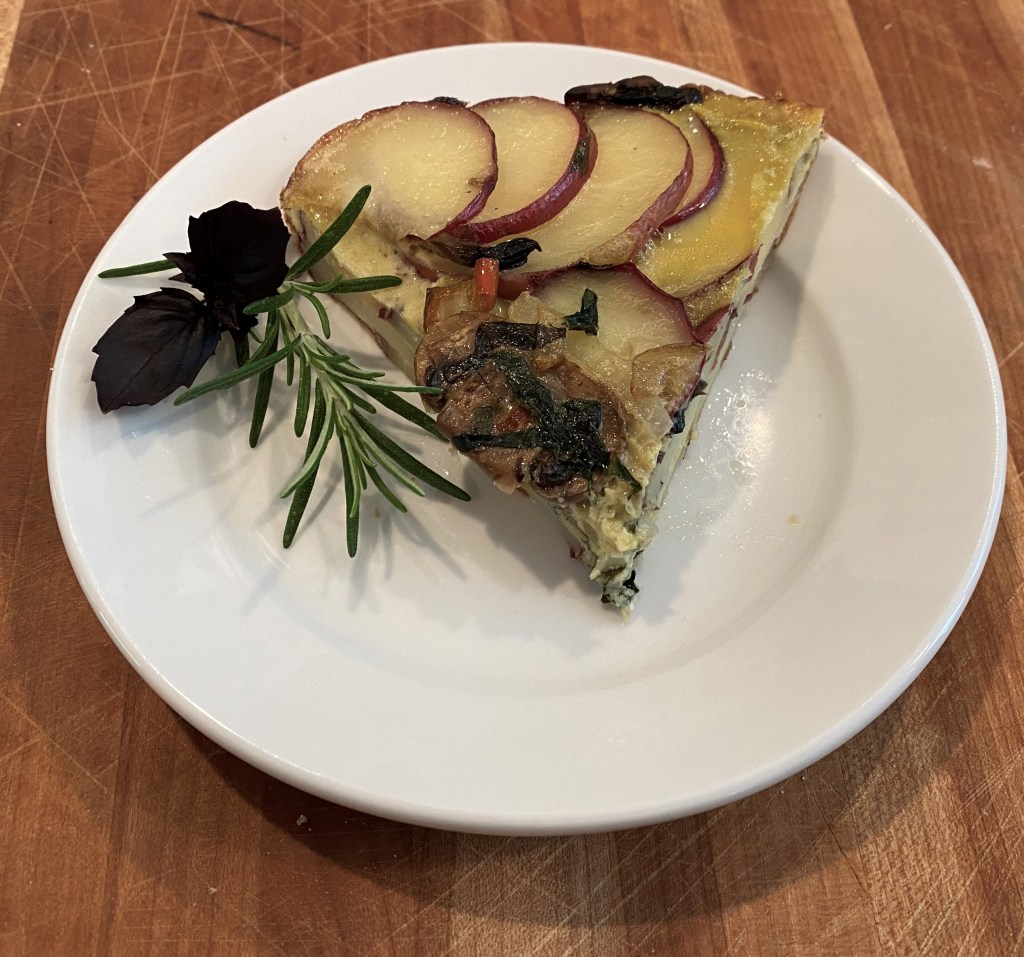
Sometimes you just want something different for breakfast. Or lunch. I love a good frittata, made with eggs and just about anything else you want to put in it. A great alternative, similar to a frittata, but with a little more substance is a Spanish omelet. It’s still fairly light, but warm and buttery and rich with potatoes, the ultimate comfort food. 

One of my favorite memories was a late summer evening meal on the beach with good friends. She served a Spanish omelet and fresh fruit salad and then followed it with Romeo y Julieta (cream cheese and guava paste on crisp crackers). Delicious food, good Spanish wine and dear friends.  Watching the sunset over the lake was an experience I’ll never forget. 

Spanish omelet or tortilla Espanola

Called a tortilla in Spanish cooking, the classic recipe is made with potatoes, onions and eggs. But you can add anything your heart desires to the recipe. 

My riff on the classic

1 onion, peeled and sliced thinly

1 lb red potatoes, not peeled, sliced thinly

3 eggs

½ c. sliced mushrooms

½ c. sliced red sweet peppers

½ c. sliced swiss chard

Salt and pepper to taste

Preheat oven to 400. Use an 8” cast iron pan if you have one. Otherwise, any stovetop-to-oven pan. You can also use a round cake or stoneware pan but you will need to vary the cooking slightly since you can’t use these on the stovetop. 

Cook potatoes in salted water, drain and cool. 

Saute onion until soft in a splash of olive oil. Add mushrooms, peppers and chard and saute briefly until tender. Cool slightly. 

Whisk eggs and 1 t. Salt. Add potatoes and vegetables and toss until coated with eggs. 

Add a bit more oil to the pan, pour in the egg and vegetable mix, and cook on medium heat for 2 minutes. Put in the oven for 20 minutes until eggs are set. 

Remove from the oven and flip upside down on a plate. Serve in wedges, hot, room temperature or cold.