Homemade Ricotta

In my vein of keeping things simple and less expensive, one of my faves is ricotta cheese. It’s a great boost of protein, is low in calories, and if you make your own, you can control exactly what’s in it. 

Store-bought ricotta can be expensive, but it is simple and quick to make. When you make it fresh you can make it as creamy or dry as you want. All it takes is high-quality milk and lemon juice or white vinegar.

It’s a great base for pasta sauces, to mix in chicken or tuna salad, to spread on grilled bread for bruschetta, to lighten and moisten baked goods, as a topping for pizza, to make delicious dips, to stuff pasta, to layer in lasagna and even to make a low-calorie sweet pudding to satisfy that sweet tooth. 

8 cups whole milk 

Organic is best; try to find milk that has not been ultra-pasteurized. But regular pasteurized milk is fine. You can make ricotta with 2% or even skim milk but it won’t be as rich or as creamy.

½ teaspoon salt 

you can omit this, especially if you are using it for something sweet

3 tablespoons lemon juice or white vinegar

Line a colander with several layers of dampened cheesecloth or a linen tea towel and place over a bowl to catch the liquid. 

Heat the milk in a large heavy pan, stirring occasionally to prevent the milk from scorching. Heat to 185 F. This scalding kills any stray bacteria that might interfere with the clotting process.

Turn the heat to low, add salt if using, and add the lemon juice or vinegar.

Gently stir the mixture for a few minutes as the curds begin to form. The liquid that separates is whey (keep this – see below).

Remove from the heat, cover and let stand for about twenty minutes. 

Gently ladle the ricotta into the colander. Let sit for about 10 minutes for creamy ricotta or up to 20 minutes for dry ricotta. 

Homemade ricotta will last about three days in the refrigerator. 

*Whey is a great protein-rich addition to baked goods, in a smoothie, as a soup base, or even added for extra nutrition in pet food. Freeze it in ice cubes to have it available for tossing into a soup if you don’t intend to use it immediately. 

Gluten-Free 3

It’s amazing how, when we heard “go gluten-free,” I thought “I absolutely can’t give up bread”. But then I whipped into gear to start looking at the options. I bought the ingredients to start baking without gluten and cruised the internet for advice about why we shouldn’t be consuming it.

Basically the advice, in a nutshell, is that if you are sensitive, you should stay away from gluten. However, if not diagnosed with Celiac disease or an actual allergy, then it’s not critical to buy oatmeal that is certified gluten-free or to avoid anything that might have even come into contact with wheat. The anecdotal take is that you should stay away from gluten no matter what because it is inflammatory. The medical advice is that it hasn’t been proven to be inflammatory and it’s fine to eat bread. The most important piece of advice to remember is to read your own body’s response.

Now that we’re several weeks into a gluten-free diet, we realize that if we have to continue this way, it’s not all that hard. We’re waiting on blood tests to see if gluten is causing the digestive issues, so will take all the advice with a grain of salt until we know the final diagnosis.

Meanwhile, commercial gluten-free hamburger buns, bagels, bread and wraps are perfectly edible. Okay, the bread doesn’t taste quite like a crusty sourdough loaf, but it’s certainly okay on a sandwich. And I like to pride myself on being adaptable. No adolescent pouting here.

I’ve had several failed loaves of bread using my own mix, so my advice is that, even though expensive, buy the ready-made baking and bread mixes. Try several and figure out which one you like the best. And enjoy your biscuits, pancakes and avocado toast!

2 c. gluten-free baking mix (Bob’s Red MIll, KIng Arthur, Pillsbury)
1 T. baking powder
½ t. salt
¼ t. baking soda
6 T. butter
1 c. buttermilk

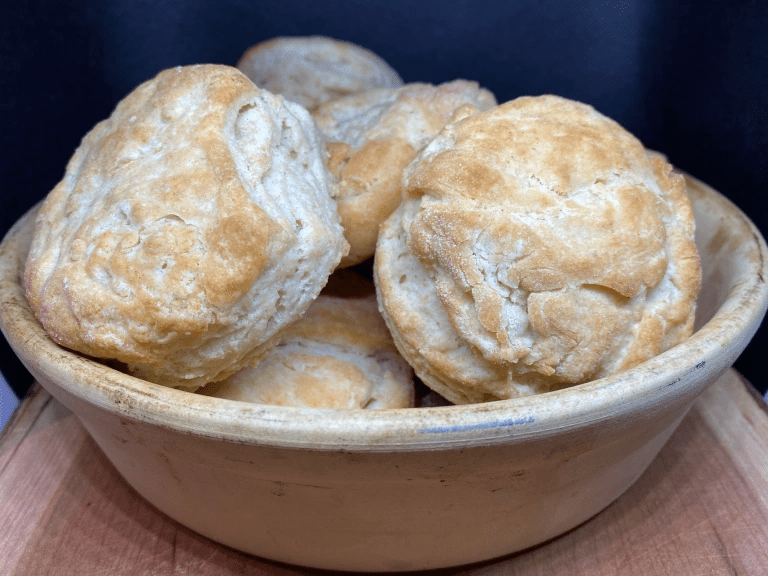
Blend dry the dry ingredients. Cut in butter with two forks or a pastry cutter until it resembles a coarse meal. Add buttermilk and mix lightly, just enough to incorporate the ingredients. Be sure not to overmix. Pat into a loose ball, turn onto a floured board and roll out to about ½” thick. Cut with a biscuit cutter and place on an ungreased cookie sheet covered with parchment paper or a silicone mat. Brush the tops with milk for browning. Bake at 400 for 15-20 minutes.

Gluten-free diet

I’m going to take you on a journey with me. Out of medical necessity, my house is going on a gluten-free diet. I’ve always shied away from gluten-free products because they just weren’t necessary and I assumed they weren’t as good as those made with wheat. Happily, I’ve been redirected.

I’ve spent a lot of years cooking with flour – from making a roux for creamy pasta to my grandmother’s traditional holiday cookies to soy sauce in stir-fries (yep, soy sauce has wheat in it) to good old bread baking and even making a sandwich.

I do so many things by rote and from scratch, that I now have to stop and think through any recipe and figure out substitutes. I asked a gluten-free friend which commercial breads taste best and her response was, “I don’t know. They’re all pretty bad.” However, until I can figure out how to make my own substitutions, I’m reliant on commercial breads and baking mixes. And they are pretty expensive.

But they certainly don’t deserve the bad reputation that so many have. I can’t say they’re homemade good yet, but at least there’s hope. Gluten-free products have come a very long way in the past 20 years. I made waffles from a gluten-free baking mix recently and they were actually as good as our usual homemade ones. Buttermilk and baking powder seem to work equally well with any type of flour. Most restaurants offer gluten-free bread and bun options so it’s also possible to eat intelligently when out without having to bring your own bread.

So, as I bounce along this road, I’ll share what I find as far as different flours to use, how to make leavening work without gluten, and which commercial products are the best. Keep in mind that if I mention a brand, I’m not selling or getting any compensation. It’s simply something I’ve tried that is readily on the market.

Here goes!

I purchased an all-purpose baking mix (King Arthur) that already has baking powder and xanthum gum in it. Certainly not intended for bread baking, but the waffles were delicious. I’d really like more of a whole grain mix so I’ll next try just the plain alternative flours to make my own waffle and pancake mix.

2 T. vegetable oil or melted butter
1 large egg
1 T. sugar (optional)
½ t. vanilla extract
1 c. baking mix
½ t. baking powder (the mix already has some in it but they suggested more)
dash salt
1 ½ c. milk

Mix and let stand 10 minutes. Pour onto hot waffle iron or pancake griddle.