I just had surgery, so I cannot use my right hand. In place of my regular blog, my husband stepped in:
“When you’re right-handed, eating exclusively with your left hand is not pretty. Kate’s right shoulder joint was replaced last week, and for the first two weeks of recovery, her right arm will be immobilized. While her left hand can manage the keyboard and mouse (with difficulty), it hasn’t been trained for the more difficult task of moving food from plate to mouth.
We started meal planning and preparations a couple of weeks before surgery. When her left shoulder was replaced last year, food planning and prep were simple: nothing on her plate that needed to be cut. The right shoulder presented more challenges.
Think inside the box
This is not a moment to explore new and creative cooking. With surgery and medications affecting taste and appetite, we learned to stick to comfort foods that can be scooped, pierced, or handheld. For the first several days, that meant focusing on wraps, quesadillas, open-face sandwiches, and soup in a mug.
Wraps
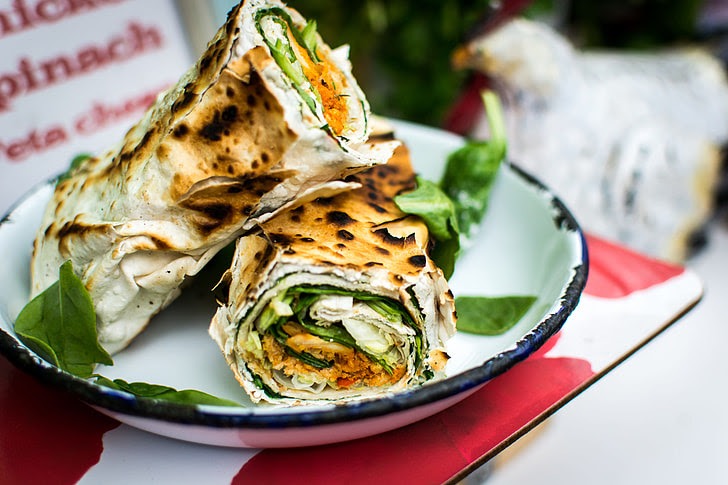
Almost anything you can eat with a fork can be wrapped. There are a host of online videos about folding, tucking, and rolling a tortilla. Wraps are easy to make, but with very little error tolerance. Too much food on the tortilla and a misaligned fold were my downfall. But a little practice makes perfect.
Our neighbor Susan, dropped off a wonderful entree salad that easily converted to a wrap. The lightly dressed tuna on a bed of marinated cucumbers and daikons, spring mix, and rice moved nicely to the tortilla. Kate’s a TexMex fan, and we made variants on breakfast burritos with sour cream and salsa for dipping. Wraps worked well for lunch and dinner, ranging from salmon with rice, chicken and white beans to tofu with grains. Dressings were spur of the moment, Caesar, ranch, olive oil, or a vinaigrette. The key to success lies less in the planning and more in responding to what sounds good at the moment.
Quesadillas
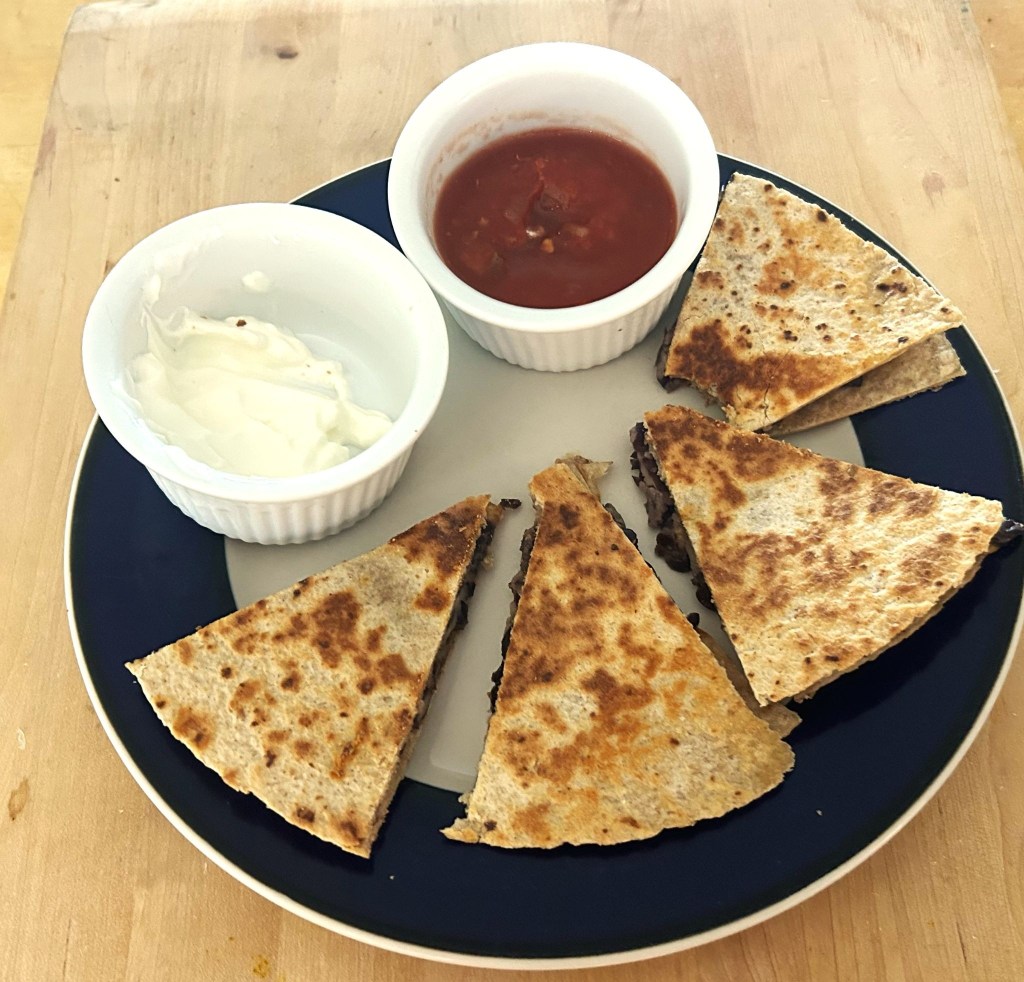
Like wraps, there are infinite possibilities for quesadillas. Great choices are scrambled eggs and cheese with onions and chilis, a quesadilla layered with black beans, salsa, sauteed greens, and a protein, or a simple spicy black bean and cheese quesadilla.
Fruit Salads
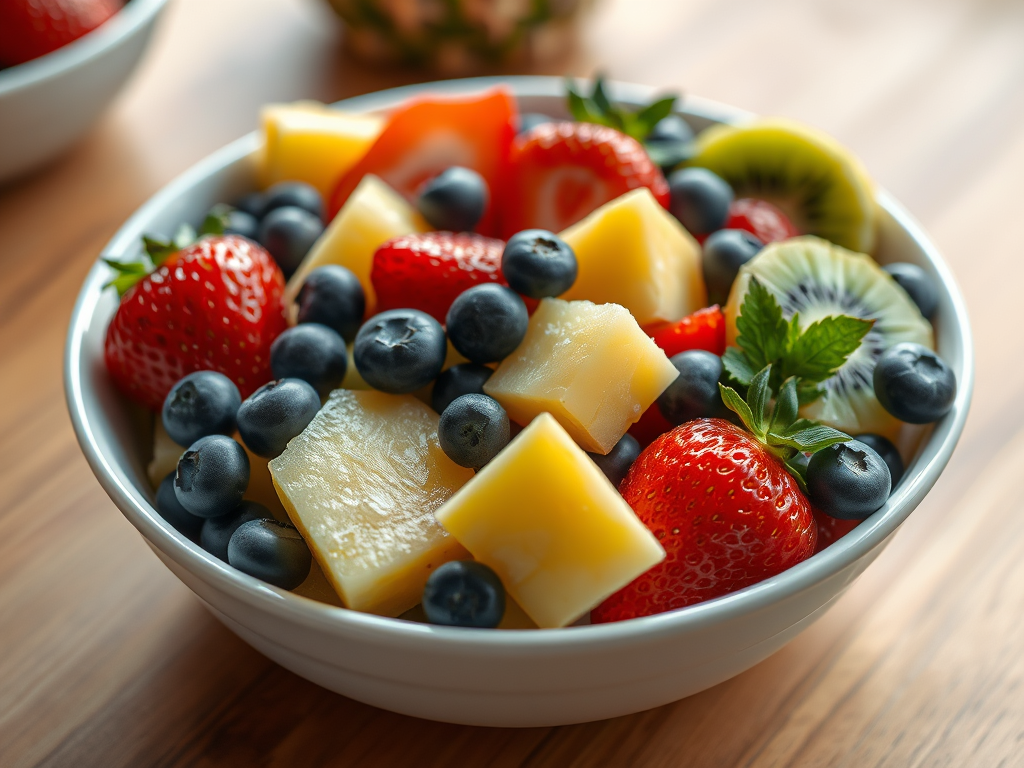
With a good napkin or two, the right fruits make fruit salad a finger food. Grapes, cherries, pineapple, strawberries, and apple and pear slices are a great start.
Soups
Soup in a mug with a sliced baguette introduces some needed variety to the diet. We started with a creamy tomato soup and graduated to chicken soup. The key to the chicken soup is the size of the pieces of chicken and vegetables. They need to be small enough to flow from the mug yet big enough to be palatable. Potato and squash soups are also on the menu.
Snacks
Throughout the two weeks, snacks are an important part of the diet. Whether as a snack or a light meal, consider fruits, nuts, cheese and crackers, or even a simple charcuterie. One of the messy highlights was a store-bought chocolate Napoleon that lifted our spirits.
I’m looking forward to sharing meal prep again with Kate in the near future. But, as a lefty, I have enjoyed the freedom of always having utensils on the useful side of the cutting board, and having the handles on skillets on the range pointing in the right direction. A kitchen occupied by a left-handed and a right-handed person involves constant negotiation.
Whatever the temporary or permanent reason you may be functioning primarily with your non-dominant hand, enjoy the moment. Look for the little things to brighten your day, whether you’re the chef or the diner.




 Kate's Garden Kitchen
You must be logged in to post a comment.