Ah, the Pilaf! Here’s to More Grains in our Diets

One of my go-to dishes for almost any dinner menu is a pilaf (or pilau). Made popular by the French, this dish is simply rice toasted in oil or butter and then cooked in seasoned broth with additions like onions, spices, vegetables, or meat. It can be a delicious side dish or pumped up into a main entree. 

The great thing about pilaf is that there are endless riffs on it. Rice is the traditional base, but you can use barley, quinoa, millet, farro, amaranth, freekah, buckwheat, sorghum, spelt, or teff. Or rice – black, basmati, brown, or white. 

Overwhelmed with the choices? This is a great way to add more whole grains to our diets. Most food co-ops have a wide variety of grain and seed choices. Many regular grocery stores are picking up the banner as well. And grains and seeds are quite simple to cook. You just need a little extra time to prepare some of them (and an InstaPot is a great investment to reduce time). 
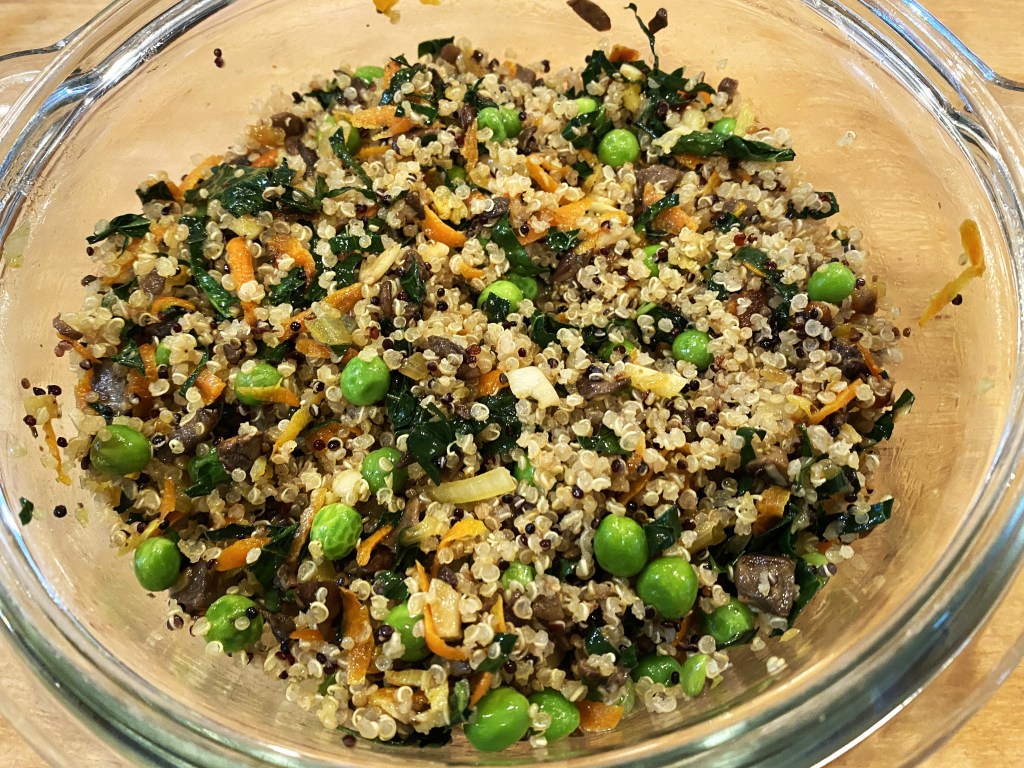
There are a million choices to add to the pilaf, and you can pick and choose according to your taste. Some of my picks are mushrooms, always onions and garlic, zucchini, peas, carrots, celery……..

Here is the basic pilaf recipe. Use it to explore your own creativity. 

Start with 2 cups cooked grain or seeds (for example, amaranth and quinoa are seeds, barley and farro are grains). You can also make pilaf from small pasta such as orzo or pastina. 

Cook according to the directions and then fluff and cool. Many of the grains benefit from being toasted in a dry skillet or with a little olive oil until they smell nutty. This does an amazing job of adding flavor. 
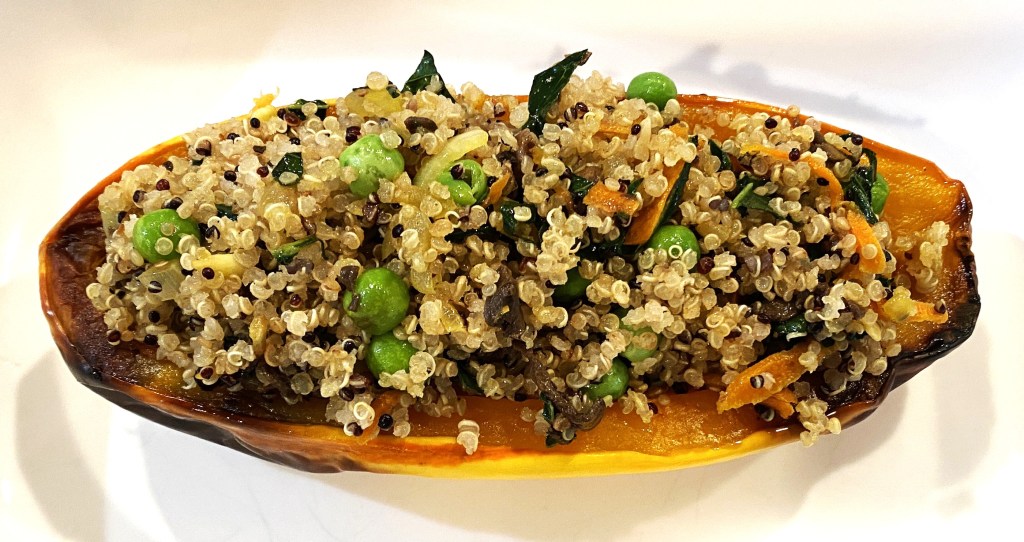
Chop onions and garlic and saute in a film of olive oil until translucent. Add chopped mushrooms, carrots, zucchini, green peas, broccoli, edamame and whatever else sounds good. Continue to saute until the vegetables are cooked to your liking. 

Add the grain or rice and seasonings of choice, chopped herbs, a squeeze of lemon. If desired, stir in chopped spinach to wilt. Warm the pilaf in the skillet, sprinkle with parmesan and/or chopped toasted nuts if desired, and serve. 

Pilaf stores well for several days in the fridge, and once you’ve had your fill as a side dish, simply add it to broth for a delicious soup or mix it into a frittata. 
Grain Pilaf – Another quick meal

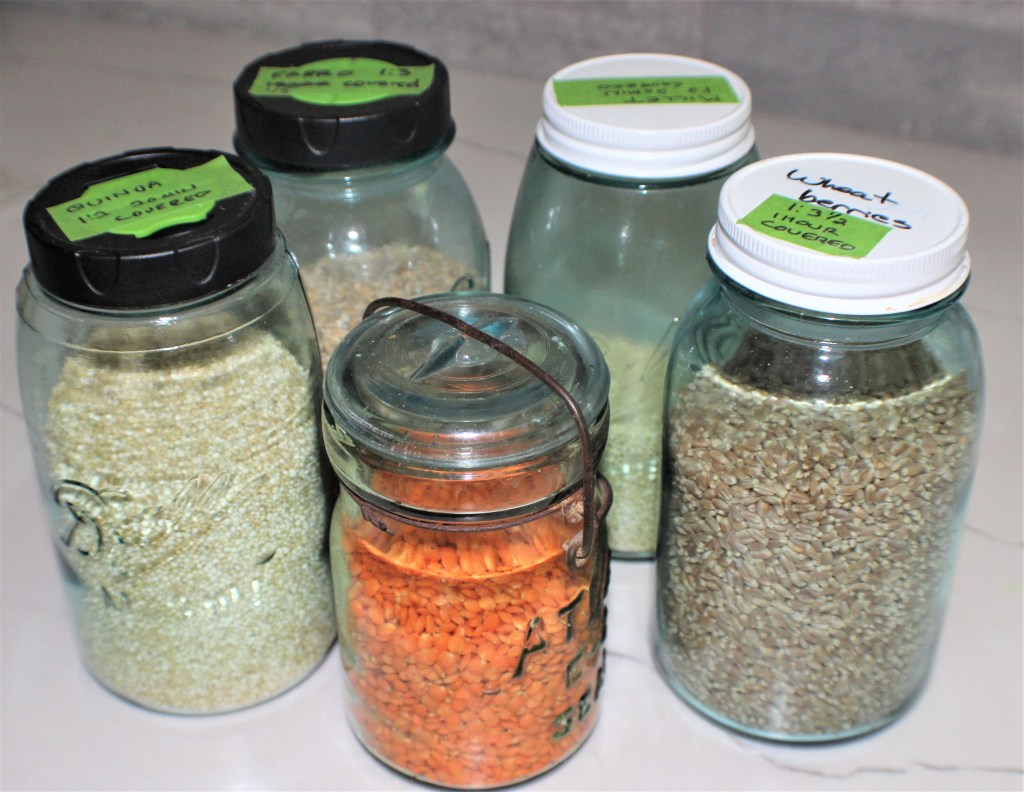
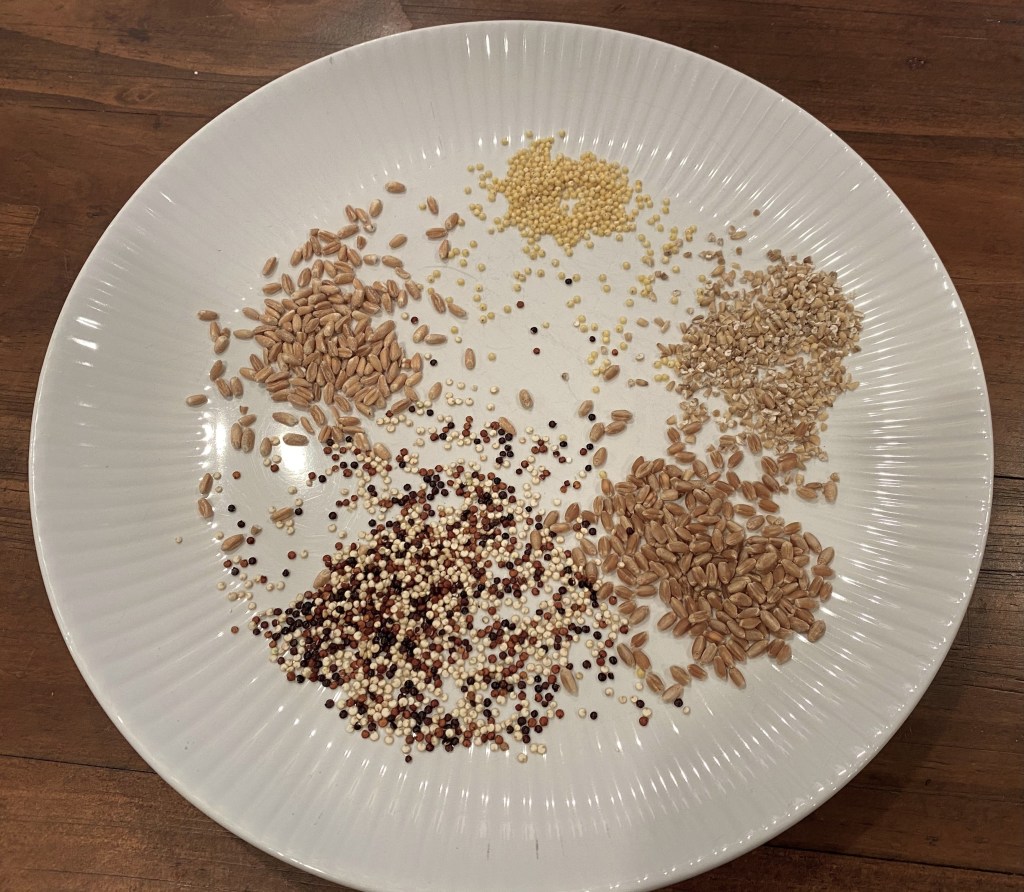
Millet, steel cut oats, wheat berries, tricolor quinoa, farro

We can all use a little extra fiber and nutrition in our diets, and grains are a delicious way to do this.

Cooked grains on hand make a quick meal

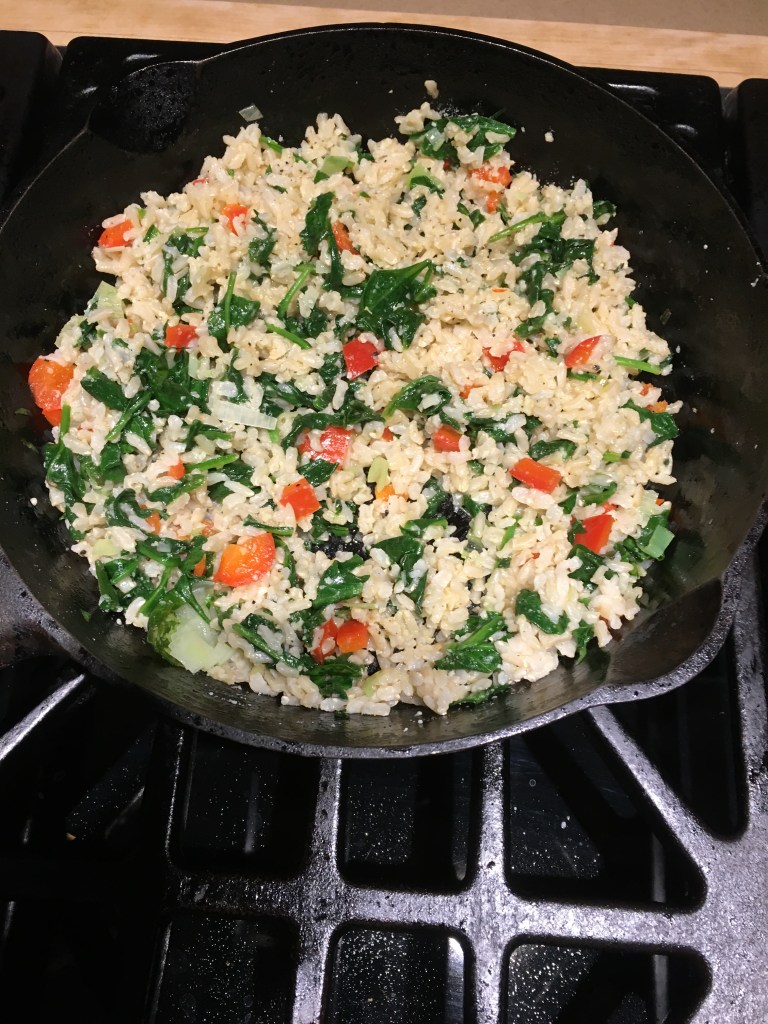
Brown rice and sauteed vegetables

I start my week by cooking a grain, any grain. I then have it in the fridge to use in soups, salads and my favorite, pilaf, for a side dish with just about any meal. There are as many recipes for “pilaf” as there are cooks. Pilaf (pilou is the British term) is technically an Indian or Asian dish of steamed rice with vegetables and meat. But you can make it whatever you want. It’s simply a grain with vegetables added, usually eaten warm but just as delicious at room temperature or cold. Cooked lentils or other beans make a great addition to pump up the protein levels.

Many, many types of grains are out there

The choice of grains is endless these days. You can get millet, quinoa, a plethora of types of rice, farro, Kamut, wheat berries, barley, triticale and umpteen other types. Many are available in bulk at market stores, so you can experiment with only a little bit at first to discover the ones you like. Kashi sells a box of mixed grains they call Seven Grain Pilaf. It has oats, brown rice, rye, hard red wheat, triticale, barley, buckwheat, and sesame seeds.

Grains and lentils

Some grains take an hour or more to cook although an instant-pot certainly shortens this time. When I’m in a time pinch and don’t have any cooked up in the fridge, I turn to bulgur, millet or quinoa which cook in twenty minutes.

Toast your grain

Before you cook any grain, toast it first. You will be amazed at the difference in flavor that a toasty browning gives your grain dish. Simply heat a non-stick or cast iron pan, drizzle with a little olive oil and stir in the dry grain. Stir over medium heat until the grain begins to brown, usually about 5-10 minutes. Then proceed with regular cooking. Use a heavy saucepan with a tight-fitting lid so you can cover if the directions call for it. After cooking, be sure to put on the lid to let it finish steaming.

For the simplest pilaf, start with your choice of cooked grain. Chop and saute any vegetables you want to add and mix with the cooked grain. Add feta or parmesan cheese if you wish and nuts, seeds and even dried fruit. Make it your own creation. You can have a different dish every night!

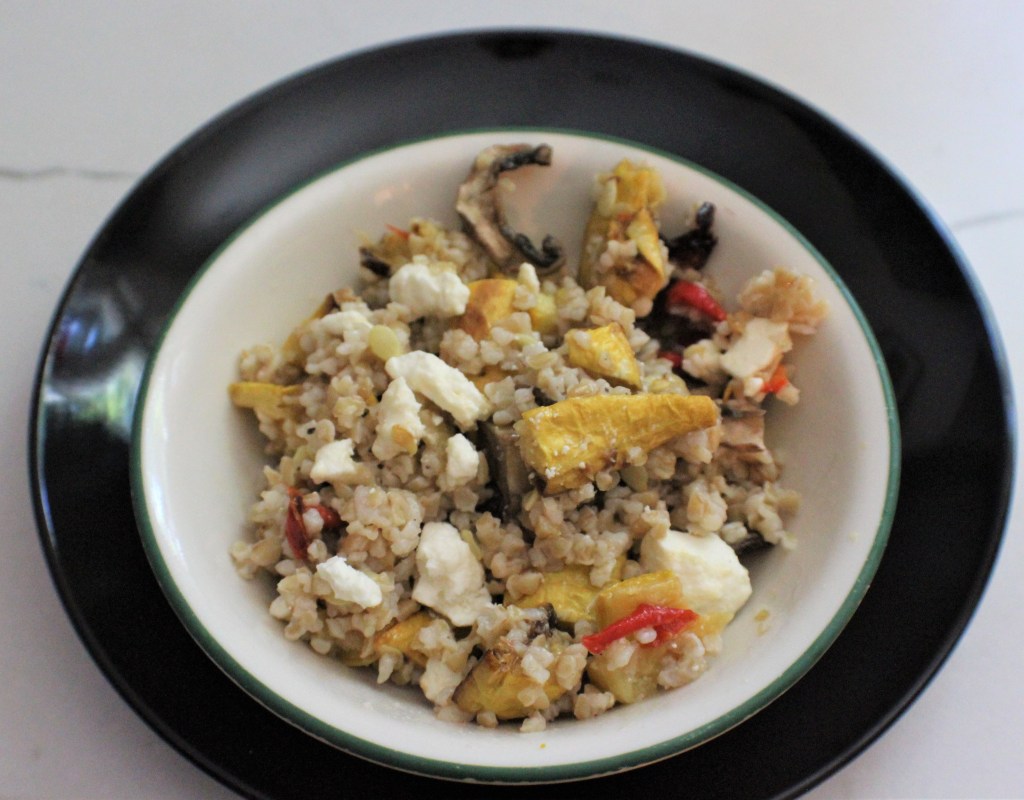
Bulgur with roasted vegetables and feta cheese

Bulgur Pilaf

(feel free to substitute your choice of cooked grain)

1 c. cooked bulgur
½ t. salt
1 T. olive oil
¼ c. diced onions
1 small clove garlic, minced
¼ c. diced sweet red pepper
¼ c. grated carrot
¼ c. grated parmesan cheese
Salt and pepper to taste

Saute vegetables until tender. Mix with bulgur and parmesan; season to taste. Warm gently or serve at room temperature.

This chart is simply a guideline and until you are familiar with cooking a particular grain, keep a close eye on it. If it is too chewy for your taste add more water and cook a little longer. You can also use broth in place of water.

Grain (1 cup) water cooking time

Barley3 cups45 min – 1 hour
Brown rice2 cups1 hour
Buckwheat groats2 cups15-25 min.
Bulgur wheat2 cups15-20 min.
Cracked wheat2 cups25 min.
Millet 3 cups25-45 min.
Quinoa 2 cups15-20
Rolled oats 2 cups15 min.
Steel cut oats 4 cup30-45 min.
Wheat berries  3 cups1 hour, 30 min.