Zucchini is summer’s overachiever, but the best part is that it can do almost anything in the kitchen. From raw in a salad to sauteed to baked to stuffed to zucchini bread.. All are fair game. Here are a few ideas to help out if you are overrun, as I seem to be.
Raw
Zucchini ribbons – Use a vegetable peeler to slice into ribbons and then toss with olive oil, lemon juice and Parmesan cheese.
Zucchini sticks – slice into thick sticks and dip in hummus, tzatziki or salsa.
Grated fresh – adds crunch and mild sweetness to salads.
Fast cook
Slice into rounds and sauté with garlic, olive oil, and a pinch of chili flakes.
Slice into planks, dress with olive oil, salt and pepper, and do a quick sear or grill on both sides.
Slice into rounds and toss with soy sauce, sesame oil, and any other vegetables you favor. Do a quick stir-fry in a hot wok. Add chicken, tofu or shrimp for extra protein.
Classic Italian side dish – saute zucchini rounds with sliced sweet peppers, onions and garlic until tender.
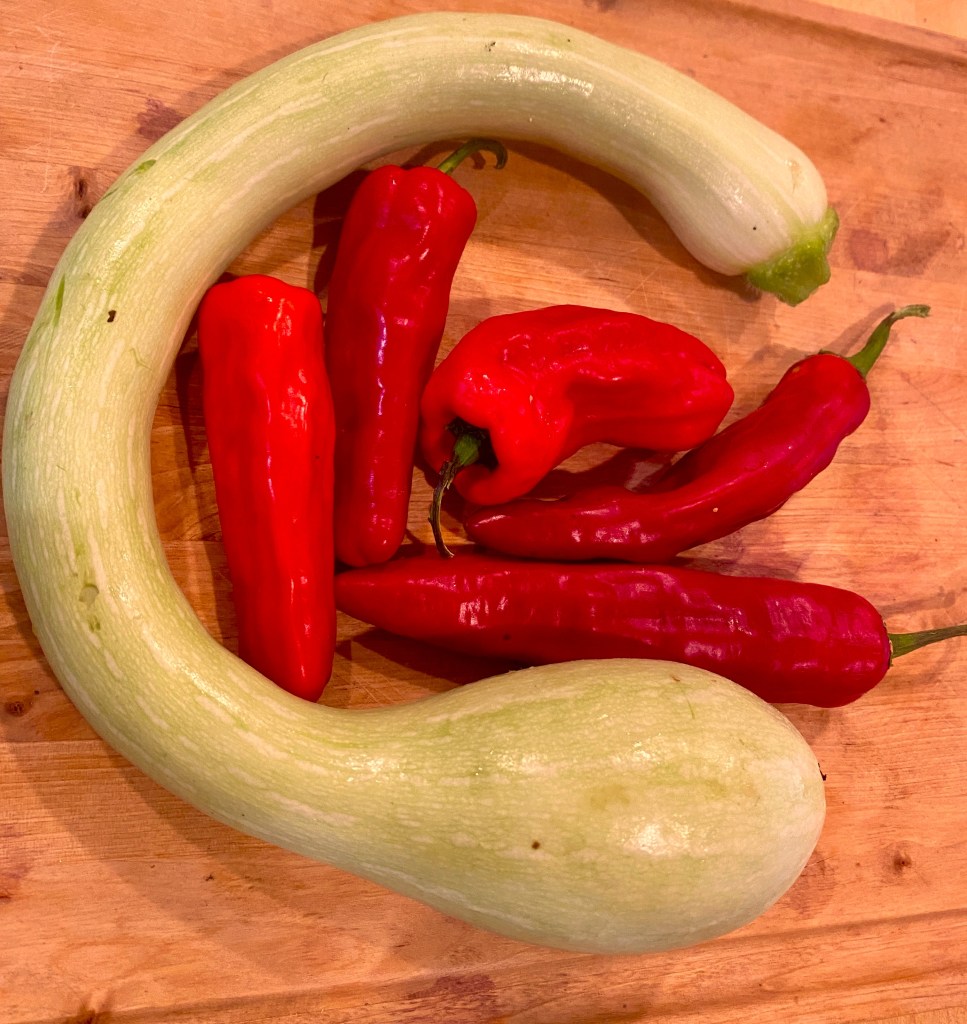
Tromboncino zucchini – a classic Italian variety
Main dishes
Zucchini noodles – slice into thin ribbons or use a spiralizer. Steam lightly and then top with pesto, marinara, or peanut sauce.
Zucchini pancakes – shred and squeeze out the moisture. Mix with egg, a bit of flour or panko breadcrumbs, shredded carrots and finely chopped onion. Saute until lightly browned on both sides. Serve with sour cream and applesauce on the side.
Stuffed zucchini boats – Slice in half and scoop out the center meat, leaving about ¼ inch in the peel. Fill with cooked quinoa, tomatoes, and herbs of your choice. Top with parmesan or mozzarella cheese. Bake at 350 for half an hour.
And if you still have an abundance, shred it, skin and all, squeeze out the moisture and freeze in portions for soups or breads.
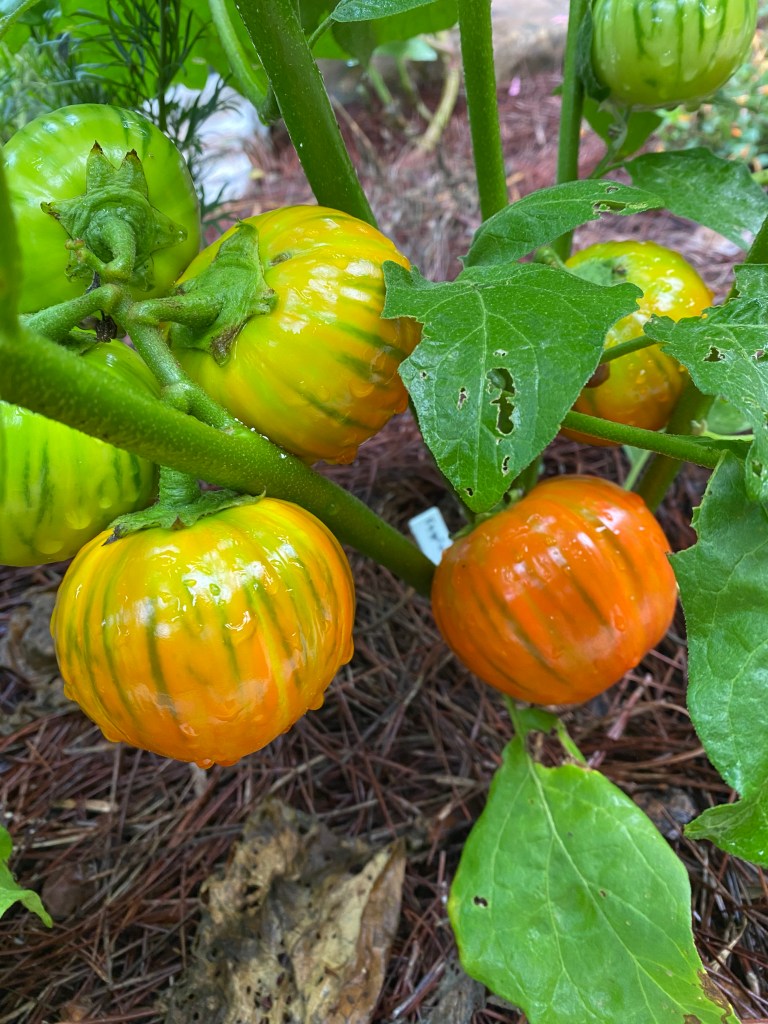
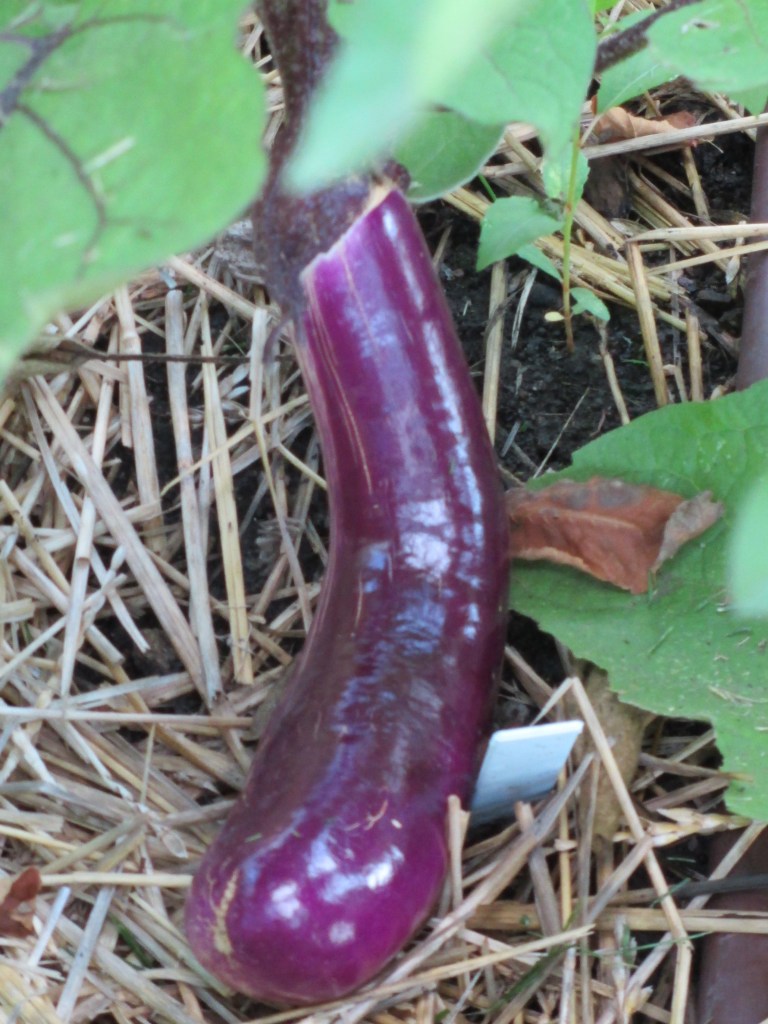
I’m growing Turkish orange, white and Japanese long purple eggplants this year and they are producing like crazy. They are beautiful additions to the garden, with their shiny bright fruits. But now what do I do with them?
Eggplants essentially take on any flavors you combine them with. Their creamy sweet flesh brings a lovely complement to summer meals. And they perform beautifully on the grill so you can keep the heat out of the kitchen. The smokiness from the grill enhances the flavor.
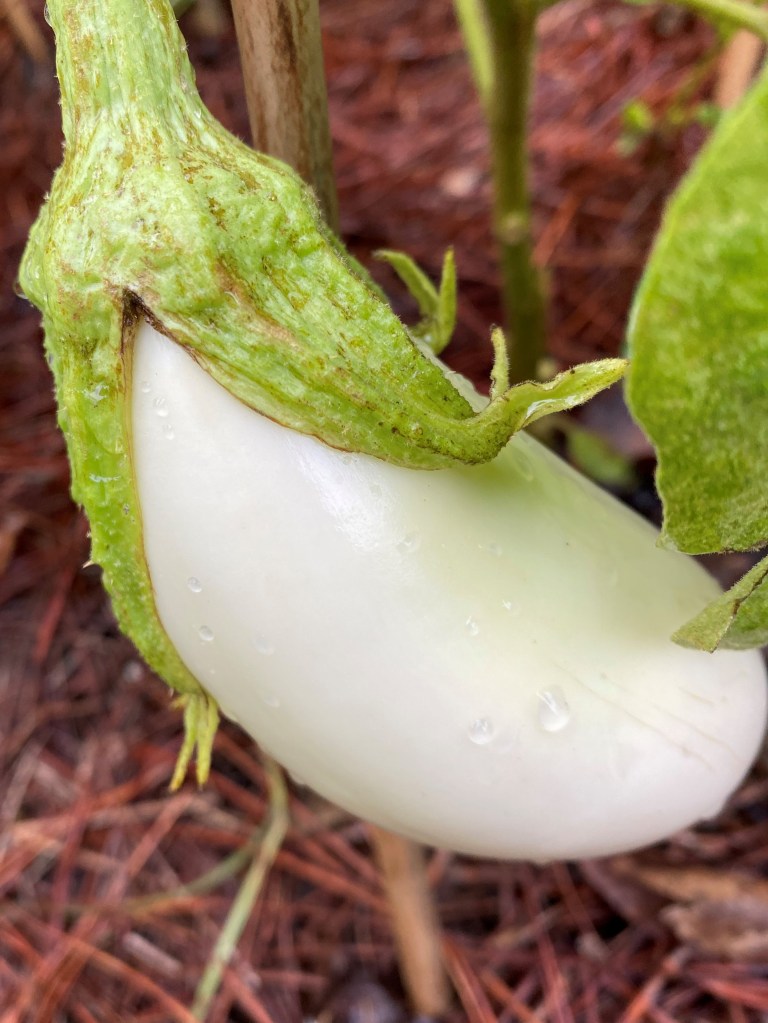
white eggplant
Types of eggplants
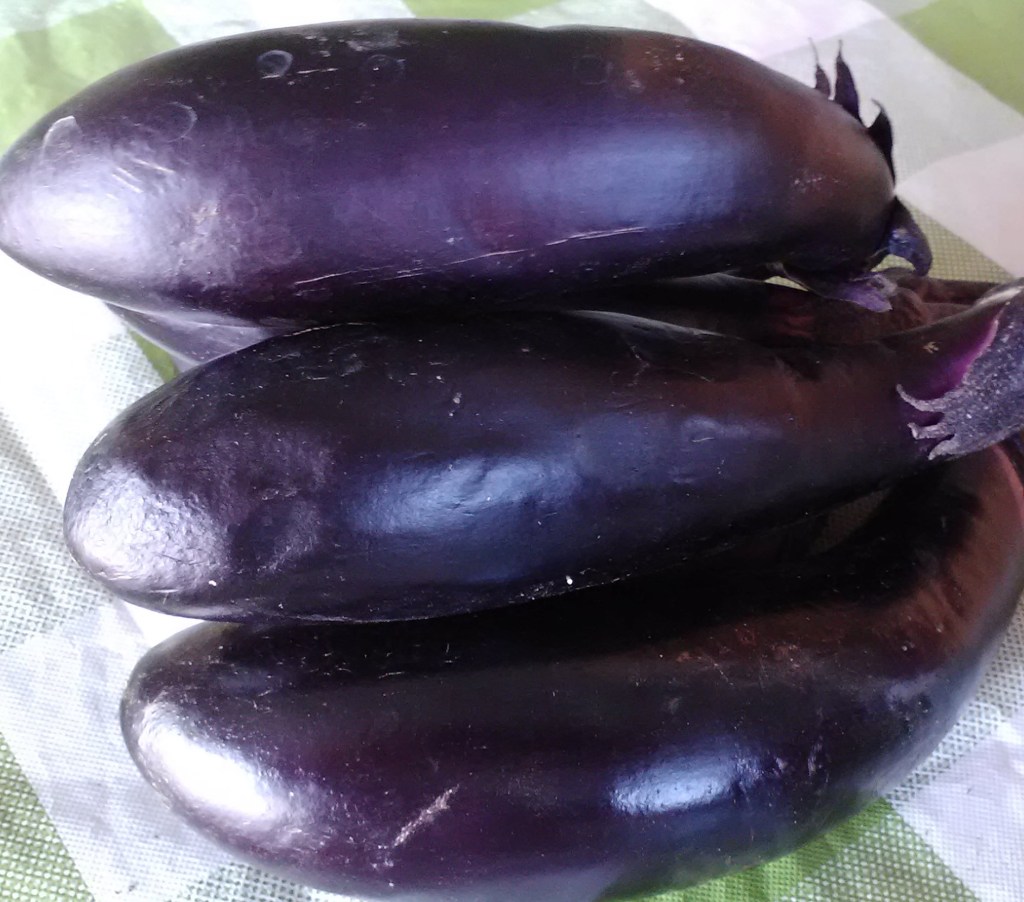
Check out the farmers market for interesting varieties. The traditional Italian eggplant is a large dark purple orb, but there are many different types available, particularly at the market. Italian eggplants are generally larger and round or oblong, in shades of purple, white and striped. Asian eggplants are long and slender and come in purple, white, pale purple and pink. And of course, there is my orange eggplant.
Italian purple eggplant
Harvest carefully
Eggplants are fairly delicate so need to be harvested carefully. They have spines on the stems, so take a pair of clippers with you. When harvesting or choosing from the farmers market, select eggplants with shiny, smooth skin. The more they lose their shine, the more bitter they become. Some cooks recommend slicing, salting and letting them sit for a half hour to remove some bitterness, but I’ve found this unnecessary. They sweeten elegantly when they cook.
Asian eggplant
Grill ’em
For the simplest preparation of the large eggplants, simply put the whole fruit on the grill and roll it around until the skin is beautifully charred. This may take an hour – it should be soft and shrunken. Let it cool and peel off the skin. Then you can mash the pulp for baba ganoush or caponata.
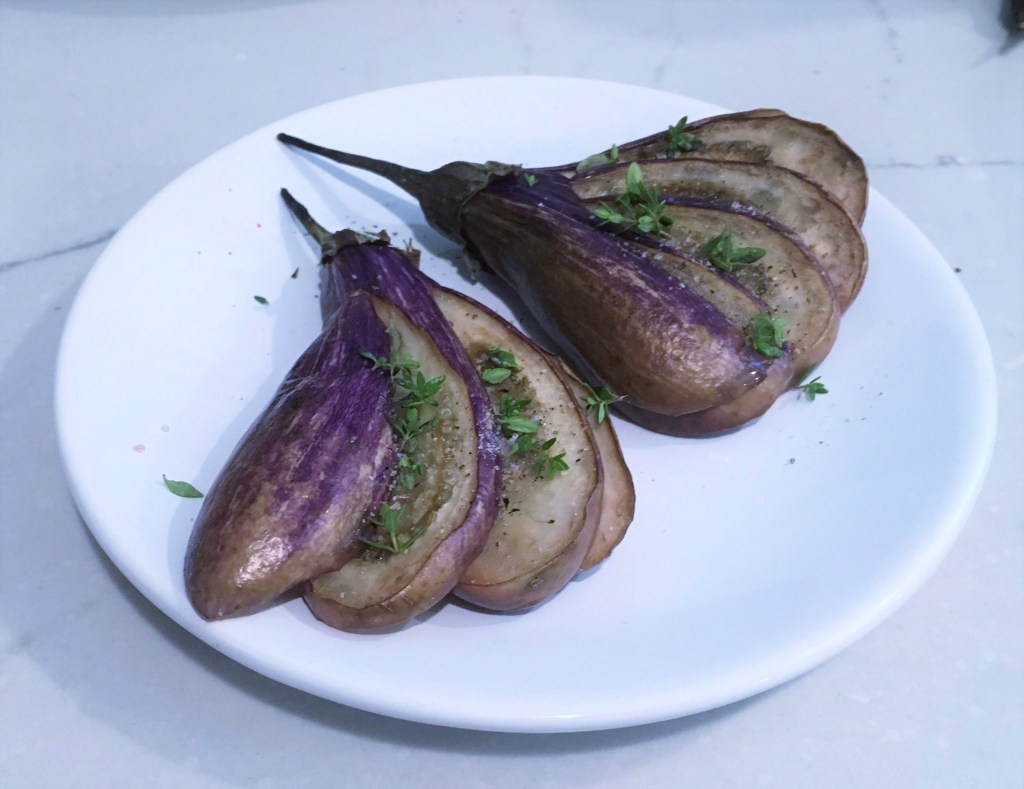
Grilled baby eggplant
Smaller eggplants also perform well on the grill. Put the whole eggplants on a medium-hot grill and close the lid. Turn a few times and remove them to a plate to cool. Once they are cool, slice carefully and drizzle with olive oil and balsamic vinegar. They pair especially well with the flavor of thyme and feta. Serve as a side to grilled meats or a large fresh salad.
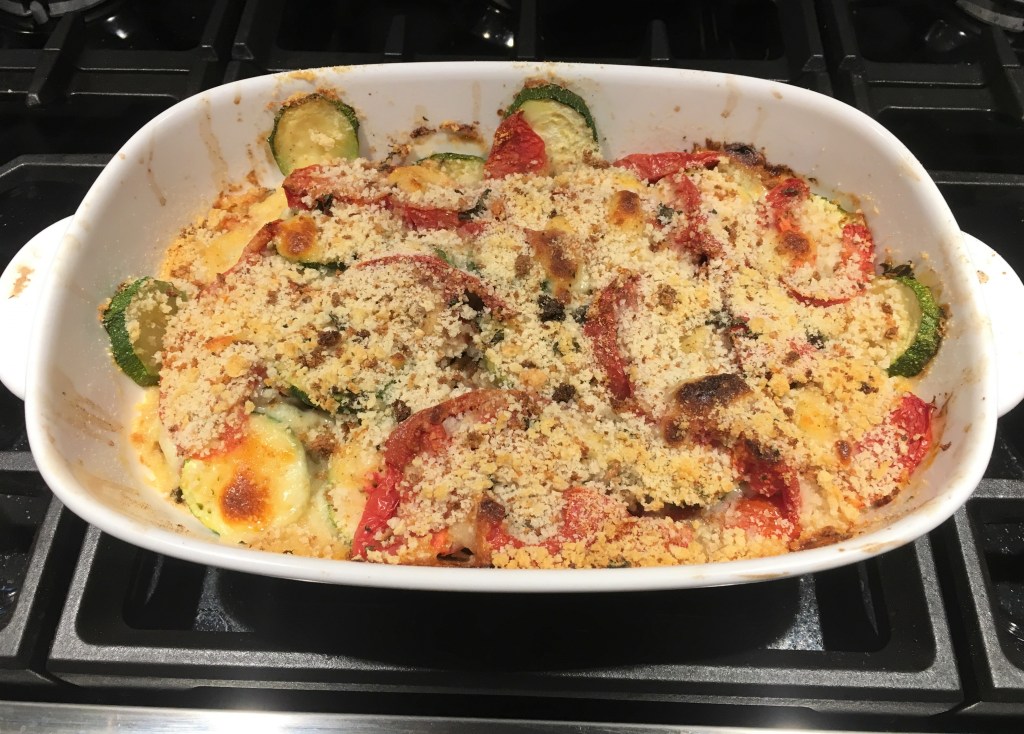
Farmers market strata
Eggplant is a natural companion to tomatoes and summer squash or zucchini, especially since everything is coming in at the same time. Throw together a layered strata with mozzarella and you have a beautiful main dish. Roast the vegetables first for an especially delicious take. Pair it with crusty Italian bread and a fresh salad for a wonderful summer meal.
Farmers market strata
Eggplants also freeze quite well when cooked although the flesh will not be firm when defrosted. Slice them in half, roast cut side down at 375 for 15-20 minutes depending on the size. Scoop out the flesh and freeze in freezer bags. When thawed, add breadcrumbs, garlic, feta and other seasonings to your taste for a delicious quick dip for fresh vegetables or pita chips.
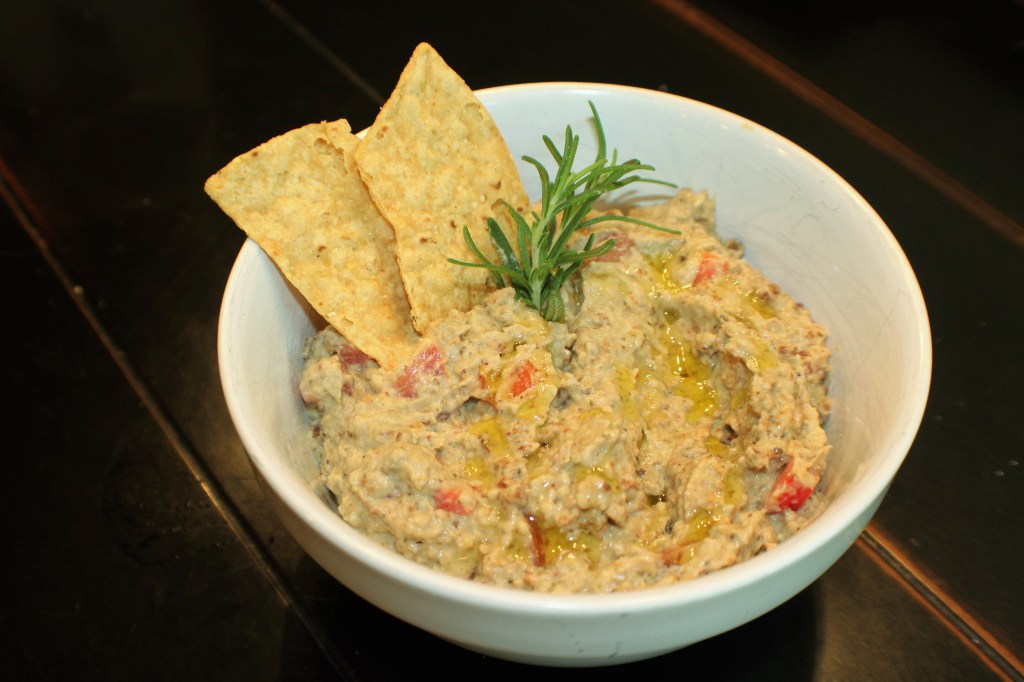
Eggplant dip
Eggplant dip (Baba ganoush)
1 medium eggplant
½ medium onion, diced
1 large clove garlic, diced
1 medium red bell pepper
½ c. toasted bread crumbs
¼ c. tahini
¼ t. cumin
1 large tomato, diced
1 T. vinegar
Salt to taste
Cut eggplant in half and roast cut side down on an oiled cookie sheet at 375 about half an hour until soft. Cut the pepper in half and discard seeds and membranes. Flatten with your palm so there is more surface exposed. Roast about half an hour until the skin blackens. Scoop into a bowl and cover with a plate to let the peppers steam further. When cool, remove the peppers and peel off the skin. Scoop out the pulp and discard the skins.
Saute onion and garlic in 2 T. olive oil until soft. Either puree the vegetables in a food processor until smooth or simply mix and leave chunky.
Stir in rest of ingredients, salt to taste and serve at room temperature with pita chips.
Eggplant salad
Peel and cube a large eggplant. Toss the cubes with olive oil and roast in a 375-degree oven for about half an hour, until tender. Remove from oven and toss while warm with a vinaigrette of your choice. Refrigerate two hours. When ready to serve, toss with chopped tomatoes, cucumbers and sweet peppers. Add crumbled feta, chopped fresh basil and more dressing if necessary.
There’s something so cozy and wholesome about potato pancakes. They’re crispy on the outside, creamy on the inside and a wonderful palette awaiting a dollop of sour cream or applesauce.
Although I don’t have an ethnic tradition of latkes in my background, I’ve taken a traditional recipe from a Jewish friend of mine and adapted it to use whatever is coming in from the garden or left over in the fridge.
This is one of my favorite ways to use leftover mashed sweet and white potatoes around the holidays. The best part is that you can use your imagination and creativity to combine all sorts of vegetables and seasonings.
The basic recipe:
1 c. mashed or grated sweet potatoes 1 c. mashed white potatoes ½ small onion, finely chopped 1 clove garlic, finely chopped 1 egg ½ c. flour Salt and pepper to taste
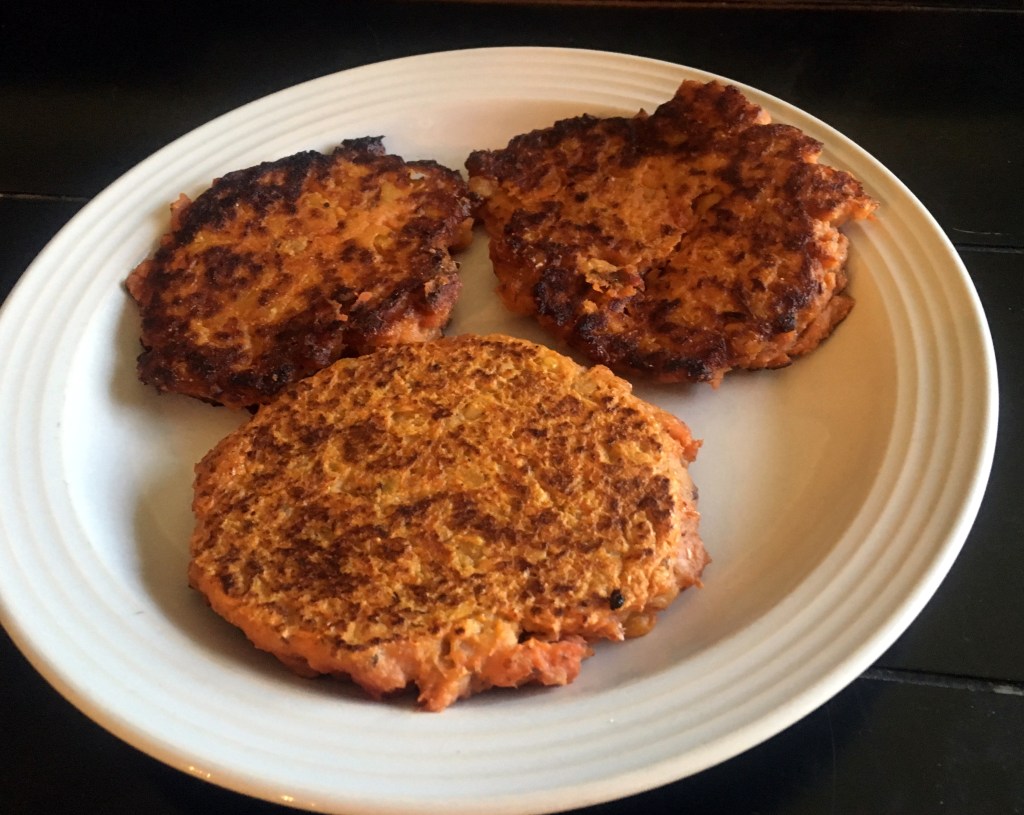
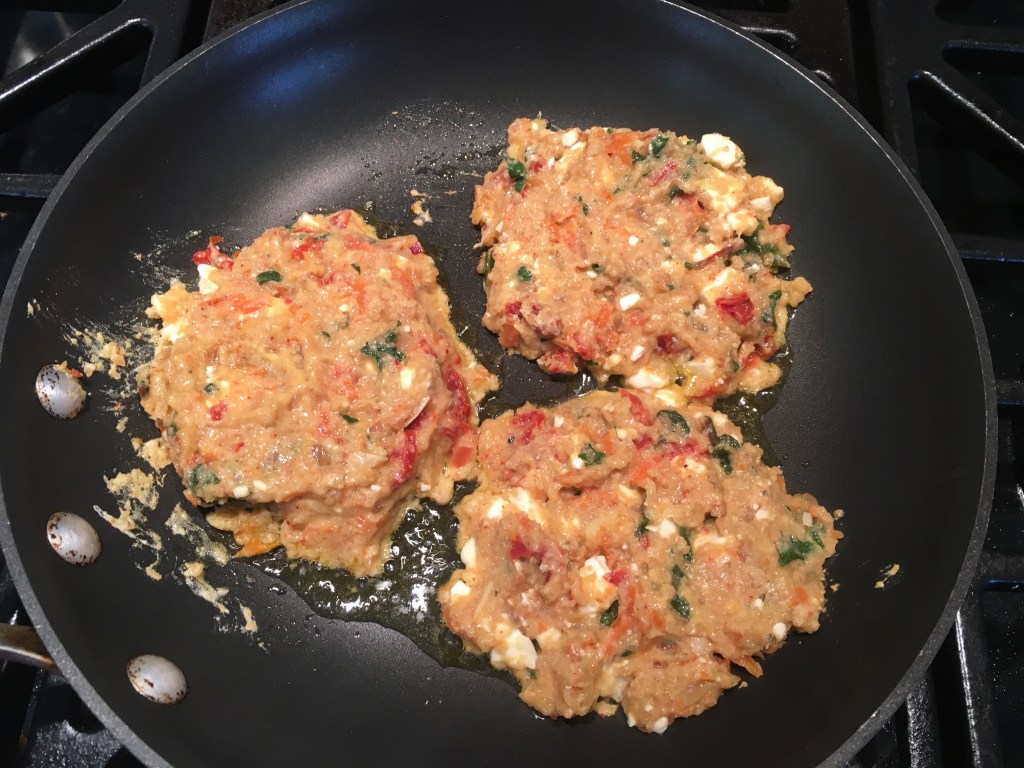
Saute onion and garlic in a small amount of olive oil. Mix all ingredients in large bowl and drop by large spoonfuls into pan glazed with olive oil. Pat the cakes flat. Saute until browned; flip and brown on the other side. Alternatively you can place on parchment or a silpat on a cookie sheet and bake for about 15-20 minutes in a 350 degree oven. Repeat with the rest of batter.
Serve warm by themselves with a dollop of plain yogurt or sour cream and a dollop of applesauce or currant jelly or whatever other jelly you have on hand. Or serve cold over a fresh salad dressed with vinaigrette and sprinkle with goat cheese or feta.
Riffs on the recipe:
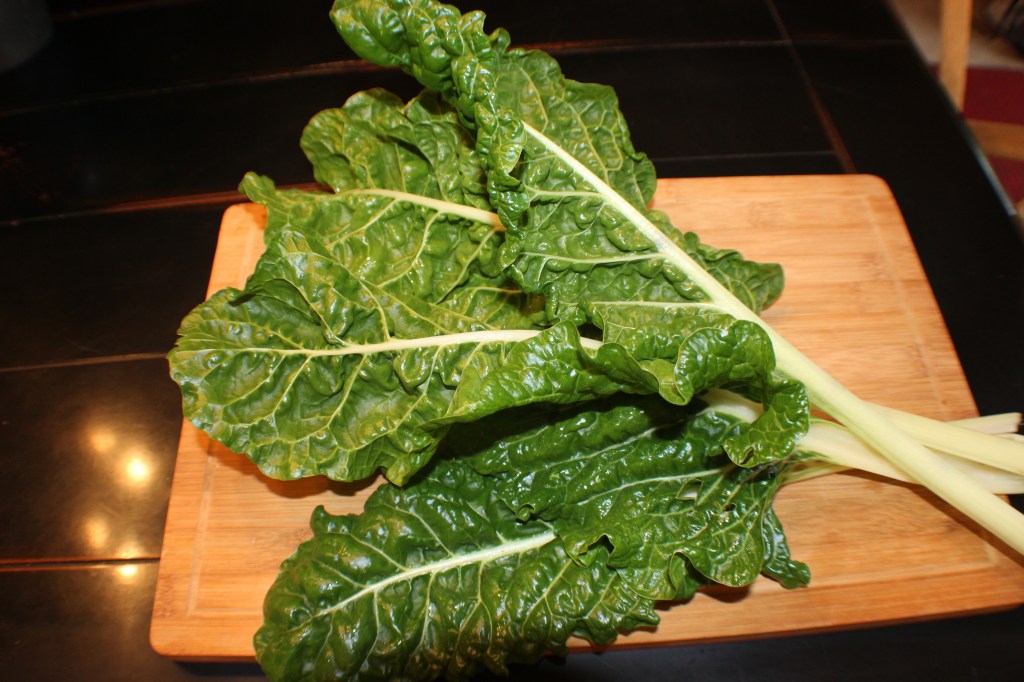
Swiss chard ready to chop
1 cup of any combination of grated raw beets, carrots, parsnips, finely chopped greens
You can also add cooked grains (quinoa, bulgur, oatmeal), mashed cooked beans (black, garbanzo, lentils). Just remember that the drier the mix, the more binder you may need such an additional egg.
Check the recipe tab for zucchini latkes and quinoa cakes

 Kate's Garden Kitchen
You must be logged in to post a comment.