Eat Your Greens! 

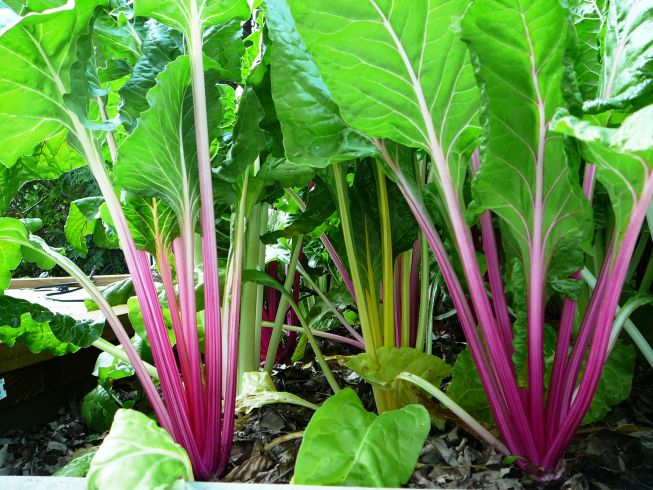
Bright Lights Swiss Chard

Greens are simple things. In a world of chaotic schedules, hurried meals and gourmet foods, it’s pleasant to contemplate eating something as simple and wholesome as chard or kale. Besides, with the constant nattering about eating less fat and more vegetables, who can argue with getting a solid dose of cancer-fighting vitamins in something that tastes so good?

I wasn’t always a greens aficionado. I hail from the South where the preferred method of cooking the common greens, collards and turnips, is to boil them until they turn gray and then flavor them with bacon drippings. As a child, the last thing I was willing to put in my mouth was a pile of slimy, gray-green glop. At least my mother always provided a bottle of hot sauce to liberally sprinkle on top to disguise the flavor ( I discovered long after I became an adult that she didn’t like the gray-green glop either.) 

I suppose greens were literally cooked to death because we had the notion that vegetables should be soft to be palatable. The recent culinary trend of steaming or sauteing vegetables until just slightly crunchy is the best thing that has happened to greens, not only for taste but also for nutritional value. 

I’ve matured, at least according to rumor, and since I no longer have to eat greens, I’ve discovered how much I enjoy them. It took a while to get past the specter of the sodden mass, but I’ve learned to cook them well, which makes a world of difference. 

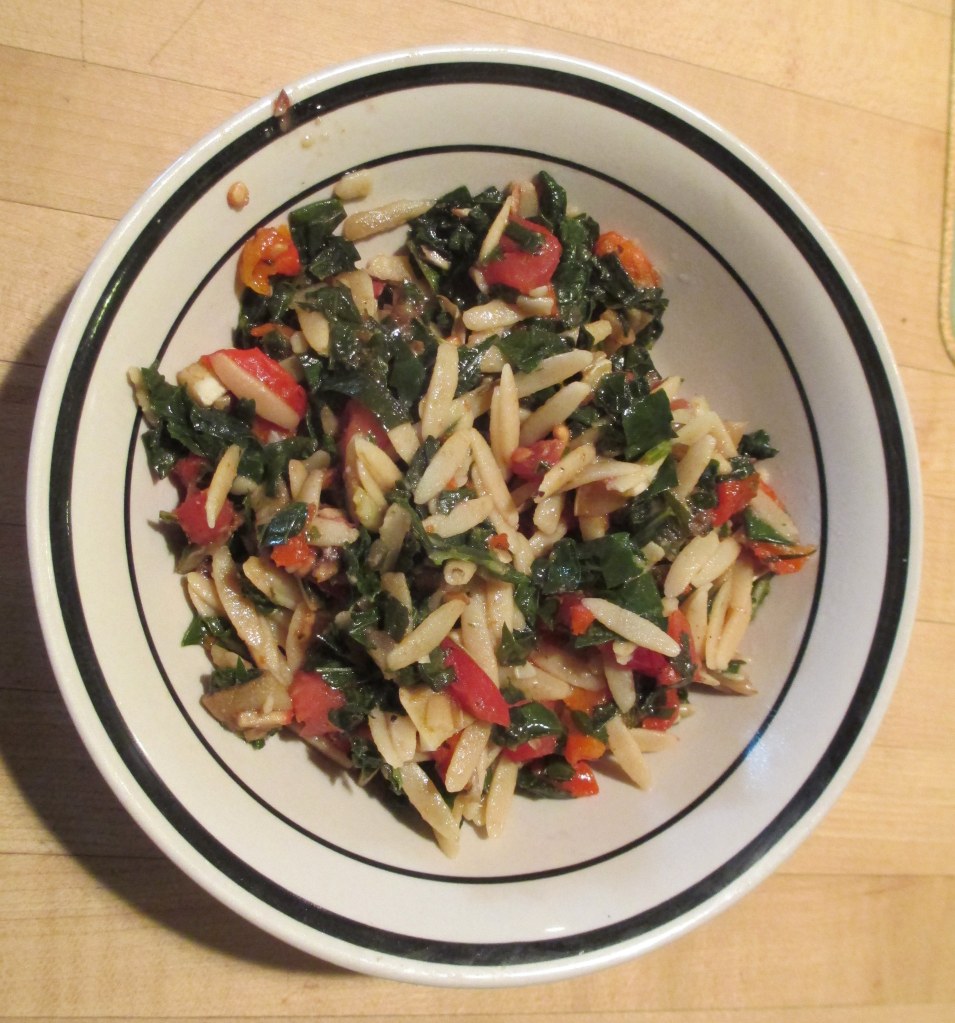
My favorite way of preparing greens is to gently sauté the tender, sweet inner leaves with onion, garlic, lots of pepper, fresh tomatoes and top it all with romano cheese. I also manage to get my family to eat greens of all sorts by putting them in things. I never make a soup or stew without chard or kale, and I add finely chopped turnip, beet or mustard greens to potato pancakes, rice pilaf, omelets and pasta. 

One reason these basic, almost mundane, vegetables appeal to me is that they are carefree growers. You sow some seeds, sometimes right on the snow in early spring, and the plants grow. They take little care except thinning early on and then harvesting. I like that in a plant. 

Some vegetables, like beets, turnips and mustard, give you delectable greens while the rest of the plant is busy developing other edible parts. With a little caution to not harvest too many greens at once, you can start using beet, turnip and mustard greens as soon as they are big enough to provide a bowlful. 

Late last summer I planted Italian kale, a variety called ‘Lacinato,’ which grows to about two and a half feet tall. Even after fall took most of the garden down, the plants were still standing stalwart in December, with their matte blue-green leaves offering themselves to be plucked to cook up “a mess of greens”. 

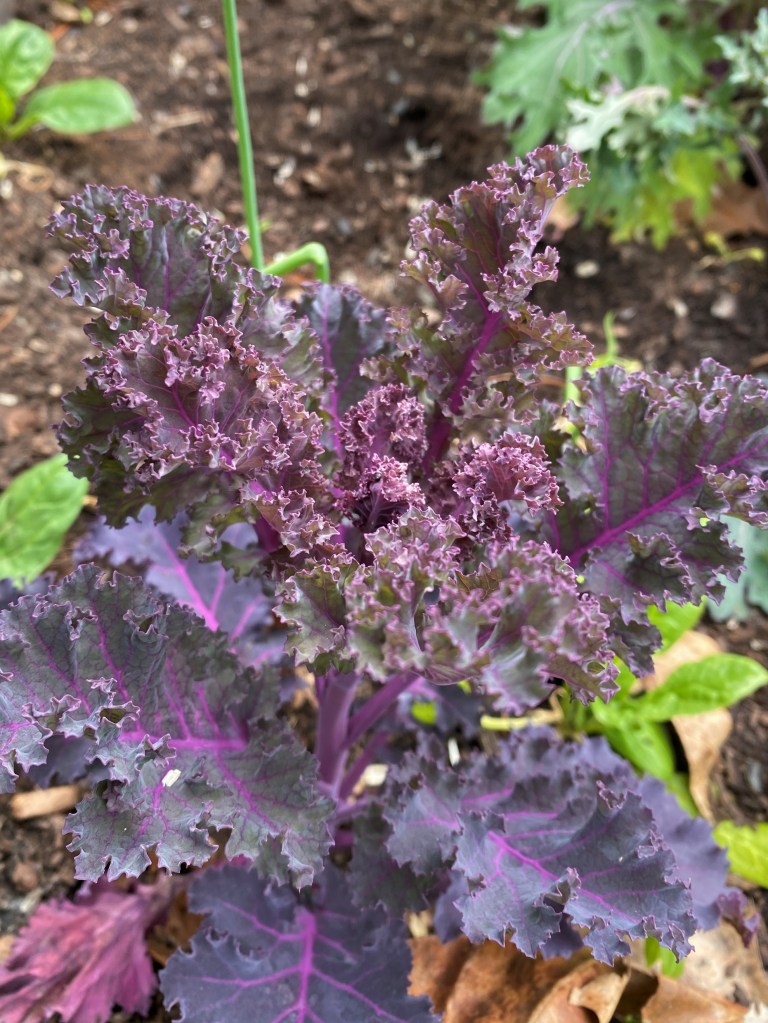
I’m a great fan of dual-purpose plants, and these kale plants were as beautiful as any of the perennials. This year I’m growing ‘Red Russian’  which has stems and veins that turn purple-red in cold weather and blue kale with dusty blue leaves. I’ve planted it with Bright Lights Swiss chard, which produces beautiful leaves on stems of purple, yellow, pink, red and white. What more could you want for color in the garden? 

Saucy Greens for Two

  • 1 small bunch of Swiss chard or other greens
  • 1 clove garlic, minced
  • ¼ c. onion, sliced
  • 1 T. olive oil
  • 1 T. balsamic vinegar
  • 1 t. sugar
  • Salt and pepper to taste
  • ½ c. chopped tomatoes
  • 2 T. sour cream or plain yogurt
  • 1 T. Sriracha sauce if desired
  • 2 large eggs if desired

Rinse the greens liberally and remove tough stems. Stack the leaves and roll them into a “cigar” and slice thinly. Add garlic and onion to olive oil in a heavy pan and saute until tender. Fry eggs in a separate pan if you intend to use them. Add greens, vinegar and sugar and saute for about 5 minutes until greens are tender. Turn off the heat and stir in tomatoes and sour cream or yogurt. Salt and pepper to taste.

Bartering

Photo by Pixabay on Pexels.com

I love the concept of bartering. It’s such a simple way of adjusting the pace of living, giving something you have in exchange for something you need without money changing hands. It just feels like a healthy way to develop a sense of community as neighbors get to know neighbors. And it takes our focus away, even if only for a little while, from earning power and the bottom line.

I have a wonderful memory of my mother striking up a conversation in the produce section of a grocery store. While squeezing melons, she and another woman started out by talking about their gardens and they ended up sharing fruit. My mother provided a bushel of peaches and she received a bushel of apples in return. Both women’s larders are now full of canned peaches and apple butter. Even better, the two are now friends.

Making lists

Photo by Karolina Grabowska on Pexels.com

I’ve challenged myself to see just how many things I can barter for. I started by making a list of all I have to offer, material things as well as things I can do. I even listed those things I tend not to think of as marketable such as lawn mowing, sewing and bread baking. After making this list, I whittled it down to things that I like to do. Sure, I can clean bathtubs and cut grass, but who wants to? I know myself well enough to know that if I don’t enjoy doing something, I won’t feel good about the barter and my exchange system will fall apart.

To start bartering, it’s taken me a lot of courage to step forward and start conversations with a stranger. It also takes nerve to open up and talk about who you are and what you do. But the outcomes can be so rewarding, not only in a bartering milieu but also with the people I’ve gotten to know and the friendships that have developed along the way.

Photo by RDNE Stock project on Pexels.com

Start at the farmers’ market

A great way to get started is by frequenting the places where gardeners hang out. Whether at the farmer’s market or the local garden center, if you begin talking to the people there, you’ll find there is a natural exchange of information that can be the start of a trading network.

Share your garden

Another natural starting point is with your neighbors working in their yards. People who garden love to talk about their gardens and most also love to share. I would bet that very few gardens that I’ve visited are comprised solely of plants and seeds that were purchased. Sure, I bought some of the plants in my garden, but the majority are trades with other gardeners.

Photo by Karolina Grabowska on Pexels.com

Perhaps you know someone who is no longer physically able to tend a garden, but who does superb lawn mower repair. Or how about exchanging herbs and garden produce with someone who has no garden, but can watch your children one afternoon a week? I like to grow seedlings, so I always add a few more for a friend who repairs my trellises.

It also helps to remember that not all trades have to be for tangible things. Offer to make someone dinner if they will sharpen your pruners and grass shears. Or perhaps merely an offer of a visit gives both you and a friend the pleasure of relaxing conversation. Sometimes the joy is simply the benefit of giving—and not receiving anything tangible in return.

Stay with it

The key to making the system work is to be clear about what you can and cannot do. Don’t be discouraged if you initially receive some negative responses. Keep searching and talking and eventually, you will be on your way to a pleasant exchange. It’s a bit idealistic to think that every service and good you need can be bartered for, but even a few exchanges can make life a little simpler and increase the social network that is so important to mental health.

Delicious Whole Grains and Seeds

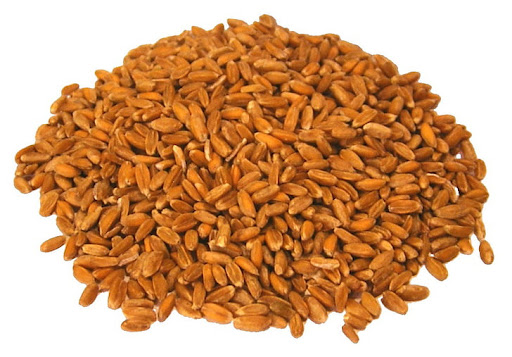
I’ve accidentally found a treasure. I love oatmeal for breakfast, and I’ve found a way to increase its nutritional value manyfold. On a recent cold rainy day, I hauled out the instapot. I cooked barley, quinoa and steel-cut oats separately and then mixed them together for an absolutely delicious whole-grain breakfast cereal. You could use just about any grain – farro, kamut, wheat berries, rice. Just cook them separately. For extra flavor, cook them in broth instead of water.

The best part is that I made enough to freeze in individual portions to use whenever I want a boost of whole grains. Whole grains take a bit of time to cook, so often they’re not the first things we grab for a meal. But the instapot makes short work of them, and since I cooked them when I wasn’t in the middle of meal prep, it wasn’t a chore and I could do other things while waiting for them to finish.

My favorite way to have hot breakfast cereal is savory – with plenty of black pepper and grated cheese. Adding spinach, avocado, carrots or any other vegetables I have in the crisper makes it even more nutritious. It’s easy to make them sweet with maple syrup, dried cranberries, toasted almonds, and even a few cubes of candied ginger.

These grains are chock full of fiber and vitamins, so adding them to almost any dish gives you a double shot of health. Mix them in with sauteed mushrooms and broccoli, add to pasta alfredo, or sprinkle them on a fresh salad.

Recipe

Here are the grain-to-water ratios and the cooking times in the instapot. No need to soak anything. Set the pressure to high and after the grains finish pressure cooking, allow a natural release so they steam a bit longer. If they are still too chewy for your taste, repeat the process and only pressure cook for a few minutes.

  • Quinoa 1 cup grain to 1 ¼ cups water 3 minutes
  • Pearled barley 1cup grain to 2 cups water 20 minutes
  • Steel cut oats 1cup grain to 3 cups water 4 minutes
  • Farro 1 cup grain to 2 cups water 10 minutes
  • Kamut 1cup grain to 2 cups water 30 minutes
  • Wheat berries 1cup grain to 4 cups water 30 minutes
  • Millet 1cup grain to 1 ½ cups water 9 minutes
  • White rice 1cup grain to 1 cup water (rinse well first) 4 minutes
  • Teff 1 cup grain to 2 cups water 2-3 minutes
  • Amaranth 1 cup grain to 2 cups water 5 minutes
  • Brown rice 1 cup grain to 1 cup water 20 minutes
  • Buckwheat 1 cup grain to 1 ¾ cups water 6 minutes

Delightful Small Bulbs

I can’t help it. Every morning I walk through the garden to check for signs of life. It’s thrilling to see winter aconites with their bright yellow blossoms emerge through the mulch.

We tend to think of crocus as the first bulbs, but there are plenty of other small bulbs that also emerge early to give us a taste of color before the blowsy daffodils and tulips come along. So, keep your eyes open for these bulbs. 

Winter aconites and snowdrops start the display in February and March and there’s nothing quite like the fresh green and white of snowdrops when it’s still quite cold to set the gardening spirits soaring. Smaller bulbs like dwarf iris, hardy cyclamen, grape hyacinths and chionodoxa give the bulb display added color from March through June. Botanical tulips, smaller and shorter than the traditional Darwin hybrids, come up extra early, as well. Their great advantage is that they do not exhaust themselves after one or two years as the hybrid tulips tend to do.

When adding bulbs to your display, keep in mind that they need plenty of sun and well-drained soil in order to produce healthy blooms. Make an effort to place bulbs in spots where the dying foliage is hidden by emerging perennials or newly planted annuals. If the foliage is visible, it’s very hard to keep from yanking the ugly leaves, and they need to stay on to replenish the bulb. Cut out only the spent flower stalk. 

And a recipe to help you get through the cold and keep the garden in mind:

Creamy cauliflower potato carrot soup

(make it fun with leeks, broccoli, parsnips, whatever you have on hand)

  • 1 T. olive oil
  • 2 garlic cloves, minced
  • 1 onion, diced
  • 1 head of cauliflower, diced
  • 2 medium potatoes, diced
  • 1 large carrot, grated
  • 32 ounces vegetable broth
  • 1 c. coconut milk 
  • 1 t. salt
  • Pepper to taste

Film a large pan with olive oil. Over medium heat, saute garlic and onion until softened, about 5 minutes.  Add the cauliflower, potatoes and salt to the pot and bring to a boil. Reduce to a simmer and cook for 15-20 minutes or until the cauliflower and potatoes are soft. Remove from heat and carefully pour the mixture into a blender, adding some of the coconut milk. Blend until smooth and creamy. Add more milk until you achieve the desired consistency. Garnish with chopped scallions, crumbled crisp bacon or a dollop of plain yogurt. 

Resolutions (not too late)

I know it’s well after the first of the year, but it’s still a fine time to make a few resolutions. So here are mine – for the garden and kitchen.

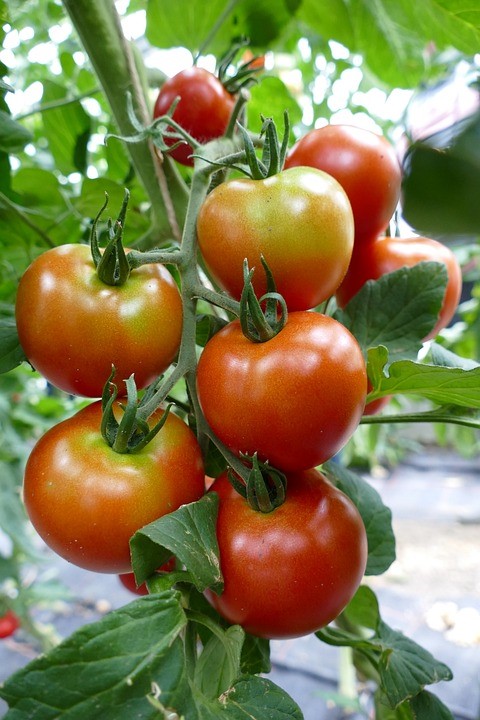
I will not plant all of my tomato seedlings. I will pick the four best of each variety and discard or give away the rest so I don’t have five bushels to make into sauce during the heat of August. Besides, who eats that much spaghetti, anyway? (Okay, maybe I’ll put just a few plants in a quiet corner of the cold frame to see if they do better than the others or just in case we have a freak hail storm that kills all the ones I plant in the garden beds).

I will wear my garden hat. I have a great hat and fixed it up with a handy tie to hold it on my head last year. Too often, though, I just step into the garden to look around for a minute and end up with dirty hands and a sunburned nose. Besides, hats give a gardener character and I could always use a little more character.

I will check my slug traps every night. By July, when I’m sick of slimy fingers and it feels like I’m losing the battle, I will try to keep the attitude that they are personally insulting me by eating my hostas and lettuce. That way I’ll keep squashing until I get rid of every last one.

To reduce my use of plastic, I’m using glass jars for refrigerator storage of leftovers. And I take organic cotton bags in which to put my greens, cabbage, brussels sprouts, and other vegetables rather than using grocery plastic bags. Occasionally a check-out person looks at me a little doubtfully, but when I explain what they are and why I’m using them, I usually get a happy thumbs-up.

In my kitchen, I’m resolving to clean the kitchen every night before bed. A clean kitchen makes it enticing to cook. I just put myself in zen mode, run a sink full of soapy warm water and ease myself into bedtime with warm hands and a good feeling.

I’m simplifying my cooking by planning menus ahead of time instead of doing it while pushing a shopping cart. I buy less, and if I keep the meals as simple as possible, any of my family can fix the meal. I’m trying for dishes with five ingredients or less. I can then pull out the stops on weekends for recreational cooking.

I will cull my recipe clipping file. I have a pretty good stash, so many that it’s not really feasible to try them all. So, when it’s quiet in the evening, I’ll go through them and select a few to try, maybe one or two a week. The ones that are good, I’ll add to my cookbook immediately. The rest I’ll toss. I won’t keep up my grandmother’s tradition of noting “not good” on it and sticking it back in the file.

And finally, I’m going to try not cave in to buying new stuff for the kitchen. I absolutely love gadgets but enough is enough. Although I’m thinking that maybe I need one of the cool air fryers……

Perhaps most importantly, I resolve to get outside into the garden at least half an hour every day. Even if just for a walk-through. It’s a matter of changing my mindset to make the garden an integral part of my day instead of simply a peripheral thing full of chores that need doing.

Sheet Pan Dinner

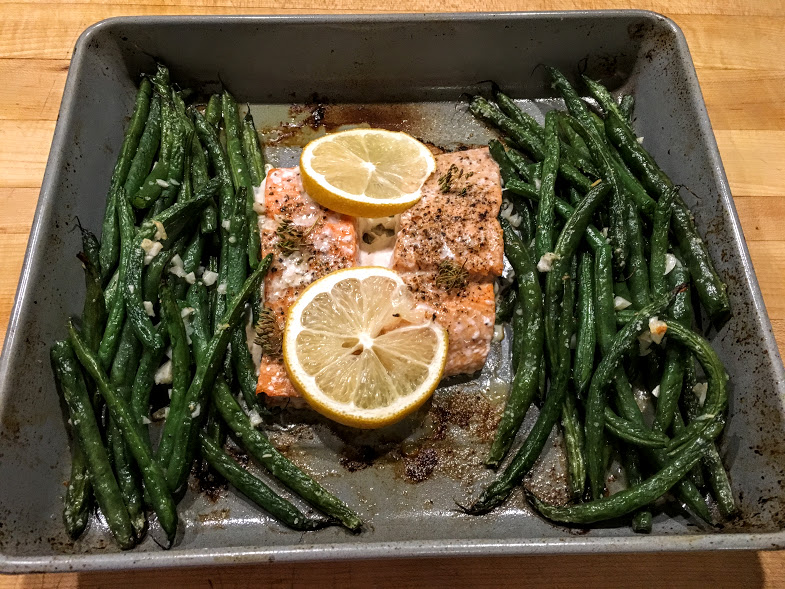
Salmon and green beans

For a simple, delicious dinner for two, try this basic sheet pan dinner. One pan, easy clean-up and an endless choice of flavors:ssa

Choose a protein, two or three vegetables and herbs of your choice.

Proteins:

  • Any type of mild fish filet – tilapia, cod, sole, haddock
  • Chicken breast
  • Pork chops
  • Ham
  • Kielbasa
  • Hot or sweet italian sausage
  • Andouille sausage
  • Turkey breast or leg
  • Tofu (marinated will have the best flavor – marinate your own or purchase it marinated)
  • Seitan
  • Chickpeas

Vegetables:

  • Zucchini
  • Summer squash
  • Winter squash such as butternut or delicata
  • Pumpkin
  • Tomatoes
  • Eggplant
  • Peppers, sweet and chile
  • Root vegetables: carrots, potatoes, parsnip, turnip, rutabaga, beet
  • Onion
  • Garlic
  • Mushrooms of all kinds
  • Edamame

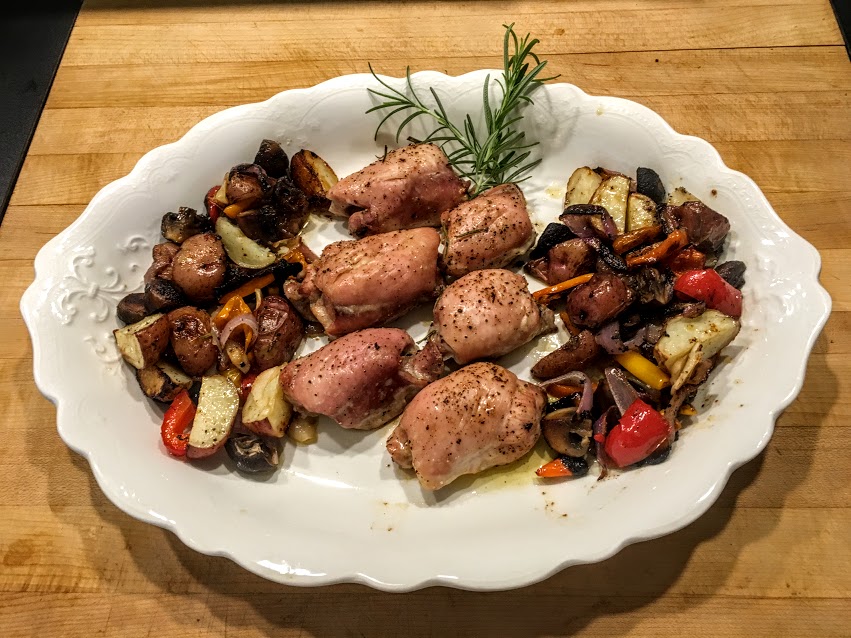
Sheet pan chicken thighs with vegetables

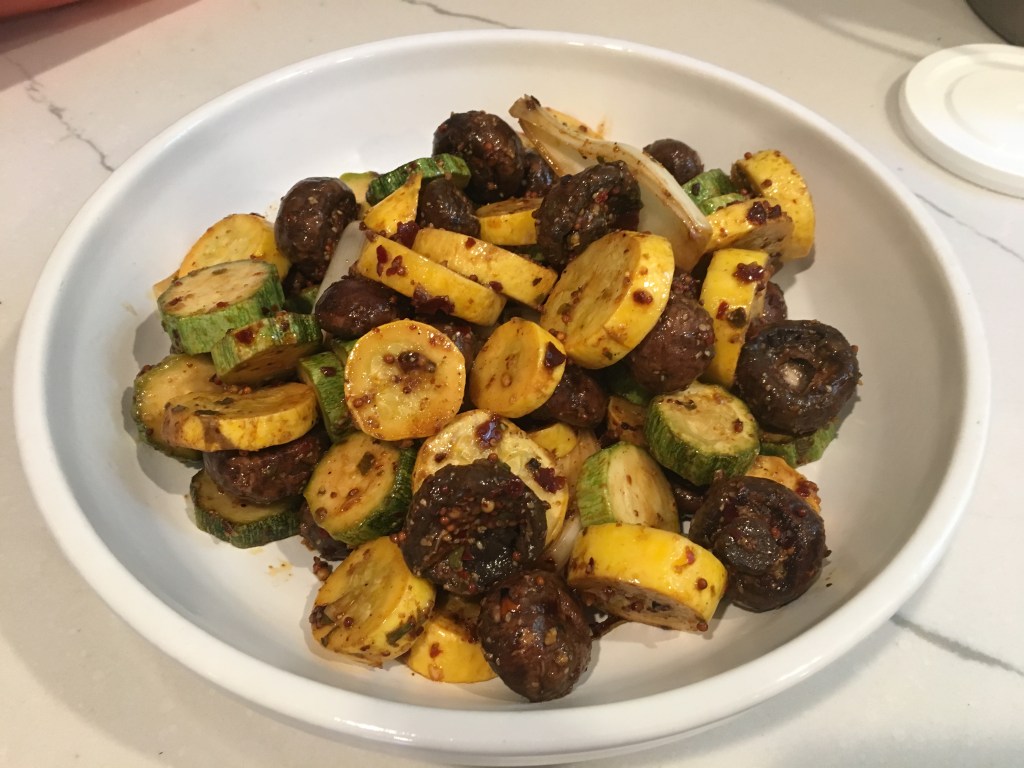
Preheat oven to 450°. Place vegetables in a roasting pan and drizzle with olive oil. Drizzle the protein with a little olive oil and then salt and pepper to taste. Nestle in with vegetables. Sprinkle chopped herbs on top and roast 35-40 minutes. If cooking meat, test with a thermometer for doneness.

Collards

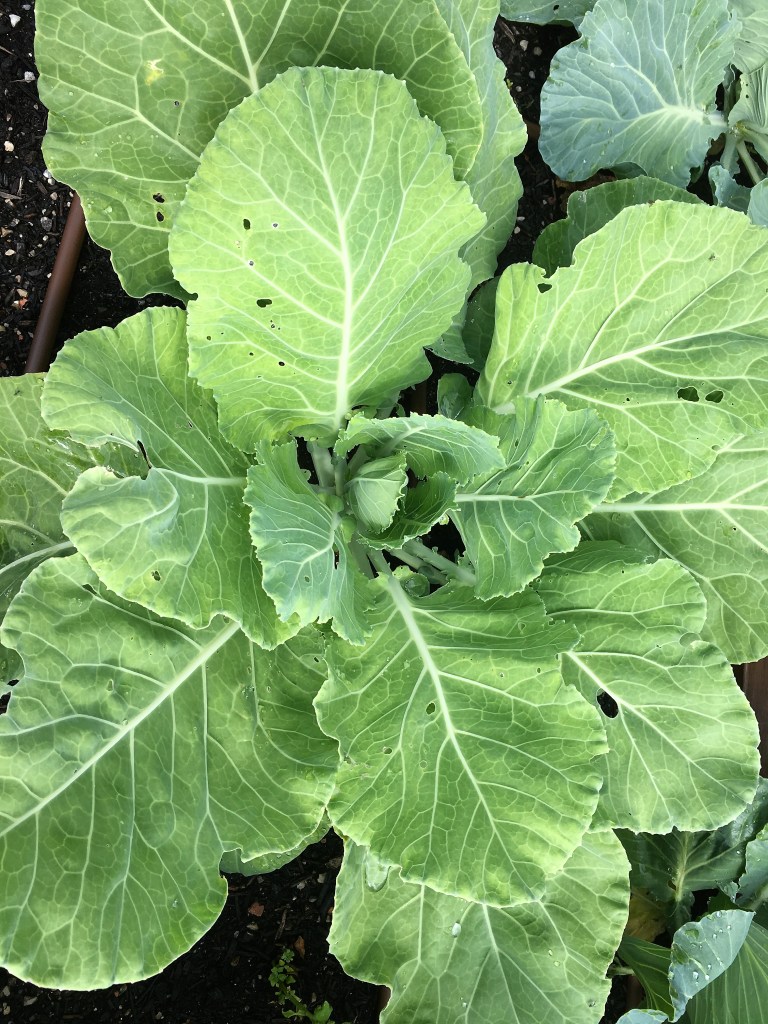
Now that I live in the south again, I’m learning to love the lowly collard. You absolutely can’t go wrong with the nutrition in this vegetable, and in the garden, they grow and grow and grow, sometimes even through the winter.

These leafy greens taste somewhat like a cross between cabbage and kale to which they are related. They are chock-full of vitamins A and C, and high in vitamin K, calcium, iron, fiber, lutein and zeaxanthin. How’s that for a mouthful?

Best of all they are versatile enough to be sauteed, steamed, boiled and even served fresh in a salad. I grew up with collards boiled for hours with a piece of ham hock. That taste certainly brings back my childhood, but I know that it’s not necessary to cook them into a gray-green mass or with meat to make them taste good.

When purchasing, choose leaves that aren’t huge and tough and use the inner, smaller leaves. One of my favorite ways to serve them is sauteed with coconut milk, tomatoes and sweet potatoes. Feel free to experiment and take advantage of the abundance of collards in the markets right now.

Here is an easy recipe adapted from The No Meat Athlete Cookbook.

Caribbean Coconut Collards and Sweet Potatoes

1 T. olive or coconut oil
1 yellow onion, diced
3 garlic cloves, chopped
½ t. crushed red pepper
1 t. sugar
2 bunches of collards, stemmed and chopped into 1-inch squares or rolled into a “cigar” and sliced into ribbons
1 large sweet potato, peeled and diced
One 15-ounce can red kidney beans or chickpeas, drained and rinsed
One 14.5-ounce can diced tomatoes with juice
1 ½ c. water
½ c. coconut milk
Salt and black pepper

DIRECTIONS:
Melt the oil in a large, deep skillet over medium heat. Add the onion, garlic, and crushed red pepper. Cook over medium heat for 3 minutes and then stir in the collards and sweet potato. Add the beans, tomatoes with their juice, water, and coconut milk. Bring just to a boil, lower the heat to medium-low, and cook, covered, until the collards and sweet potato are tender, about 30 minutes. Season with salt and pepper and serve.

Noodle salads

When it comes to comfort foods, I don’t turn to mashed potatoes. Okay, maybe sometimes. But usually, I turn to noodles. In any shape or form. I always make extra spaghetti noodles to have some in the fridge to heat with butter and parmesan. Delight!

Some of my favorite noodle dishes are Asian noodle salads. Whether dressed with a peanut sauce or a sesame ginger dressing, they are infinitely adaptable, healthy and delicious. Start with noodles of choice – I happen to like whole wheat spaghetti, but any will do. Cook until as tender as you like, drain and cool. Then dress with your favorite dressing and add whatever vegetables you like.

These noodles pair well with thinly sliced napa cabbage, shredded carrots, cooked edamame, scallions, shredded beets, steamed and chopped broccoli or cauliflower, and shredded romaine.

Sesame Ginger Dressing

½ c. oil
¼ c. rice vinegar
3 T. low sodium soy sauce
1 T. brown sugar
2 t. minced garlic
1 t. grated fresh ginger or ½ t. ground ginger
1 t. sesame oil

Whisk and toss with cooked noodles. Serve on a bed of greens and vegetables.

Peanut Dressing

⅓ c. smooth peanut butter
1 garlic clove
2 T. fresh lime juice
2 T. soy sauce
1 t. fresh grated ginger
1 t. sugar
pinch cayenne
⅓ c. water

Winter Squash and Sweet Potatoes

There is something magical about the marriage of sweet potatoes and butternut squash. They have similar textures and colors, but the flavors are unique to each. Combine them with white potatoes and you have a dish of exquisite sweet earthy flavors perfect for the winter season.

Grocery stores and farmers’ markets have all manner of winter squash, potatoes and sweet potatoes. Butternut squash is commonly available, but this dish is a great chance to try some other squashes like kabocha, Hubbard, Kuri, buttercup or even sugar pumpkins. Each squash has a somewhat unique flavor although they may be hard to tell apart unless you have them side by side.

This dish can be seasoned according to your culinary bent – with fresh or dried herbs, cheese, bacon or pancetta. However you season, be sure to use plenty of fresh ground black pepper and a hint of red pepper for a delectable main course or side dish.

Simply put, you will first make a seasoned creamy sauce, then cook the potato, sweet potato and squash slices until tender and finally layer them, pour over the sauce, top with cheese and bake.

Butternut, sweet potato, white potato bake

(serves 8 as a side dish, 4 as a main dish)

Roux (sauce)
2 T. butter
1 oz. pancetta or bacon (optional)
¼ c. finely minced onions or shallots
2 garlic cloves, finely minced
¼ c. flour
1 ½ c. milk (skim or 2%)
Approximately ¾ c. grated Parmigiano cheese
½ t.salt
½ t. fresh ground black pepper
¼ t. ground red pepper

Vegetables
1 large baking potato
1 medium sweet potato
Half of one small squash (save the other half for another dish)
½ c. grated gruyere, asiago or crumbled goat cheese

Preheat oven to 375 degrees.
Peel and cube the potatoes and squash into ½” cubes. Add to boiling water and boil gently until tender, about 4-5 minutes (may take longer, depending on the density of the squash). You want them easily pierced with a fork, but not falling apart. Drain well.

In a heavy-bottomed saucepan, melt butter and add the pancetta or bacon if using, cooking until crisp. Add onion and garlic and cook until tender, stirring constantly. Reduce heat to low, add flour and cook for about two minutes, stirring constantly with a whisk. Gradually add milk, stirring constantly. Continue stirring over low heat until the sauce thickens. Add the parmesan, salt and pepper and remove from the heat.

Arrange vegetables in a shallow baking dish and pour sauce over the vegetables. Top with cheese and any desired herbs. Bake uncovered for 40 minutes. If desired, you can then put the dish under the broiler for 3 or 4 minutes until it is golden. Let stand ten minutes before serving.

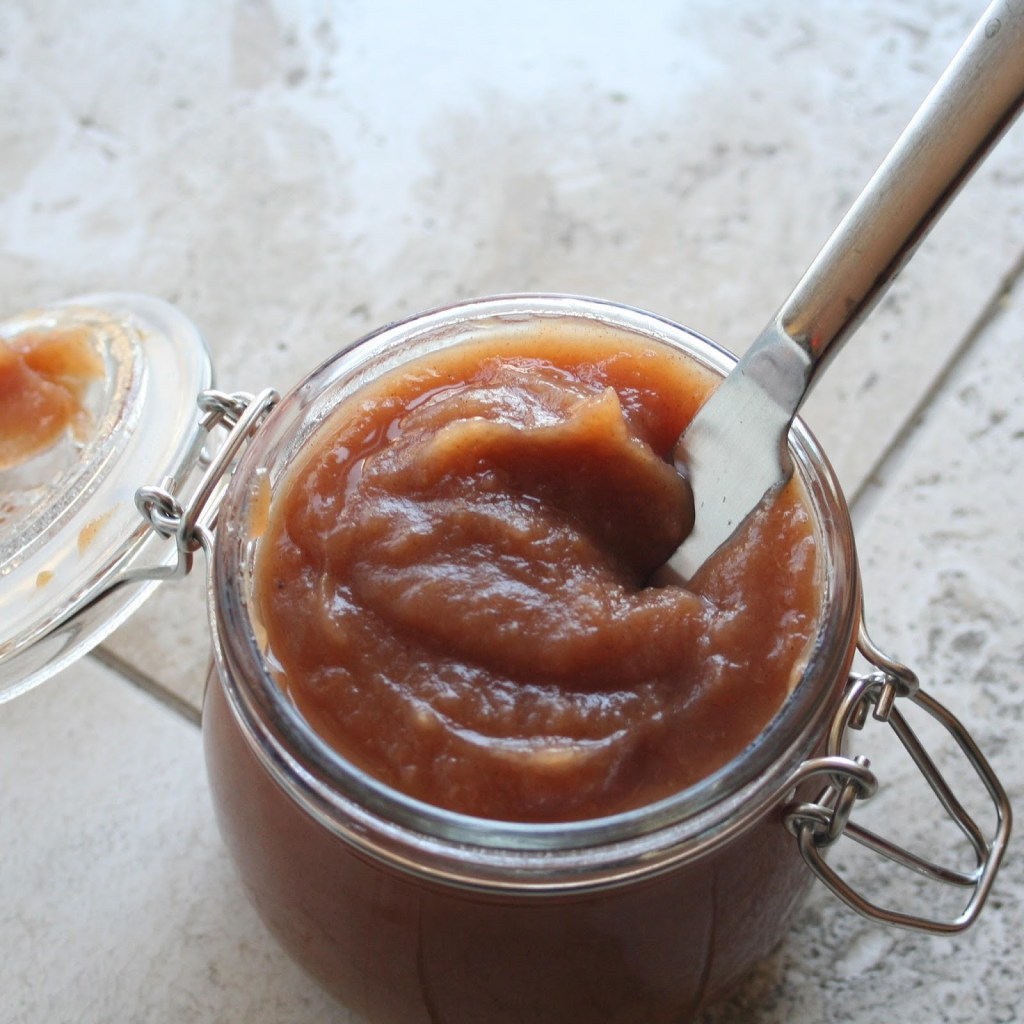
This dish goes well as a side with any smoky meat such as barbecued ribs or smoked sausage. A perfect accompaniment is homemade applesauce, dusted with cinnamon.


Let’s all have messy gardens

Leave your seedheads

Rudbeckia seedheads

If you take a look at my garden at this time of year, it looks a bit messy with seedheads and dead foliage left standing.

During the growing season, we happily deadhead spent flowers and cut back dead foliage. But at this time of year, that foliage provides a habitat for pollinators to overwinter. And those seedheads provide food for birds. Goldfinches, chickadees and other songbirds survive on the seeds through the winter.

Sometimes it takes a shift in our thinking to learn to appreciate something we’ve always thought was unattractive. If you look at how nature does it on a prairie, meadow or in the woods, nothing is cut back or removed. Everything is left standing through the winter, and then the new plants grow through the old leaves in spring.

Maybe it is time for a mind reset so we can learn to appreciate the standing foliage and seeds. They are, after all, snuggly homes for all those pollinators we try so hard to encourage throughout the growing season.

This doesn’t mean you can’t have a lightly groomed landscape instead of a typical meadow, so you can certainly cut back some of the foliage as it dies, but try to leave much of it to catch snow and rain through the winter. And use the “chop and drop” method of cleanup – as you cut it back, cut it into smaller pieces and allow it to drop in the bed. It will give your beds a natural mulch for the spring plants to emerge through.

And apples are in! Cool autumn evenings call for the scent of apples and cinnamon wafting through the house.

Here’s an easy fruit crisp

Simply fill a deep baking dish with two to four cups of sliced and peeled apples. Dust with cinnamon and top with a crumbly crust. Bake for about half an hour at 350 degrees

Crunchy topping

1 c. regular oatmeal
½ c. brown sugar
½ c. flour
1 t. cinnamon
¼ c. defrosted apple juice concentrate

Mix the first four ingredients; drizzle apple juice into the oatmeal mixture. Stir until the mixture forms small clumps. Spread mixture on top of the fruit and bake for 30 minutes at 350.

Alternate topping

⅓ c. chopped toasted walnuts
½ c. flour
½ c. rolled oats
½ c. brown sugar
1 T. granulated sugar
¼ t. cinnamon
¼ t. nutmeg
¼ c. softened butter

Mix dry ingredients well and then cut in the butter until it forms small clumps. Continue as above.

Tomato Basil Soup

Lots of tomatoes, lots of tomatoes! The season is definitely winding down, but the tomatoes are still fabulous and plentiful. When I find my kitchen is full of them at this time of year, I just quarter and throw them in a roasting pan with onion and garlic and a splash of olive oil. 

Opal basil

And, then, I can make all sorts of tomatoey things. But my favorite right now is tomato basil soup. When the tomatoes come out of the oven, I throw them in the blender with some stock and basil. I then stir in some plain yogurt or half and half, adjust the seasonings and have a delicious early fall soup. 

Tomato Basil soup with pumpernickel croutons

Tomato basil soup

  • 2 cups quartered fresh tomatoes (you can also use canned tomatoes)
  • 2 T. olive oil
  • ½ onion, coarsely chopped
  • 1 clove garlic, coarsely chopped
  • 2 c. broth (chicken or vegetable)
  • ½ cup minced basil
  • ½ c. half-and-half, coconut milk, plain yogurt or pureed cannellini beans (optional)
  • salt and pepper to taste

Preheat the oven to 375. Film a roasting pan with some of the olive oil. Toss in the vegetables, drizzle with the rest of the oil, and roast for about an hour, stirring occasionally. The longer they roast, the more caramelized they become (which is good!). 

Remove from the oven and cool slightly. Add basil and puree with a hand or countertop blender. You can puree it until smooth or leave it somewhat chunky. Stir in half-and-half or another cream if you wish and season to taste with salt, pepper and even cayenne if you want a little spunk. Pour into bowls and garnish with garlic croutons, scallions, feta or goat cheese, or parmesan.