
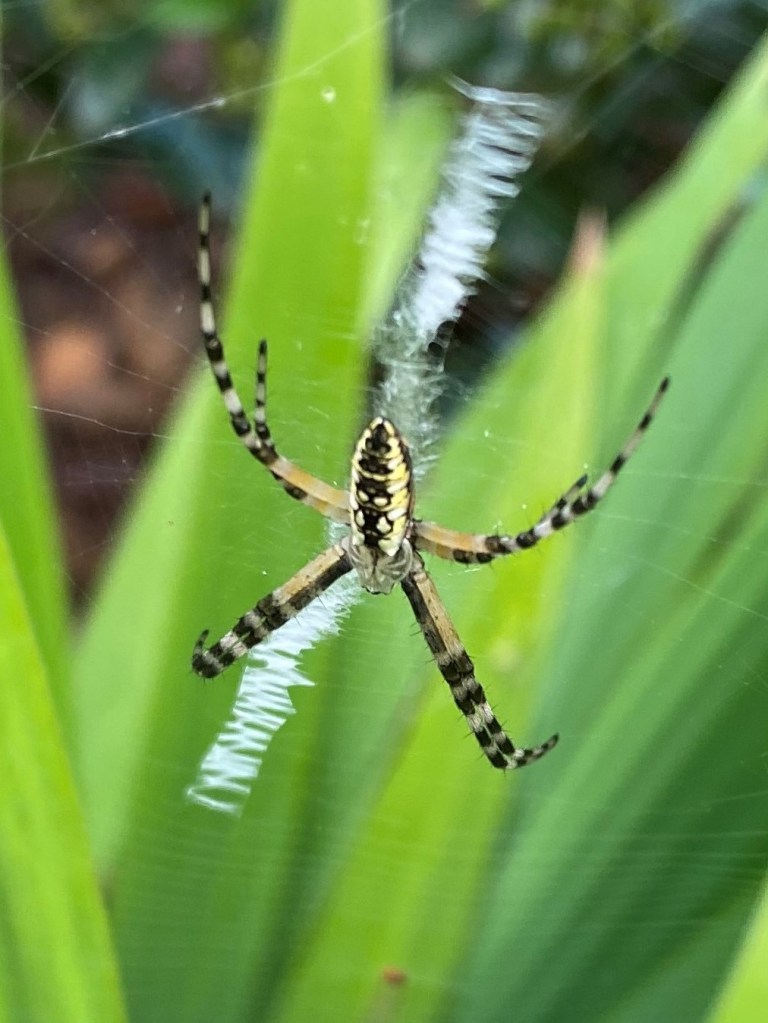
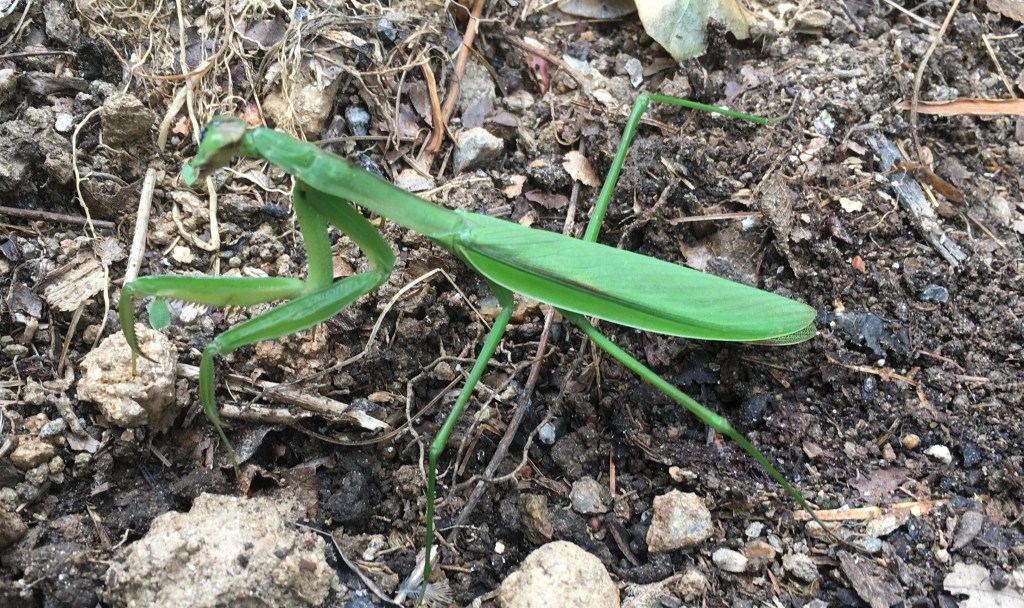
I have a friend with a pristine garden. It’s absolutely immaculate. Not a spot on a leaf nor a leaf on the ground. He is quite proud of his work. Yet I am so conscious when I walk into his garden that there is nothing alive but the plants. True, there are no pests. But there are also no ladybugs, no birds, snakes or toads. These usually welcome creatures are living somewhere else. Somewhere with plenty for them to eat.

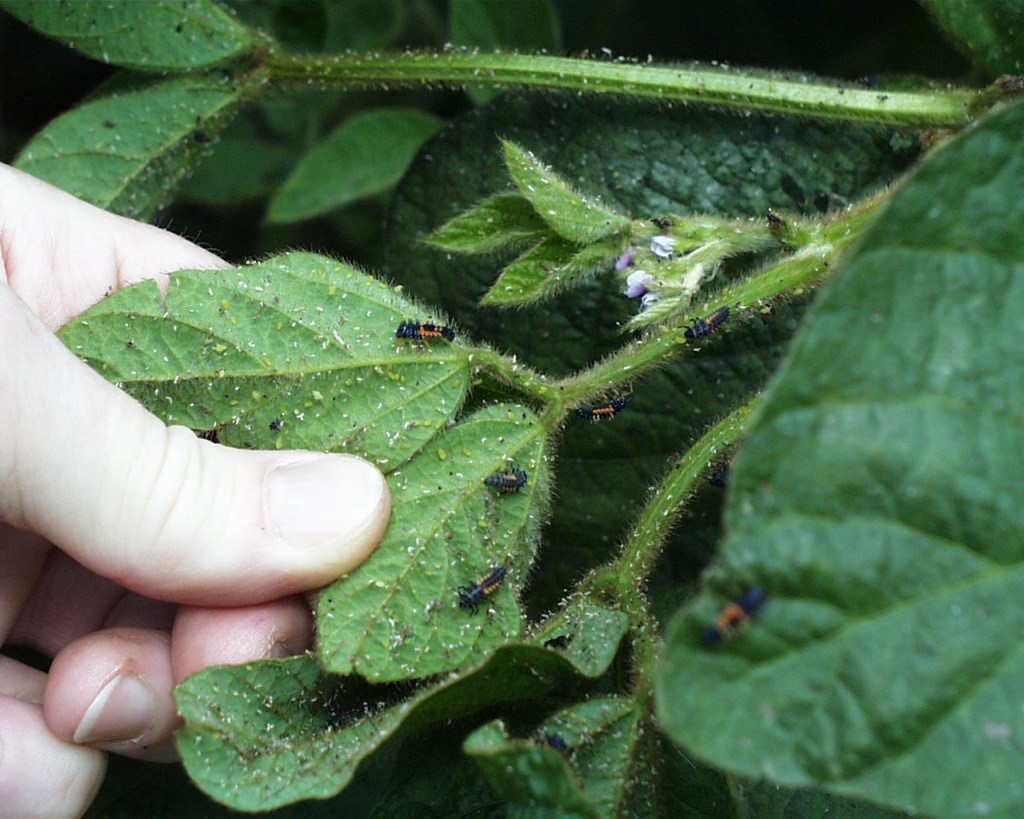
Ladybug larva
With the gardening season upon us, I can’t help but reflect on the best of last year’s garden. One of my most gratifying sights was in late September when the tomatoes were in full blush. I noticed that some of the leaves looked a little odd, sort of minimal. At this point in the season, I wasn’t concerned, although I did start looking casually for tomato hornworms. I found one and then another and then another. Every tomato plant had at least one or two of these giant green caterpillars, and they had feasted on some of the top leaves.

Tomato hornworm with braconid wasp cocoons
When I questioned him about how he got his garden so clean, he hemmed and hawed a bit, and then had to admit the truth. He has an unbelievable routine of chemical pest control and fertilization. If he didn’t spray constantly, pests and diseases would quickly make short work of his garden and he knows it.
The beauty of this picture was that each caterpillar was bedecked with white cocoons of braconid wasps. These tiny wasps lay their eggs inside the caterpillars, and as the eggs hatch and grow, the larvae weaken and eventually kill the caterpillar. These wasps in my garden prevented the hornworms from producing that nightmare, the skeleton tomato plant with no leaves. My husband thought it cruel that I left the caterpillars with their guests in the garden, but I took great joy in wishing them well.
The best part about seeing these caterpillars is the reinforcement that my garden is naturally balanced with predators and prey. This is what all organic gardeners strive for, and it’s such an ephemeral thing that you never quite know how in-balance your garden is. But a garden out of balance is one in which a pest can come in and wipe out a crop or a shrub before the gardener is even aware of what is going on.
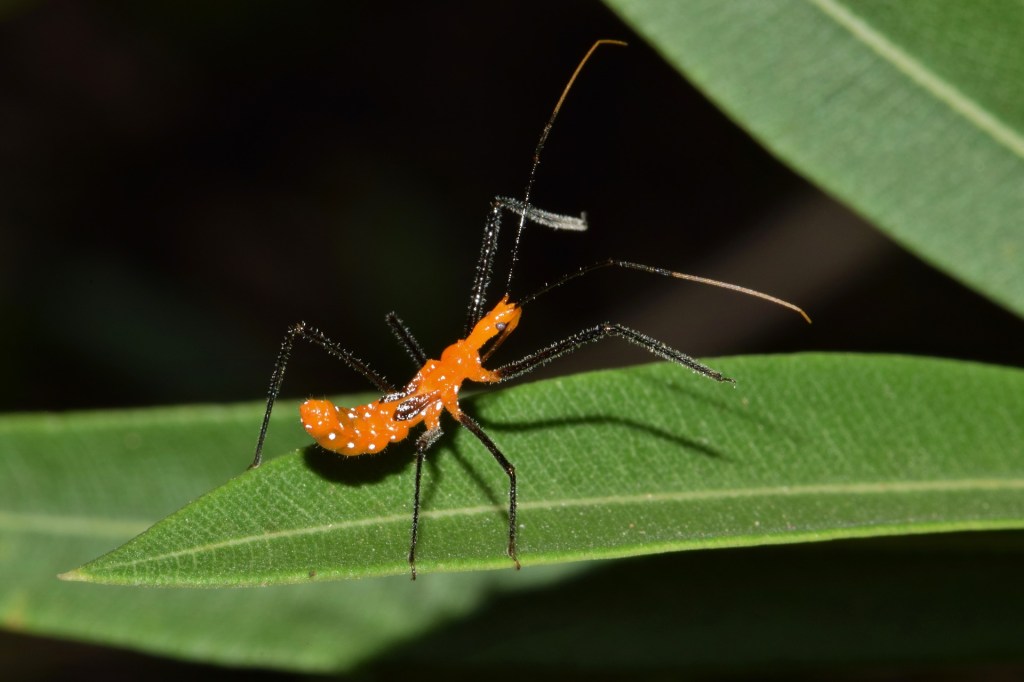
A critical aspect of the entire idea of pest management is that we must tolerate a few pests. As long as they don’t reach critical proportions and do unacceptable damage, they are actually helping by providing food for the beneficial insects.
With all we hear these days about the value of preventive health care, it seems logical to take the same approach in the garden. It makes so much more sense to prevent problems from the outset instead of having to resort to methods that are more drastic than necessary.
It’s true that the best thing you can put into a garden is your shadow. Spending time in the garden with a practiced eye will alert you to the first tiny holes in the broccoli leaves from flea beetles or the tips of your roses adorned with tiny pink aphids. Yet how satisfying to see a ladybug larva with its huge jaws around one of those aphids or to put up row covers knowing the beetles can’t get in.
Roast Your Vegetables
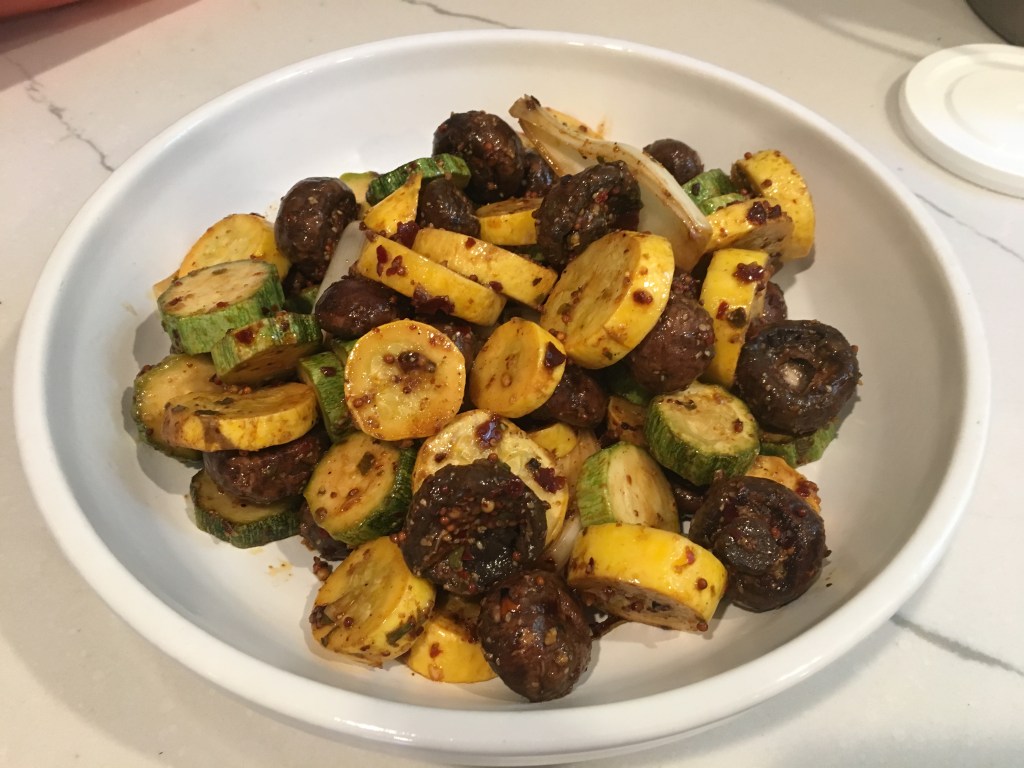
Roasted summer squash and eggplant
Summer is here and the vegetables are coming in like crazy. Instead of making complicated dishes that heat up the kitchen, think about simply roasting vegetables and tossing with pasta or rice. Something happens when you roast or grill vegetables. Even though we don’t think of vegetables as being sweet, they do have sugars and when roasted, these sugars caramelize and take them from delicious to divine. It’s easy to do, fairly quick, and can provide a myriad of tastes to eat alone or add to other dishes.
Slice small zucchini, an eggplant, a pepper or two and maybe a couple of Yukon gold potatoes into bite-sized pieces. Toss with olive oil, minced garlic and your choice of other seasonings. Preheat oven to 375. Film a broiler or jelly roll pan with olive oil. Spread out on the pan and roast until tender when pierced with a fork, usually about half an hour, depending on the type of vegetable. Toss with hot pasta or rice and sprinkle with parmesan. Viola! Serve with a crisp salad for a perfect summer side or main dish.
 Kate's Garden Kitchen
You must be logged in to post a comment.