It’s quite a gift to have plants that deposit themselves in your garden effortlessly. About this time of year, when I’m exhausted from all the garden work, I have a love affair with annuals and perennials that reseed themselves. It’s such a source of delight to see fresh new dill plants in late summer because I let some go to seed. The same goes for cilantro and arugula. It’s a sustainable and cost-effective way to maintain my garden.
Self-seeding plants naturally drop seeds which germinate and grow into new plants without intervention. If you end up with plants in the wrong spot, simply remove or move them. The key is to avoid deadheading so they can produce seeds, and to be ferocious about weeding in spring in case you don’t recognize seedlings.
Annuals complete their life cycle in one year, dying after the seeds are spread. Perennials, on the other hand, may spread from the crown or may also strew seed about the garden. The plant dies back to the ground in winter but comes back the following spring.
Poppy
Incorporating self-seeding perennials and annuals into your garden can bring a sense of spontaneity and low-maintenance beauty. The magic of self-seeding plants makes a garden more vibrant with each passing year.
Zinnia
A few self-seeding perennials that thrive in our area:
black-eyed Susan, columbine, coneflower, coreopsis, fall anemone, lupine, primrose, yarrow
A place to relax in the garden. Isn’t that an oxymoron? Can any gardener actually relax? While it may be hard to stop picking and tucking and weeding and fussing, relaxing in the garden you’ve created is the best part of the day. After hours of hard work, what better reward can there be than to flop into an overstuffed chair on the porch with a novel or laze in a soft cotton hammock, swaying gently in the breeze and counting clouds.
The dictionary defines relax as “to slacken” and “to ease.” Although our culture tends to assign negative connotations, as if to do either shows lack of character or slovenliness, I’ll go against the grain and put relaxing in my garden at the forefront of my chore list. For me, the best place “to ease” is the porch.
I covet those grand farmhouses with a porch that wraps around the entire house. But that’s not really necessary unless you have thirteen kids, each of whom needs a separate place to play checkers or brush the dog or giggle with a boyfriend.
In reality, any porch will do. The porch of my dreams has wide scuffed boards and a traditional robin’s egg blue ceiling. It is appointed with a whitewashed willow settee, a glider or porch swing with a soft floral cushion and mismatched overstuffed, well-worn chairs – lots of places to sit whether you’re dirty or not.
It can be just a place for a moment’s respite from weeding and watering, hoeing and deadheading, or a spot to leave a pile of garden catalogs to thumb through on a water break. But it can also be a gracious room for elegant entertaining.
My dream porch has a banister dripping with old-fashioned scented roses and a trellis off to the side clad in cerulean blue morning glories, making a secret place to sit and read. You can hear what’s going on, but no one can see you – a truly magical spot where the kids can’t see you from the yard.
On a hot afternoon, the porch contains all manner of kids lounging, reading, and playing checkers while others squeal as they run through the sprinkler. There’s a frosted pitcher of lemonade on the rickety table, and the scents of mint, sunflowers and freshly mown grass waft through the air.
Evening falls and you begin to hear Vivaldi playing softly in the background. The porch is full to groaning with family and friends. Someone’s cranking the ice cream freezer and out comes “porch chicken” and potato salad, to be eaten in your lap, followed by bowls of homemade strawberry ice cream and slices of cold watermelon.
Night descends and the citronella oil lanterns are lighted, casting a warm glow on sunburned faces. The fragrance of nicotiana, petunias and evening stocks drifts all around, and the cicadas begin to call as the stars appear. Someone softly strums a guitar and the night is filled with quiet conversation peppered with laughter.
This is what summer is made of.
Ice Cream Base
8 egg yolks
3 c. milk
1 c. half and half
1 c. sugar
4 t. vanilla
Beat yolks and sugar until thick. Scald milk and pour into yolk mixture while stirring. Pour back into pan and heat gently until it coats a spoon. Cool. Stir in vanilla and other additions. Freeze in ice cream freezer. Additions (use your imagination – the sky’s the limit):
I love the concept of bartering. It’s such a simple way of adjusting the pace of living, giving something you have in exchange for something you need without money changing hands. It just feels like a healthy way to develop a sense of community as neighbors get to know neighbors. And it takes our focus away, even if only for a little while, from earning power and the bottom line.
I have a wonderful memory of my mother striking up a conversation in the produce section of a grocery store. While squeezing melons, she and another woman started out by talking about their gardens and they ended up sharing fruit. My mother provided a bushel of peaches and she received a bushel of apples in return. Both women’s larders are now full of canned peaches and apple butter. Even better, the two are now friends.
I’ve challenged myself to see just how many things I can barter for. I started by making a list of all I have to offer, material things as well as things I can do. I even listed those things I tend not to think of as marketable such as lawn mowing, sewing and bread baking. After making this list, I whittled it down to things that I like to do. Sure, I can clean bathtubs and cut grass, but who wants to? I know myself well enough to know that if I don’t enjoy doing something, I won’t feel good about the barter and my exchange system will fall apart.
To start bartering, it’s taken me a lot of courage to step forward and start conversations with a stranger. It also takes nerve to open up and talk about who you are and what you do. But the outcomes can be so rewarding, not only in a bartering milieu but also with the people I’ve gotten to know and the friendships that have developed along the way.
A great way to get started is by frequenting the places where gardeners hang out. Whether at the farmer’s market or the local garden center, if you begin talking to the people there, you’ll find there is a natural exchange of information that can be the start of a trading network.
Share your garden
Another natural starting point is with your neighbors working in their yards. People who garden love to talk about their gardens and most also love to share. I would bet that very few gardens that I’ve visited are comprised solely of plants and seeds that were purchased. Sure, I bought some of the plants in my garden, but the majority are trades with other gardeners.
Perhaps you know someone who is no longer physically able to tend a garden, but who does superb lawn mower repair. Or how about exchanging herbs and garden produce with someone who has no garden, but can watch your children one afternoon a week? I like to grow seedlings, so I always add a few more for a friend who repairs my trellises.
It also helps to remember that not all trades have to be for tangible things. Offer to make someone dinner if they will sharpen your pruners and grass shears. Or perhaps merely an offer of a visit gives both you and a friend the pleasure of relaxing conversation. Sometimes the joy is simply the benefit of giving—and not receiving anything tangible in return.
Stay with it
The key to making the system work is to be clear about what you can and cannot do. Don’t be discouraged if you initially receive some negative responses. Keep searching and talking and eventually, you will be on your way to a pleasant exchange. It’s a bit idealistic to think that every service and good you need can be bartered for, but even a few exchanges can make life a little simpler and increase the social network that is so important to mental health.
Oh, how those glimpses into spring taunt us. Days when the sun is shining and the temperature goes above 45 degrees. They are far between right now, but when they do come, my fingers literally get itchy to be plunged into the dirt. Cold though it is, it still feels good.
I’m one of the worst offenders when it comes to jumping the gun on the season, but there are certainly things we can do when we get those softened breezes. Here are a few tips to get you started when you can be in the garden for a couple of hours.
Leave mulch in place
Shredded leaf mulch adds health organics
If you’ve mulched over the tops of your perennials, don’t be too fast to remove it. Wait until the tulips begin to bloom. Remove whatever you can by hand and then use a strong spray of water to remove the rest from the crown. Be sure to keep three inches of organic mulch on the ground around the plant for the growing season.
Prune winter dieback
Yes, you can warm up your pruners! Prune winter dieback while the plants are still semi-dormant to take full use of the sap and nutrient flow in spring. Dead areas of stems will be obvious by their color. Prune just below the dead area, aiming to cut just above an outward facing bud. Also, prune for a pleasing shape.
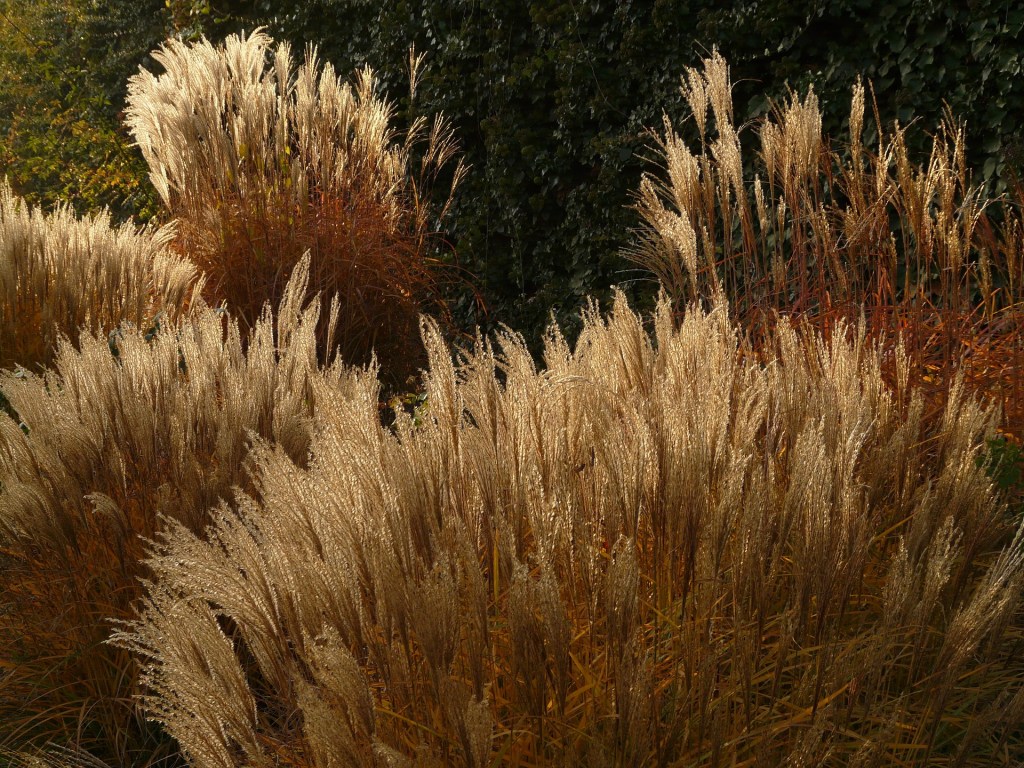
Cut back ornamental grasses
As soon as the weather permits being outside comfortably, cut back all ornamental grass foliage left on for the winter. Be sure to do this before new growth starts. This will make it easier than trying to sort through the new foliage and will keep from damaging it.
Recycle for the garden
paper pots and cardboard rolls
Start recycling for the garden. Save paper towel, bathroom tissue or gift paper rolls and cut into 3-inch lengths to use for seed starting or as collars around early transplants to prevent cutworm damage. Make a mini-greenhouse by bending coat hangers into arches to fit in a seedling flat. Cover with plastic.
Leave garden debris in place
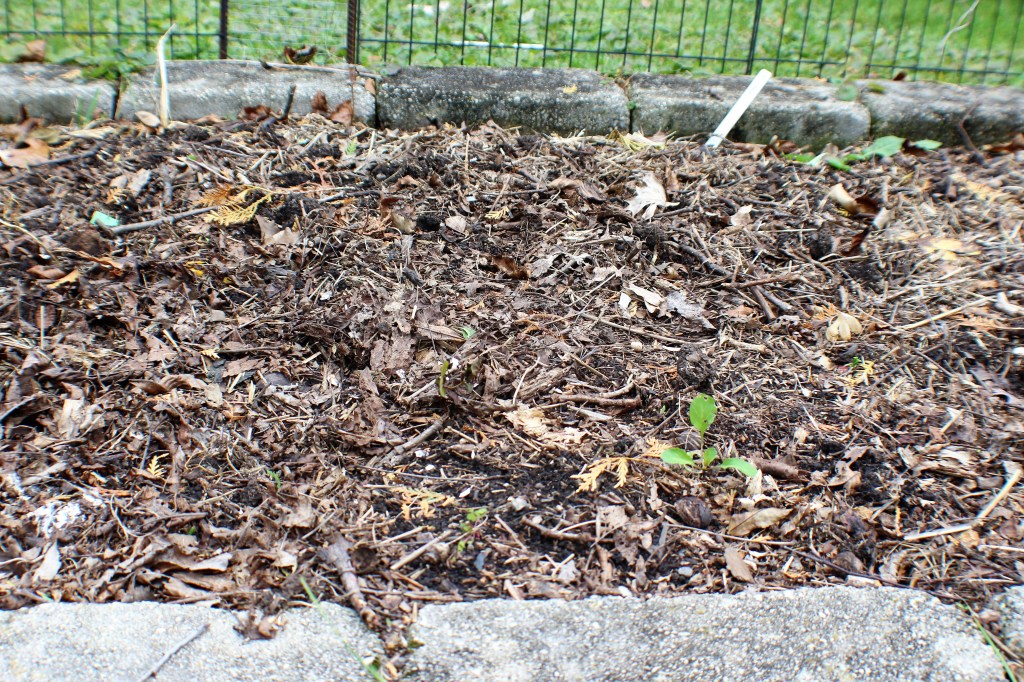
No need to remove dead foliage
Even though spring clean-up feels really good, don’t be too eager to rake the area under shrubs and groundcovers clean of leaves and organic debris. Nature doesn’t do this, so mimic the woods and leave the natural mulch in place. This not only helps the health of the plants by providing nutrients as the materials decompose, but it also gives birds an excellent hunting ground. And the plants will come up through the mulch just fine.
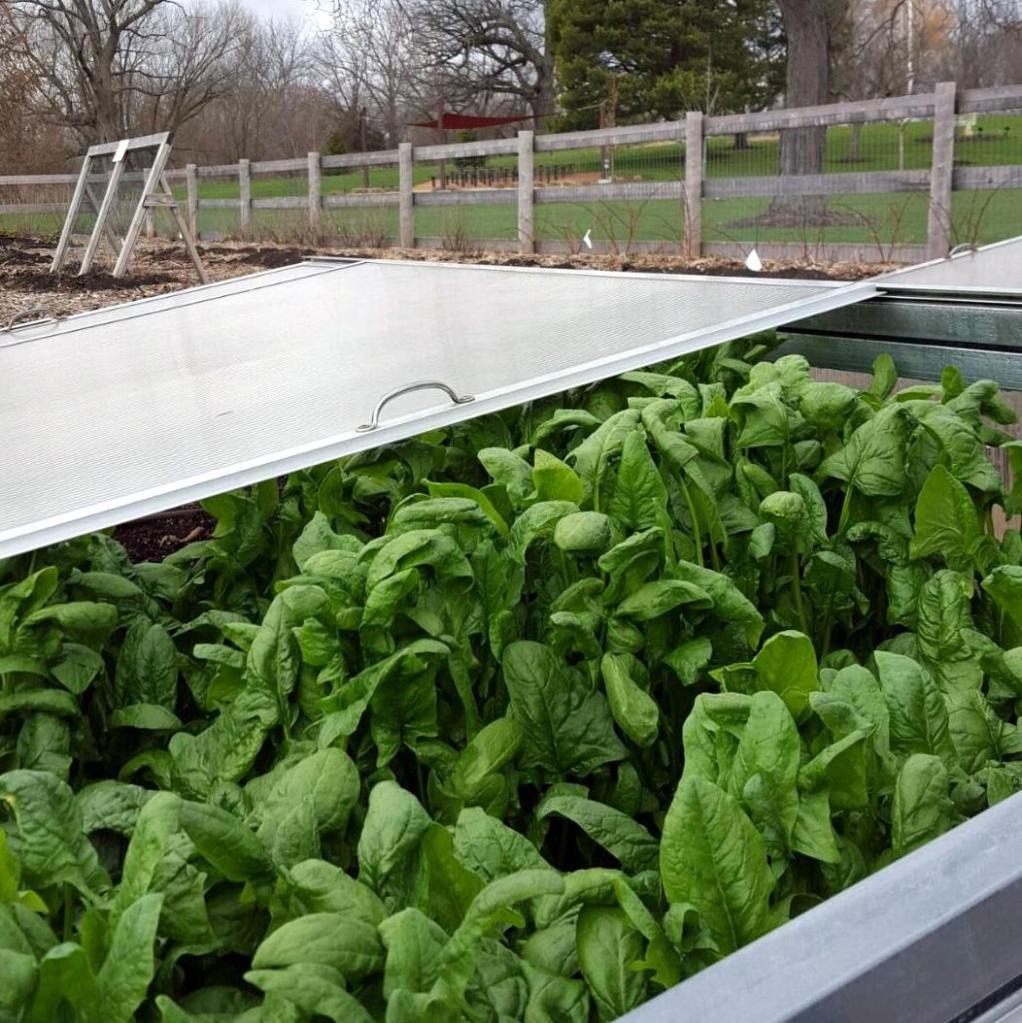
Set up your cold frame
There’s no need to have a fancy set-up. Simply placing bricks, cement blocks or even hay bales and putting a discarded window across them will give you a superb planting spot for early vegetables. There is absolutely nothing quite as sweet as fresh spinach, especially when coupled with the earliest of perennial onions. Make sure to give it a south or southeast exposure with some wind deflection.
Spinach pasta
A deliciously easy recipe for early spring spinach (or any green)
1 tablespoons extra-virgin olive oil
½ cup finely chopped onion
3 cloves garlic, minced
½ pound whole grain spaghetti
Salt and pepper
1 tablespoon butter
½ pound fresh spinach, coarsely chopped
Red-pepper flakes, to taste (optional)
½ T. fresh lemon juice
½ c. grated Parmesan, Asiago or smoked gouda cheese
Cook pasta in salted water to al dente. Drain, reserving one cup of the pasta water.
Saute onion and garlic in oil until tender but not caramelized. Add pasta, reserved cooking water, butter to the onion and garlic. Cook over low heat, stirring constantly until the sauce thickens, about 5 minutes. Add spinach and red pepper, stirring until the spinach wilts. Add rest of ingredients, stirring until the cheese begins to melt. Season to taste. Serve with more cheese if desired and garlic toast. Enjoy!
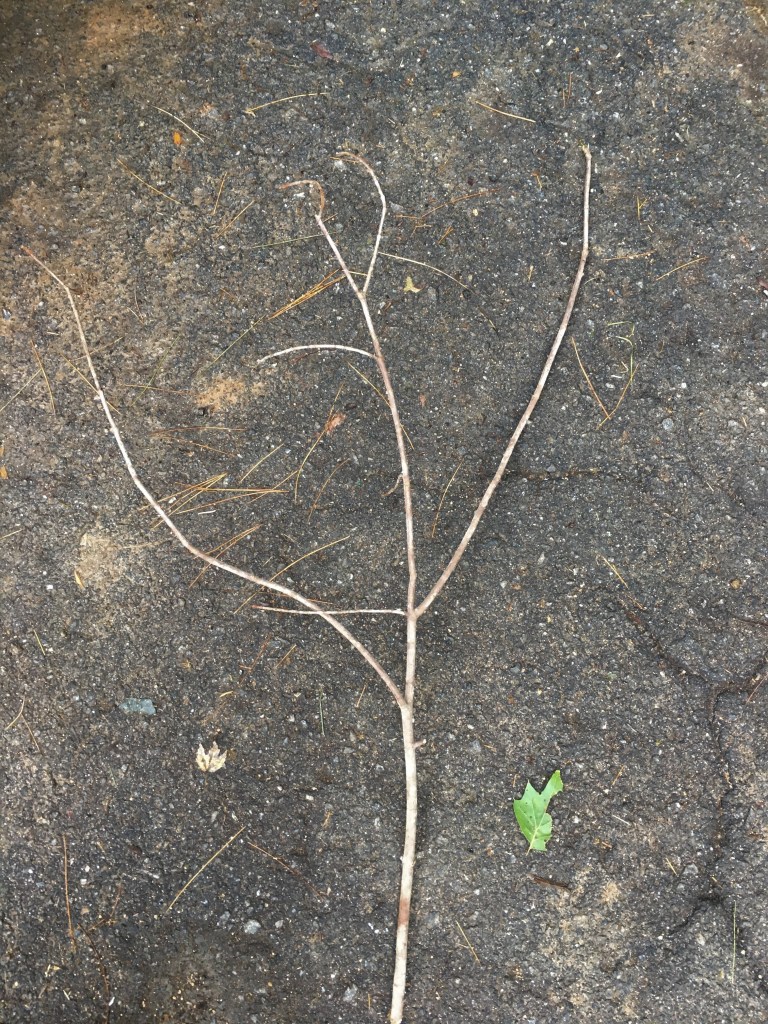
I met a woman I didn’t know while walking in the woods yesterday. We each had a dog and were walking toward each other waving sticks up and down. When we met, we both burst out laughing. It wasn’t a cult ritual nor dousing for water. These were our spider sticks.
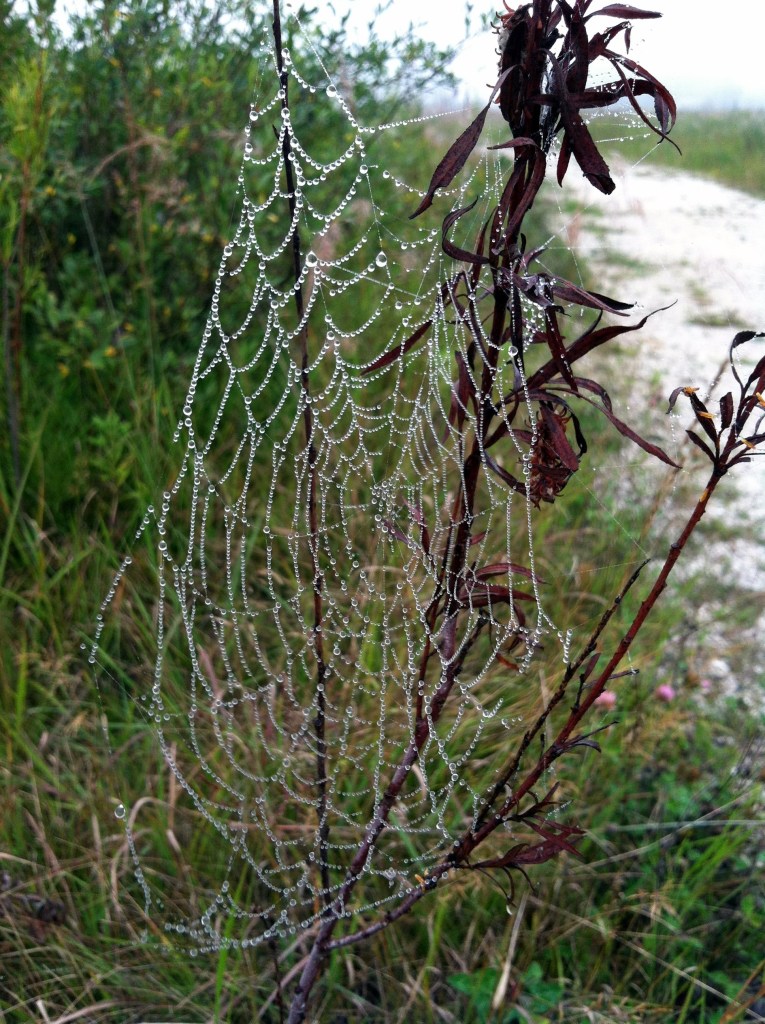
In the fall, when spiders are busy making plans for winter, they string their webs from tree to tree, without regard to where the paths are and who might be walking them. You seldom see the spiders, but occasionally I’ll find one hanging from my hat brim. I love what spiders are and what they do, but frankly, don’t like them on me. It’s irrational I know, but just can’t quite get past that silly fear.
My spider stick
So, we walk with spider sticks, waving them to catch the webs instead of letting them wrap themselves around our faces. Without a spider stick, you risk coming out of the woods looking like Frodo in the Hobbit when the giant spider wrapped him up in silk.
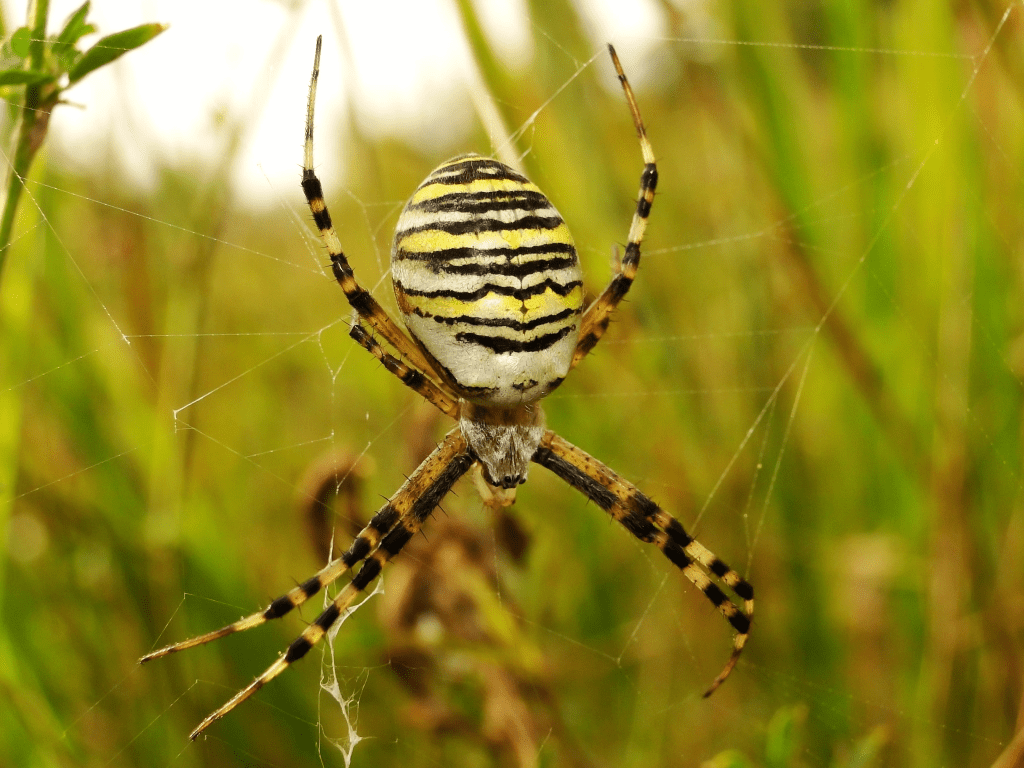
Spiders are amazing allies in the garden. They consume countless aphids, flying pests and even slugs that can wreak havoc on our plants. So protecting and tolerating them is definitely in our best interests. Their presence makes garden easier.
Garden Orb Spider (my friend)
Spider silk is one of the wonders of the world. It’s ethereally light and almost as strong as steel. It’s sticky (why it’s so hard to get off your face), and is used for transport, lodging and trapping prey. Most of the silks across the trail are the lines tossed into the wind to make a way for the spider to move through the trees without having to walk down a tree, across the path and up another tree. For fascinating details about the silk (and some creepy photos), check out Spider Silk: Evolution and 400 Million Years of Spinning, Waiting, Snagging, and Mating by Catherine Craig.
I’ve started timing my walks so that someone else has already been on that path. Hopefully, with their spider stick, they’ve cleaned out all the webs spun during the night. And yes, there is a spider that shoots silk just like Spiderman. It just doesn’t live around here (look out, Floridians).











 Kate's Garden Kitchen
You must be logged in to post a comment.