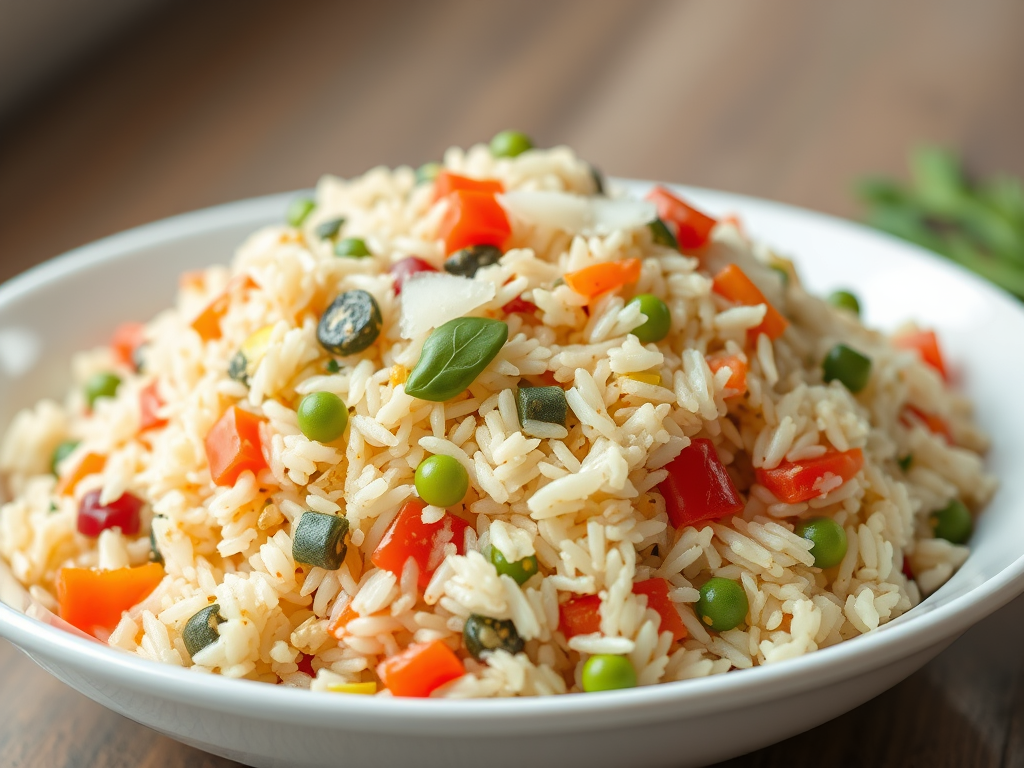
Ah, the Pilaf! Here’s to More Grains in our Diets

One of my go-to dishes for almost any dinner menu is a pilaf (or pilau). Made popular by the French, this dish is simply rice toasted in oil or butter and then cooked in seasoned broth with additions like onions, spices, vegetables, or meat. It can be a delicious side dish or pumped up into a main entree. 

The great thing about pilaf is that there are endless riffs on it. Rice is the traditional base, but you can use barley, quinoa, millet, farro, amaranth, freekah, buckwheat, sorghum, spelt, or teff. Or rice – black, basmati, brown, or white. 

Overwhelmed with the choices? This is a great way to add more whole grains to our diets. Most food co-ops have a wide variety of grain and seed choices. Many regular grocery stores are picking up the banner as well. And grains and seeds are quite simple to cook. You just need a little extra time to prepare some of them (and an InstaPot is a great investment to reduce time). 
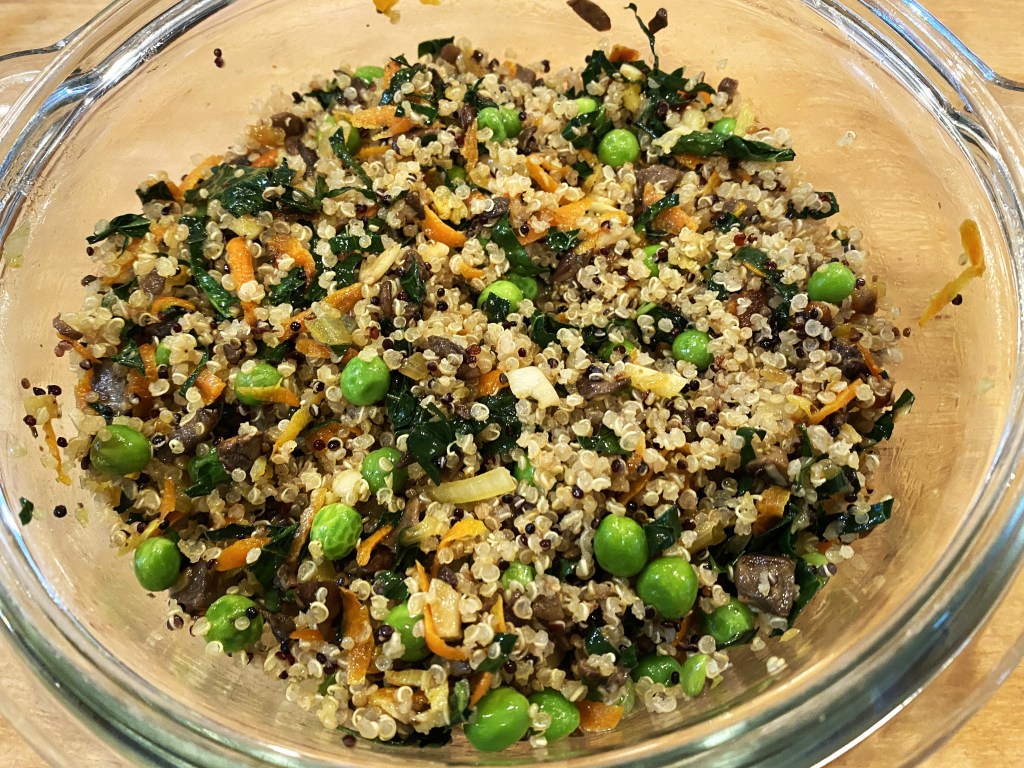
There are a million choices to add to the pilaf, and you can pick and choose according to your taste. Some of my picks are mushrooms, always onions and garlic, zucchini, peas, carrots, celery……..

Here is the basic pilaf recipe. Use it to explore your own creativity. 

Start with 2 cups cooked grain or seeds (for example, amaranth and quinoa are seeds, barley and farro are grains). You can also make pilaf from small pasta such as orzo or pastina. 

Cook according to the directions and then fluff and cool. Many of the grains benefit from being toasted in a dry skillet or with a little olive oil until they smell nutty. This does an amazing job of adding flavor. 
Chop onions and garlic and saute in a film of olive oil until translucent. Add chopped mushrooms, carrots, zucchini, green peas, broccoli, edamame and whatever else sounds good. Continue to saute until the vegetables are cooked to your liking. 

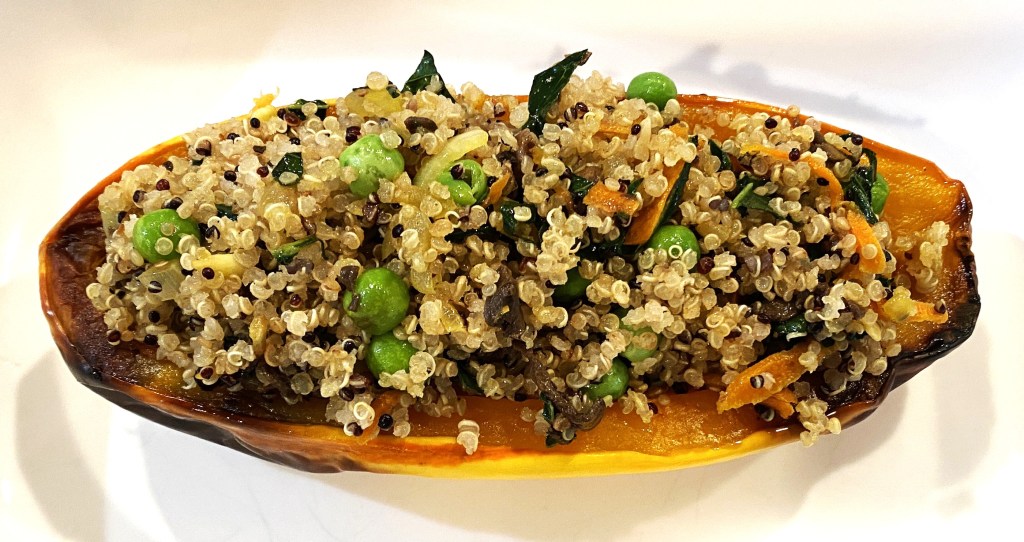
Add the grain or rice and seasonings of choice, chopped herbs, a squeeze of lemon. If desired, stir in chopped spinach to wilt. Warm the pilaf in the skillet, sprinkle with parmesan and/or chopped toasted nuts if desired, and serve. 

Pilaf stores well for several days in the fridge, and once you’ve had your fill as a side dish, simply add it to broth for a delicious soup or mix it into a frittata. 

Pestos!

Pesto over hot pasta couldn’t be a simpler, more healthy meal (or over rice or on a baked potato). Traditional Italian pesto is made of basil, pine nuts, olive oil, garlic and parmesan. It’s delicious, but at the risk of offending my Italian cook-friends, I’m going to give you some riffs on traditional pesto, to make use of whatever is harvestable. 

Pestos are infinitely adaptable

Pestos can be adapted to just about any flavor you like, and will give you a good shot of serious vitamins when added to soups, stews or pastas. I’ve also heard the term “green smash” used for a pesto-like sauce made with herbs which is a beautifully imaginative way to present it.

Greens make great pesto

Greens such as kale, beets, Swiss chard or Asian mizuna, are prolific producers, so you will almost always have more greens than you can eat in summer. One of the easiest ways to preserve them for winter eating is in pesto. 

Chard pesto ingredients

Simply wash and stem the greens, and toss in the food processor with a couple of cloves of garlic, some olive oil, a handful of roasted nuts (pine, almond, walnut, pecan, pistachio), fresh basil or other herb of your choice, salt and pepper. Punch up your pesto with roasted peppers, sun dried or fresh tomatoes, roasted winter squash or roasted carrots.

Prepare for the freezer

Puree the mixture and put in a plastic freezer bag. Squeeze out all the air and flatten the bag to freeze. This way, you can simply break off chunks to use without having the thaw the entire bag. Alternatively, you can freeze in ice cube trays or single portion bags. Don’t add cheese until you plan to use the pesto – it doesn’t freeze well. 

Toss with pasta, rice, potatoes

For a quick lunch or dinner, thaw the pesto and toss with pasta or rice and add a generous helping of high-quality grated parmesan, romano or asiago cheese. You can embellish with chopped tomatoes, fresh slivers of red onion or anything else that catches your eye. Add silken tofu or plain Greek yogurt to any pesto when serving for added nutrition.

I’ve listed a classic pesto recipe below but check out the recipe page for chard, red pepper and garlic scape pesto recipes.

Classic Pesto

3 cloves garlic

2 c. fresh basil leaves

¼ c. nuts

1 ½ t. salt

¼ t. pepper

½ cup olive oil

3 oz. Parmesan

Combine all ingredients except oil and cheese in blender or processor. Add half the oil. Process while adding other half the oil. Stir in cheese as you serve.