Cilantro pesto

We often think of pesto as a basil-forward sauce for pasta. But there are so many other kinds of pestos (apologies to all Italian nonnas), that it seems a waste not to consider other possibilities. 

Consider other herbs and vegetables before you give in to using only basil. You can certainly add basil to any pesto, but consider a delicious green sauce made from parsley (if you like parsley, which I don’t. Shh), mint, broccoli, spinach, and Swiss chard. I’ve tried some of the stronger herbs like thyme and oregano, and they are too strong unless used in small amounts with another vegetable like spinach to tone them down. 

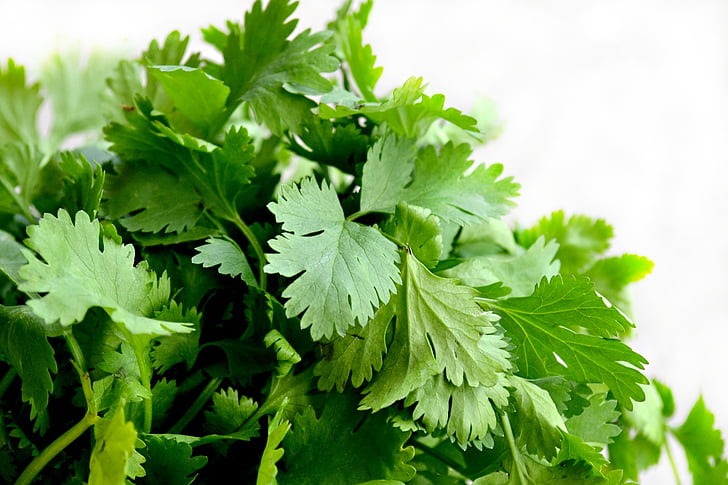
I happen to have buckets of cilantro right now. It self-seeds in my garden, and although I love to have a bit around, it is prolific. I have a fragrant, leafy, slightly accusatory forest.
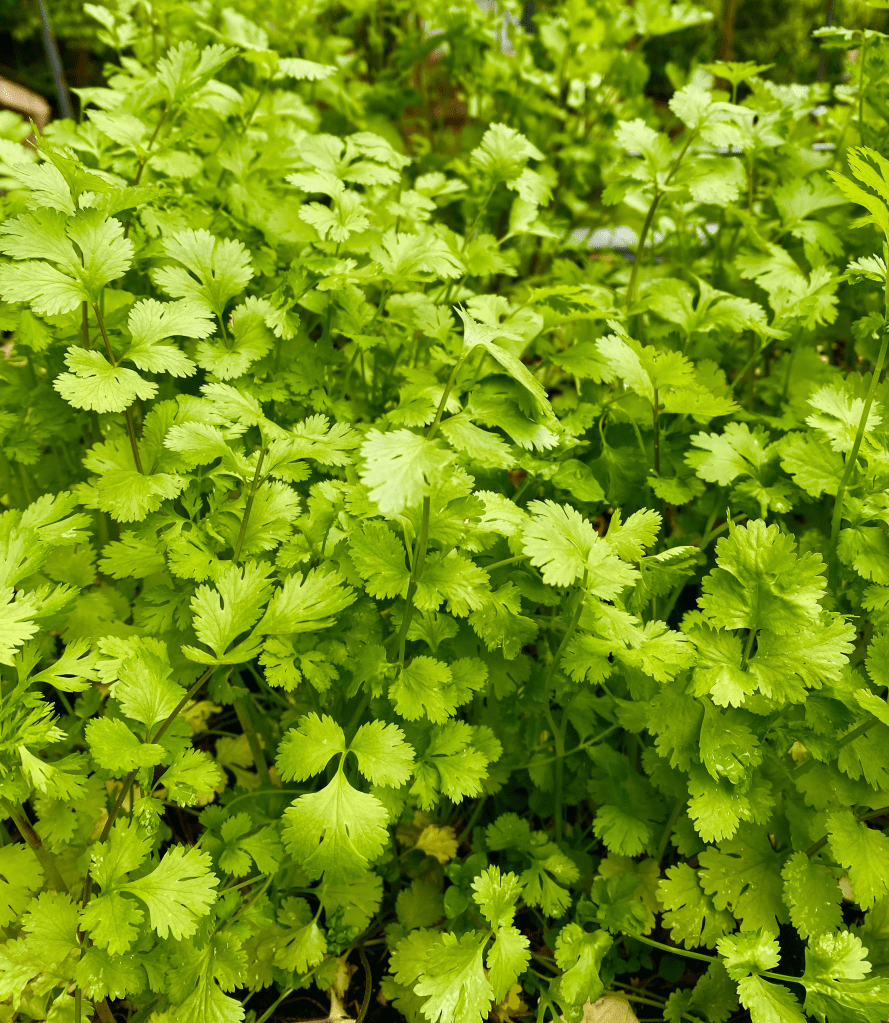
There are only so many tacos a person can eat before the cilantro starts whispering, “You had plans for me. And I don’t just mean for guacamole.”

Enter cilantro pesto, the culinary equivalent of “I refuse to waste this, but I also refuse to follow rules.” Traditional pesto is structured, classical, Italian, and probably owns a linen apron. Cilantro pesto is barefoot, possibly wearing a hat indoors, and absolutely substituting whatever nuts you have on hand without apology. Cilantro pesto is what happens when basil goes on vacation and cilantro throws a party without asking permission.

The recipe is mostly a negotiation. You gather cilantro (all of it, because commitment matters), garlic (to keep things honest), some kind of nut or seed (walnuts, almonds, pumpkin seeds—this is not a picky dish), something sharp (lime, because we’re leaning into chaos), and oil (enough to make it feel like a sauce). Cheese is optional, and often debated. 

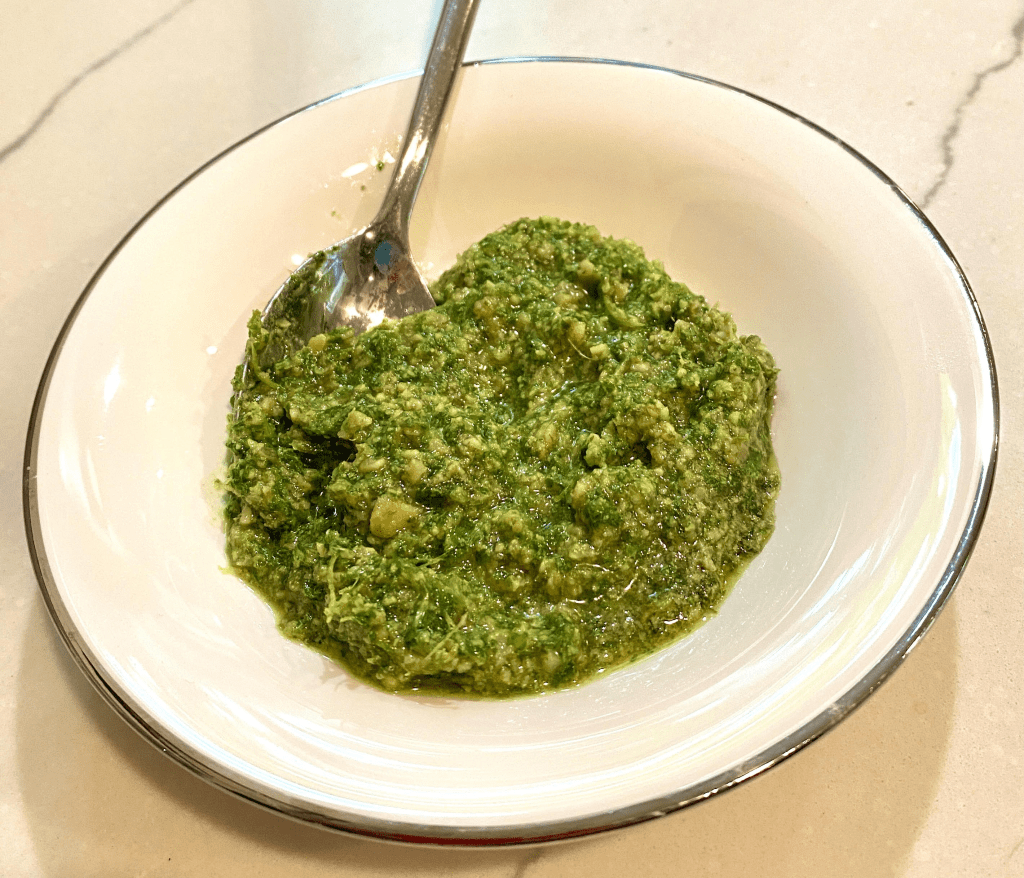
Then comes the blending, which is less about technique and more about trust. At first, it looks like lawn clippings. Stay with it. Add oil. Add more oil. Forget calories – you’ll only be using a small amount for your dish. Scrape the sides like you’re coaxing a shy guest into conversation. Suddenly, it transforms into something bright, green, and suspiciously alive.

The first taste is always a moment of truth. Cilantro, as we know, is controversial. For some, it tastes like sunshine and possibility. For others, it tastes like a bar of soap. Cilantro pesto does not care where you fall on this spectrum. It arrives boldly, announcing itself on roasted vegetables, grilled meats, eggs, rice, bread, and anything else that seems like it could use a personality.

And that’s really its purpose. Cilantro pesto is not here to be subtle. It is here to rescue Tuesday night. It is here to make leftovers feel intentional. It is here to say, “You may not have planned this meal, but look how it turned out anyway.”

By the end, the forest is gone. The cilantro has fulfilled its destiny. Your fridge contains a jar of something vibrant and slightly unpredictable, which feels, in its own way, like a small victory.

1 cup packed cilantro leaves

1/3 cup olive oil or avocado oil

1/3 cup pepitas

1 clove garlic

Juice of 1 large lime

Kosher salt and black pepper, to taste

Blend as best you can – it will not be smooth. You can use it as it is or add cheese of choice – parmesan or cotija are good. If you want it as a sauce, 

Add some mayo and sour cream or yogurt to make it a milder sauce. Add buttermilk to make it pour more easily. 
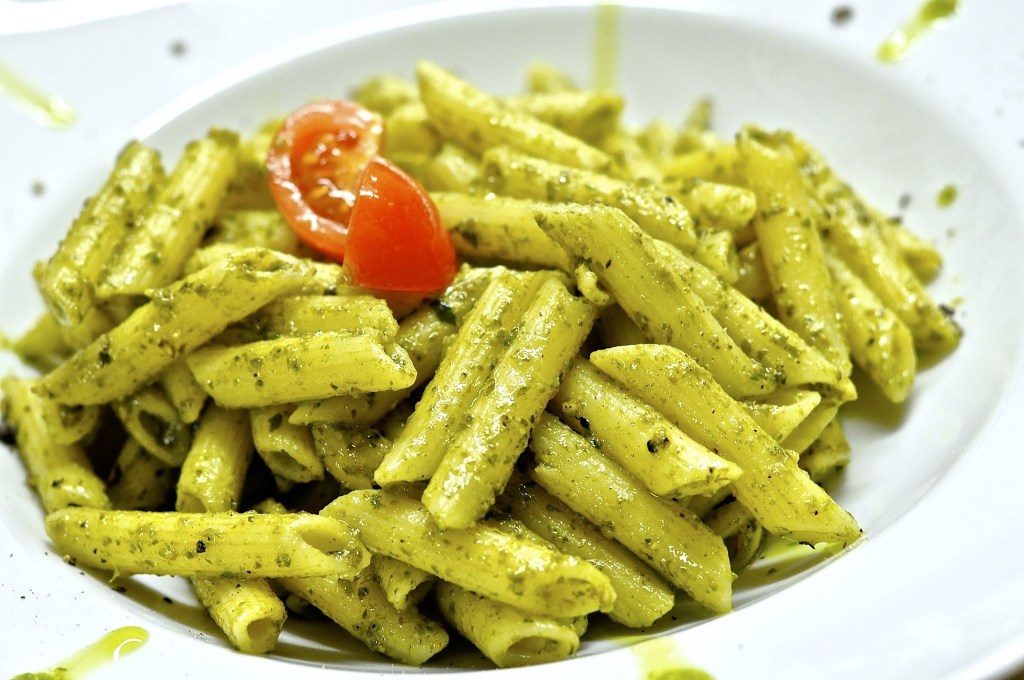
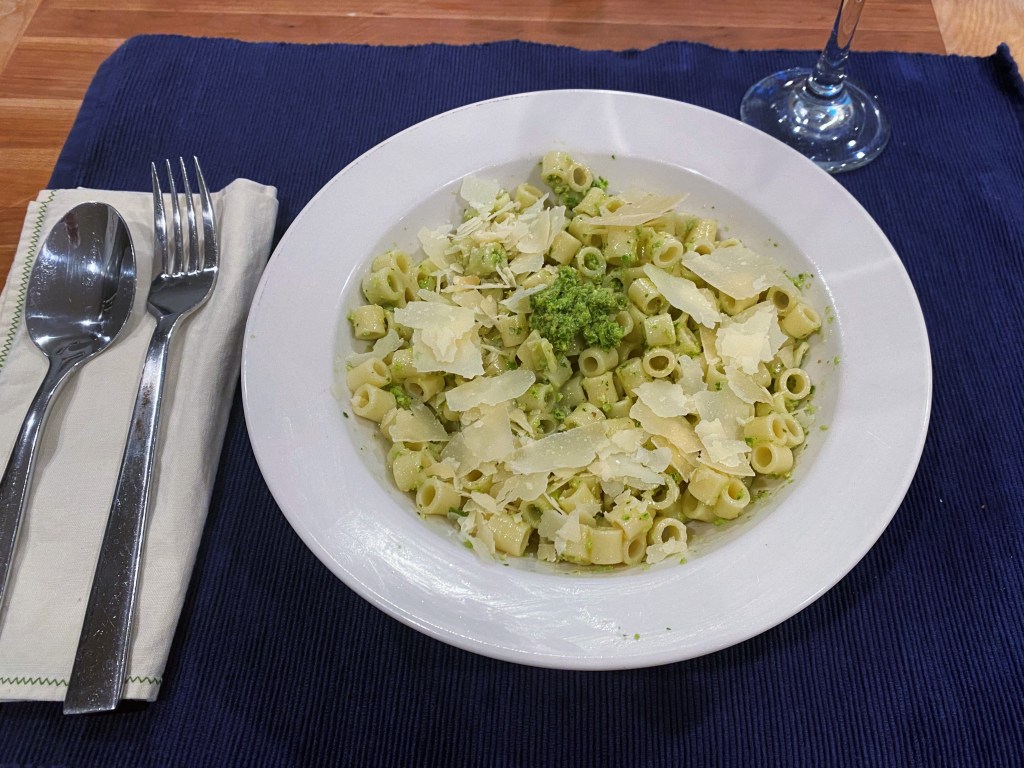
Toss with hot pasta, rice or farro, or pour over grilled vegetables or meat. 

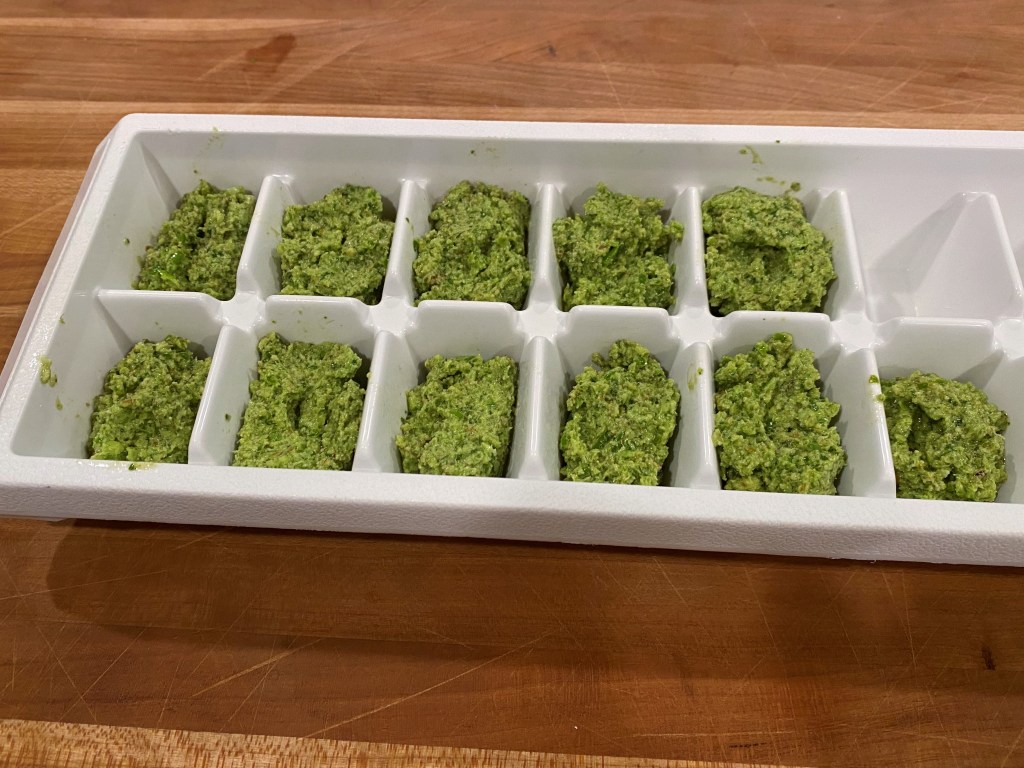
It will keep in the fridge for several days, but if you have an abundance, make it without the cheese and freeze it in ice cube trays to keep for six months. Toss a cube into tortilla soup, or thaw and serve as above.
Simple Vegetable Gardens

With the world in such a stir today, the more I can simplify my life, the better I’ll feel. Grocery prices are soaring as are restaurant prices so I’ve made a promise to myself to grow some of my family’s produce. I don’t want to complicate my life by having to manage a large vegetable garden. But many vegetables are easy to grow and can even be grown in a pot on the porch.

One of the keys to success is to grow in season. Unless you have perfect conditions, it won’t be possible to grow spinach, snow peas or bok choi in the middle of a hot summer. They are spring and fall vegetables. But you can grow kale, Swiss chard and many other Asian greens all summer.

And planting every few weeks will keep the produce coming. Bush beans grow beautifully in a pot, and planting every two or three weeks will keep them producing all summer.

Afraid that tomatoes need a lot of care – trellising, spraying, etc? There are new varieties of smaller tomato plants with “potato” type leaves that are compact and inherently quite disease-resistant. You can pick a warm, just ripened tomato from a pot on your porch.

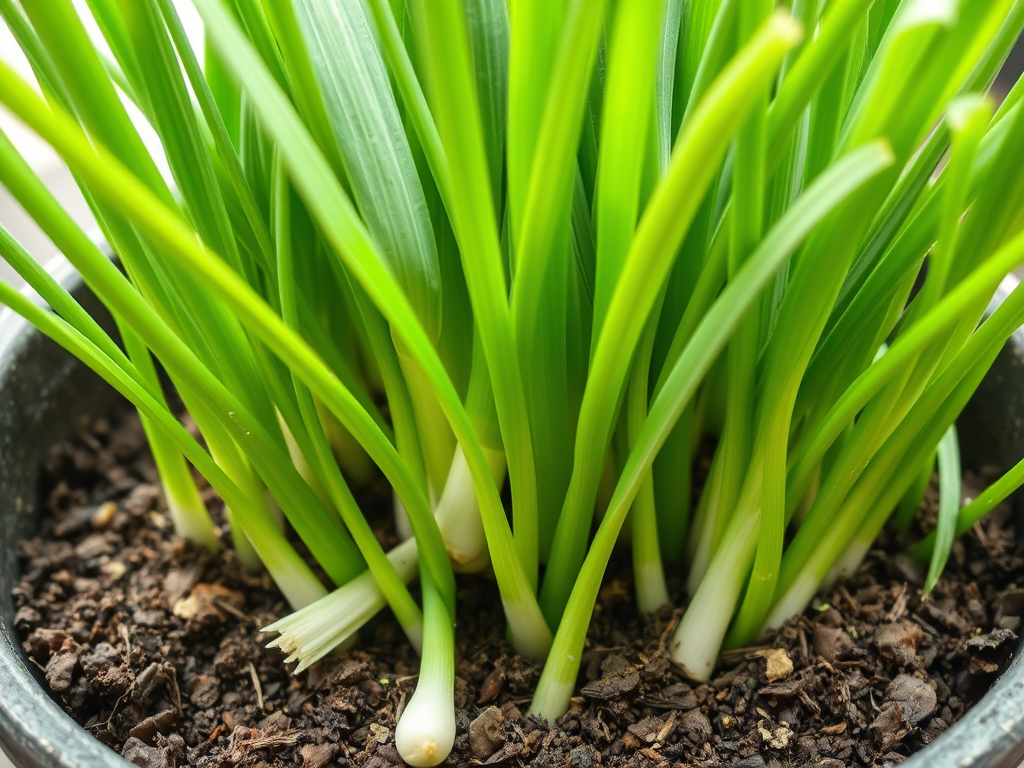
It seems every garden store has plenty of onion sets, and planting a few every two weeks will give you scallions all summer long. Plant them in a pot with radishes and you have an instant salad.

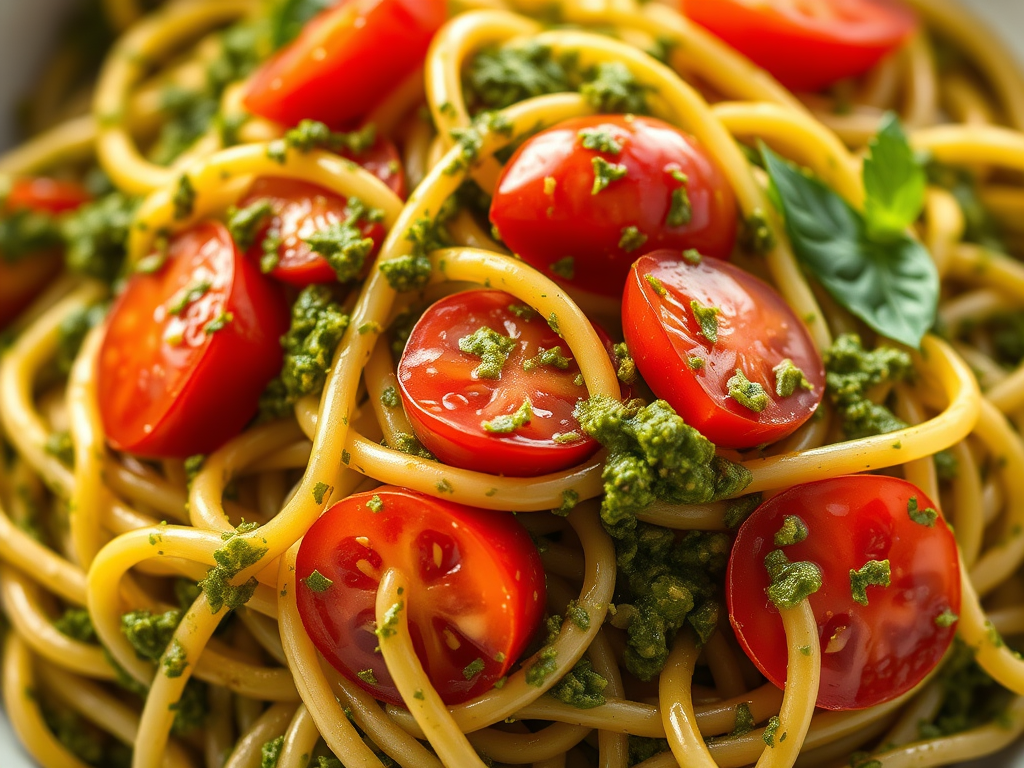
An herb garden of dill, arugula and cilantro will grow spectacularly in a pot. Add some basil and use them for pesto (what could be simpler and tastier than hot pasta tossed with pesto and fresh tomatoes?).

3 cloves garlic
2 c. fresh basil leaves
¼ c. nuts
1 ½ t. salt
¼ t. pepper
½ cup olive oil
3 oz. Parmesan

Combine all ingredients except oil and cheese in blender or processor. Add half the oil. Process while adding other half the oil. Stir in cheese as you serve.

3 T. toasted pecans, walnuts or pine nuts (toasting gives them a fabulous flavor that raw nuts don’t have)
7 c. greens, stems removed
¼ chopped fresh basil
2 T. lemon juice
½ t. salt
¼ t. pepper
2 garlic cloves, minced (or substitute ½ cup chopped garlic scapes)
2 T. water
1 T. olive oil
¼ c. Parmesan cheese

Place ingredients through garlic in food processor – process until smooth. Slowly pour water and oil through chute with processor on until well blended. Add cheese when serving.

Garlic Scapes

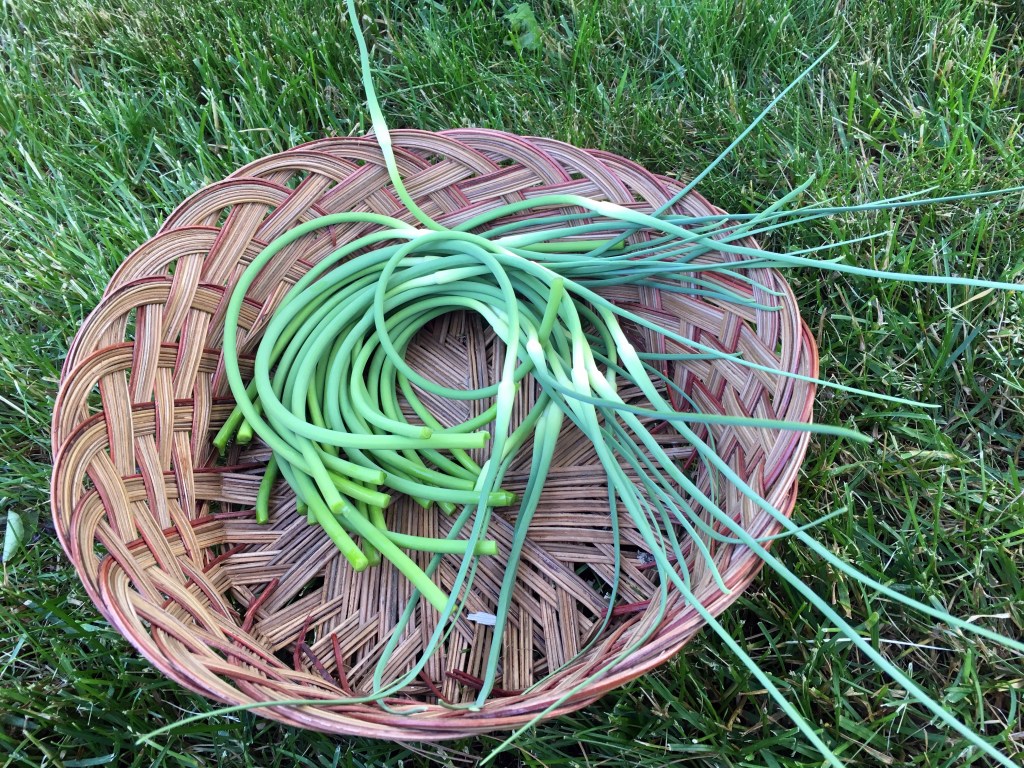
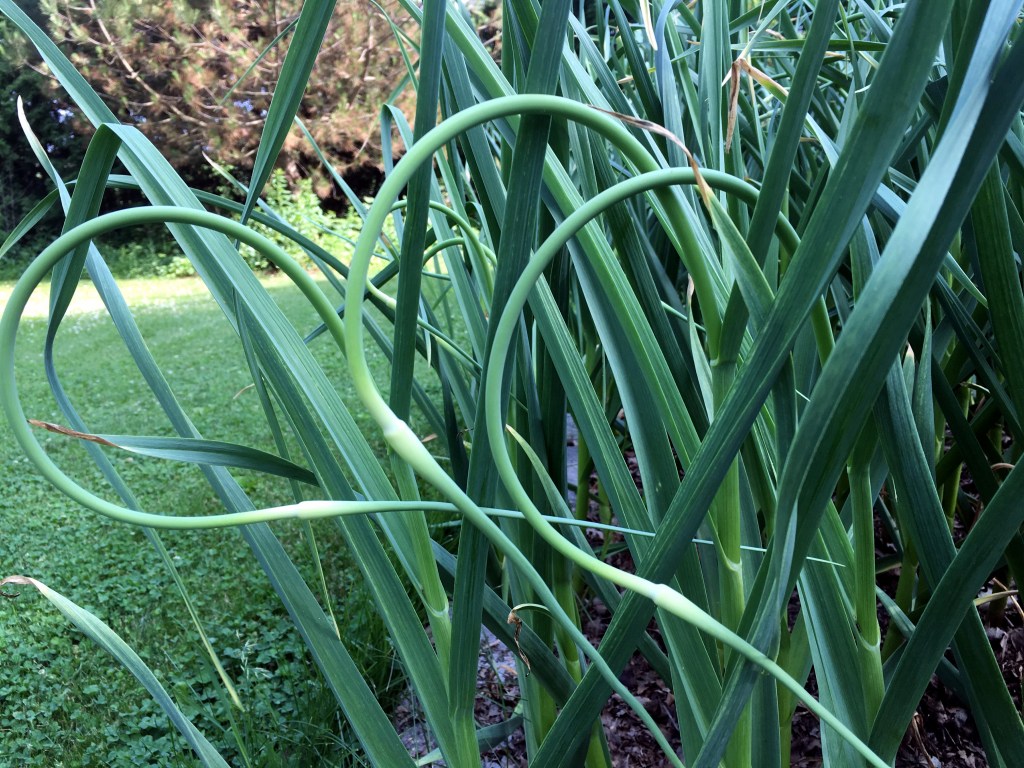
Ever wonder about those interesting curled shoots coming off the garlic plants? These are the lovely flower heads of the garlic bulbs. They are delicious and are actually a vegetable on their own as well as a mild garlic seasoning. Unlike the fiery flavor of garlic bulbs, they have a sweet flavor that is a mix of garlic, leek and onion, and a texture not unlike asparagus. 

Freshly harvested garlic scapes

Scapes grow out of the center of hardneck garlic, usually starting in early June. It’s best to harvest them when they are young, usually right before they make a huge curl, as they tend to get tough the longer they stay on the plant. 

You will be doing the garlic a favor by pinching out the scapes since leaving them on the plant reduces the size of the garlic bulb below and makes the bulbs less storable.

Garlic scapes ready to pick

Check out farmers’ markets

Scapes are available at farmers’ markets now and will probably be around a couple more weeks. They store quite well in the refrigerator so when you find them, pick up a few and give them a try. They are delicious grilled or chopped fresh for a salad, frittata or stir fry. Or, blend them into hummus or pesto, or puree them and mix into softened sweet butter for a delectable dressing for sweet corn. They are also scrumptious when pickled. 

Garlic scape, lemon verbena pesto

Garlic Scape Pesto

½ c. garlic scapes

2 c. fresh basil leaves, oregano, parsley, lemon balm or any combination you desire

¼ c. nuts (pine, walnut, pecans)

1 ½ t. salt

¼ t. pepper

½ cup olive oil

3 oz. Parmesan

Combine all ingredients except oil and cheese in blender or processor. Add half the oil. Process while adding the rest of the oil. Stir in cheese and toss with hot cooked pasta or rice. If you have plenty of scapes, consider making the pesto and freezing it in ice cube trays or flat in a freezer bag. Leave out the cheese until ready to use. You can simply break off a piece for a quick lunch. 

Garlic scape pesto ready for the freezer

Pestos!

Pesto over hot pasta couldn’t be a simpler, more healthy meal (or over rice or on a baked potato). Traditional Italian pesto is made of basil, pine nuts, olive oil, garlic and parmesan. It’s delicious, but at the risk of offending my Italian cook-friends, I’m going to give you some riffs on traditional pesto, to make use of whatever is harvestable. 

Pestos are infinitely adaptable

Pestos can be adapted to just about any flavor you like, and will give you a good shot of serious vitamins when added to soups, stews or pastas. I’ve also heard the term “green smash” used for a pesto-like sauce made with herbs which is a beautifully imaginative way to present it.

Greens make great pesto

Greens such as kale, beets, Swiss chard or Asian mizuna, are prolific producers, so you will almost always have more greens than you can eat in summer. One of the easiest ways to preserve them for winter eating is in pesto. 

Chard pesto ingredients

Simply wash and stem the greens, and toss in the food processor with a couple of cloves of garlic, some olive oil, a handful of roasted nuts (pine, almond, walnut, pecan, pistachio), fresh basil or other herb of your choice, salt and pepper. Punch up your pesto with roasted peppers, sun dried or fresh tomatoes, roasted winter squash or roasted carrots.

Prepare for the freezer

Puree the mixture and put in a plastic freezer bag. Squeeze out all the air and flatten the bag to freeze. This way, you can simply break off chunks to use without having the thaw the entire bag. Alternatively, you can freeze in ice cube trays or single portion bags. Don’t add cheese until you plan to use the pesto – it doesn’t freeze well. 

Toss with pasta, rice, potatoes

For a quick lunch or dinner, thaw the pesto and toss with pasta or rice and add a generous helping of high-quality grated parmesan, romano or asiago cheese. You can embellish with chopped tomatoes, fresh slivers of red onion or anything else that catches your eye. Add silken tofu or plain Greek yogurt to any pesto when serving for added nutrition.

I’ve listed a classic pesto recipe below but check out the recipe page for chard, red pepper and garlic scape pesto recipes.

Classic Pesto

3 cloves garlic

2 c. fresh basil leaves

¼ c. nuts

1 ½ t. salt

¼ t. pepper

½ cup olive oil

3 oz. Parmesan

Combine all ingredients except oil and cheese in blender or processor. Add half the oil. Process while adding other half the oil. Stir in cheese as you serve.