
Homemade stock
In my vein of saving money and making food taste better, one of my go-to’s is homemade stock. There’s nothing quite like the scent of a kitchen with a pot of simmering stock on the stove.
It’s a fantastic way to extract flavor and nutrients from ingredients while reducing waste and homemade stock adds depth and richness to soups, stews, sauces, and risotto.

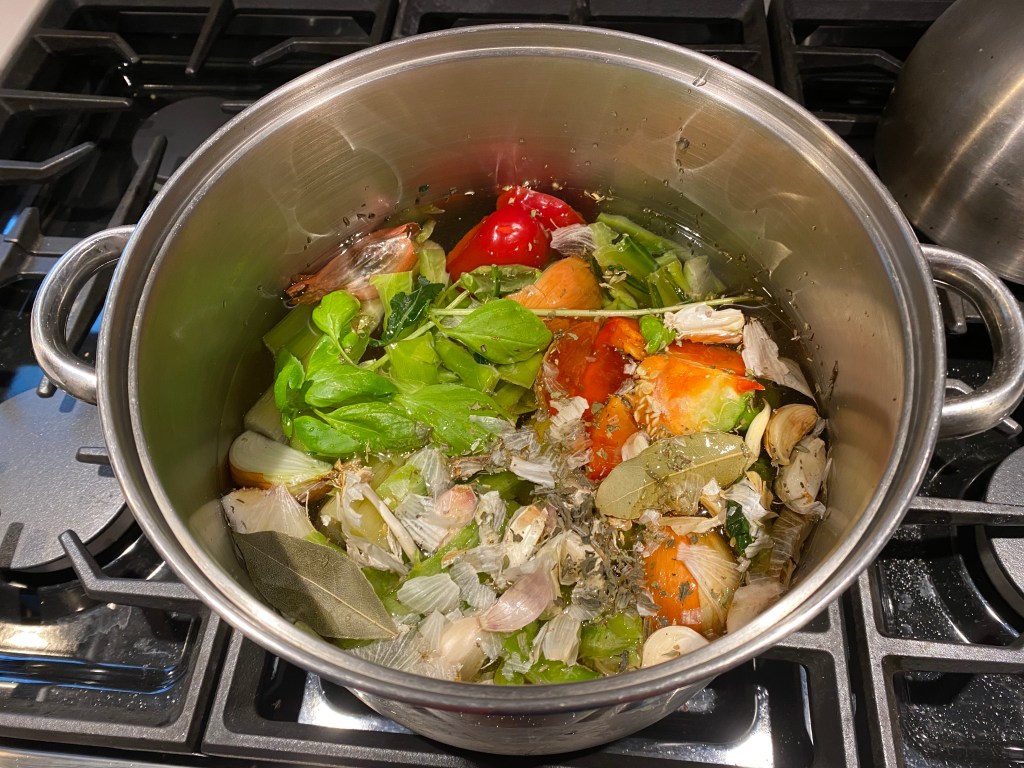
I keep a bag in the freezer into which go all of my vegetable scraps. When I have a bagful, I toss them into a large, heavy pot for a long, slow simmering. You can also toss in chicken or beef bones if you are a meat-eater.
Most vegetables such as onions, carrots, celery, leeks and garlic make a delicious stock. Be sure to use the peels, especially onion and garlic, as they make the stock richer. Don’t use potato peels or scraps from cabbage, cauliflower or broccoli since they make the stock too strong. I also glean parmesan rinds from my grocery – they often sell them fairly inexpensively – and toss one or two into the stock for richness.
Add whatever herbs you have handy, either fresh or dried, such as parsley, thyme, bay leaves, basil and oregano.
Cover with a substantial portion of water and put on a low simmer. The longer you simmer it, the richer your stock will be. Four to six hours is adequate or you can cook it in a slow cooker on low overnight.
I prefer to salt my stock when I use it in a recipe, but you can certainly salt it as you make it.
Once the stock has simmered long and slow, remove it from the heat and let it cool slightly. Strain through a fine mesh strainer or cheesecloth into a clean container to remove the solids.

Let the stock cool completely before storing it. Refrigerate for up to a week or freeze for several months. I freeze mine in 1-cup portions for easy use later.
Oven Baked Risotto
- 1 tablespoon olive oil
- 1/4 cup finely chopped onion
- 3/4 cup Arborio rice
- 1/4 cup dry white wine, (optional)
- 3 cups stock (here’s where your homemade stock will shine)
- 3/4 teaspoon coarse salt
- 1/8 teaspoon freshly ground pepper
- 1 tablespoon unsalted butter
- 1/4 cup freshly grated Parmesan cheese
- 2 tablespoons finely chopped fresh flat-leaf parsley, (optional)
- Additions: prosciutto, brie, mushrooms, pumpkin, butternut squash, peas
Preheat oven to 425 degrees. In an ovenproof saucepan or Dutch oven, heat oil over medium-high heat. Add the onion and cook, stirring, until translucent, 2 to 3 minutes. Add the rice and cook, stirring to coat the grains with oil, about 1 minute.
Stir in the wine and cook until completely evaporated, about 1 minute. Stir in 1 ½ cups water, the stock, salt, and pepper. Bring to a boil. Cover, transfer to the oven, and bake, until most of the liquid has been absorbed by the rice, 20 to 25 minutes.
Remove from oven. Stir in ½ to ¾ cup water (the consistency of the risotto should be creamy), the butter, cheese and parsley. Serve immediately.



 Kate's Garden Kitchen
You must be logged in to post a comment.