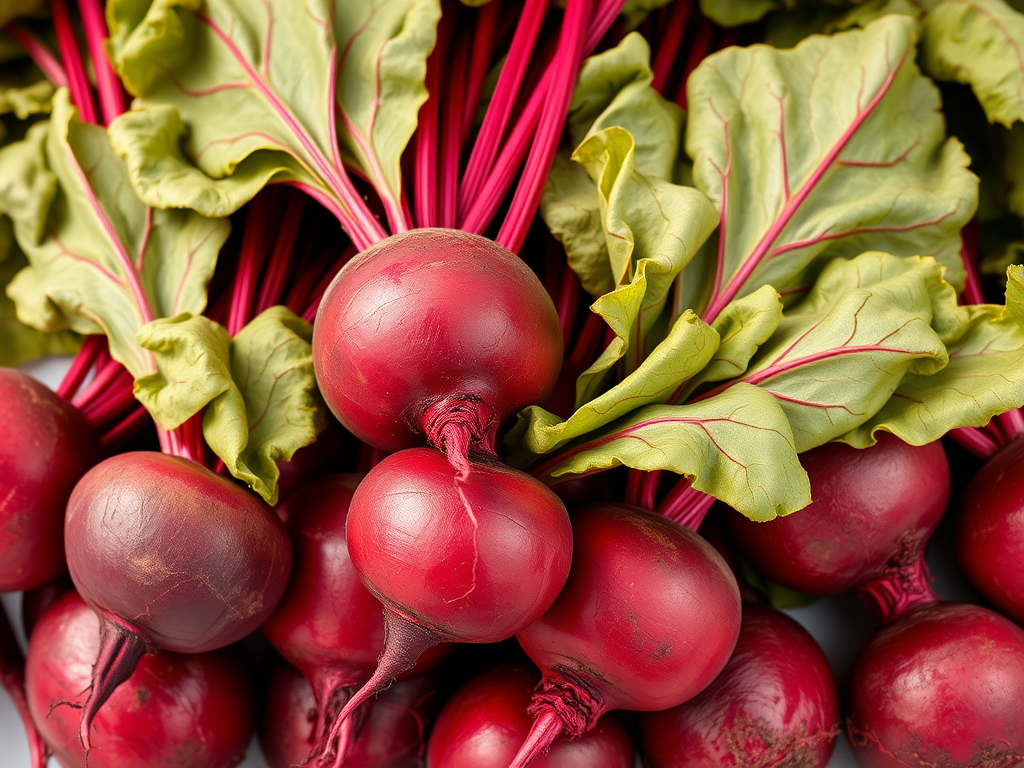
Beets don’t ask to be loved. They just show up—muddy, jewel-toned, slightly sweet, and quietly impressive. They’re cheerful in color (that deep magenta is basically edible optimism), earthy in a way that feels grounding rather than dull, and endlessly adaptable. Roast them and they turn caramel-sweet. Grate them raw and they’re crisp and bright. Simmer them into soup for an Eastern European flavor.
Beets are rich in folate, fiber, and antioxidants, and they’re famous for supporting blood flow thanks to natural nitrates. Translation: they’re good for your brain, your heart, and your general energy.
They also play very nicely with the MIND and Mediterranean diets – plant-forward, colorful, and quietly anti-inflammatory.
They Make Everything Look Better
Beets turn salads into art. They make hummus blush. They transform grains into something you’d gladly eat out of a wide, shallow bowl to appreciate their beauty. If you think you hate beets, you probably just haven’t met them in the right context yet.
Try These:
Roasted beets + olive oil + a splash of balsamic
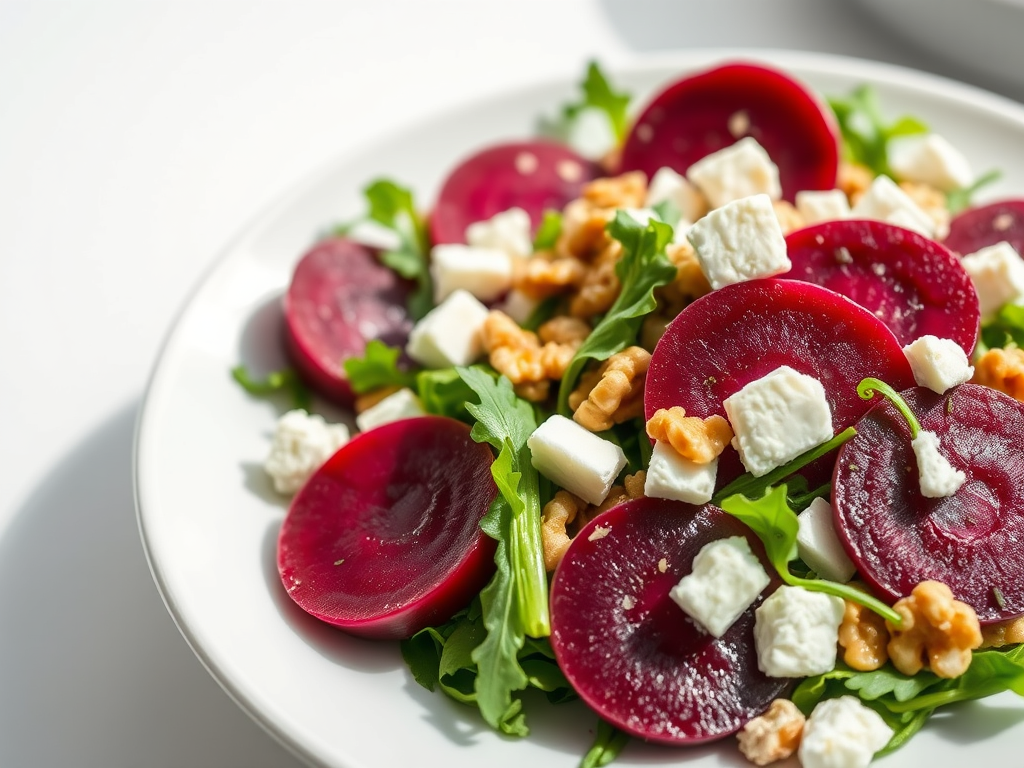
Warm beets with goat cheese and walnuts
Grated raw beets with lemon and a pinch of salt
Blended into soup with onions, garlic, and dill
Beets don’t need much. They just need someone to give them a fair shot. So here’s to beets. Earthy. Bold. Unapologetically themselves. May your cutting board be pink and your dinner be better for it.
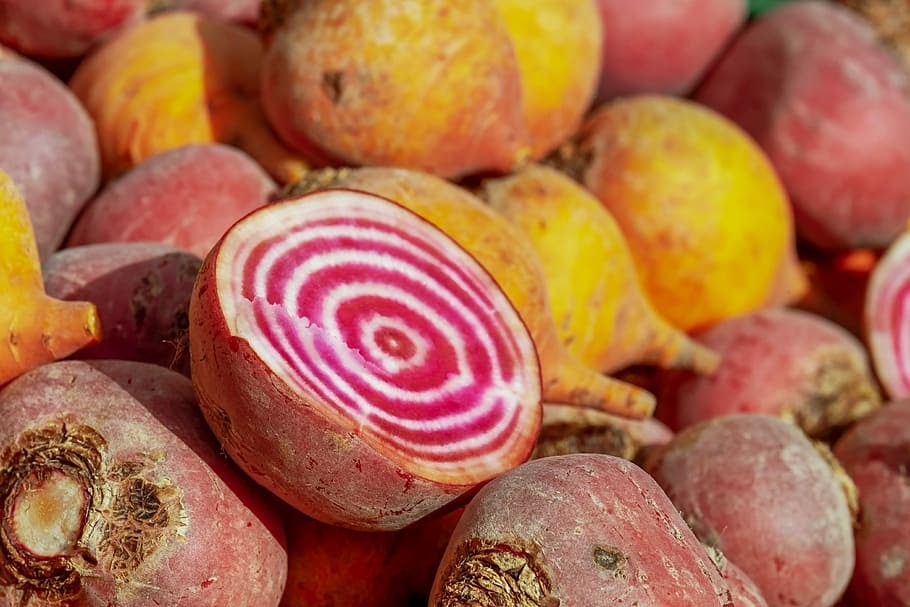
Beets are little magic orbs of deliciousness and nutrition. They come in gold, red, white and even candy-striped. And I learned early in my daughters’ lives to feed them the light-colored beets to keep from staining absolutely everything.
Fresh beets often come with the bonus vegetable of beet greens. They taste just like Swiss chard, which is actually a non-bulbing beet. Beets are traditionally served cooked but they are also delicious in a raw shredded salad.
Beets are best stored in the refrigerator, and will last for several weeks. If you choose to harvest greens while your beets are still growing, only use about a third of the greens at a time to give them plenty of leaves to continue to feed the root.
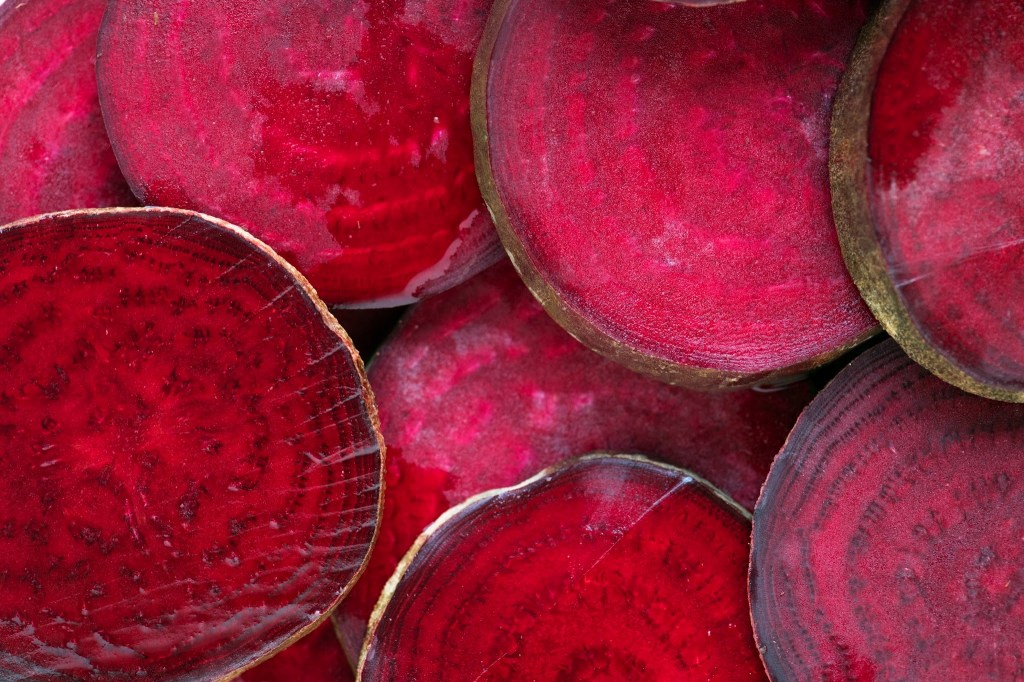
Roasting beets gives them a sweetness that you don’t get by boiling. To roast beets, trim off the greens and set aside. Wash and put them in a baking pan with a few tablespoons of water and cover tightly with foil. Roast at 400 for about an hour. They are done when a fork easily pierces. Cool and then rub off the skins.
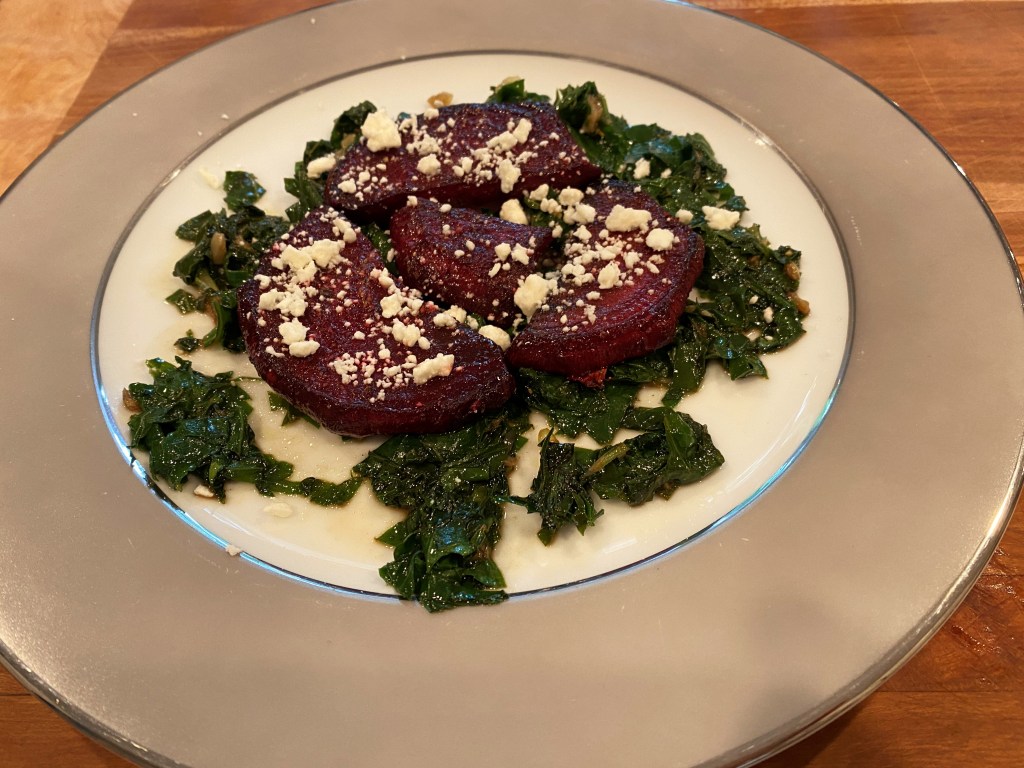
Crispy sautéed beets with beet greens
3 or 4 beets, any type
2 T. butter
1 T. olive oil
4 cloves garlic, minced
1 T balsamic vinegar
Few pinches red pepper flakes or ¼ t. tabasco to taste
Salt and pepper to taste
Feta cheese for garnishing
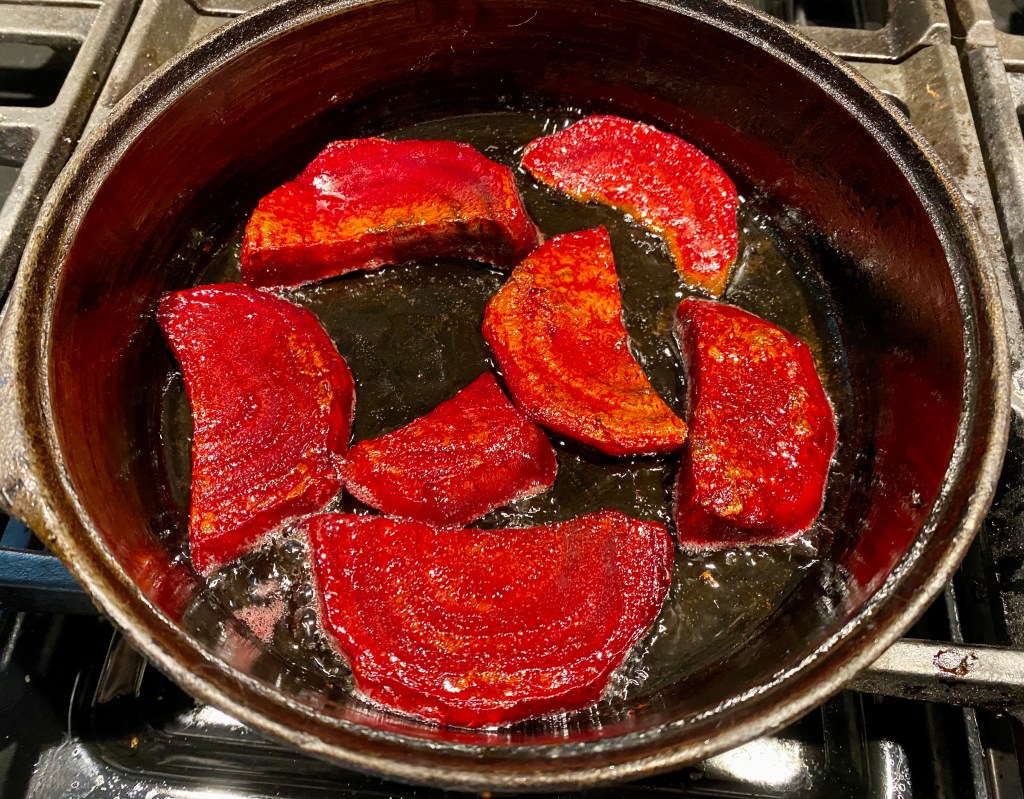
Sautéing roasted beets (I promise I didn’t enhance the color!)
Trim greens from beets. Place beets in an oven-safe baking pan, add ¼ cup water, and cover tightly with foil. Roast at 400 degrees for about 45 minutes to an hour until they can be pierced easily with a fork. Remove from the oven and allow to cool. When cool, peel (the skins should slip off easily) and slice into ⅛” slices.
Melt 2 tablespoons butter in a heavy skillet (cast iron is perfect). Add beet slices and saute until crisp on one side (about 10 minutes). Flip and saute the other side. Remove from pan and set aside.
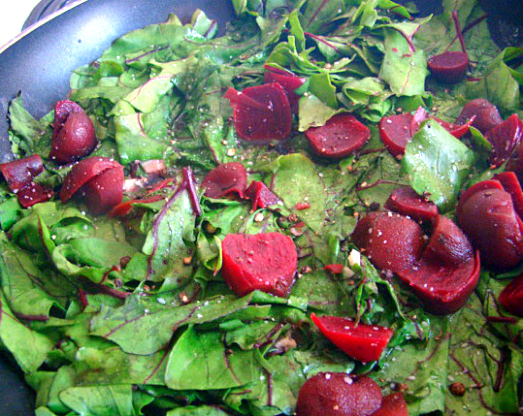
Rinse and roughly chop the greens. Add garlic to olive oil and saute briefly (about a minute). Add beet greens and toss to coat with oil. Saute about 2 to 3 minutes until wilted to your taste. Add balsamic vinegar and red pepper. Remove from heat, plate and top with the beet slices. Sprinkle with feta cheese and enjoy!
And here’s an easy, delicious sauce to add to your beet repertoire. Use liberally on cooked beets and/or beet greens.
4 oz. goat cheese, softened
2 T. milk or half and half
1 t. dried or 1 T. fresh dill
Whisk or blend until smooth. Add more milk as necessary to make a pourable sauce. Stir in the dill. Drizzle over beets and greens
I had a wonderful dish in a local restaurant shortly after I moved to Asheville. I subsequently found out that root hash is served in many restaurants here, with breakfast, lunch and dinner.
Fresh parsnips
It was meltingly delicious, heartbreakingly full of umami, so I decided to duplicate it. This time of year root crops are plentiful and delicious – parsnips, carrots, beets, turnips and even radishes. All of these combine beautifully, and when roasted, they take on a subtle smokiness that softens their pungency.
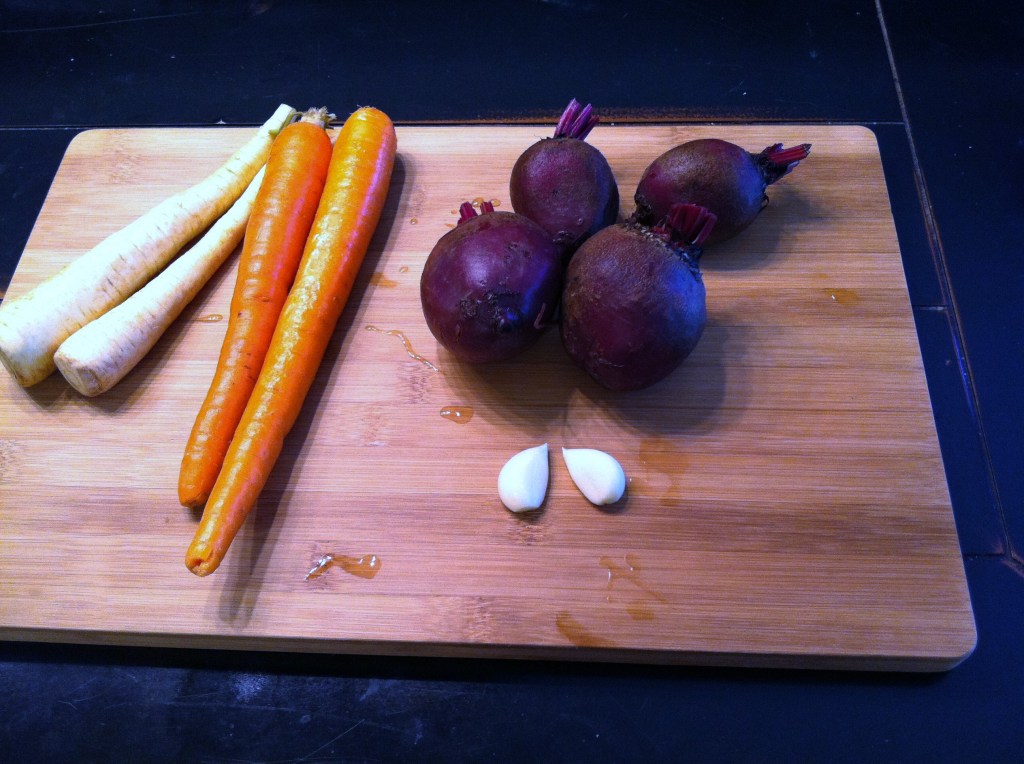
Carrots, parsnips, beets and garlic ready to chop
Use any combination of roots
You can use any combination of root vegetables, including potatoes and sweet potatoes. Apples give it a kiss of sweetness; onions give it a savory bite. And if you want to really go wild, add celeriac or parsley root. I have to say, the word hash conjures up a gloppy mess, a muddle or mess. Let’s call it a melange, medley, alliage, amalgam or even simply a blend.
Prep work is key
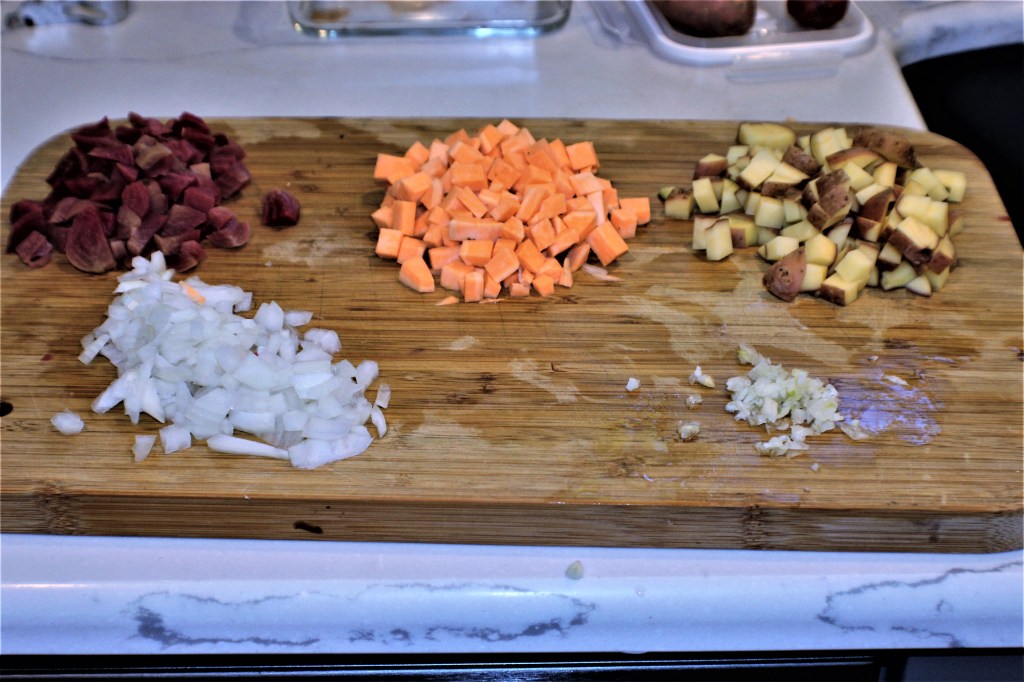
The key to a good hash is to cut the pieces all the same size and shapes so they will cook evenly. And the smaller the better. It may seem like a lot of work to cut everything into ½” squares, but you’ll be happy you did when they come out of the oven perfectly roasted.
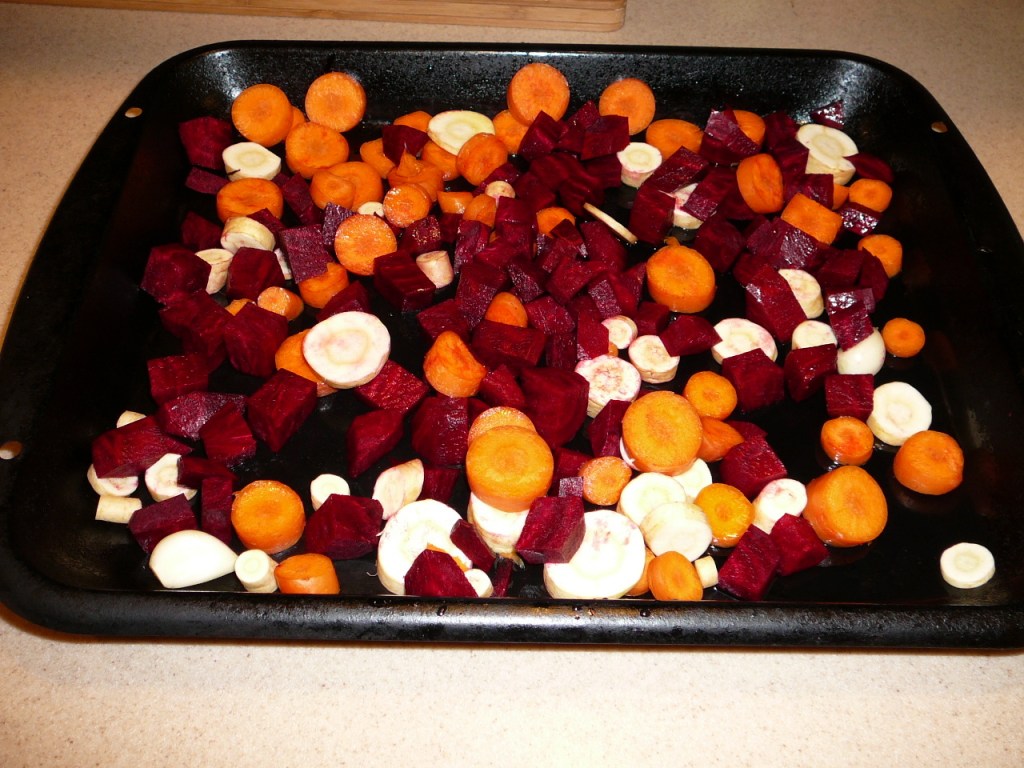
Chopped roots ready to roast
Roast away!
Once your pieces are pared, you simply need to toss the vegetables with olive oil and minced garlic if you like. There’s no need to salt until they come out of the oven. Roast at 375. Stir them up and turn over a bit after 15 minutes and continue to roast for another 15 minutes, until they are tender when pierced with a fork.
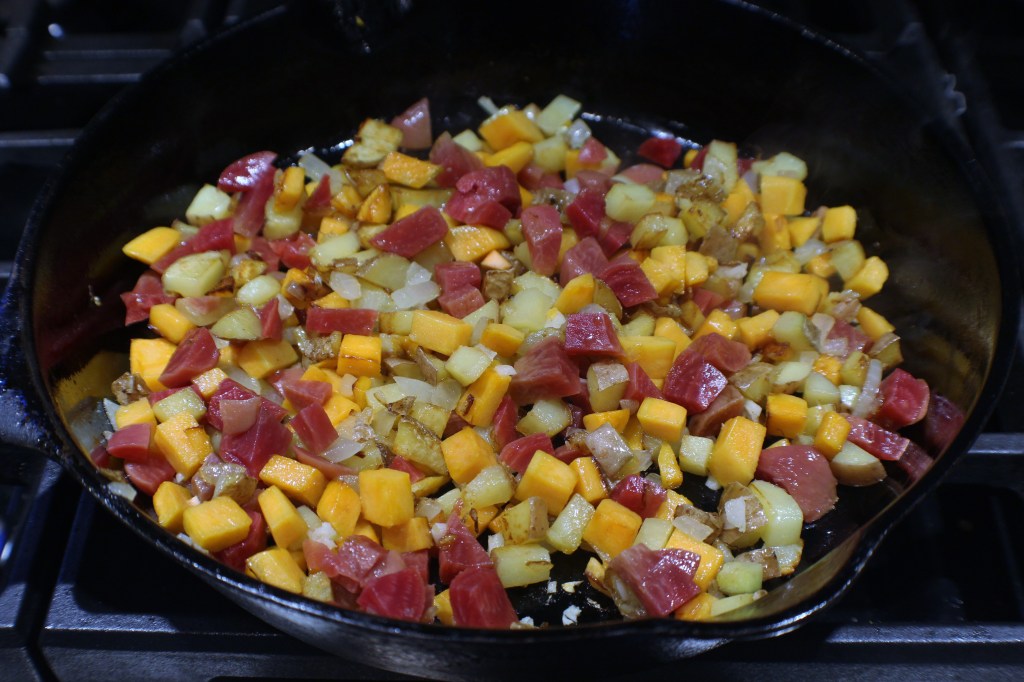
Root hash roasting
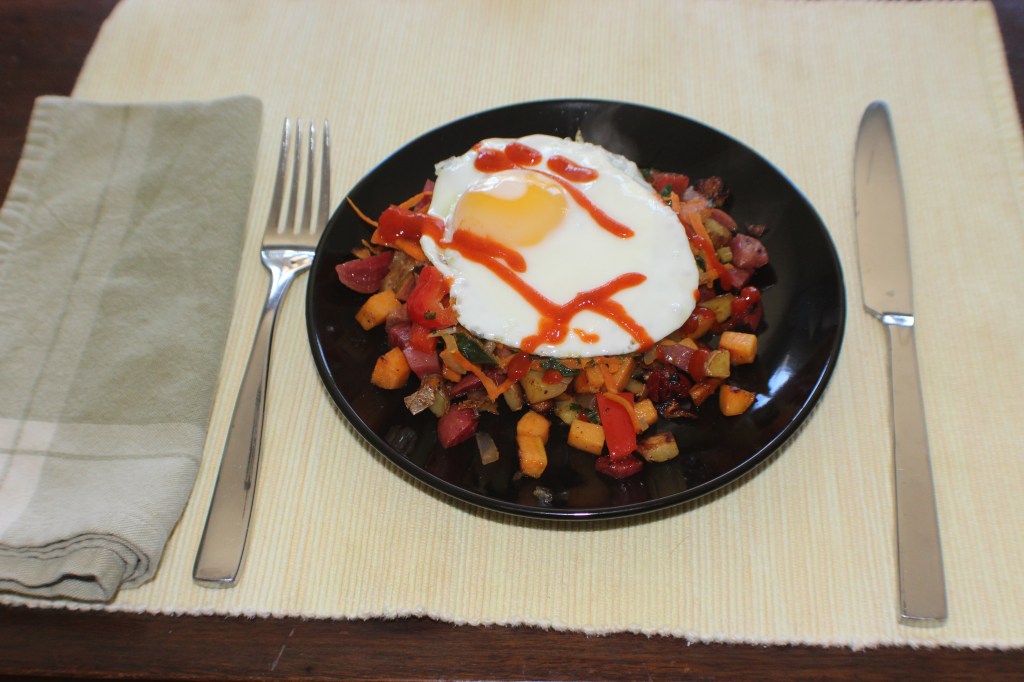
Root hash (medley) makes a delicious side dish in itself, or a main dish when sprinkled with feta cheese, toasted nuts and scallions. Pair it with a salad with a pungent vinaigrette dressing and a slab of sourdough bread. I love it topped with a fried egg.
Roasted Root Vegetable Medley
2-3 cups cubed (½” cubes) parsnips, carrots, beets, turnips, radishes, potatoes, sweet potatoes, apples, onions, celeriac, parsley root. Just about any combination is delicious. If using large beets, throw them into the microwave for a few minutes to soften them since they are denser than the other vegetables. Red beets will stain the hash, so golden or Chioggia beets will make a more attractive dish.
2 T. good quality olive oil
1 clove garlic, minced
Preheat the oven to 375. Toss the vegetables with the olive oil and garlic. Spread in a single layer on a roasting pan or cookie sheet with sides. Or use a cast iron pan as long as you can make only one layer. Roast about 15 minutes and then stir. Roast another 15-20 minutes until vegetables are tender when pierced with a fork and beginning to brown. Remove from oven and salt and pepper liberally.
I know everyone is writing about how gardening soothes right now, especially in these trying times. But it’s true. There is nothing that calms the inner monkey quite like getting outdoors, planting seeds, and then nurturing them into food production. The sun on your face, the scents of earth and plants, the sounds of birds, bees and other creatures have a healing effect unlike anything else.
I’ve always done it, but right now it seems more important and more effective than ever at being my Zen place. Not to mention making my family more resilient by growing our own food.
I started my gardening as a manic doer, and it’s taken years to slow down. I’m a huge fan of the slow gardening movement – of leaving things alone when you don’t need to mess with them. It’s all about the soil.
Happily, the move toward regenerative agriculture and permaculture is taking this idea to heart on a larger scale. If you get a chance, check out One Straw Revolution by Masanobu Fukuoka. He is essentially the grandfather of permaculture with his philosophy that plants will thrive in their natural settings, without human intervention.
It makes us lend a more critical eye to how our food is produced. If we do our best to protect and nurture our soil by adapting his methods of using nature’s cycles, we’ll have healthier gardens that are less susceptible to the vagaries of pests and diseases. Slow gardening, non-intervention at its best.
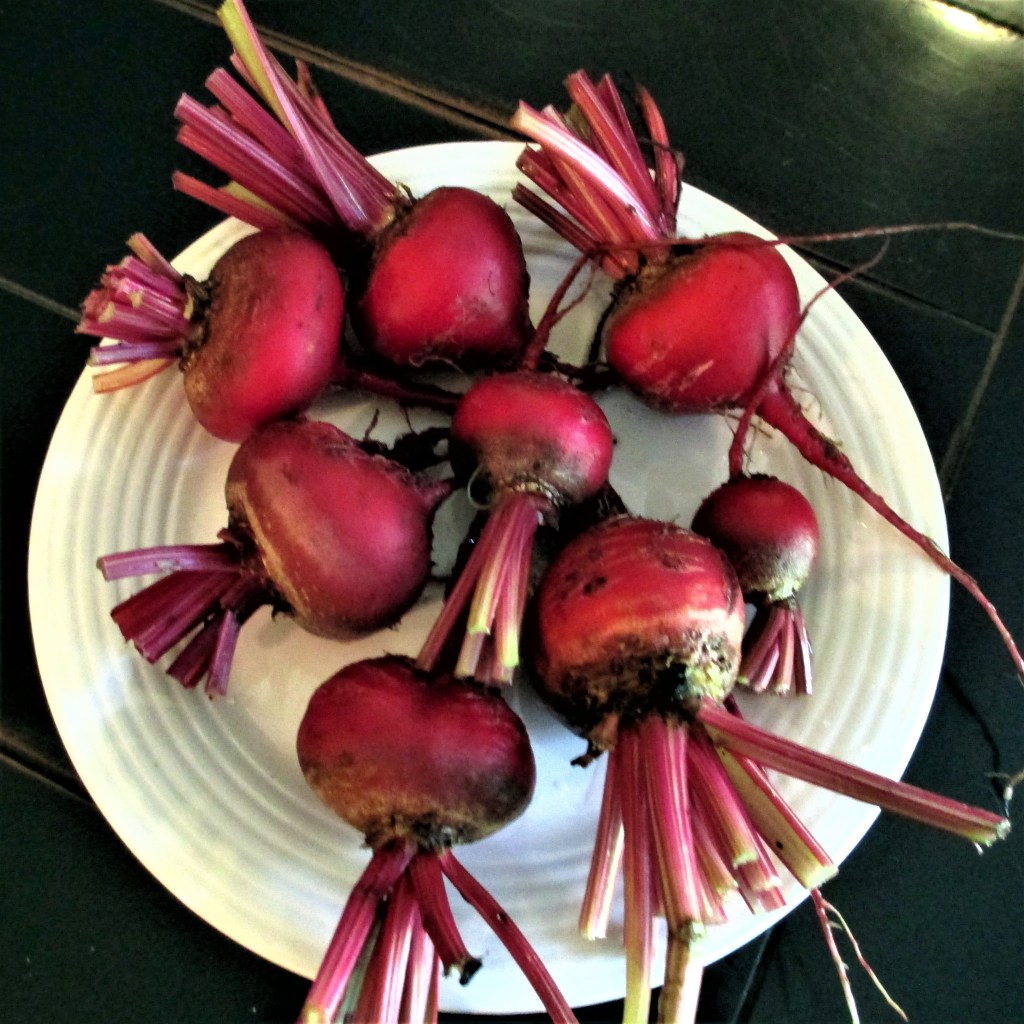
And it’s all about the soil. Nurturing your soil will produce delicious results like these baby beets and turnips. With little care except planting the seeds.
It seems that when we are sequestered indoors, our bodies yearn for warmth, both internally and externally. We naturally crave those earthy flavors of root vegetables such as carrots, beets, parsnips and even rutabagas. So, plan a visit to the winter farmers’ market or raid your own root cellar for any combination of delectable root vegetables. Cook up your roots into a rich soup (with the added sweetness of a butternut squash), dish up a bowl, cut a slice of rustic bread, and pull your chair up next to the fire.
Start planting roots crops
It’s time to start planting root crops. They are perhaps the easiest of vegetables to grow. Cool season crops, they bracket the garden season or can be planted multiple times for yield all season long. You can put the seeds into the garden as early as possible. The seeds will not be harmed even by heavy frost, so as soon as the thaw starts, get them out there. If your garden is prepared, you can even cast the seeds on the snow to get the earliest start as soon as they hit the soil.
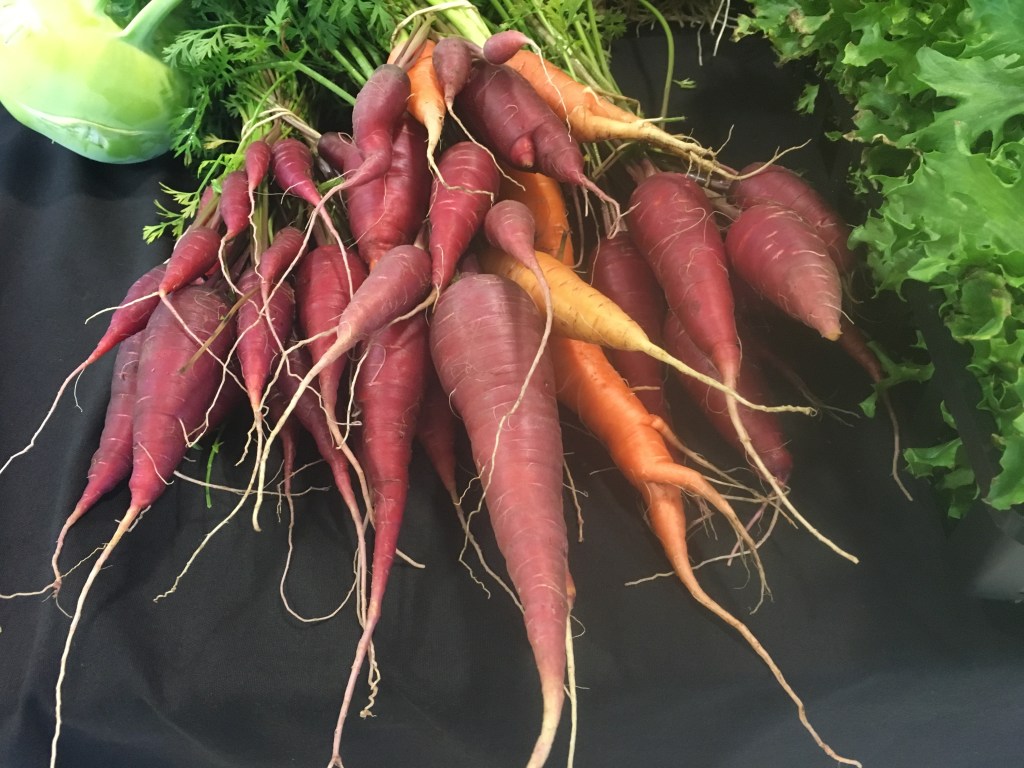
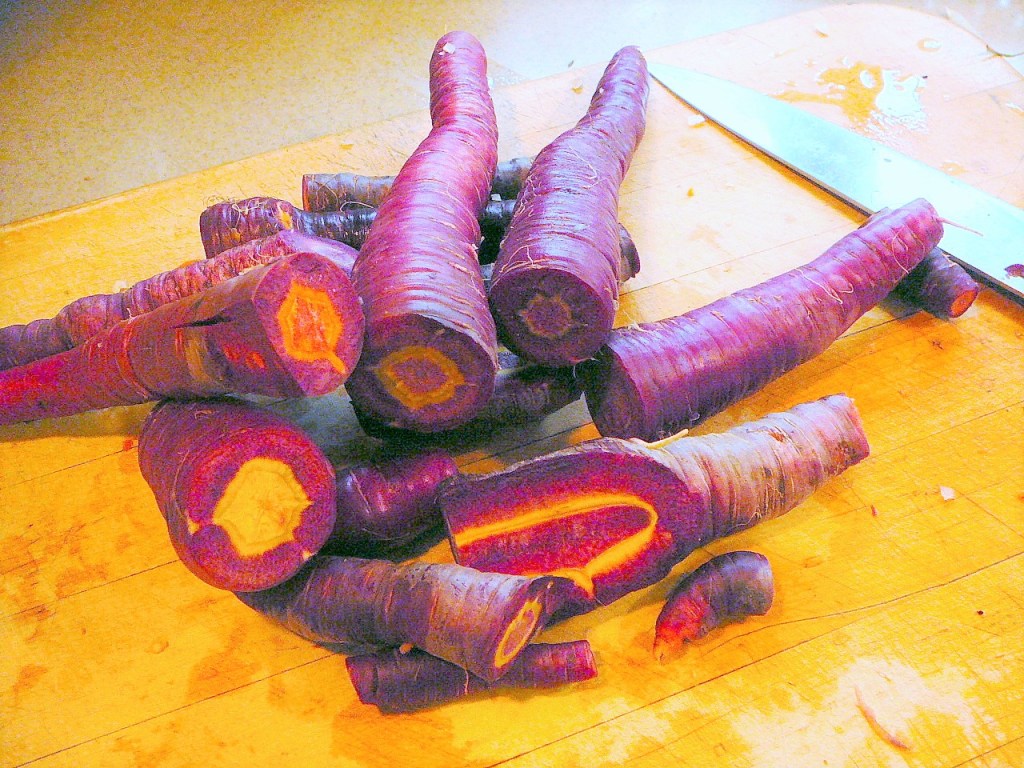
Purple Haze carrots
Don’t forget fall planting
At the other end of the season, start planning the fall crop in July. Carrots and beets go in around the middle of the month, turnips the first week.
Easy to grow
Root crops grow well in any spot in the garden that receives six to eight hours of sun. The most critical element to healthy growth is preparing the soil deeply to have good tilth, with nothing to impede the growth of the roots. We’ve all seen carrots with forked roots – this usually is due to the tender root hitting something it cannot grow through so it moves off at an angle. The soil should be of average fertility and the plants should be mulched to keep the soil moisture even.
Chioggia beets
Plant frequently
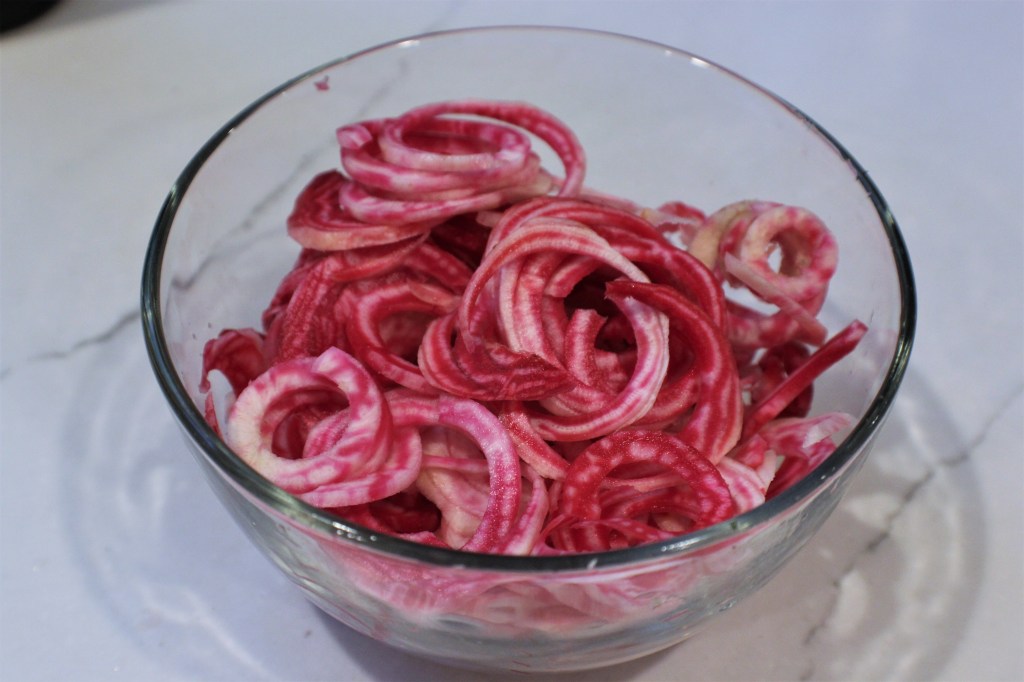
Planting every two or three weeks will keep you in carrots and beets all season. My favorite beet is Chioggia, an Italian beet that is creamy white or pink with dark rings. The best feature is that these beets will stay tender all season, not becoming woody as some beets do when left in the ground.
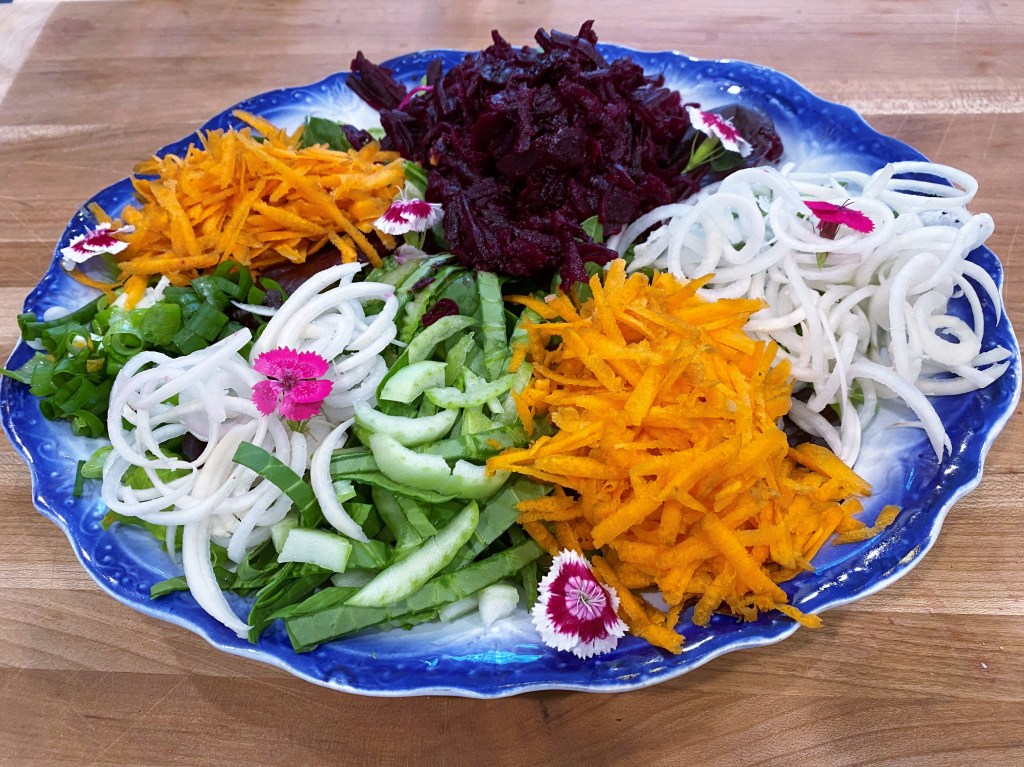
Spiralized Chioggia beets
And now for the soup:
Winter Root Vegetable Soup
Root vegetable soup
You really can use any combination of vegetables. Vary the flavors with different combinations and add herbs to give you further nuances of flavor. This soup is creamy, savory and slightly sweet, an amazing comfort on a cold winter evening.
Use one cup of vegetables for each serving. This recipe serves 6-8 although you can cut it half easily. It also freezes well.
Beets, carrots and parsnips ready for roasting
6-8 cups root vegetables (any combination of carrot, beet, parsnip, rutabaga, turnip, salsify, celery root, sweet potato, butternut squash) cut into ½ inch pieces
2 cloves garlic
¼ c. olive oil
1-2 t. salt as needed
¼ – ½ t. fresh ground black pepper (to taste)
1 small sweet onion, diced
2 stalks celery, diced
1 quart chicken or vegetable broth
½ t. dried or 1 T. fresh herbs of choice – basil, oregano, thyme, rosemary
Preheat oven to 400 degrees F. In a low-sided broiler or jellyroll pan, place vegetables and drizzle with about two tablespoons of olive oil. Roast in a preheated oven for about 30 minutes, stirring occasionally until all vegetables are tender when pierced. Sprinkle with salt immediately upon removing from the oven.
Roasted vegetables ready to puree
While vegetables are roasting, in a large pot over medium heat, saute onions and celery in the remaining olive oil, stirring until the onions are translucent. Add pepper, herbs and stock. Bring to a simmer. Stir in roasted vegetables and heat through. Puree with an immersion blender or in small batches in a food processor or blender. If soup is too thick, thin with water, more broth, or creamy it up with half and half or coconut milk.
Ladle into bowls, grate fresh pepper on top and drizzle with fruity olive oil. Serve with crusty, rustic bread and a crisp cabbage salad.





 Kate's Garden Kitchen
You must be logged in to post a comment.