It’s quite a gift to have plants that deposit themselves in your garden effortlessly. About this time of year, when I’m exhausted from all the garden work, I have a love affair with annuals and perennials that reseed themselves. It’s such a source of delight to see fresh new dill plants in late summer because I let some go to seed. The same goes for cilantro and arugula. It’s a sustainable and cost-effective way to maintain my garden.
Self-seeding plants naturally drop seeds which germinate and grow into new plants without intervention. If you end up with plants in the wrong spot, simply remove or move them. The key is to avoid deadheading so they can produce seeds, and to be ferocious about weeding in spring in case you don’t recognize seedlings.
Annuals complete their life cycle in one year, dying after the seeds are spread. Perennials, on the other hand, may spread from the crown or may also strew seed about the garden. The plant dies back to the ground in winter but comes back the following spring.
Poppy
Incorporating self-seeding perennials and annuals into your garden can bring a sense of spontaneity and low-maintenance beauty. The magic of self-seeding plants makes a garden more vibrant with each passing year.
Zinnia
A few self-seeding perennials that thrive in our area:
black-eyed Susan, columbine, coneflower, coreopsis, fall anemone, lupine, primrose, yarrow
I did it again. We had one nice day and I ran outdoors like a crazy woman trying to do so many things before the weather turned. And, as usual, I hurt myself. I could hardly get out of bed the next day.
Get garden tools ready. Especially the biggest tool – your body
I consider myself in reasonable shape physically, but the things one does when gardening are totally different than anything done at the gym or in yoga class.
Gardening feels so good, that it’s a shame to go at it in a way that hurts. So, if I can give a little advice (and plan to take it myself) before the real garden season begins, add some strengthening exercises to your day so you can take a stronger body outdoors.
Strong back
My worst offending hurt is my back. I know from physical therapists that most back issues come from a not-so-strong core, so that’s where I’m going to concentrate my exercises.
Strong legs
In the evenings, I will pull out my mat and simply do whatever feels right to twist and pull and get my core in shape. It may sound silly, but you can actually do exercises that mimic actual movement in the garden such as hoeing, kneeling and stretching to prune a branch. As much as I don’t like doing squats in the gym, I do them constantly in the garden so they are valuable preparation for being outside.
Strong hands
I also purchased one of those small tension balls to squeeze whenever I’m sitting, to get my hands stronger. I refuse to take my dad’s advice that the only way to get your hands in shape is to plunge them repeatedly into a bucket of ice (he was kidding). But even though the muscles in the hands are small, they are indispensable for almost every garden task, and having strong hands makes gardening easier.
We all know that gardening is good for the soul, and that the food we produce makes us healthy on the inside. But gardening is so very good for the body because it does make use of all muscles. We use our hands when transplanting, arms when pruning and planting, our backs and legs when hoeing or mowing. I was shocked that even my feet were sore because I wore my muck boots for the first time of the season and my feet had to get used to them.
Strong mind
Gardening is also wonderful for the mind. Our mental and emotional health get a lovely boost from doing something we feel is worthwhile and from being outdoors, in tune with nature. It’s hard not to be happy when looking at a freshly opened daffodil or a beautifully executed pruning job on an apple tree. So take that mental uplift and combine it with a strong body to get the maximum enjoyment out of your garden.
Recipe of the day – one of my favorites for spring (I have been known to simply eat it by the spoonful)
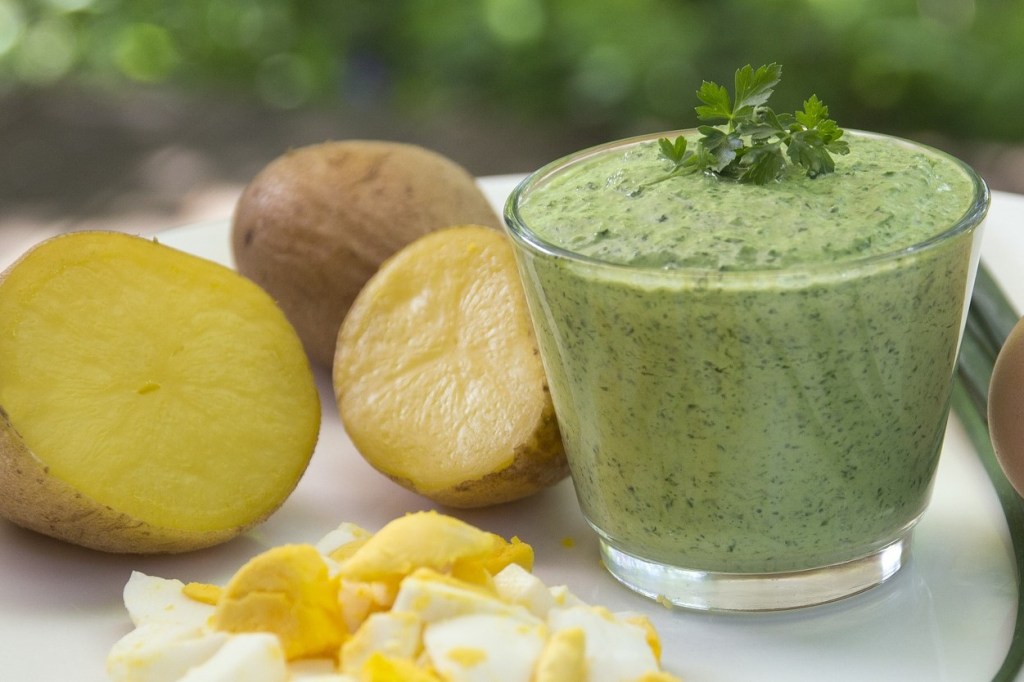
Creamy Sorrel Sauce
(adapted from More Recipes from a Kitchen Garden by Renee Shepherd)
Creamy sorrel sauce (image from Pixabay)
This lovely light green sauce can be modified in a lot of interesting ways, adding herbs like basil and dill, changing the carriers from mayonnaise to all yogurt, sour cream, creme fraiche, etc. You will love it on salmon, vegetables, potatoes and especially on freshly roasted asparagus.
1 c. any combination of plain Greek yogurt, mayonnaise, sour cream
1 c. fresh sorrel with stems removed and leaves chopped
1 T. soy sauce or 1 t. salt (soy sauce gives it more flavor but you can pump up the flavor with herbs also)
1 clove garlic, minced
Blend (a blender works best to make a velvety sauce) and serve cold.
I know everyone is writing about how gardening soothes right now, especially in these trying times. But it’s true. There is nothing that calms the inner monkey quite like getting outdoors, planting seeds, and then nurturing them into food production. The sun on your face, the scents of earth and plants, the sounds of birds, bees and other creatures have a healing effect unlike anything else.
I’ve always done it, but right now it seems more important and more effective than ever at being my Zen place. Not to mention making my family more resilient by growing our own food.
I started my gardening as a manic doer, and it’s taken years to slow down. I’m a huge fan of the slow gardening movement – of leaving things alone when you don’t need to mess with them. It’s all about the soil.
Happily, the move toward regenerative agriculture and permaculture is taking this idea to heart on a larger scale. If you get a chance, check out One Straw Revolution by Masanobu Fukuoka. He is essentially the grandfather of permaculture with his philosophy that plants will thrive in their natural settings, without human intervention.
It makes us lend a more critical eye to how our food is produced. If we do our best to protect and nurture our soil by adapting his methods of using nature’s cycles, we’ll have healthier gardens that are less susceptible to the vagaries of pests and diseases. Slow gardening, non-intervention at its best.
And it’s all about the soil. Nurturing your soil will produce delicious results like these baby beets and turnips. With little care except planting the seeds.
I don’t do resolutions. But I do love the idea of a fresh start for some things in my life. So, here is my resolve for all of us. Just start.
I’ve been reading so many gardeners’ and cooks’ resolutions that my head is spinning. But the one thing that seems a common thread through all of these is the desire for simplicity.
I’ve touted this for years, that simple gardening and simple cooking will bring us back to the garden and kitchen in a restful, pleasant way. And if it becomes meaningful or artistic, all the better. But mostly, we just need to start. Start small, start easy and most of all, don’t pressure yourself to create a masterpiece.
Gardening
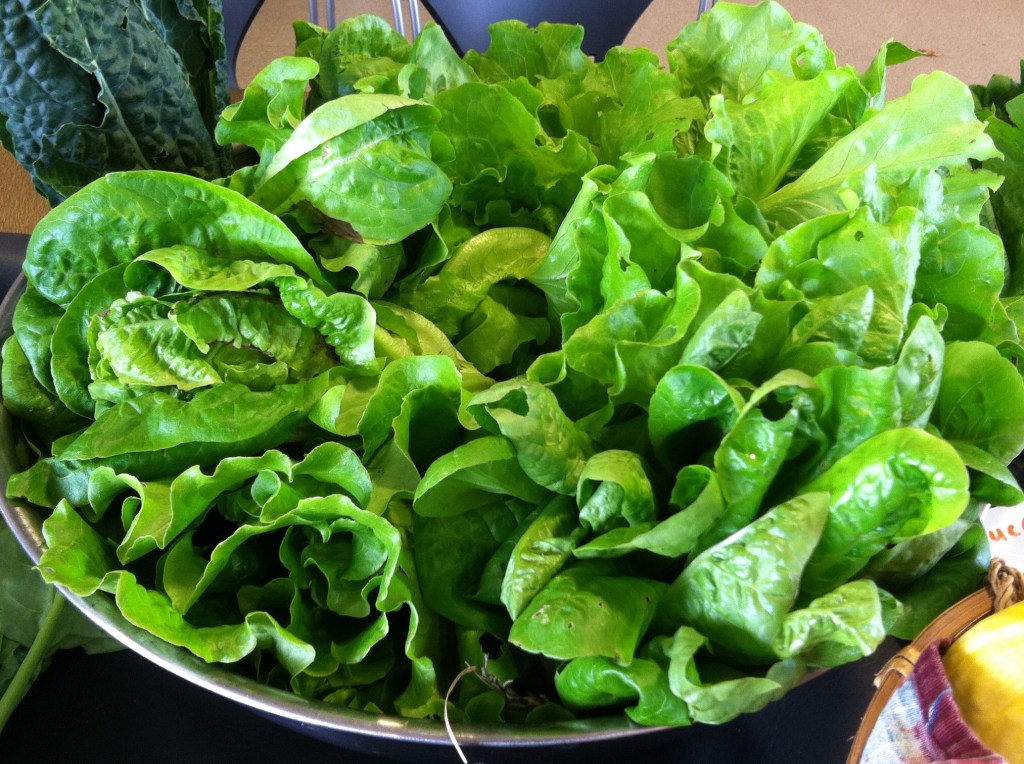
For gardening, perhaps it means getting two pots, filling them with soil and planting lettuce. When the lettuce is done, plant carrots. Or a pepper or a tomato. If you are successful (meaning you get something on the table, even a simple salad), then ask yourself if you want to go further with your garden.
Bowl full of Batavia lettuce
Cooking
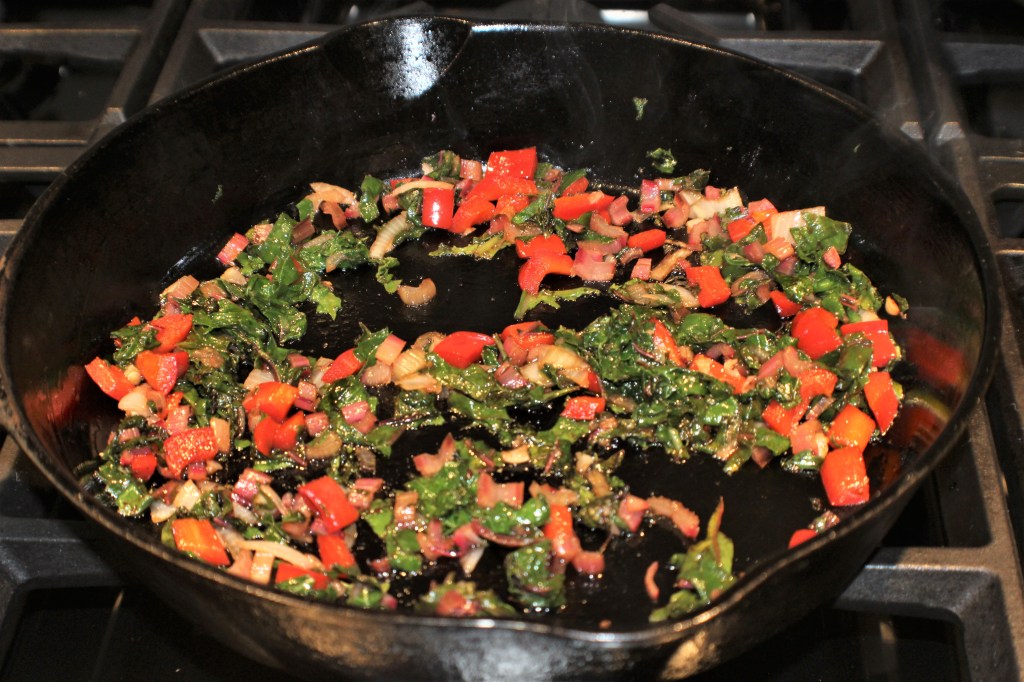
For cooking, try this: Chop a sweet pepper, a sweet onion and a small zucchini or a couple of leaves of chard. Saute them in olive oil until tender, season to your liking, and serve over cooked rice or pasta. Simple! And delicious. Cooking doesn’t have to be hard. And, you can always embellish as your heart leads you.
Sauteed peppers and greens
For a bigger challenge:
Saucy Greens
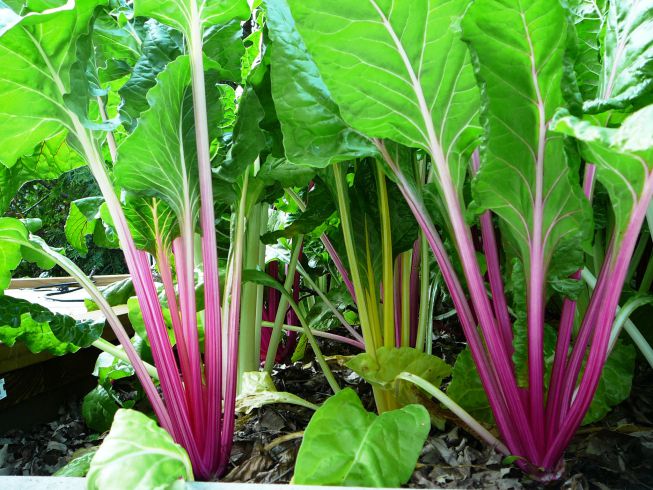
1 small bunch of Swiss chard or other greens
1 clove garlic, minced
¼ c. onion, sliced
1 T. olive oil
1 T. balsamic vinegar
1 t. Sugar
Salt and pepper to taste
½ c. chopped tomatoes
2 T. sour cream or plain yogurt
1 T. sriracha sauce if desired
2 large eggs if desired
Rinse the greens liberally and remove tough stems. Stack the leaves and roll them into a “cigar” and slice thinly. Add garlic and onion to olive oil in heavy pan and saute until tender. Fry eggs in separate pan if you intend to use them. Add greens, vinegar and sugar and saute about 5 minutes until greens are tender. Turn off the heat and stir in tomatoes and sour cream or yogurt. Salt and pepper to taste.
Most of all, have a wonderful 2020 and don’t be afraid to play!



 Kate's Garden Kitchen
You must be logged in to post a comment.