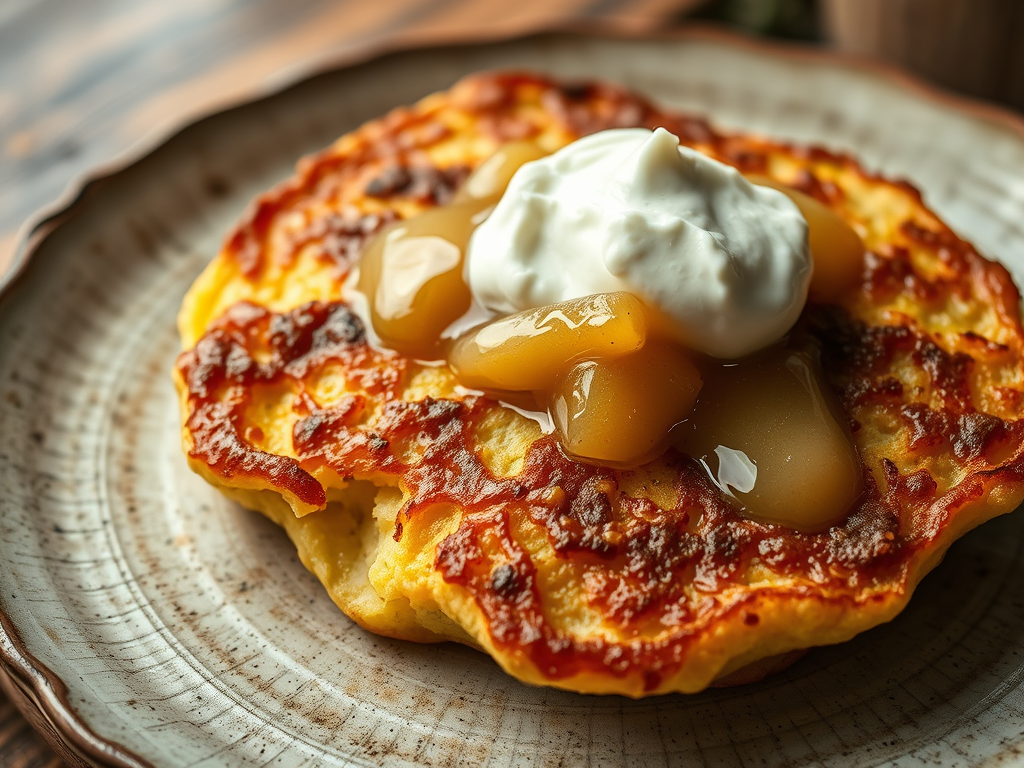
Some foods try very hard to impress you, and then there are potato pancakes. Potato pancakes do not care if you are impressed. They care only that you are warm, slightly happier than you were five minutes ago, and maybe sitting down for a minute. There’s something so cozy and wholesome – they’re crispy on the outside, creamy on the inside and a wonderful palette awaiting a dollop of sour cream or applesauce. Comfort doesn’t have to be complicated. It can be grated, pan-fried, and eaten standing at the counter while someone else asks, “Are those ready yet?”
Potato pancakes do not ask you to julienne anything. They do not require garnishes or fancy ingredients. They simply say, “Grate some potatoes. I’ll take it from here.” The best part is that you can use your imagination and creativity to combine all sorts of vegetables and seasonings. Basically, use up whatever is in the crisper.
Even if the rest of the day has been a little questionable, eating a potato pancake is an exercise in mindfulness, whether you intend it or not. They are best fresh and hot, but still excellent cold, which feels like a metaphor for resilience. In uncertain times, when big answers are hard to come by, it is good to remember that some problems can be solved with potatoes, oil, and a hot pan. Not all of them. But enough to make things feel manageable. And really, sometimes that’s all we’re asking of dinner.
The basic recipe:

2 c. any combination of mashed or grated sweet and white potatoes
½ small onion, finely chopped
1 clove garlic, finely chopped
1 egg
½ c. flour
Salt and pepper to taste
Sauté onion and garlic in a small amount of olive oil. Mix all ingredients in a large bowl and drop by large spoonfuls into a pan glazed with olive oil. Pat the cakes flat. Sauté until browned; flip and brown on the other side. Alternatively, you can place on parchment or a silpat on a cookie sheet and bake for about 15-20 minutes in a 350-degree oven. Repeat with the rest of the batter.
Serve warm on their own with a dollop of plain yogurt or sour cream, and a dollop of applesauce, currant jelly, or whatever other jelly you have on hand. Or serve cold over a fresh salad dressed with vinaigrette and sprinkle with goat cheese or feta.
Extras:

1 cup of any combination of grated raw beets, carrots, zucchini, and/or finely chopped greens
1 cup cooked grains (quinoa, bulgur, oatmeal), and/or mashed cooked beans (black, garbanzo, lentils). Just remember that the drier the mix, the more binder you may need, such as an additional egg.


 Kate's Garden Kitchen
You must be logged in to post a comment.