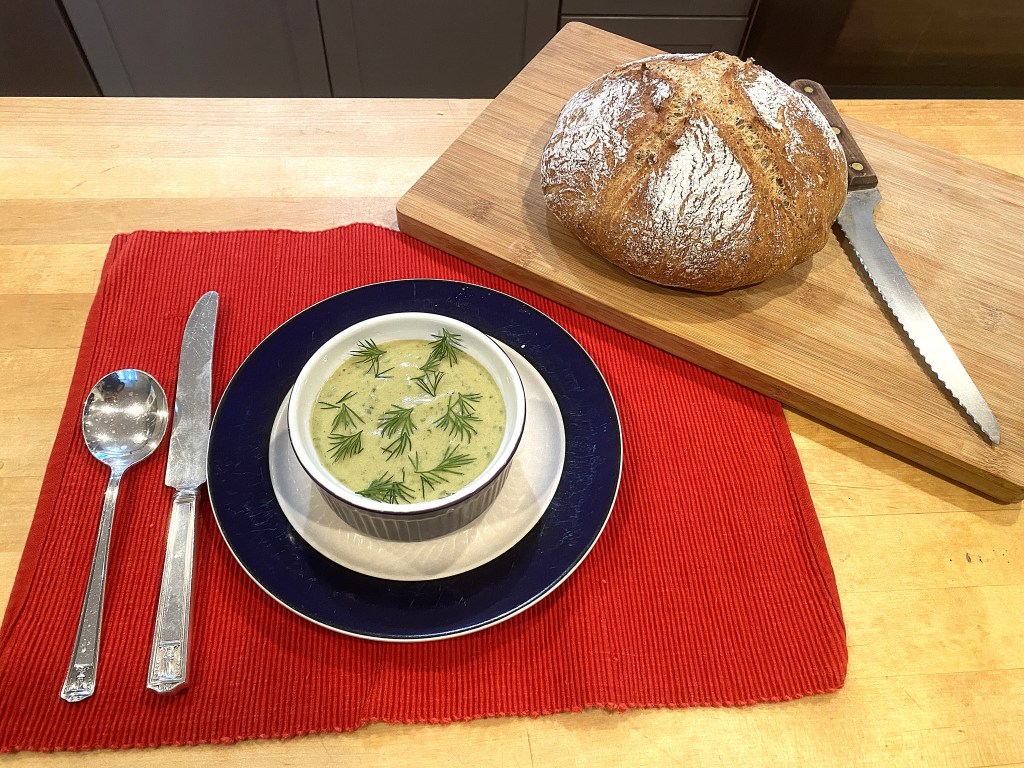
We know that fall is the traditional leek season, so I picked up a bunch at the farmers’ market this week and decided to make potato leek soup, one of my favorites. And for a riff on the traditional, I decided to give it a lemony freshness with sorrel. I realize sorrel is usually considered a spring vegetable/herb since it makes such an early appearance when we’re so hungry for fresh greens. But mine is spectacular right now. It was ravaged as usual in summer, but the new leaves are large and lush because of the fall coolness.
The idea wasn’t an original. I took inspiration from Marian Morash in The Victory Garden Cookbook, published in 1982. Remember the PBS show The Victory Garden with James Underwood Crockett? It was a Saturday morning staple, especially because Marian Morash always cooked something directly from the garden. That show and Organic Gardening Magazine still put me in a nostalgic haze. They helped make me who I am today.
When I couldn’t find a good recipe to use sorrel (other than my sorrel sauce for salmon), I looked to Marian’s cookbook for ideas. Here is her basic recipe, with a few tweaks of my own. I have reduced amounts to make soup for two.
Potato Leek Soup with Sorrel
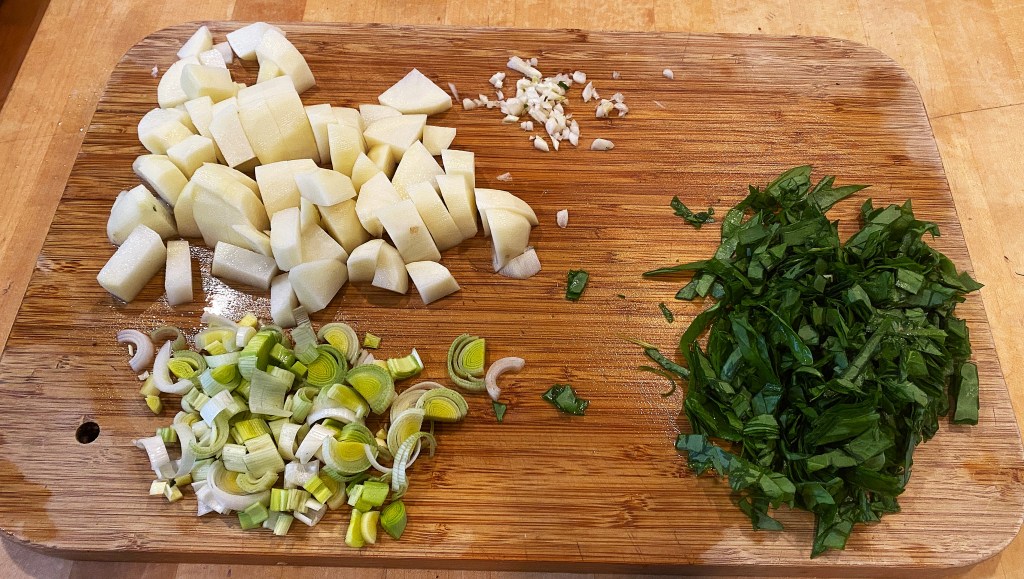
2 good-sized russet potatoes
about ten sorrel leaves
1 T. butter
½ c. chopped leeks (one or two, depending on size; white parts only)
2 cloves garlic, minced
2 c. chicken or vegetable broth
Lemon juice
Salt and pepper
½ c. evaporated milk or buttermilk
Peel and roughly chop the potatoes. Wash the sorrel and remove the ribs and stems. Chop. Melt the butter and saute the leeks and garlic over gentle heat until soft. Cook the potatoes and half of the sorrel in chicken broth until the potatoes are fork-tender (about 20 minutes). Add the leeks and garlic, and puree. Return to the pan and season to taste. Stir in the remaining sorrel and milk or buttermilk and heat gently. Serve either hot or chilled. My dill is going crazy so it’s a perfect garnish.
Vegetables that come back year after year? I can’t think of anything more enticing to a gardener than the reward of delicious food with little effort. As I keep trying to ease my gardening load, I’m captivated with the virtues of perennial vegetables.
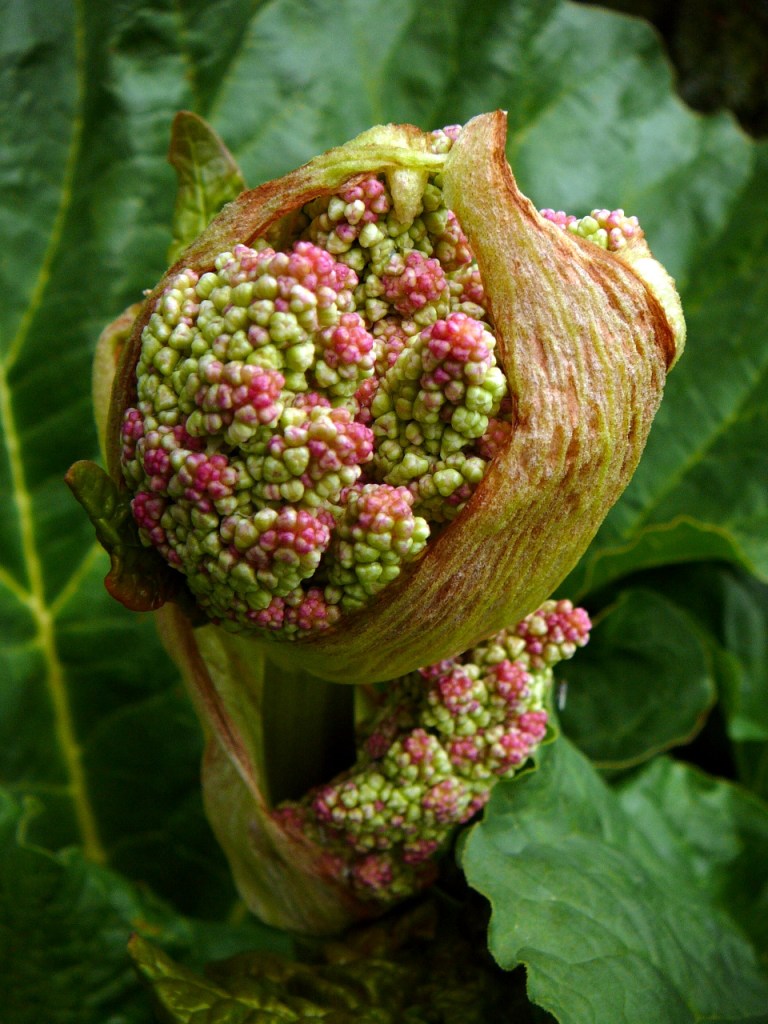
rhubarb flower
I have a good start on some, but I’m going to add more this year. There’s something so appealing about not having to replant every year. I’ll never give up my annual peppers, tomatoes and green beans, but why not add some other less intense plantings?
Earliest vegetables
Although some vegetables function like perennials, reseeding themselves or being first up in spring after having been planted in fall, there are a few true perennial vegetables that are delicious and exceptionally easy to grow. One of the best rewards is that these vegetables are often the earliest in the garden.
Perennial onions
Perennial onions
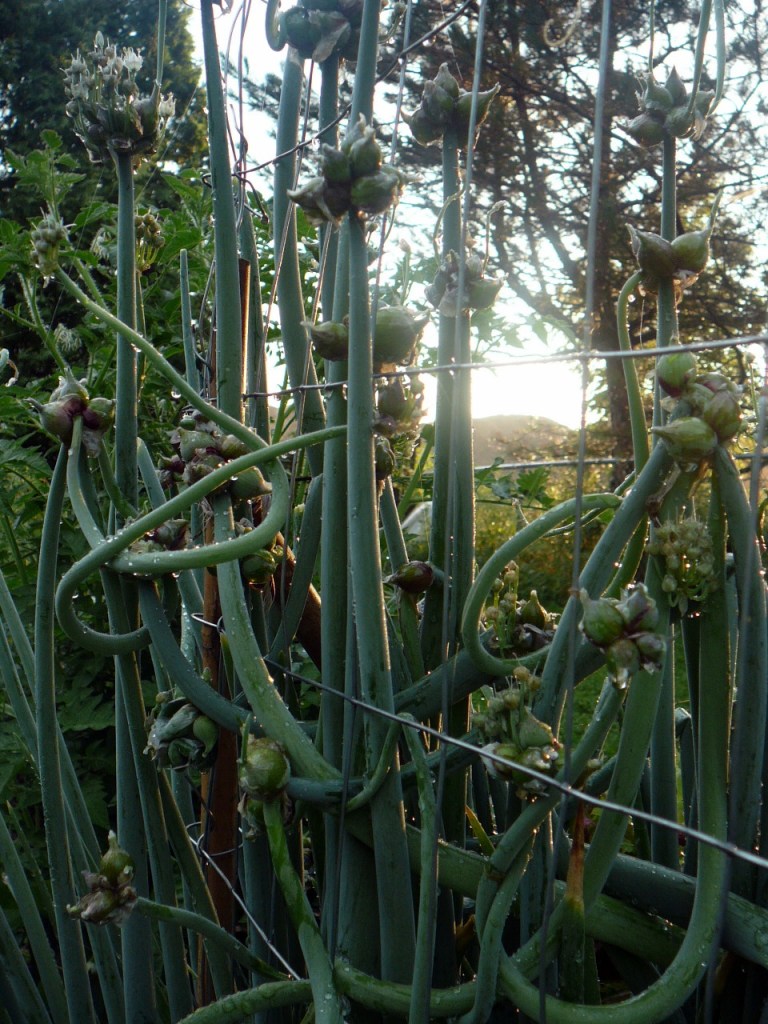
One of my favorite aromas in early spring is the combination of moist soil and a freshly pulled spring onion. Also called Egyptian onions or walking onions, they start as small bulbs that send up green scallion-like leaves in early spring, much like any other onion.
The underground bulb becomes tough and woody through the summer, but you can harvest the greens until about midsummer when they become tough. In midsummer the onions send up a flower stalk, and once the flowers bloom, they turn into small bulblets sitting at the top of the plant. If left alone, this flower stalk bends over and “plants” these bulblets.
The small bulblets then send up green scallions in late summer and into fall. They go dormant in winter and begin again the following spring. By bending over to plant the bulblets, the onions spread, thus “walking” to other parts of the garden.
Horseradish
If you’ve never tasted freshly ground horseradish, you are in for a palate teaser. Traditionally it is an accompaniment to robust meats, but try a dollop in a glass of tomato juice or as a side dressing for roasted vegetables.
Horseradish is a beautiful adornment for the garden, although it loves to spread and thrives on neglect. So site it carefully. If you don’t want it to spread, plant the horseradish in a large pot. It will reward you with handsome tropical foliage followed by clouds of airy white flowers. Any time you are ready for a dash of heat and pungency, pull up a crown, break off a piece of root and stick the remaining root back in the ground. You can harvest any time, but the roots do sweeten a bit in the fall after the first frost. Grate the root into vinegar and keep it in the refrigerator for many months.
Sorrel
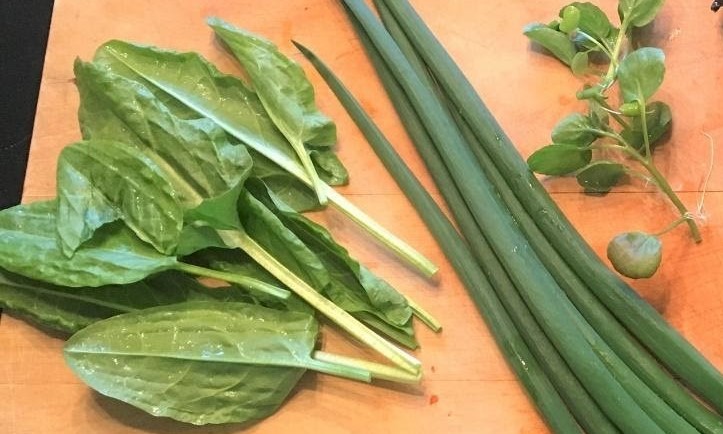
Sorrel and perennial onions
Sorrel greens have the tangy flavor of lemon and can be used fresh in salads or cooked in soups. You can harvest all season although spring and fall are traditionally the best times. The tang comes from oxalic acid in leaves; and the leaves are packed with vitamin C and minerals.
Once established, the only cultural requirements are to keep it watered during drought and divide the plant every three or four years to keep its vigor. Don’t be tempted to fertilize or the leaves tend to lose their flavor.
Asparagus
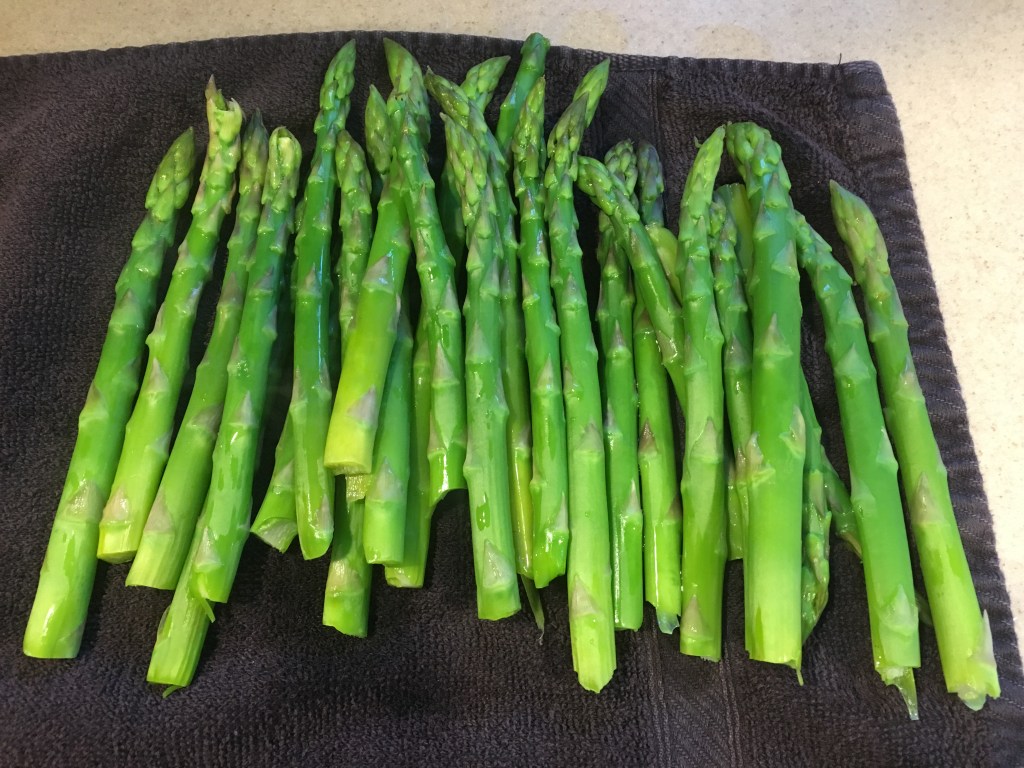
There is nothing quite like the ephemeral delicacy on your tongue of roasted asparagus. Dress with a sorrel sauce for the epitome of a fresh spring treat. Asparagus is best planted in early spring. The old adage of planting the crowns a foot deep and then filling in soil as they grow has been replaced with some sound research showing that planting about six inches below ground is all they need. The bed needs to be prepared well by loosening the soil and adding compost since an asparagus bed will be in place for twenty to thirty years. Spread the roots on a small mound of soil and cover.
It’s a labor of love because you should not harvest for the first two years because the crowns need time to establish themselves. It’s hard, but you will be rewarded with beautiful thick spears in their third year. As they come up in that third spring, you can harvest until the new spears become smaller and smaller. Stop when they are about pencil-sized and let them go to leaf. The ferny leaves are quite attractive as a backdrop to other flowers, and they turn a brilliant yellow in fall.
Rhubarb
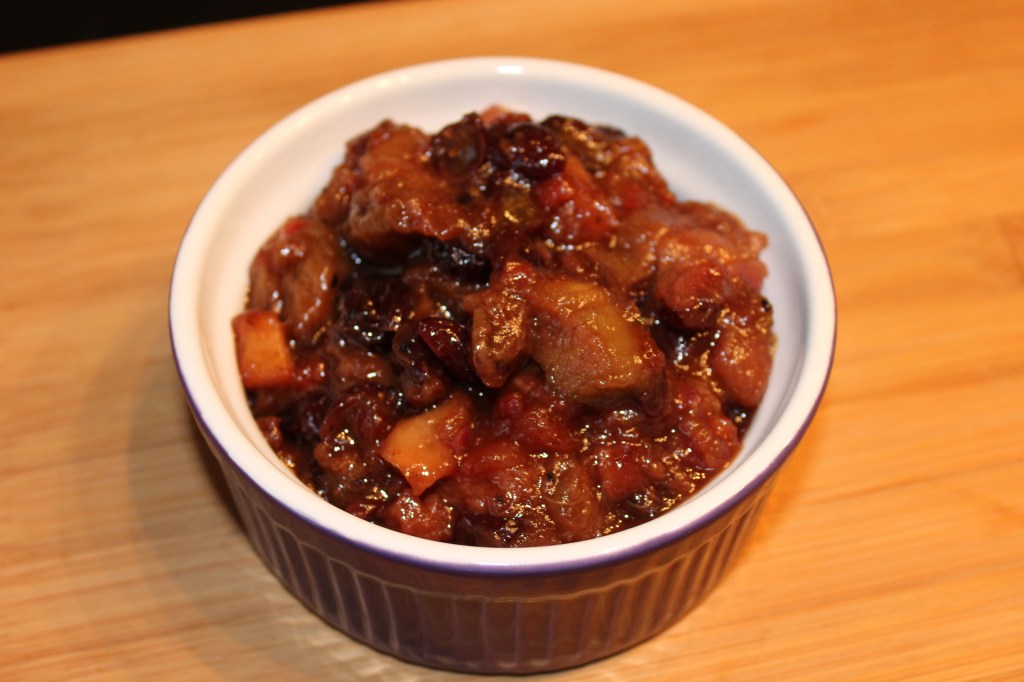
Rhubarb chutney
It’s hard to talk about asparagus without mentioning rhubarb, the other perennial vegetable that is so prominent in early spring. Rhubarb buds actually begin appearing at 40 degrees, and the enormous leaves explode into growth at the first hint of warmth. Rhubarb also takes little care, and the stems can be harvested until mid-summer when new emerging stems become considerably smaller.
Rhubarb bread and strawberry rhubarb pie are traditional favorites, but think about stewing it in maple syrup for a topping for yogurt or ice cream. It makes a great chutney or relish, a refreshing drink or a tangy barbecue sauce.
Sunchokes
Sunchokes (photo by William Brauner)
Jerusalem artichokes or sunchokes are a striking addition to the garden. They take a good-sized bed as they grow to about six feet, with golden sunflower blossoms. The chokes are underground tubers that can be harvested in fall and early winter. You’ll never get them all, and the ones that stay in the ground will sprout the following year. So you plant only one time.
Roasted sunchokes taste nutty and earthy and are a wonderful substitute for potatoes, especially for those whose diet requires fewer simple carbs.
Creamy Sorrel Sauce
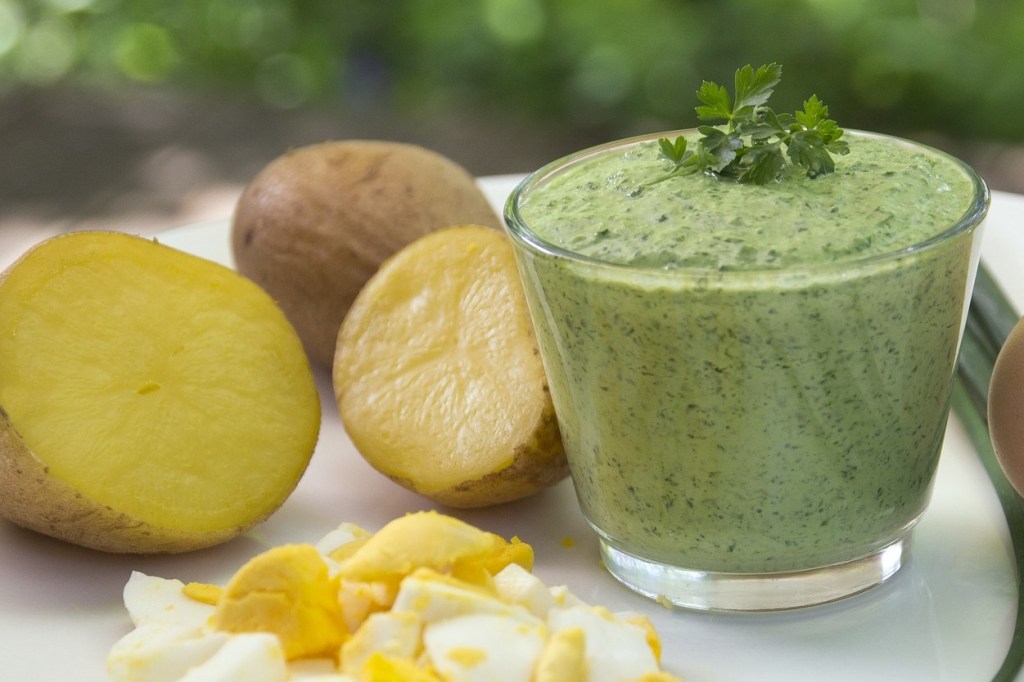
Creamy sorrel sauce (photo from Pixabay)
(adapted from More Recipes from a Kitchen Garden by Renee Shepherd)
This lovely light green sauce can be modified in a lot of interesting ways, adding herbs like basil and dill, changing the carriers from mayonnaise to all yogurt, sour cream, creme fraiche, etc. You will love it on salmon, vegetables, potatoes and especially on freshly roasted asparagus.
1 c. any combination of plain Greek yogurt, mayonnaise, sour cream
1 c. fresh sorrel with stems removed and leaves chopped
1 T. soy sauce or 1 t. salt (soy sauce gives it more flavor but you can pump up the flavor with herbs also)
1 clove garlic, minced
Blend (a blender works best to make a velvety sauce) and serve cold.


 Kate's Garden Kitchen
You must be logged in to post a comment.