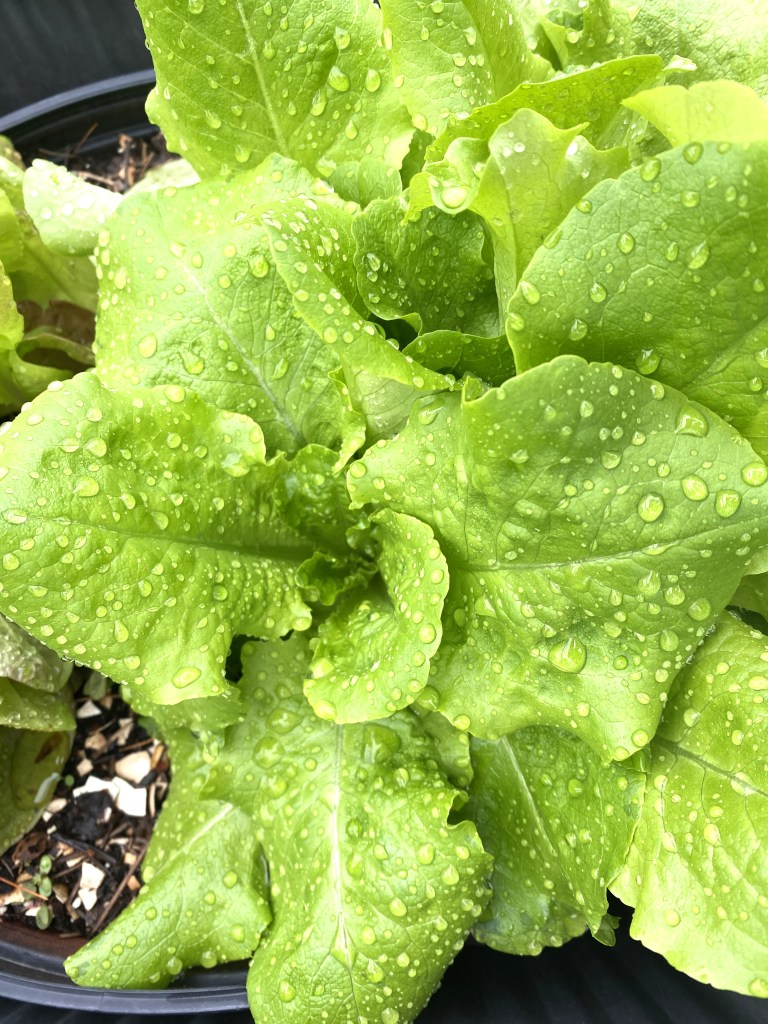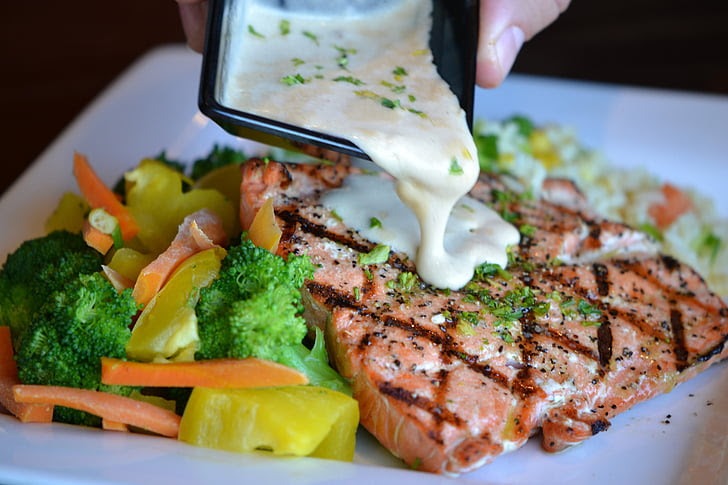
So, who wants to cook in this heat? I work in the garden in the cool of the morning and bring in my daily harvest. But when I look at the lovelies on the kitchen counter, I find I have no energy left to cook an evening meal. So, I’ve put together some of my favorite ways to avoid heating the kitchen, meals that are quick to fix, use those exquisite fresh ingredients that are abundant right now, and taste refreshing on a hot summer day.
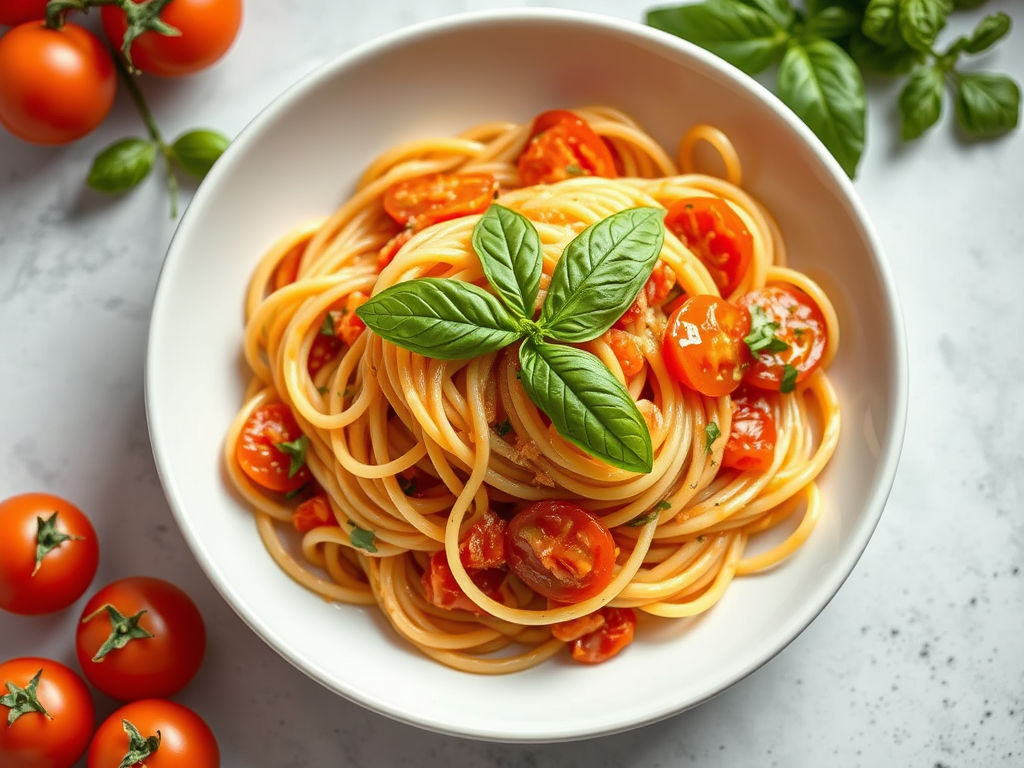
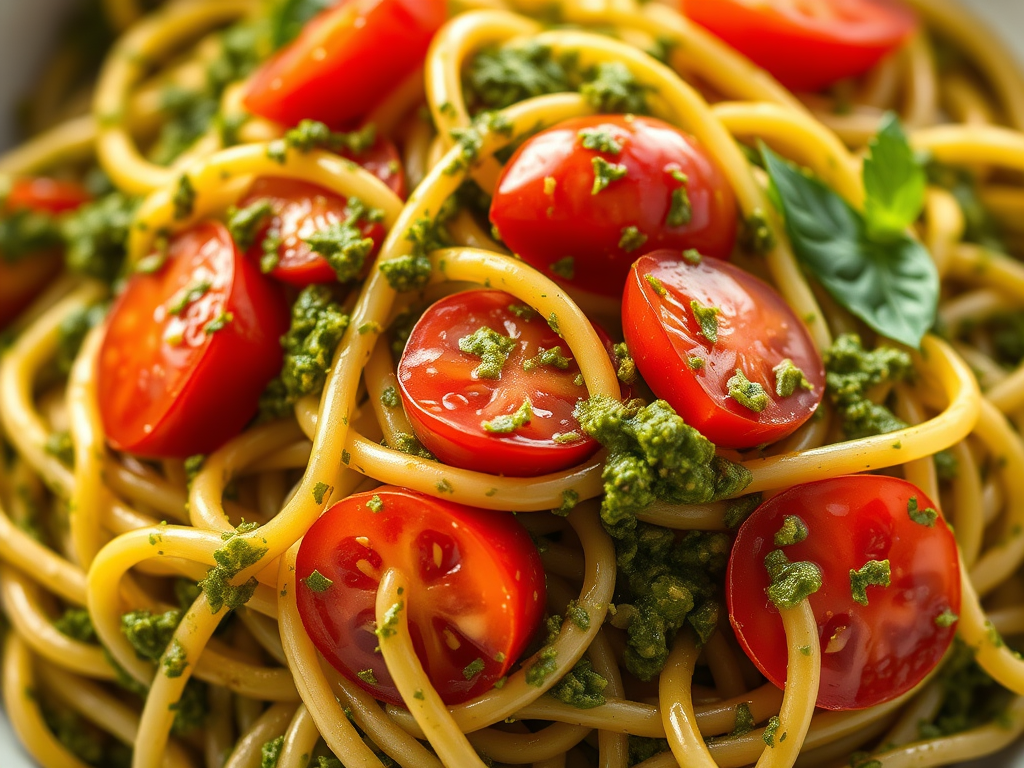
Pasta with tuna and tomatoes
Boil some of your favorite pasta and let it cool. Dress with store-bought or homemade pesto or your favorite vinaigrette. Toss with a can of albacore tuna, quartered cherry tomatoes and fresh Parmesan.
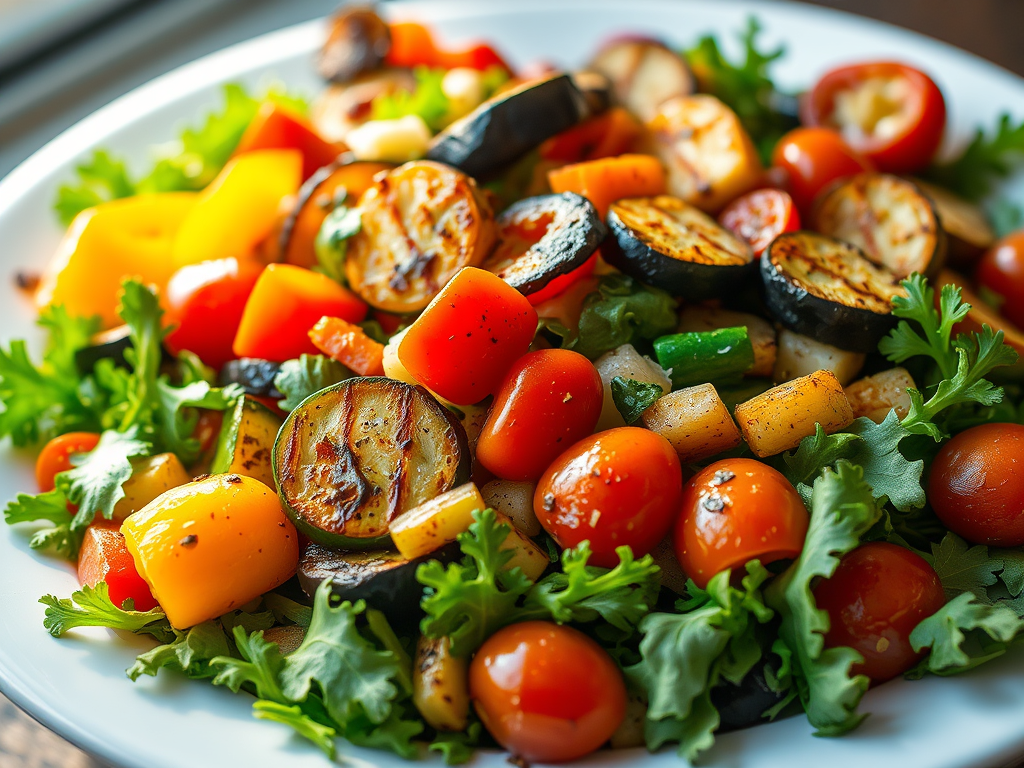
Roasted vegetable salad
Don’t be shy to heat the grill. Any vegetables you have on hand, like bell peppers, zucchini, and eggplant, take only a few minutes to carmelize a bit in a grill basket. Toss them with fresh herbs, olive oil, and a squeeze of lemon juice. Serve over crisp greens or cooked quinoa.
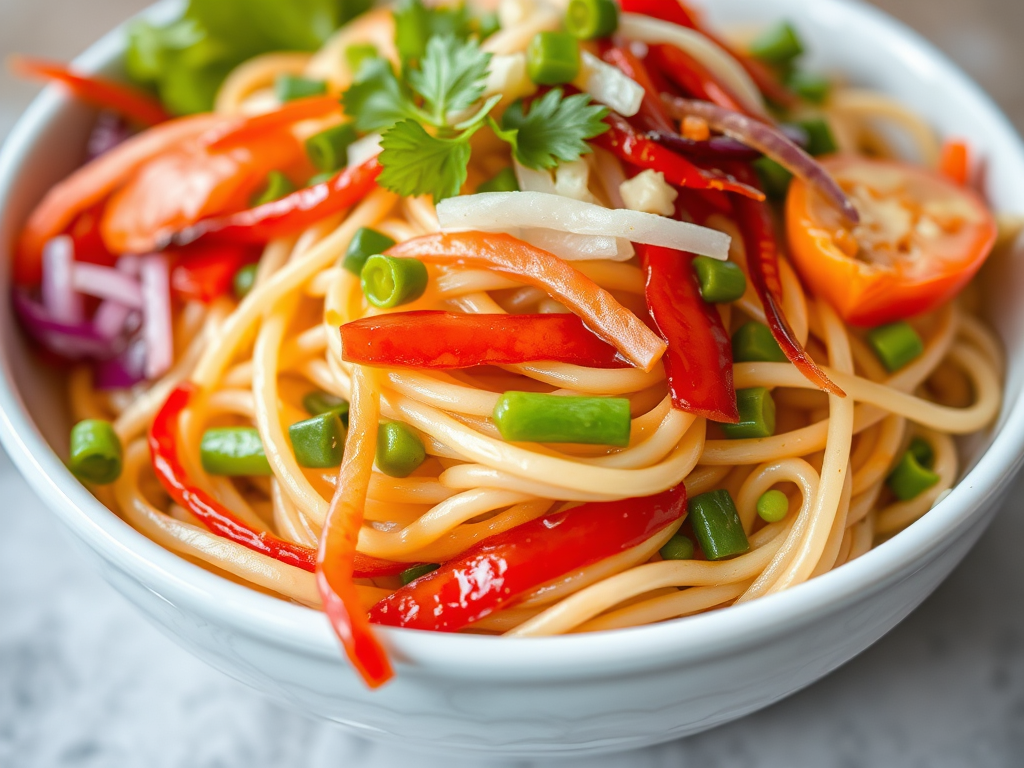
Cold noodle salad
Prepare rice, soba or spaghetti noodles according to package directions. Let cool and toss with carrots, bell peppers, cucumbers and snow peas. Toss with a sesame-ginger dressing or peanut sauce.
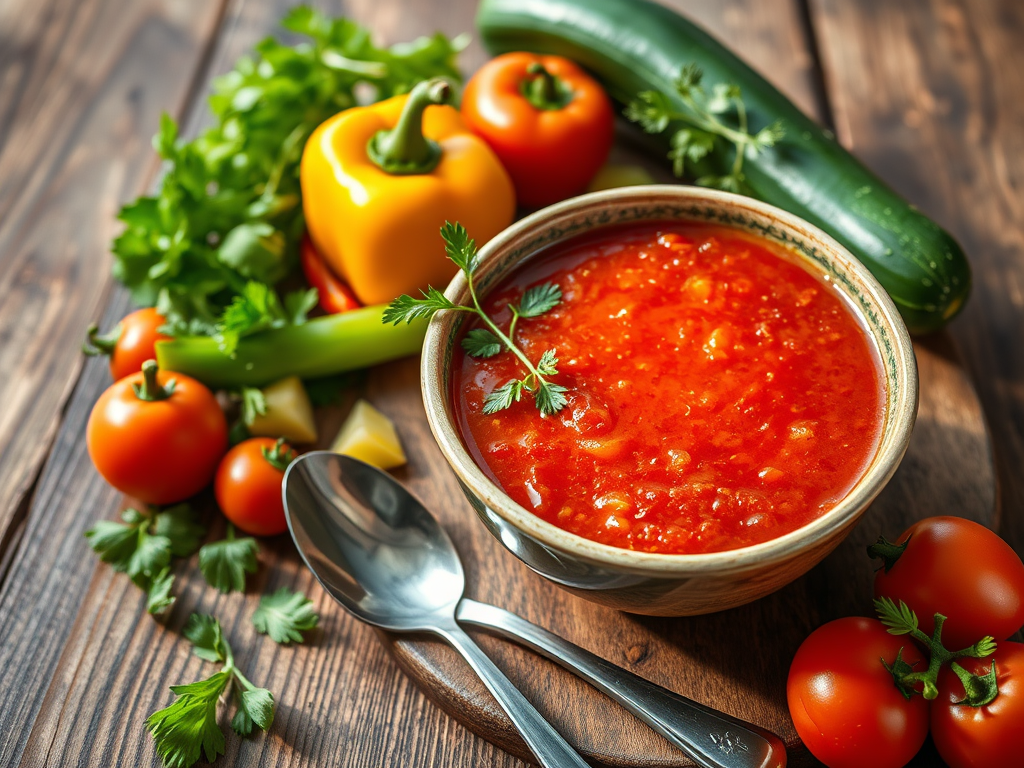
Cold soups
Gazpacho and cucumber soup are perfect for hot days. Blend fresh tomatoes or cucumbers with onions, garlic, herbs, a splash of olive oil, and a splash of your favorite hot sauce (mine is sriracha). Serve with crusty bread or sprinkle with crisp croutons.
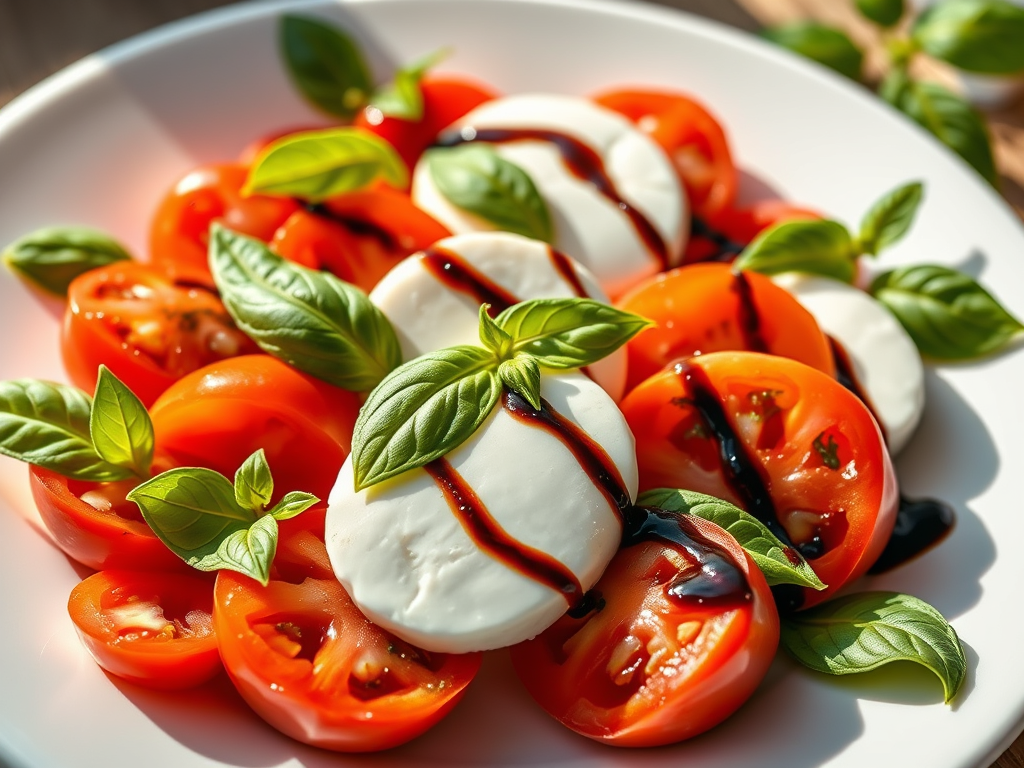
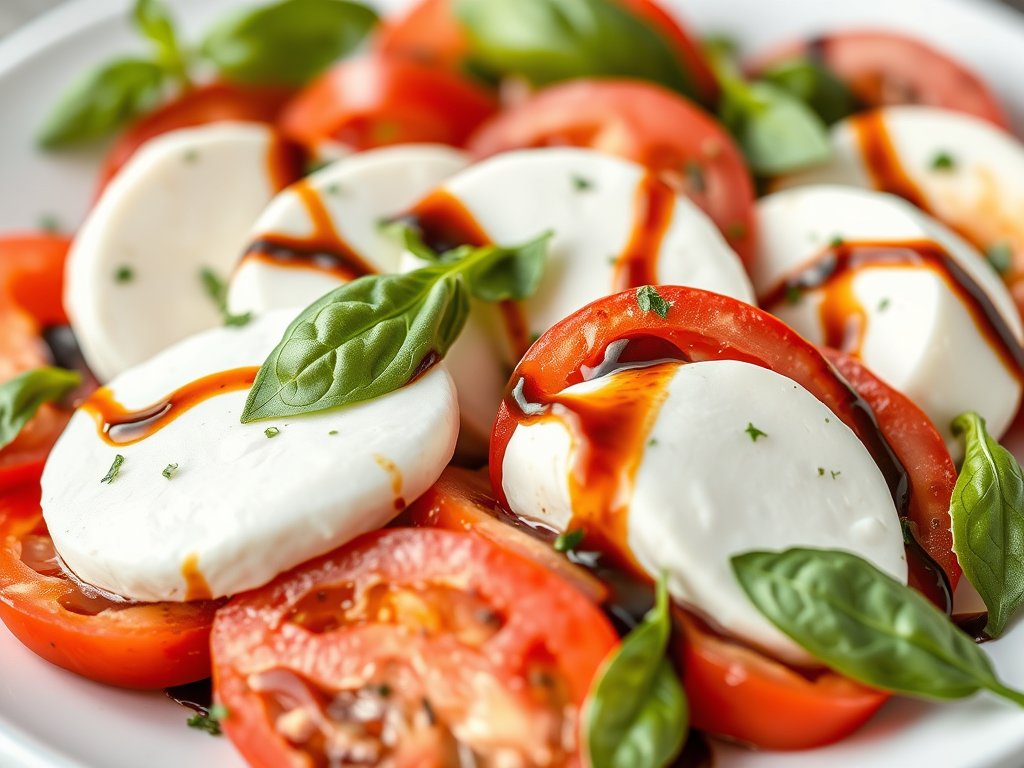
Caprese salad
Layer slices of ripe tomatoes, fresh mozzarella, and basil leaves. Drizzle with balsamic glaze, olive oil, salt, and pepper.
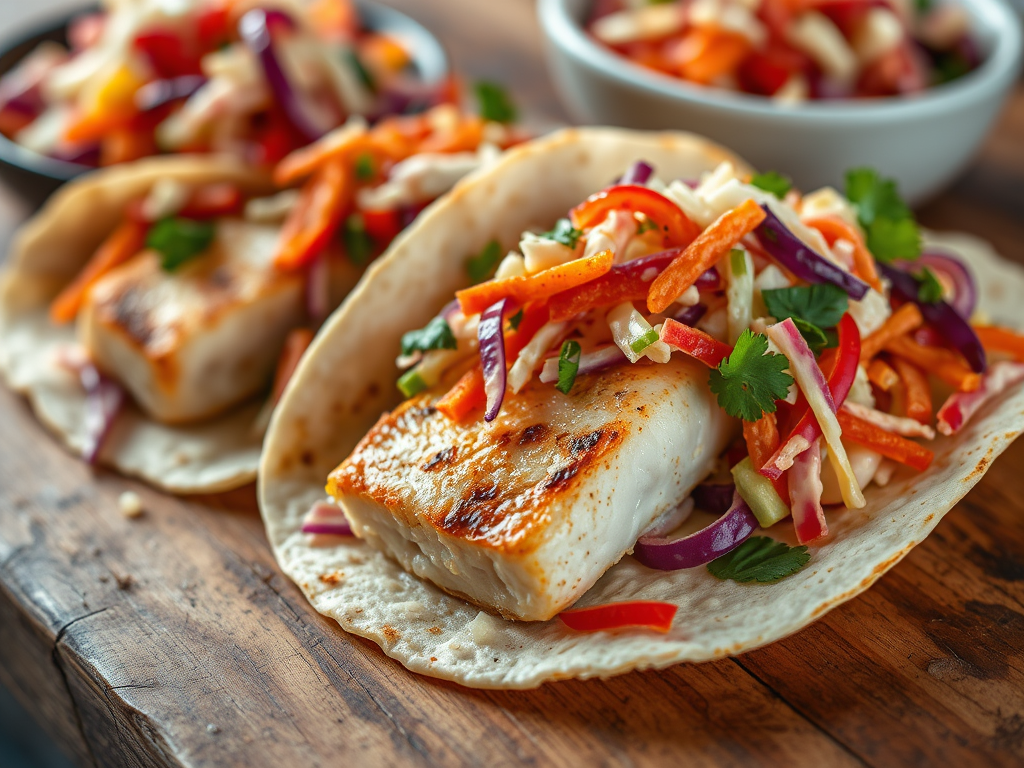
Seafood Tacos
Grill fish or shrimp, add to a taco shell, and top with crunchy slaw, avocado, and a squeeze of lime.
Happy Earth Day, everyone! At this time of year, the soothing green of plants and the soft spring days override the memories of a cold winter. It’s a time to be contemplative and appreciative of our earth and gardens. It’s the perfect time to recalibrate. clean out those closets, and clean up our food priorities.
It’s so much easier to pull off a healthy meal when the stress of planning and cooking is eased. So let’s put our energy into clean, simple meals that let us focus on our health. Put the heavier soups and stews away for next fall.
Let’s Stir-Fry!
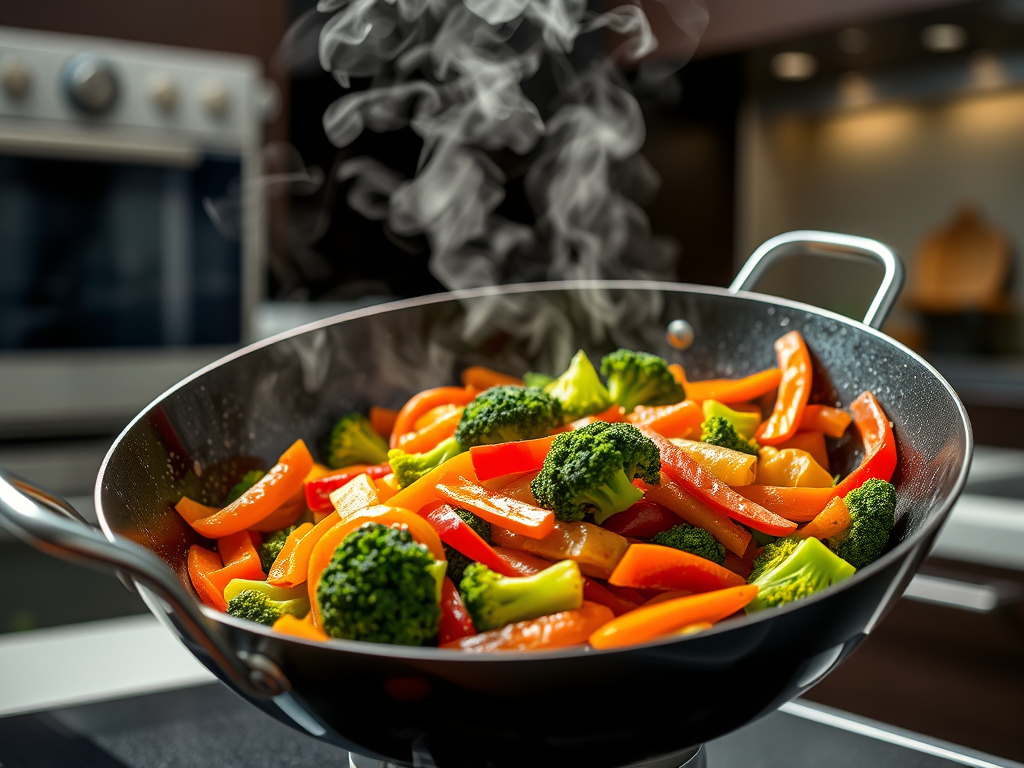
One of the freshest and easiest meals to make quickly is a stir-fry. Serve a chopped salad alongside, and you have a power-packed meal. Varying the vegetables and sauce flavors i the stir-fry can make it different each time.
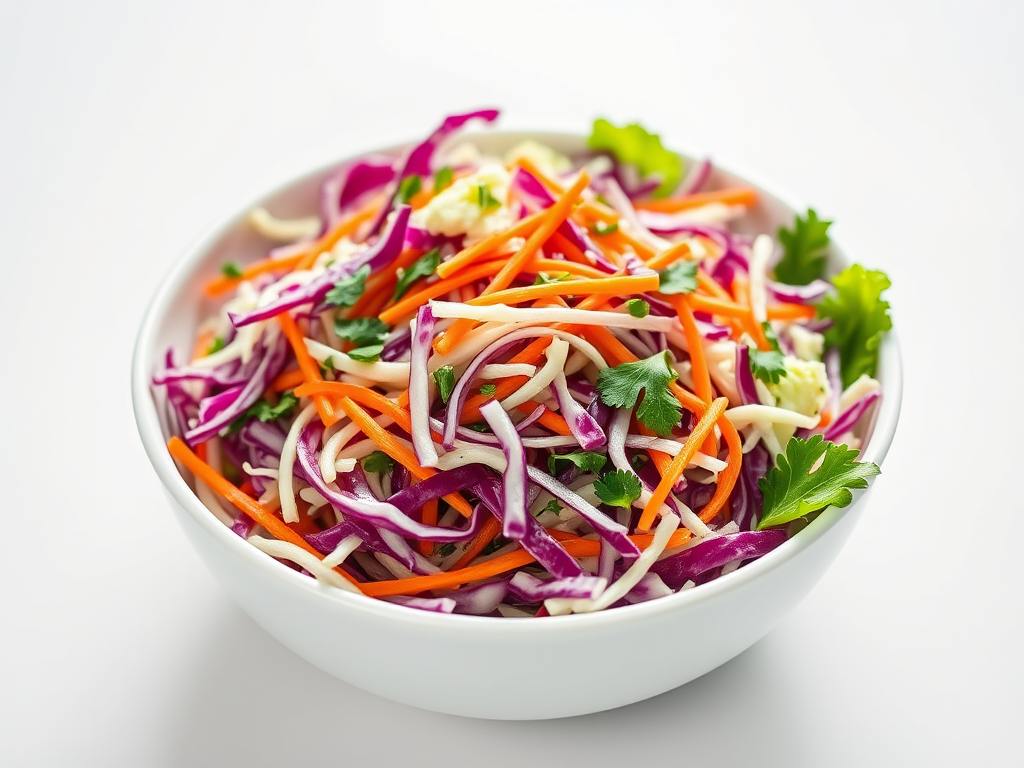
Do you use all of the head of broccoli? My family isn’t fond of the stems, so I roast the florets for a meal and then peel the stems (quick and easy with a carrot peeler) and grate them. Add to shredded carrot and cabbage for a delicious slaw. I like to make my dressing, but I keep commercial slaw dressing on hand to make things easier.
Best of all, the slaw mix makes a great salad and but can also make quick stir-fry if you use it before adding dressing. Simply add a bit of spinach or whatever greens you have on hand. Even a handful of frozen vegetables will add extra nutrition. Scramble an egg right in the pan for added protein, or add roasted tofu or leftover roasted chicken. Use a bottled stir-fry sauce of your choice, and serve over leftover rice or noodles.
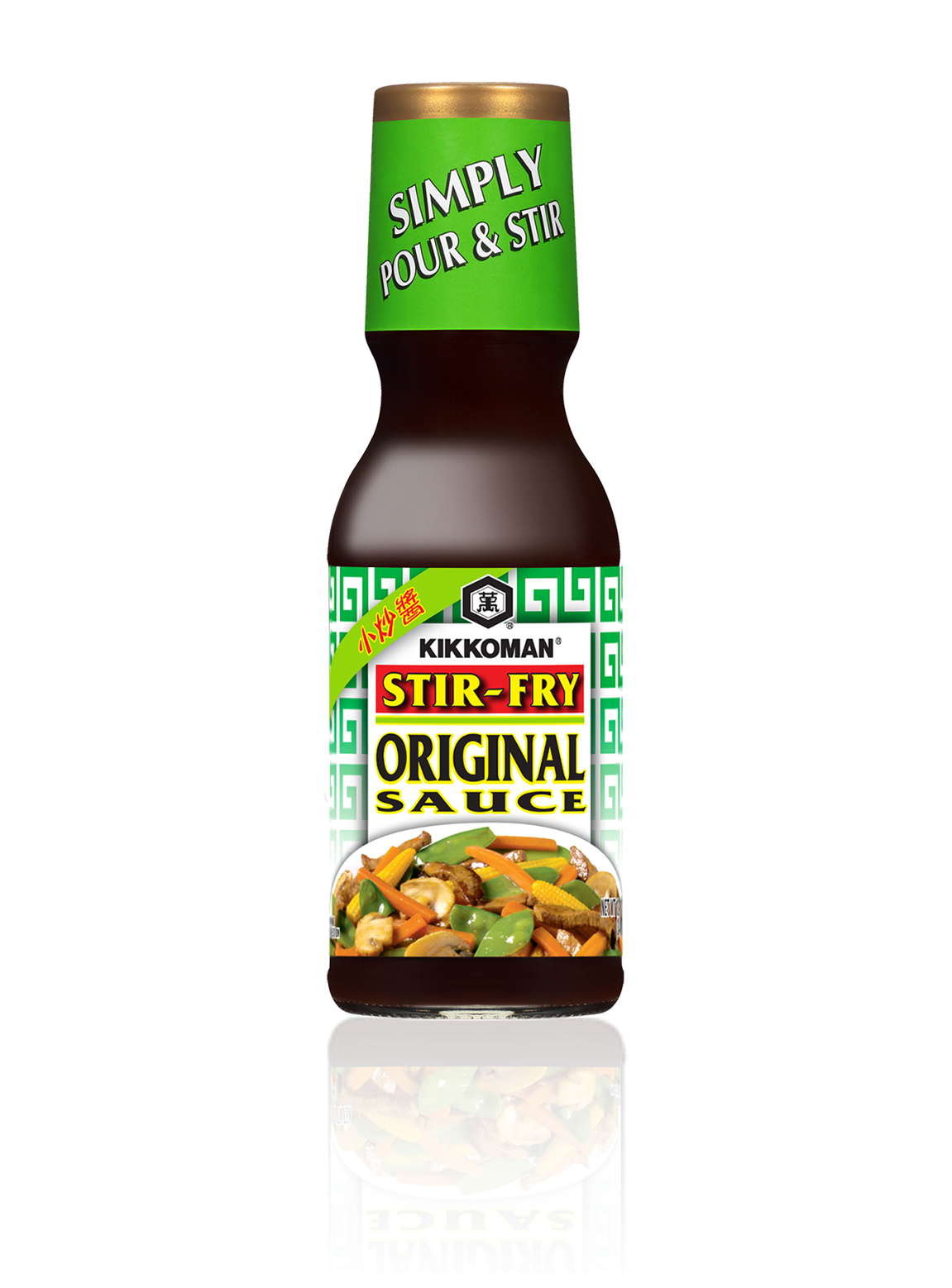
You can certainly make stir-fry sauces yourself, but don’t be hesitant to buy bottled sauces as long as you check the ingredients carefully. Having peanut sauce, barbecue, or any flavor of Asian sauces will make pulling off a quick meal even quicker.
Classic Stir-Fry sauce
2 T. brown sugar 3 T. soy sauce 1 t. grated fresh ginger 1 clove garlic, minced ¾ water or broth 4 T. cornstarch
Mix and let sit for half an hour. Add to vegetables when almost done.
Spicy slaw dressing
1/2 c. mayonnaise 1/4 c. fresh cilantro leaves packed 1-2 green onions 1 garlic clove 1 lime zested and juiced 1 jalapeño or serrano chile, stem removed 1/4 tsp ground cumin 1/4 tsp kosher salt 1/8 tsp black pepper
With the world in such a stir today, the more I can simplify my life, the better I’ll feel. Grocery prices are soaring as are restaurant prices so I’ve made a promise to myself to grow some of my family’s produce. I don’t want to complicate my life by having to manage a large vegetable garden. But many vegetables are easy to grow and can even be grown in a pot on the porch.
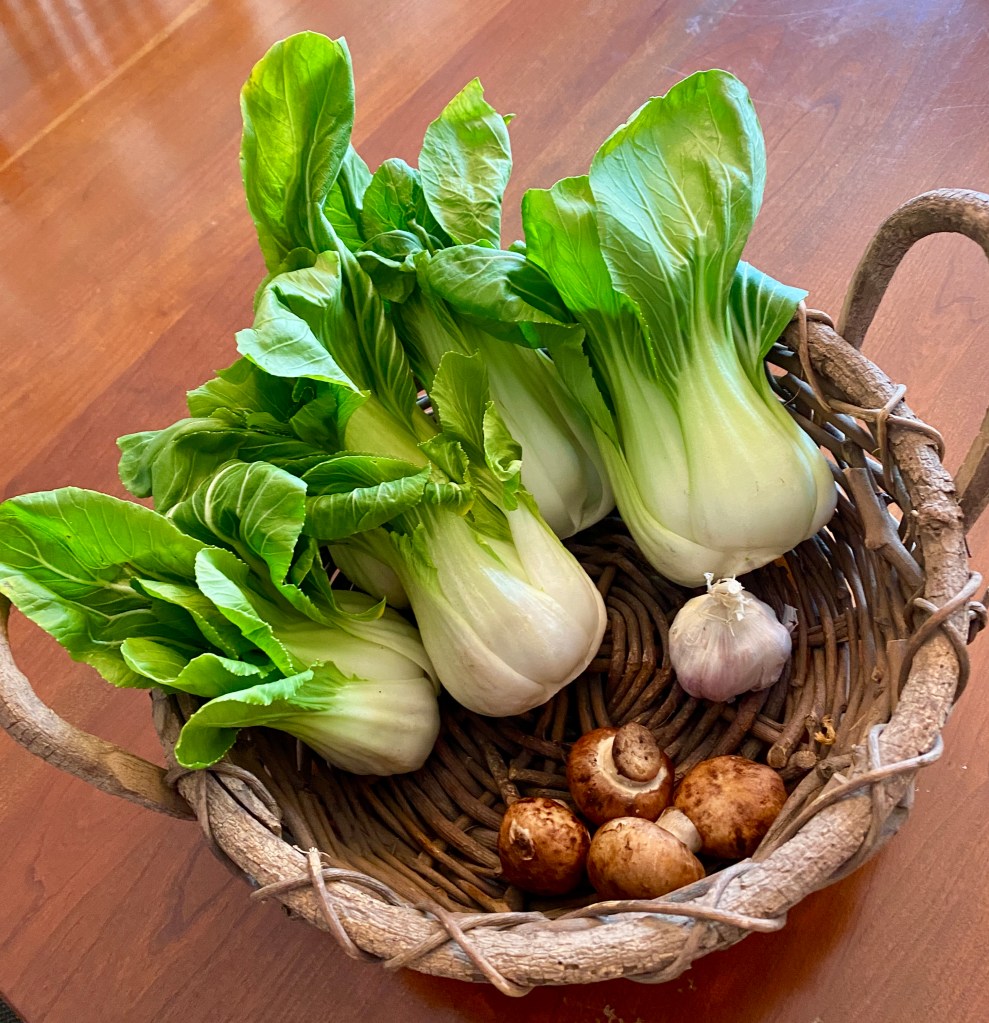
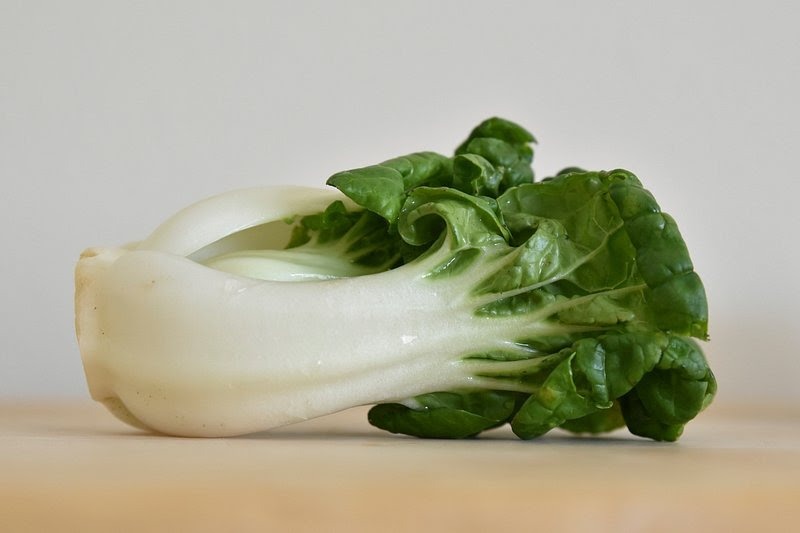
One of the keys to success is to grow in season. Unless you have perfect conditions, it won’t be possible to grow spinach, snow peas or bok choi in the middle of a hot summer. They are spring and fall vegetables. But you can grow kale, Swiss chard and many other Asian greens all summer.
Swiss Chard
And planting every few weeks will keep the produce coming. Bush beans grow beautifully in a pot, and planting every two or three weeks will keep them producing all summer.
Afraid that tomatoes need a lot of care – trellising, spraying, etc? There are new varieties of smaller tomato plants with “potato” type leaves that are compact and inherently quite disease-resistant. You can pick a warm, just ripened tomato from a pot on your porch.
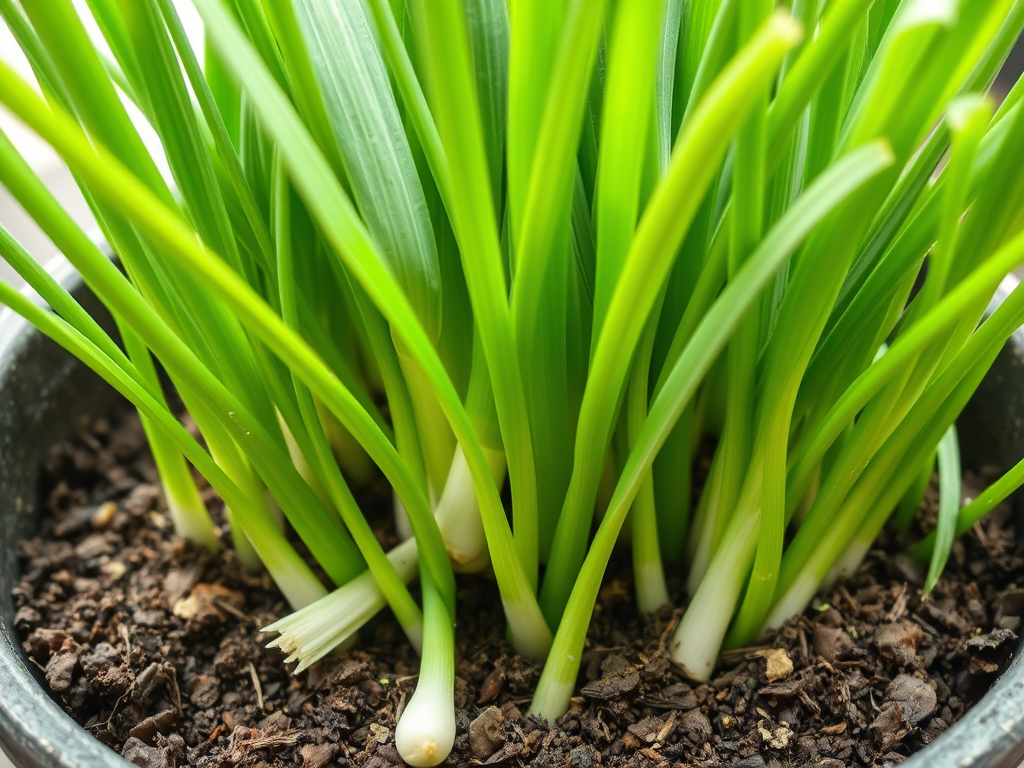
It seems every garden store has plenty of onion sets, and planting a few every two weeks will give you scallions all summer long. Plant them in a pot with radishes and you have an instant salad.
Scallions
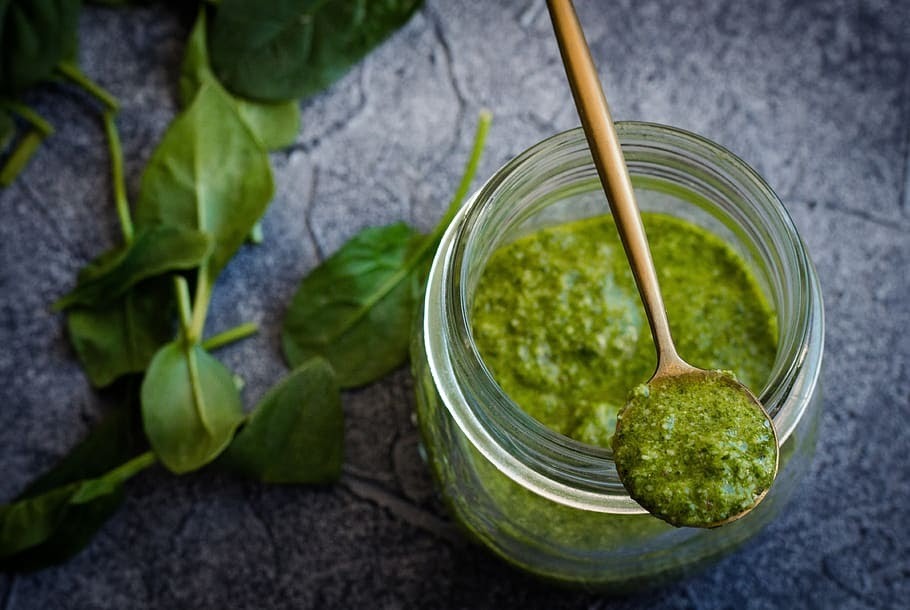
An herb garden of dill, arugula and cilantro will grow spectacularly in a pot. Add some basil and use them for pesto (what could be simpler and tastier than hot pasta tossed with pesto and fresh tomatoes?).
Classic Pesto
3 cloves garlic 2 c. fresh basil leaves ¼ c. nuts 1 ½ t. salt ¼ t. pepper ½ cup olive oil 3 oz. Parmesan
Combine all ingredients except oil and cheese in blender or processor. Add half the oil. Process while adding other half the oil. Stir in cheese as you serve.
Kale or Swiss Chard Pesto for the freezer
3 T. toasted pecans, walnuts or pine nuts (toasting gives them a fabulous flavor that raw nuts don’t have) 7 c. greens, stems removed ¼ chopped fresh basil 2 T. lemon juice ½ t. salt ¼ t. pepper 2 garlic cloves, minced (or substitute ½ cup chopped garlic scapes) 2 T. water 1 T. olive oil ¼ c. Parmesan cheese
Place ingredients through garlic in food processor – process until smooth. Slowly pour water and oil through chute with processor on until well blended. Add cheese when serving.
Ouch! Grocery shopping is getting increasingly expensive, especially now in the winter when everything must be shipped in. We have a few local farms here still growing greens and cabbages, but for the most part, we have to rely on produce from California or Florida.
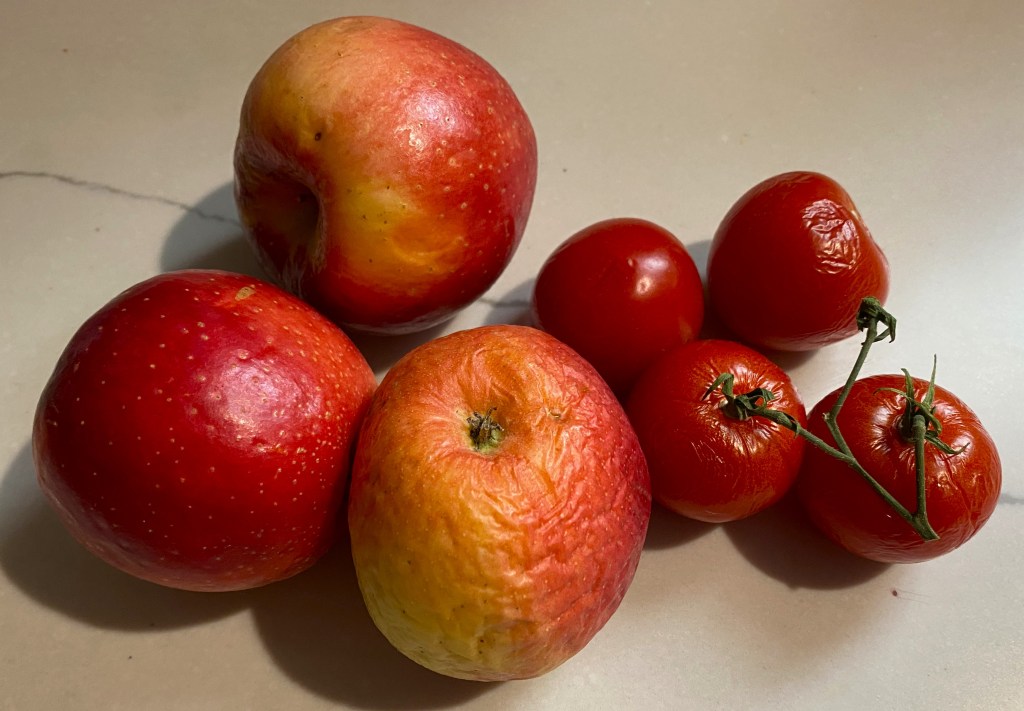
So, when I check the fruit basket or the crisper drawer and find some fruits and vegetables that aren’t looking their best, I have two options – compost or find a way to use not-quite-perfect specimens. I hate to lose the money spent on groceries so I’m finding ways to use that produce.
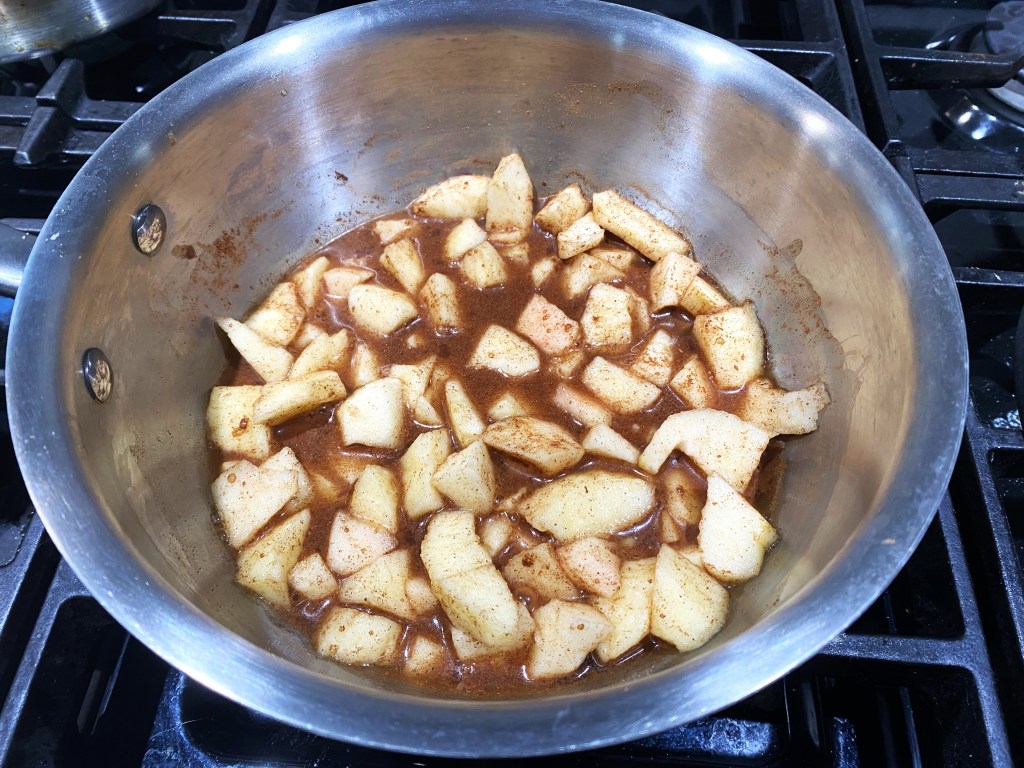
For example, it’s usually less expensive to buy a bag of apples instead of a few loose ones, so I buy that bag. By the time we get to the end, we’re all a little tired of apples so we end up with a few that don’t look so good. Rather than toss them, I peel and slice them and gently simmer them with cinnamon and a little water for a delicious topping for yogurt. You can certainly add a little brown sugar if you like. Or if I have a lot of apples, I quarter them, peels and all, and cook them down with cinnamon. A quick run through the food mill or mash with a potato masher makes great applesauce.
Apples simmering for sauce
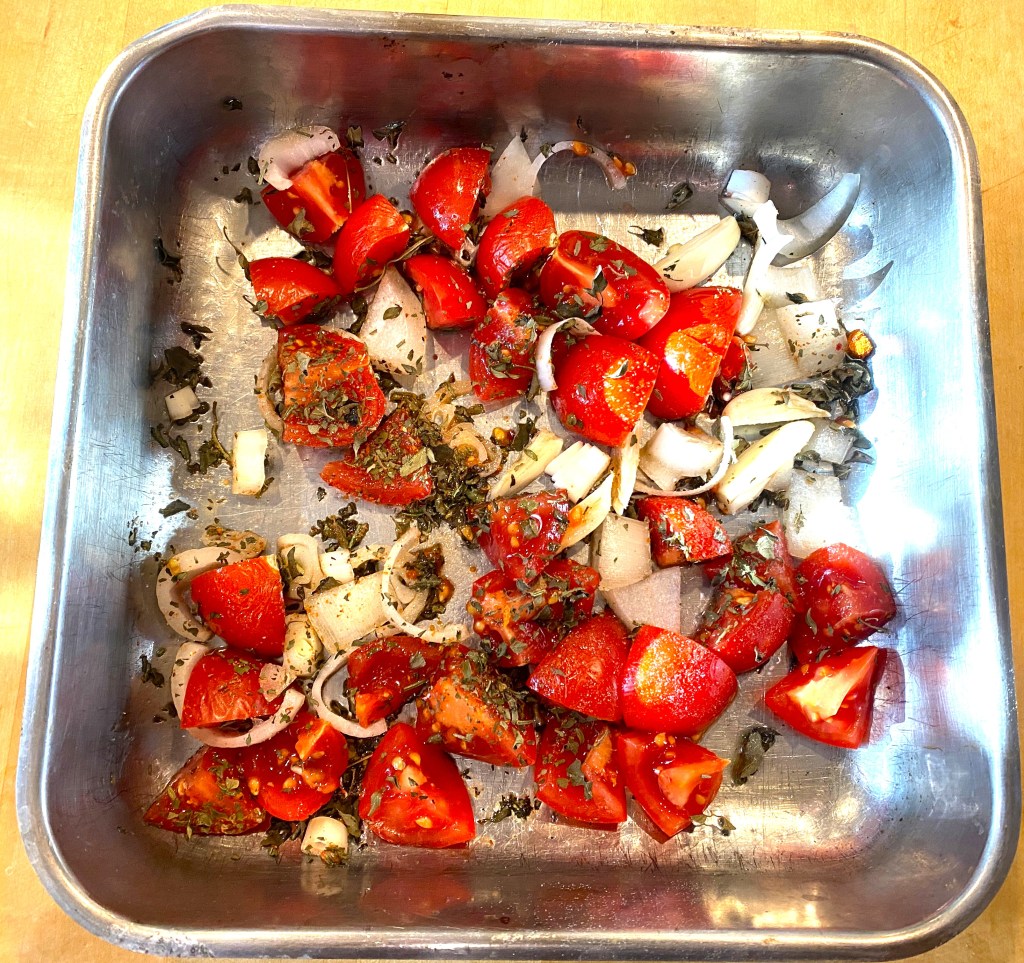
I know tomatoes aren’t great this time of year but sometimes I simply must have one. I buy Campari tomatoes which tend to have better flavor than others. But again, if I don’t use them all and they start getting wrinkly, I quarter or chop them and toss with hot cooked pasta, a bit of garlic and basil if I have it. Voila! Instant supper.
Tomatoes and onions ready to roast
The same principle applies to anything that gets wrinkly – mushrooms, peppers, carrots, zucchini. You can chop as you want and add to a stirfry. No one will ever know they were in danger of passing on to the compost pile. Add a little fresh chopped onions, crisp celery and you have the base for almost any type of soup.
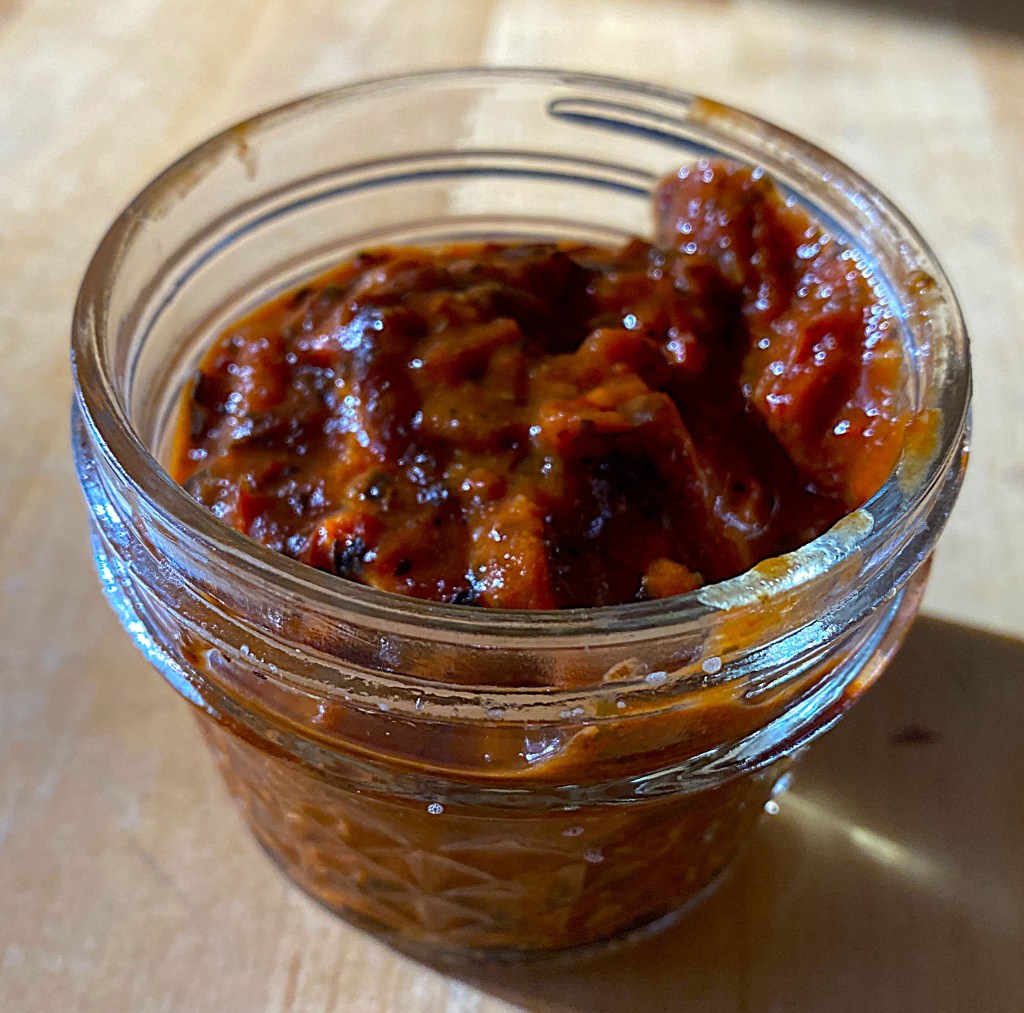
Roasted Tomato Sauce
Asian stirfry for wrinkly vegetables
Any slightly wrinkled vegetables you have on hand, chopped to whatever size you prefer ½ onion, chopped 1 clove garlic, minced Protein of choice – leftover cooked chicken, ground pork, tofu Cooked rice
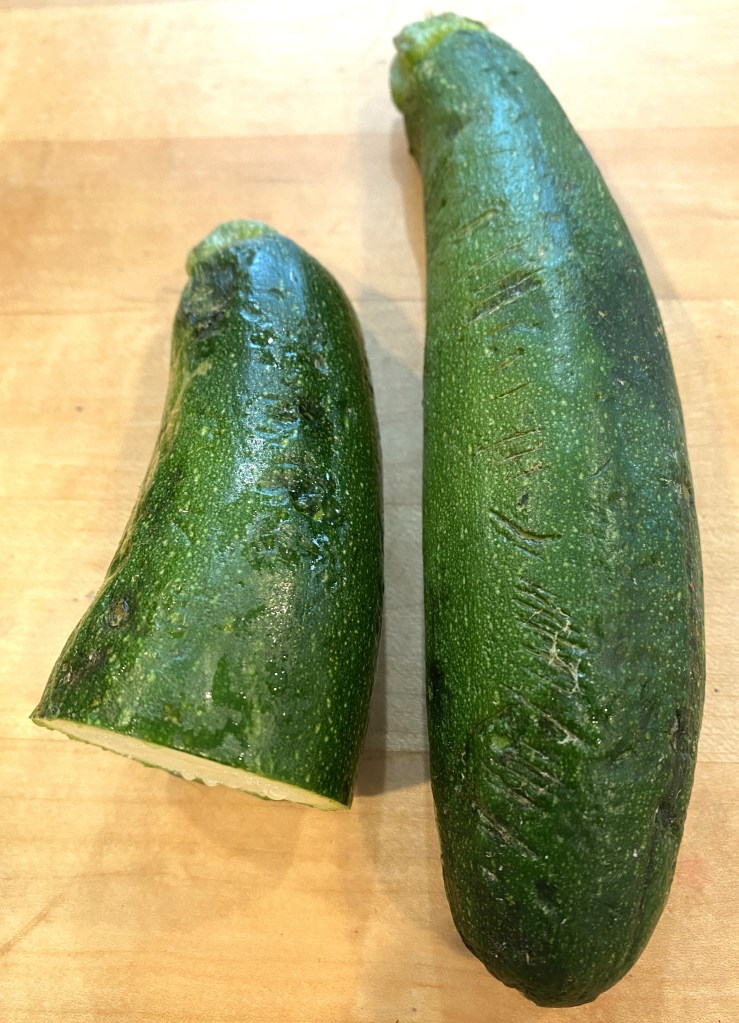
Wrinkly zucchini
Sauce – any bottled stir-fry sauce will do but if you want to make your own, here’s my favorite Asian sauce:
Spicy Szechuan sauce
¼ cup soy sauce 2 tablespoons brown sugar 2 tablespoons hoisin sauce 2 tablespoons rice wine or sake 1 tablespoon black vinegar (or rice wine vinegar) 2 teaspoons toasted sesame oil ½ teaspoon freshly ground white pepper or ¼ teaspoon finely ground white pepper 1 t. chili paste (or more or less to taste) 3 garlic cloves, finely grated 1 (1-inch) piece fresh ginger, peeled and finely grated 2 teaspoons cornstarch
Heat 2 T. olive in wok or high-sided skillet. Saute protein until done (if using cooked chicken or tofu, simply stir until heated through. Add the vegetables, 1 T. toasted sesame oil and saute until tender. Dress with sauce, heat through and serve over hot cooked rice.
We know that fall is the traditional leek season, so I picked up a bunch at the farmers’ market this week and decided to make potato leek soup, one of my favorites. And for a riff on the traditional, I decided to give it a lemony freshness with sorrel. I realize sorrel is usually considered a spring vegetable/herb since it makes such an early appearance when we’re so hungry for fresh greens. But mine is spectacular right now. It was ravaged as usual in summer, but the new leaves are large and lush because of the fall coolness.
The idea wasn’t an original. I took inspiration from Marian Morash in The Victory Garden Cookbook, published in 1982. Remember the PBS show The Victory Garden with James Underwood Crockett? It was a Saturday morning staple, especially because Marian Morash always cooked something directly from the garden. That show and Organic Gardening Magazine still put me in a nostalgic haze. They helped make me who I am today.
When I couldn’t find a good recipe to use sorrel (other than my sorrel sauce for salmon), I looked to Marian’s cookbook for ideas. Here is her basic recipe, with a few tweaks of my own. I have reduced amounts to make soup for two.
Potato Leek Soup with Sorrel
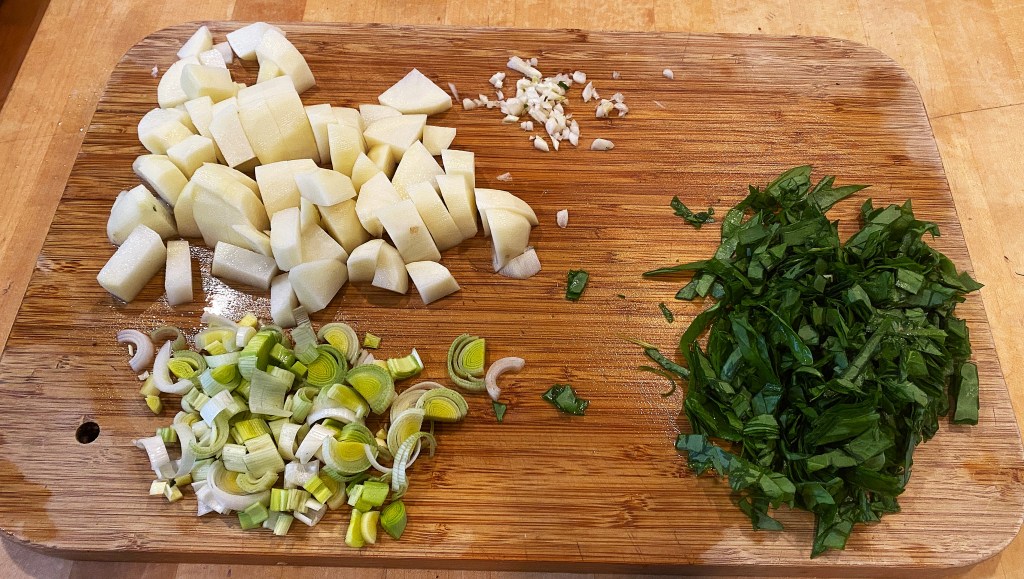
2 good-sized russet potatoes
about ten sorrel leaves
1 T. butter
½ c. chopped leeks (one or two, depending on size; white parts only)
2 cloves garlic, minced
2 c. chicken or vegetable broth
Lemon juice
Salt and pepper
½ c. evaporated milk or buttermilk
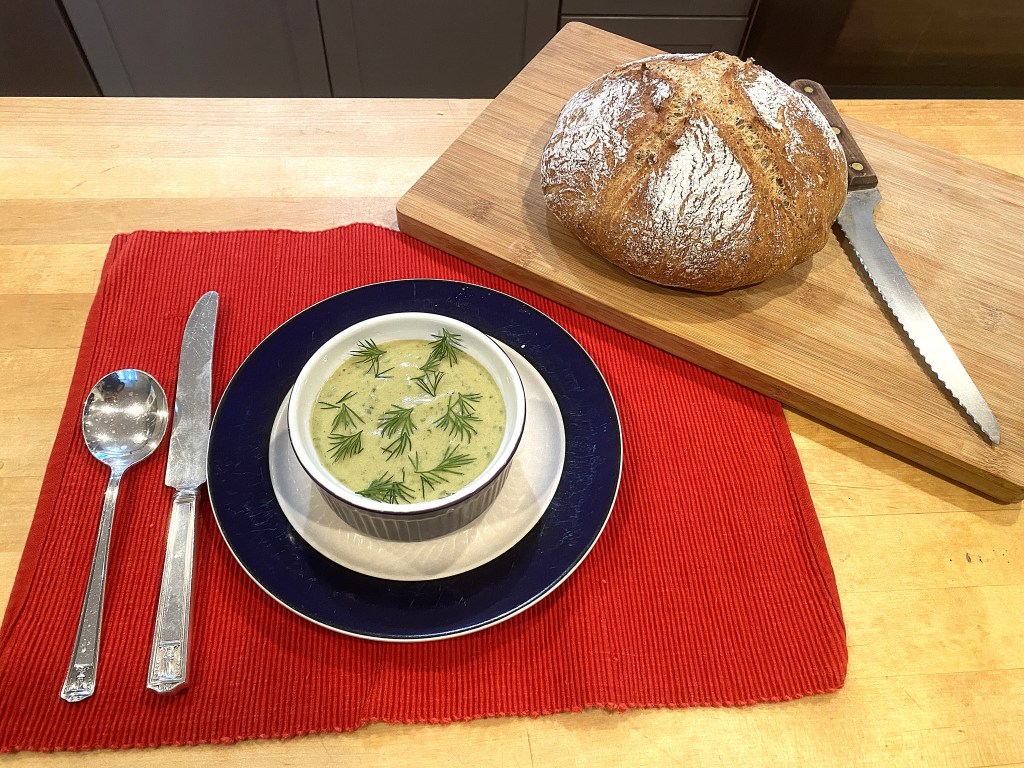
Peel and roughly chop the potatoes. Wash the sorrel and remove the ribs and stems. Chop. Melt the butter and saute the leeks and garlic over gentle heat until soft. Cook the potatoes and half of the sorrel in chicken broth until the potatoes are fork-tender (about 20 minutes). Add the leeks and garlic, and puree. Return to the pan and season to taste. Stir in the remaining sorrel and milk or buttermilk and heat gently. Serve either hot or chilled. My dill is going crazy so it’s a perfect garnish.
I live in Asheville. We survived and are coping. Hurricane Helene caused untold damage and suffering, with many, many houses damaged in our neighborhood by falling trees and inundating rain. But we are Asheville strong and will recover and rebuild.
Being in a situation without power, water or communication certainly makes one take stock of what is important. We scrambled for candles and lanterns, potable and flushing water, and gas to run generators. We frantically tried to cook everything in our freezer as it thawed (I am lucky to have a gas stove we could light with matches). As we handed food out to neighbors and hosted neighborhood dinners, I decided never to let my freezer get that full again. I love to put food by, but the food I lost was such a huge waste.
The community spirit certainly lives on, and our neighborhood, which came together to help each other through the last month, is having an outdoor chili supper tonight. We will all bring food, be grateful for the electricity to plug in the slow cookers, and happily drink our bottled water (no potable water available yet, and probably not for another month).
It’s to be a cool evening, perfect for chili, and there will be a myriad of chili flavors for all to sample as well as plentiful sides and delicious desserts. Most of all, it’s a chance to check in again with neighbors and friends to see just how everyone is doing.
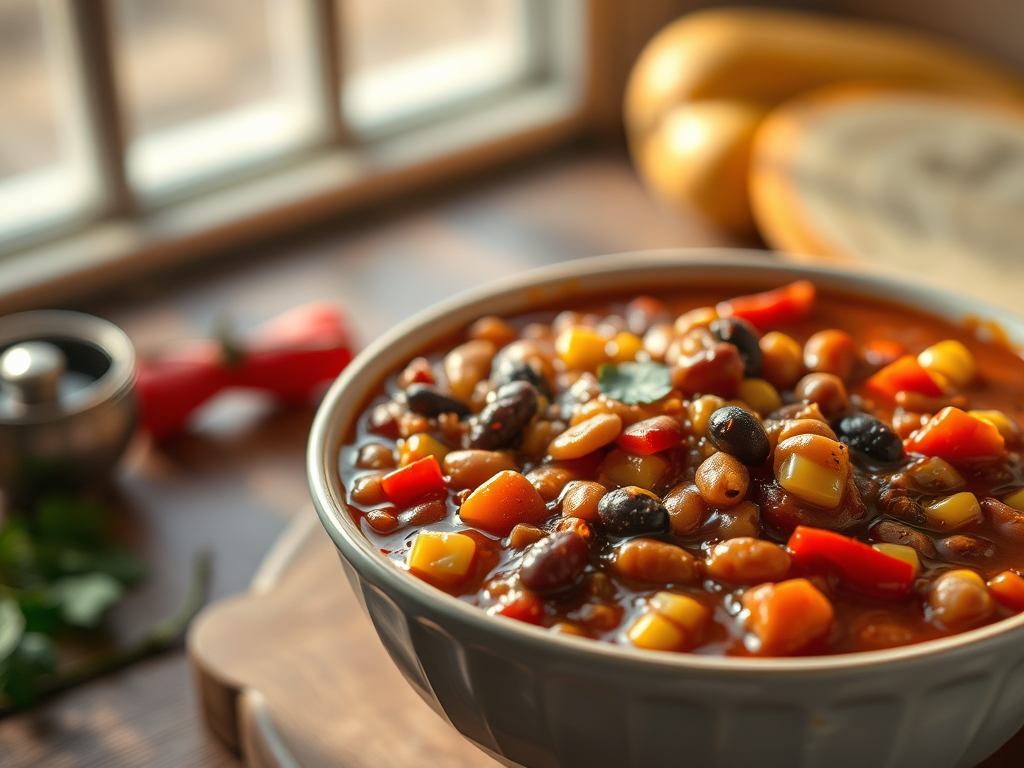
I’m taking vegetable chili, full of vegetables, beans and most of all, tummy-warming flavor. You can put anything you like in this chili and it will keep a week in the fridge and in the freezer for three months. This recipe serves 4-6 and is easily doubled for your own neighborhood chili supper. It’s a great slow-cooker meal.
Vegetable Bean Chili
olive oil for sauteing 1 medium onion, chopped 1 can chopped green chilis 2 medium carrots, chopped 2 ribs celery, chopped 1 large sweet potato, peeled if you like, chopped 4-6 cloves garlic, minced 2 T. chili powder of choice (I like a combo of regular chili powder and chipotle chili powder 2 t. ground cumin 1 ½ t. smoked paprika 2 15 oz. cans diced tomatoes, with juice 2 15 oz. cans black beans (I don’t drain and rinse – the juice adds flavor) 1 15 oz. cans pinto beans (see above) 2 c. vegetable broth or water 1 to 2 t. cider vinegar (brightens the flavor)
Garnishes: chopped cilantro, sliced avocado, tortilla chips, sour cream, grated cheddar or jack cheese
Warm the olive oil until shimmering in a large heavy-bottomed pot over medium heat. Add the onion, chiles, carrot, celery and a few shakes of salt. Saute until the vegetables are tender and the onion is translucent, 7 to 10 minutes. Add the garlic and spices and cook until fragrant stirring constantly, about 1 minute.
Add the tomatoes and their juice, beans and broth or water. Bring to a simmer and cook for about 30 minutes or put into the slow cooker on medium for about three hours. At this point check for salt. If you used unsalted beans, it will definitely need salt. Before serving you can remove a third and blend it to make a thicker chili if you like. Garnish to taste.
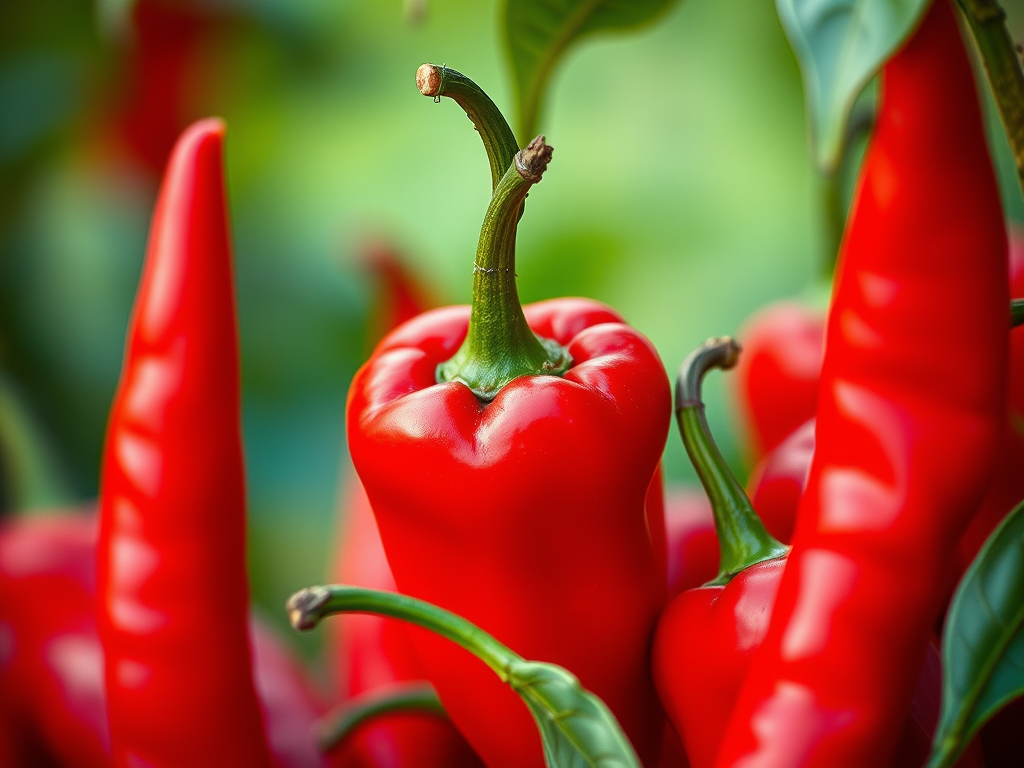
The garden is bursting with ripe chile peppers, so it’s time to make salsas, hot sauces, chili pepper powders, and other chile goodies.
I grow a few favorites every year, but I’m a sucker for new varieties as well. I’m not a fan of extremely hot peppers, especially when they are so hot that the burn takes away all flavor. But there are some mildly hot peppers that are not on that extreme scale, and the flavors you get from them is unmatchable.
I always grow Aleppo and Espelette peppers for chili powder and Jalapenos for salsa. I grow Anaheims and Poblanos for roasting for the freezer for soups and stews in winter, and this year my new pepper is Sugar Rush Peach, an heirloom that has just appeared to be readily available.
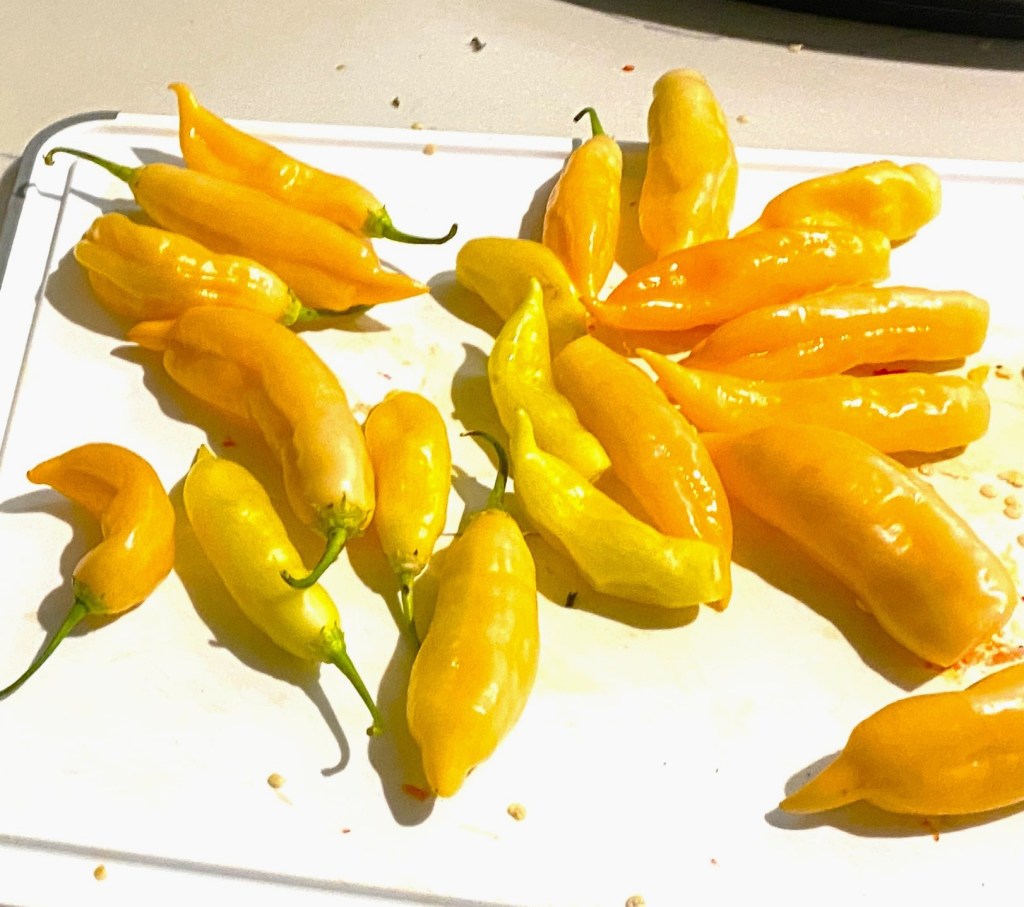
Sugar Rush Peach peppers
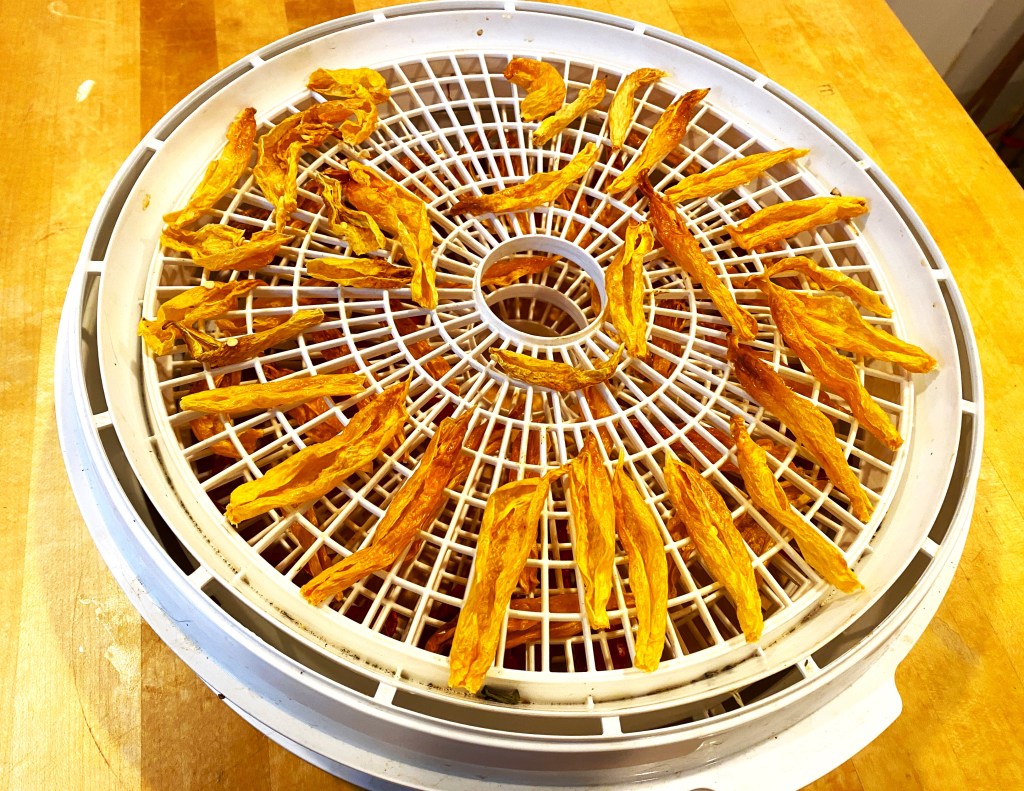
Dehydrating
I had only one plant of Sugar Rush but it was heavily laden with lovely peach-colored peppers as they ripened. So, I had baskets of these peppers and needed to figure out what to do with them. I tried grilling them and they were a little too hot to eat plain so I diced them into some salsa which toned down the heat a bit. I dried the rest for chili powder and the tropical sweetness behind the heat is delicious. My best discovery was to stuff halves with cream cheese mixed with pepper jelly and broil them. They are not quite so hot when cooked, and these “poppers” are absolutely delicious.
Two extraordinary ways to eat some of the sweeter chile peppers:
Grilled Stuffed Sweet Heat Peppers
20 Sweet Heat peppers, sliced lengthwise into halves, seeds and membranes removed (they look best if the stems are left on) 2 slices bacon 1 c. cream cheese, softened (or ½ c. cream cheese and ½ c. goat cheese) ¼ c. shredded cheddar cheese ¼ minced chives 1 small garlic clove, minced 1 T. chopped fresh thyme
Preheat grill to medium-high heat. Cook bacon until crisp and drain. Crumble bacon and add to rest of ingredients. Stuff pepper halves and place on grilling rack coated with cooking spray. Grill covered about ten minutes, until peppers are charred. Remove to serving platter and sprinkle with chopped, seeded fresh tomatoes.
Stuffed Sugar Rush Peach Peppers Ten Sugar Rush Peach peppers, sliced lengthwise into halves, seeds and membranes removed (they look best if the stems are left on) ½ c. softened cream cheese ¼ c. pepper jelly (or any favorite jelly)
Mix the cream cheese and jelly and stuff the pepper halves. Slide under the broiler just until the cream cheese gets soft and begins to brown. Remove and enjoy!
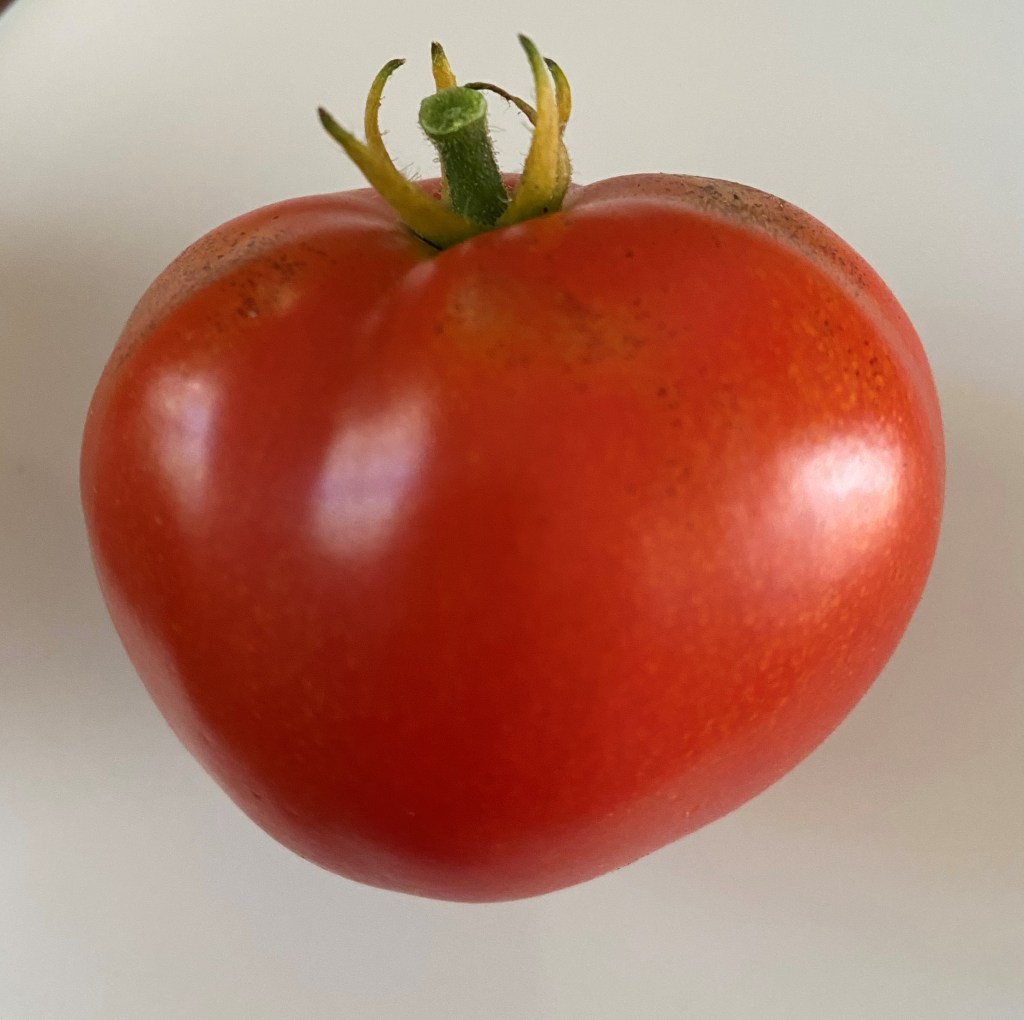
Nothing says summer like a tomato, cucumber and onion salad, a staple in our house. After a day in the sun or in the hammock, why cook? We have a pile of tomatoes fresh from the garden sitting on the counter, so this salad paired with fresh sweet corn makes a perfect summer meal.
Summer’s bounty
Summer, by nature, brings on lazy days when you want only cool, simple things to eat. And quick and easy preparation.
Open the crisper drawer and lo! Zucchini, yellow squash, snap beans, fresh dill. What can I make? Blanch the beans until crisp-tender and chill, shave the squashes into ribbons, and dress with chopped dill, feta cheese and a simple vinaigrette.
Here are a few simple meals to make your summer evenings easy. And they make good use of garden and market-fresh produce. For salads, simple olive oil and vinegar dressings are easy. But even though I love to make homemade dressings, I cave to simplicity in the summer and purchase dressings. This is a great time to use fresh herbs like basil, dill and mint.
Grilled baby carrots
Fork canned albacore tuna over cooked pasta. Top with fresh tomatoes, and fresh grated Parmesan
Grilled vegetable salad: Grill colorful vegetables like bell peppers, zucchini, carrots, eggplant. Toss them with fresh herbs, olive oil, and a squeeze of lemon juice.
Caprese salad: Layer slices of ripe tomatoes, fresh mozzarella, and basil leaves. Drizzle with balsamic glaze, olive oil, salt, and pepper.
Gazpacho or cucumber soup is perfect for hot days. Blend fresh tomatoes and/or cucumbers with onions, garlic, herbs, and a splash of olive oil.
Seafood tacos: Grill fish or shrimp, top with crunchy slaw, avocado, and a squeeze of lime and roll in soft tortillas.
Fruit salad: Combine seasonal fruits like watermelon, berries, and peaches. Add a hint of mint and a squeeze of lime or orange juice for extra freshness.
Pasta salad: Mix cooked pasta with cherry tomatoes, cucumbers, olives, and feta cheese. Dress with a light vinaigrette and fresh herbs.
Stuffed bell peppers: Fill sweet red bell peppers with quinoa, black beans, corn, tomatoes, and spices. Bake until tender.
Cold noodle salad: Toss cooked whole wheat spaghetti or soba noodles with carrots, bell peppers, snow peas or whatever other vegetables sound good. Toss with a sesame-ginger dressing.
Grilled chicken Caesar salad: Grill chicken breasts and serve over crisp romaine lettuce with Caesar dressing, croutons, and Parmesan cheese.
In my vein of saving money and making food taste better, one of my go-to’s is homemade stock. There’s nothing quite like the scent of a kitchen with a pot of simmering stock on the stove.
It’s a fantastic way to extract flavor and nutrients from ingredients while reducing waste and homemade stock adds depth and richness to soups, stews, sauces, and risotto.
I keep a bag in the freezer into which go all of my vegetable scraps. When I have a bagful, I toss them into a large, heavy pot for a long, slow simmering. You can also toss in chicken or beef bones if you are a meat-eater.
Most vegetables such as onions, carrots, celery, leeks and garlic make a delicious stock. Be sure to use the peels, especially onion and garlic, as they make the stock richer. Don’t use potato peels or scraps from cabbage, cauliflower or broccoli since they make the stock too strong. I also glean parmesan rinds from my grocery – they often sell them fairly inexpensively – and toss one or two into the stock for richness.
Add whatever herbs you have handy, either fresh or dried, such as parsley, thyme, bay leaves, basil and oregano.
Cover with a substantial portion of water and put on a low simmer. The longer you simmer it, the richer your stock will be. Four to six hours is adequate or you can cook it in a slow cooker on low overnight.
I prefer to salt my stock when I use it in a recipe, but you can certainly salt it as you make it.
Once the stock has simmered long and slow, remove it from the heat and let it cool slightly. Strain through a fine mesh strainer or cheesecloth into a clean container to remove the solids.
Let the stock cool completely before storing it. Refrigerate for up to a week or freeze for several months. I freeze mine in 1-cup portions for easy use later.
Oven Baked Risotto
1 tablespoon olive oil
1/4 cup finely chopped onion
3/4 cup Arborio rice
1/4 cup dry white wine, (optional)
3 cups stock (here’s where your homemade stock will shine)
Preheat oven to 425 degrees. In an ovenproof saucepan or Dutch oven, heat oil over medium-high heat. Add the onion and cook, stirring, until translucent, 2 to 3 minutes. Add the rice and cook, stirring to coat the grains with oil, about 1 minute.
Stir in the wine and cook until completely evaporated, about 1 minute. Stir in 1 ½ cups water, the stock, salt, and pepper. Bring to a boil. Cover, transfer to the oven, and bake, until most of the liquid has been absorbed by the rice, 20 to 25 minutes.
Remove from oven. Stir in ½ to ¾ cup water (the consistency of the risotto should be creamy), the butter, cheese and parsley. Serve immediately.
As a child, I was made to force down boiled brussels sprouts and steamed broccoli. For some reason, it didn’t occur to my mother to season with anything but salt and pepper. It took me a while to get back to eating both of those vegetables.
I will probably catch flak from readers who really do love the flavor of steamed broccoli for dissing it. But why not give it a squirt of lemon or a dash of sriracha?
So many of my friends (and my husband) are working toward the life change to a plant-based diet. Not just a new year’s resolution, but a permanent life change. A change like this is hard, but there are ways to make the transition easier and so much more likely to stick.
It’s true that vegetables don’t have the natural umami flavors of meat, but there are countless ways to make steamed broccoli and boiled carrots delicious and satisfying. Sauces are one tool, and they don’t have to be high fat, high calorie. Herb mixes are other tools.
Herbs for Mediterranean herb mix
You can buy many herb mixes ready-made off the store shelves although you may need to visit higher-end groceries to find some of the more exotic ones. Or you can mix your own. I grow herbs and chile peppers and dry them all summer. Then I mix my own mixes. It’s so easy to simply toss a tablespoon of homemade Italian seasoning into a marinara sauce.
Try to avoid ready-made packets, like spaghetti and chili mixes because they often contain ingredients that you may not want. For example, Lawry’s spaghetti sauce mix has these ingredients: “Modified Food Starch, Sugar, Salt, Onion, Mushrooms, Garlic Powder, Spices (Including Paprika And Parsley), Hydrolyzed Soy Protein, Whey (Milk), Natural Flavors (Beef And Pork), Cheddar Cheese (Milk, Cheese Cultures, Salt, Enzymes), Torula Yeast, Citric Acid, Disodium Guanylate, Disodium Inosinate.” While these are not inherently bad ingredients, why not make a cleaner simple Italian mix of oregano, basil, marjoram, paprika and garlic?
The ethnic aisle in the grocery is my favorite place to browse. Mose ethnic cuisines have intriguing spice combinations and sauces. My latest love is Za’atar seasoning which is made of thyme, sesame, sumac and sometimes cumin and coriander. I love this sprinkled on roasted potatoes and chicken, and used to season minestrone for a change from traditional Italian seasoning. I was able to buy a big package at my local grocery.
Here are some sauces and herb mixes to bring your cooking up to the highest standards of flavor and healthy eating. Most are readily available in the grocery. Have fun shopping!
Sauces: Moroccan harissa Japanese miso (white and dark) Korean Go-chu-Jang Indian garlic curry paste Thai red or green curry paste Thai sriracha sauce (try mixing this with coconut milk for an astounding sauce for roasted broccoli) Mexican salsas (way too many choices here)
Spice mixes: Indian garam masala Spanish sazon Creole blackening Italian Mediterranean Mexican adobo Jamaican jerk French herbes de provence
Roasted Potatoes with Za’atar – Warm, comforting and full of umami flavor
For two: Preheat the oven to 425. Peel (or leave the skin on) and cube 1 pound of potatoes (Yukons or golds work well). You can also quarter small red potatoes. Rinse in a colander and roll dry on a dishtowel. Drying them off makes the oil and seasonings stick.
Toss with 2 tablespoons of high-quality olive oil, salt and pepper, and a tablespoon of Za’atar or any other seasoning mix. For spicy potatoes, toss with chile oil in place of the olive oil.
Prepare a baking dish large enough to hold the potatoes in one layer with a film of olive oil or cooking spray. Place in a cold oven in the bottom third of the oven. Roast for about 20 minutes, stirring and turning them once at the halfway mark.
You must be logged in to post a comment.