Garlic Scapes

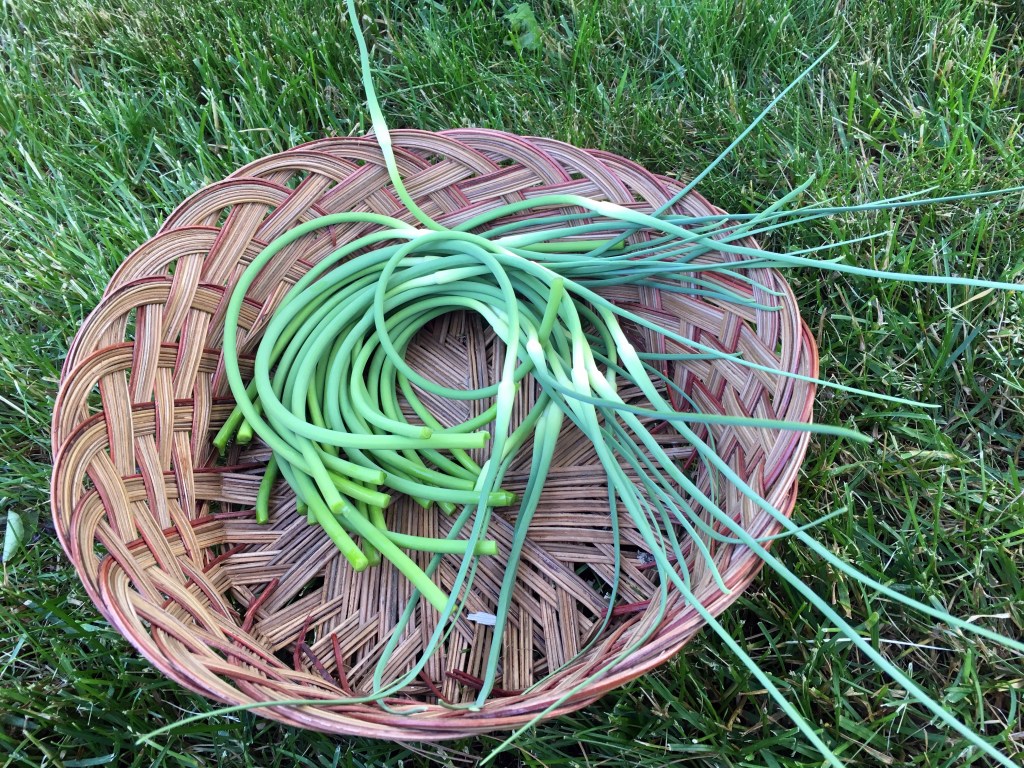
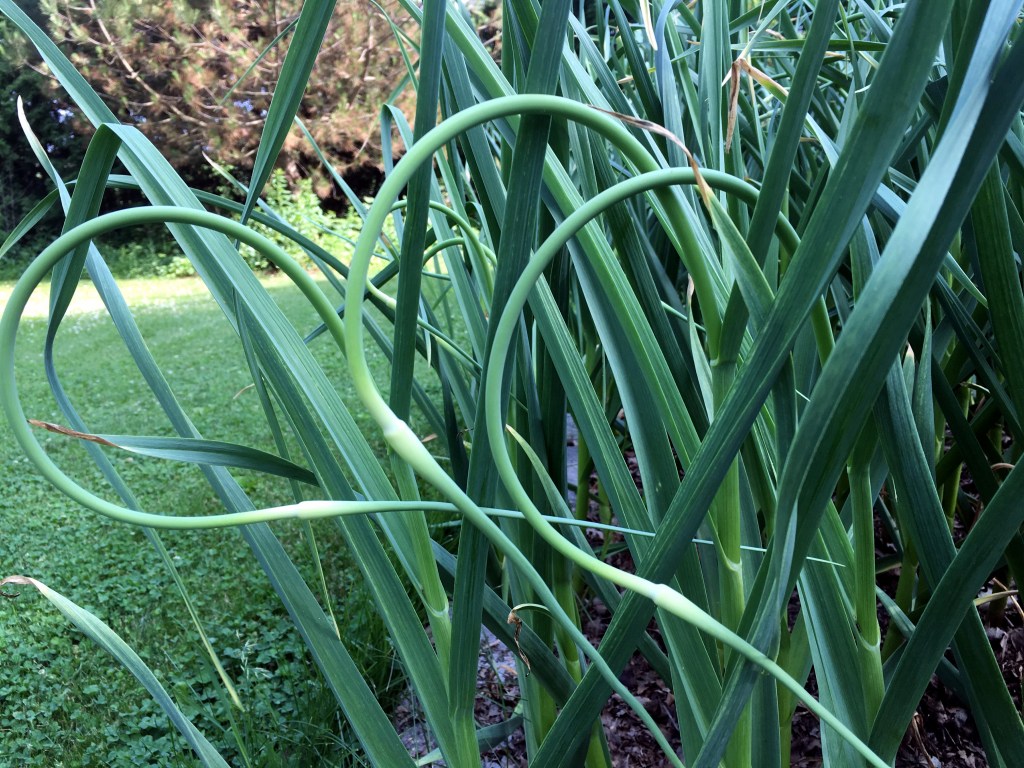
Ever wonder about those interesting curled shoots coming off the garlic plants? These are the lovely flower heads of the garlic bulbs. They are delicious and are actually a vegetable on their own as well as a mild garlic seasoning. Unlike the fiery flavor of garlic bulbs, they have a sweet flavor that is a mix of garlic, leek and onion, and a texture not unlike asparagus. 

Freshly harvested garlic scapes

Scapes grow out of the center of hardneck garlic, usually starting in early June. It’s best to harvest them when they are young, usually right before they make a huge curl, as they tend to get tough the longer they stay on the plant. 

You will be doing the garlic a favor by pinching out the scapes since leaving them on the plant reduces the size of the garlic bulb below and makes the bulbs less storable.

Garlic scapes ready to pick

Check out farmers’ markets

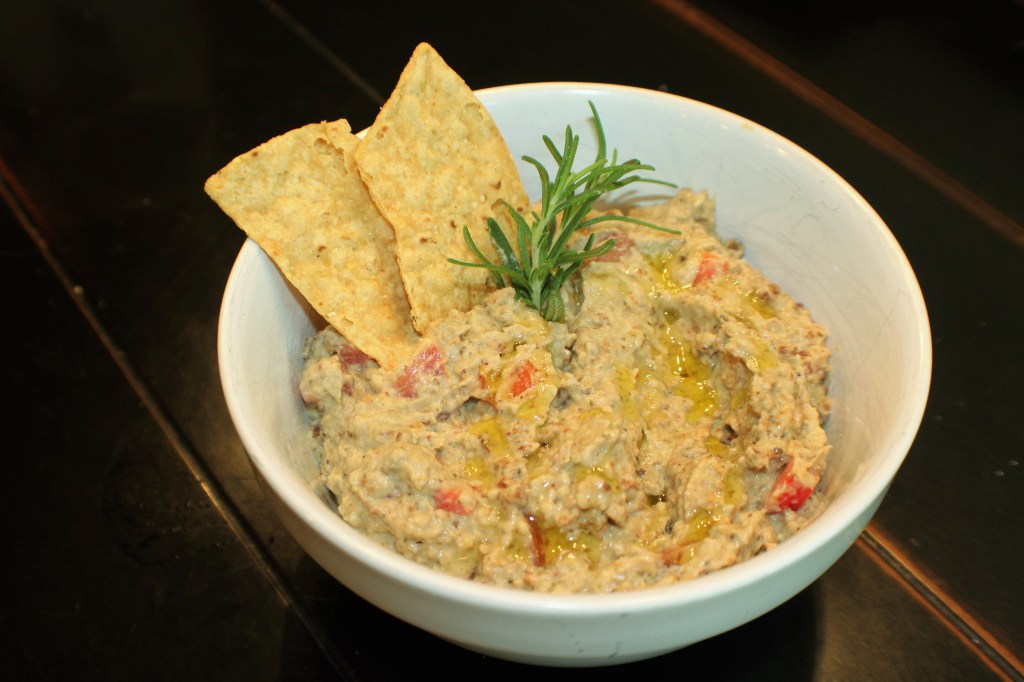
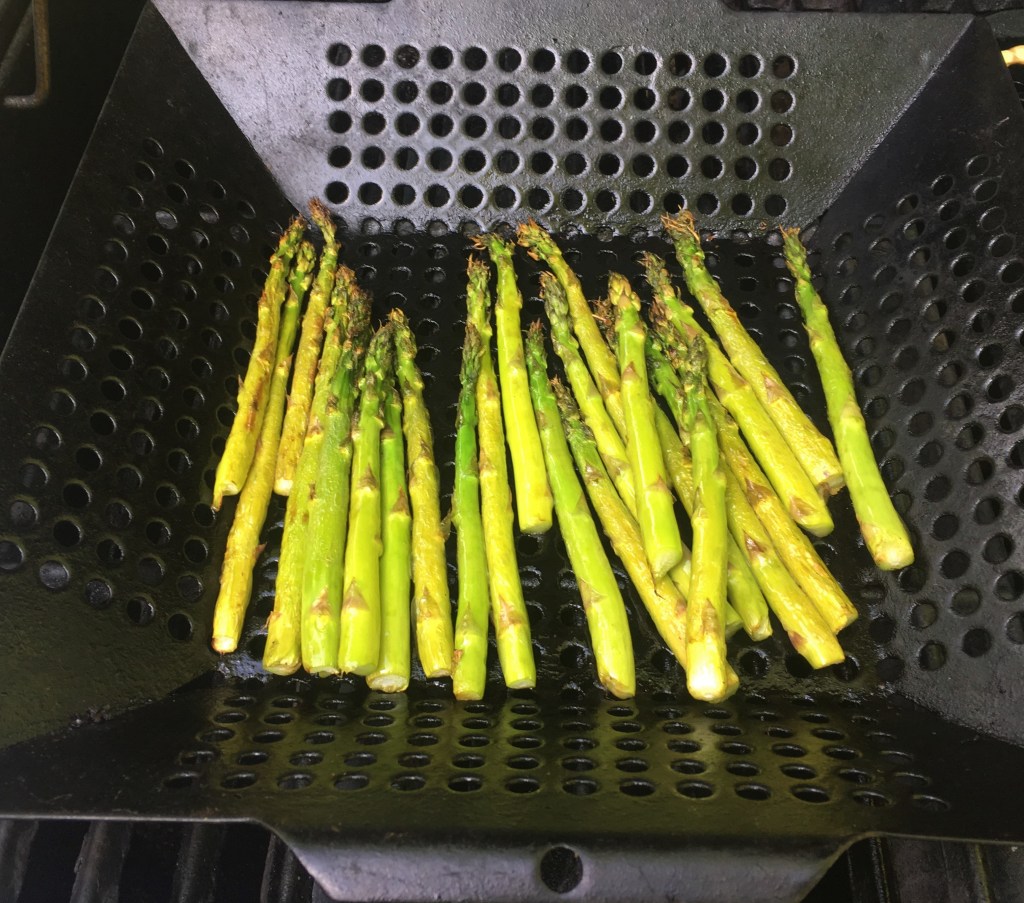
Scapes are available at farmers’ markets now and will probably be around a couple more weeks. They store quite well in the refrigerator so when you find them, pick up a few and give them a try. They are delicious grilled or chopped fresh for a salad, frittata or stir fry. Or, blend them into hummus or pesto, or puree them and mix into softened sweet butter for a delectable dressing for sweet corn. They are also scrumptious when pickled. 
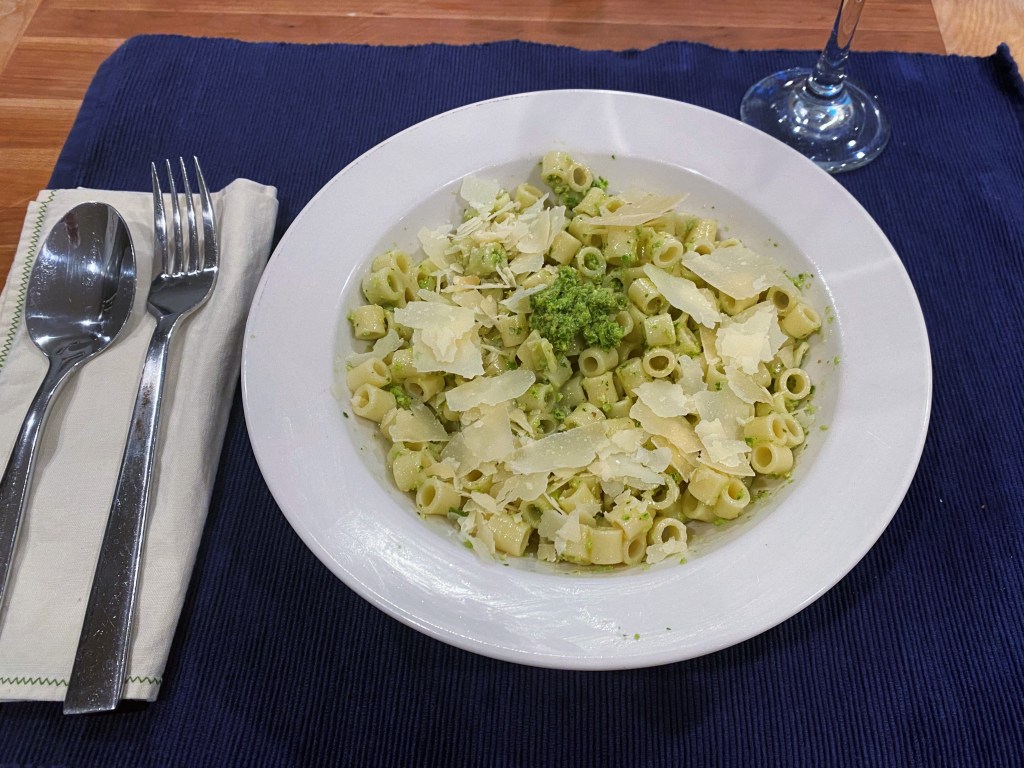
Garlic scape, lemon verbena pesto

Garlic Scape Pesto

½ c. garlic scapes

2 c. fresh basil leaves, oregano, parsley, lemon balm or any combination you desire

¼ c. nuts (pine, walnut, pecans)

1 ½ t. salt

¼ t. pepper

½ cup olive oil

3 oz. Parmesan

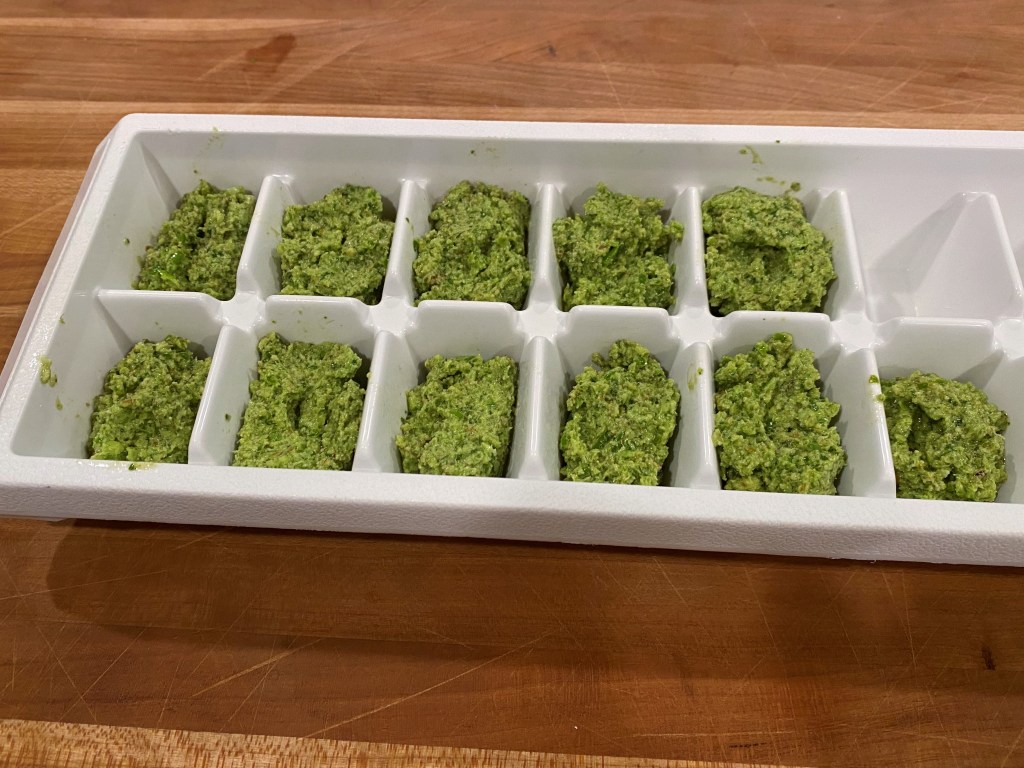
Combine all ingredients except oil and cheese in blender or processor. Add half the oil. Process while adding the rest of the oil. Stir in cheese and toss with hot cooked pasta or rice. If you have plenty of scapes, consider making the pesto and freezing it in ice cube trays or flat in a freezer bag. Leave out the cheese until ready to use. You can simply break off a piece for a quick lunch. 

Garlic scape pesto ready for the freezer

The humble green bean

Haricots verts

It doesn’t get any simpler or more homespun than a pot of green beans. Biting into one, whether steamed, sauteed or simply fresh off the vine, is a true taste of summer. Green beans are coming in like crazy now, so pick while young and tender or visit a farm stand or market weekly for the freshest beans. 

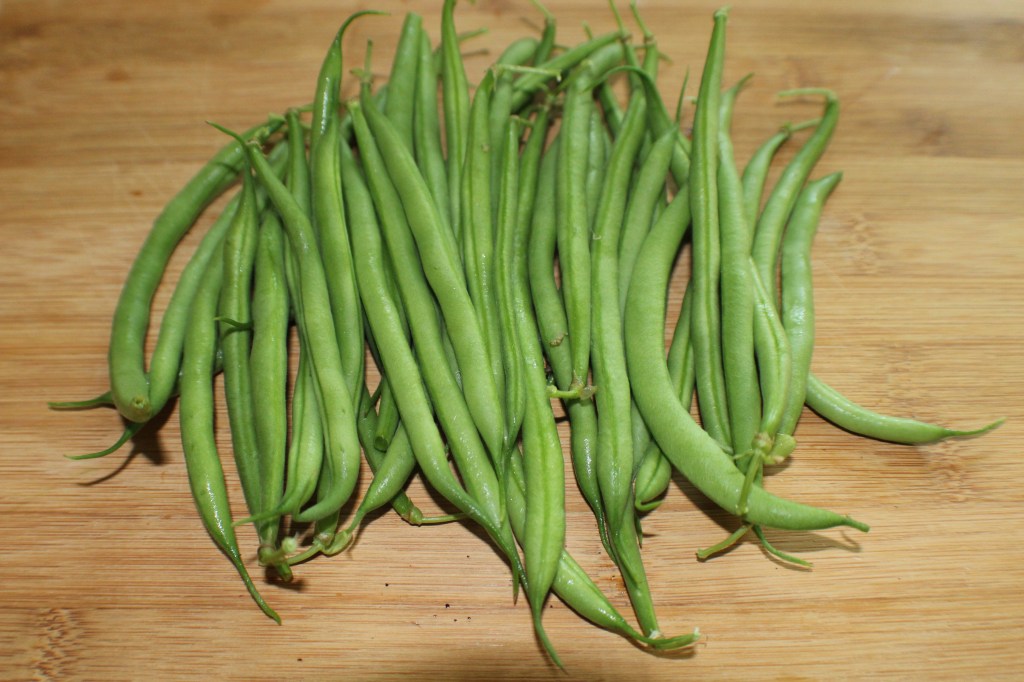
Haricot verts

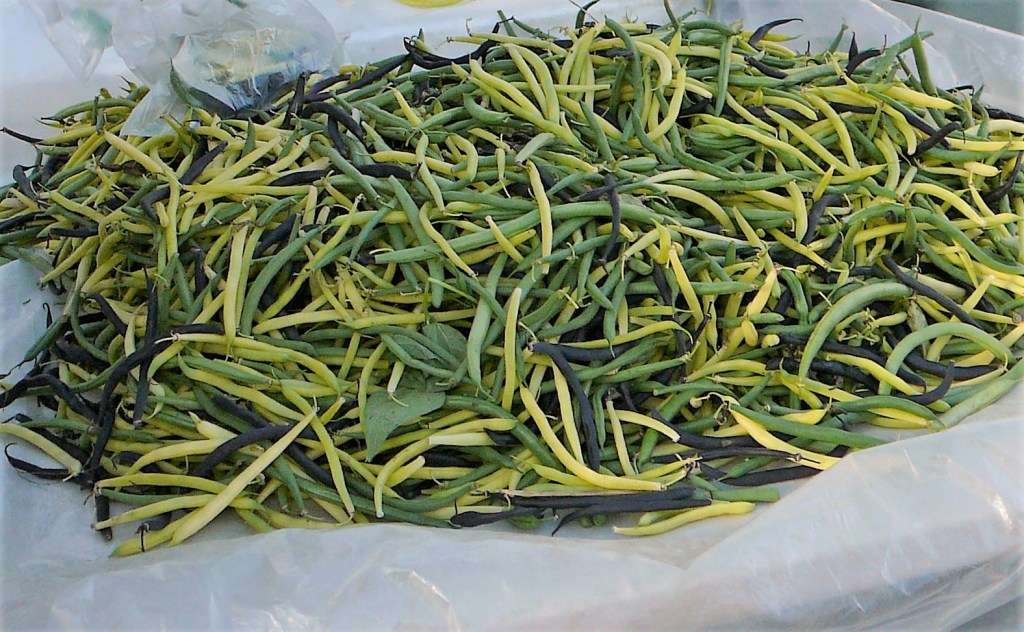
Green, yellow wax and purple beans at market

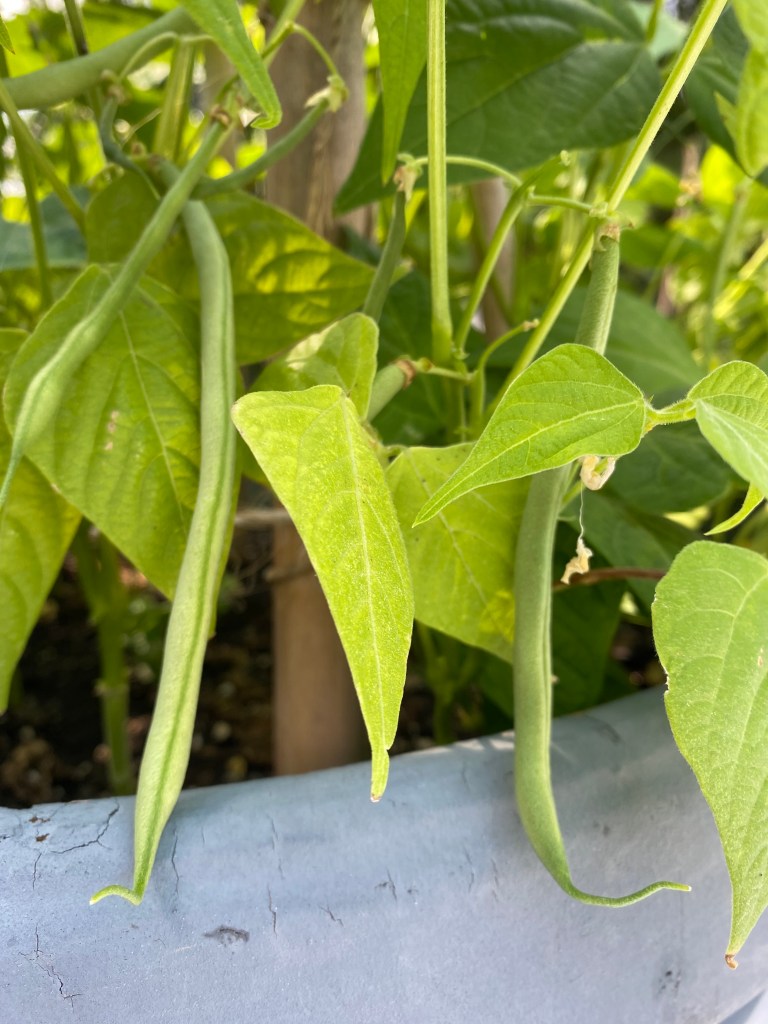
A fancy french type, haricots vert, is probably my favorite, but these tend to be fleeting, ephemeral. There are specific varieties of haricots verts that grow long and thin, but really any green bean can be eaten as haricots verts. You must simply pick and consume them when they are very young. 

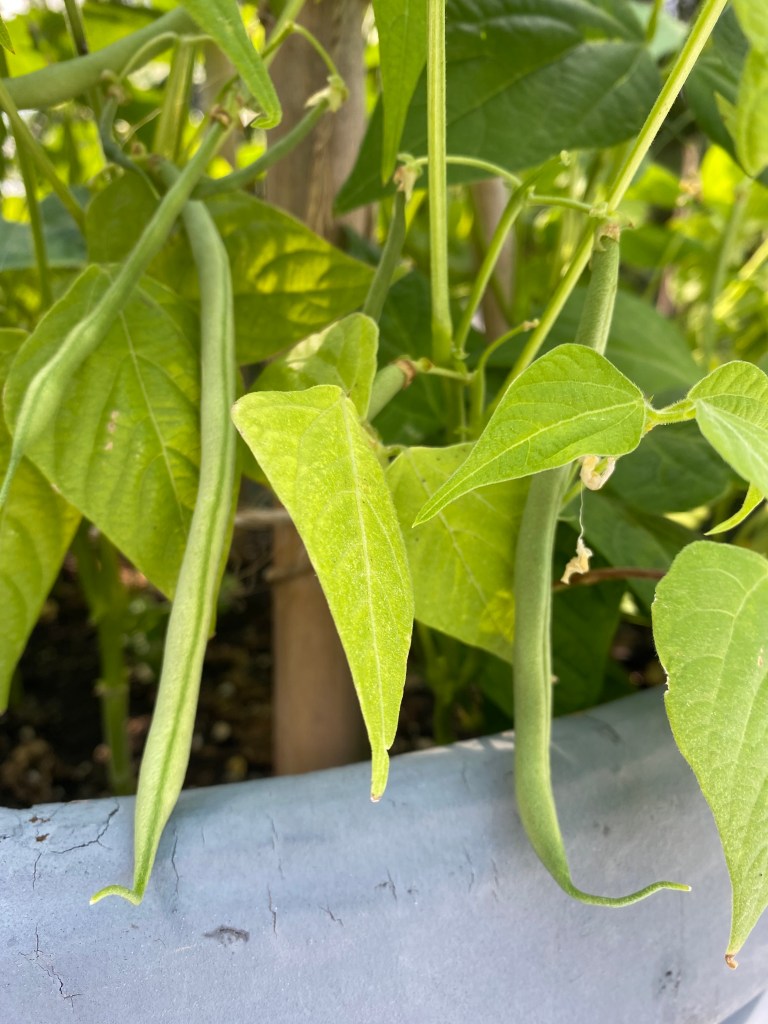
Most haricots verts varieties are bush-type beans, meaning that the plants get about a foot tall and then cover themselves with long, thin pods. 

Bush beans vs. pole beans

Bush beans produce a quick crop in early June and are then done. Pole beans, whether purple, green, lima, Romano or just plain green beans like Blue Lake or Tendergreen take a bit longer to get started but will produce abundantly all summer. 

Easy to grow

Green beans of all types take little special care and are seldom bothered by insects and disease. You simply need to provide decent garden soil and plenty of sun and water. Pole type beans will need a trellis to climb (a chain link fence is perfect if you have it). 

Succession plant

To keep bush beans coming through the summer it’s necessary to succession-plant every two weeks or so. I put them in pots this year which gave me no room to do succession planting. So, I put them around the perimeter of a large pot, constructed a bamboo trellis, and then put pole green beans in the center. When the bush beans are finished in the next week or so, the pole beans will take over for longer production through the summer.

How to prepare

I grew up snapping beans on the front porch with my grandmother. She put the beans in a pot of water with a ham hock, salt, pepper and a little sugar and then boiled them for several hours. I’ll admit to not being a fan as a kid although whenever I taste them cooked this way now, a wave of nostalgia always overcomes me. 

As a grown-up, I discovered the French method of blanching beans that makes them irresistible and preserves all the good “beaniness.” You simply bring a large pot of water to boil, liberally salt the water, tip and tail the beans and then toss in the boiling water for 2-3 minutes. Plunging them into cold water stops the cooking process and gives you crisp-tender beans that are the essence of summer. All they need is a spritz of lemon and a dash of salt.

Blister your beans

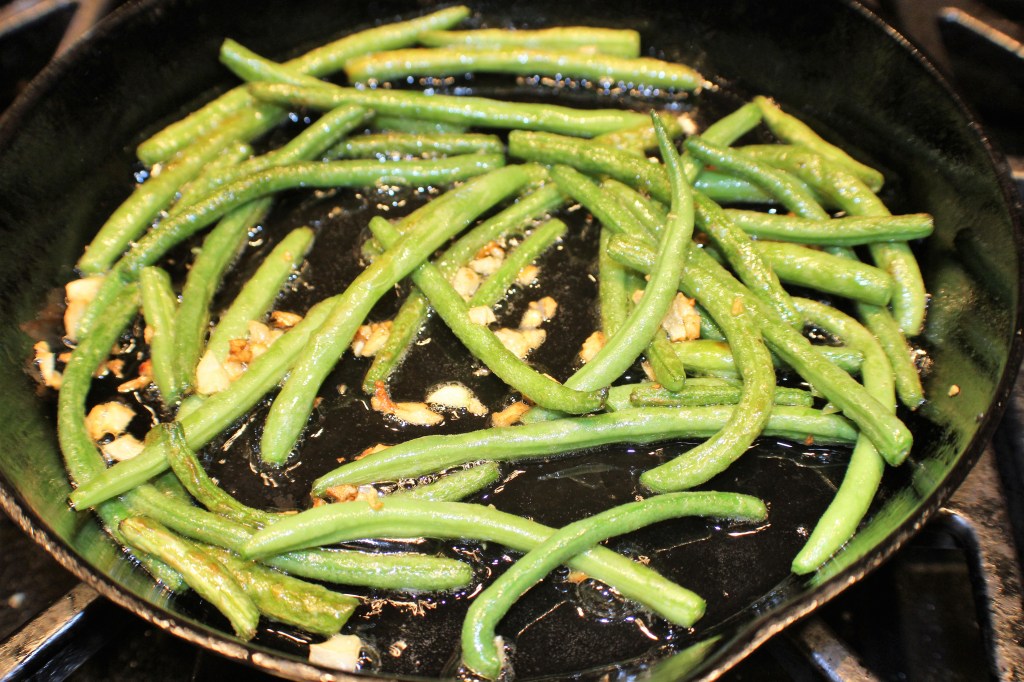
To take them one step further for extra pizazz, blister them. Film a cast iron skillet with olive oil, mince a large clove of garlic and add the garlic and blanched beans to the skillet when hot. Saute, stirring frequently until the beans are slightly charred. Serve warm or at room temperature.

Blistered Green Beans

1 lb. green beans, trimmed  

1 clove garlic

olive oil to film the pan

salt  

Add the beans to boiling, salted water and allow to cook for 2-3 minutes. Drain and cool by running under cold water in a colander.  Smash the garlic clove and mince roughly. Heat a cast-iron skillet and film it with olive oil. Add the green beans and cook on medium-high heat for about 5 minutes. Add garlic and continue to cook, turning and stirring until the beans begin to char. Turn off the heat and salt the beans to taste. Enjoy warm or at room temperature. 

Weeds, weeds, weeds

When is a weed a weed? I was pondering this question last week as I pulled quack grass out of my ornamental grasses. Grass is grass, right? But it was ugly and I wanted it out of there. So I made a choice of one grass to keep and the other to go.

Dandelions are edible

There is a wonderful saying that one person’s weed is another person’s lunch. What many consider lawn weeds are simply green additions to the lawn and can be delicious additions to a salad. Like chickweed, purslane and dandelion greens. 

If I may get a bit philosophical for a minute, what exactly is a weed? Some say it is a plant whose virtues have not yet been discovered. Others define it as a plant that is simply in the wrong place. And still others say it is any plant that chokes out another, more desired plant.

What is a weed?

Chicory is edible and beautiful

Some weeds have beautiful flowers such as violet and dandelion. Others have culinary virtues such as garlic mustard and chickweed. But there’s no doubt that we sometimes need to fight the invasion of these plants lest they take over our cultivated gardens. 

I’ve been fighting violets this year. Beautiful, but they roam at the expense of my cultivated beds. I’m trying to make peace with them. The same goes for chickweed. It’s a groundcover, and who am I to say it’s not preferred over bugleweed, my groundcover of choice. It’s a mind shift – one I’m having a hard time making with some plants.

Weed controls

Annual weeds like purslane or chickweed assure their existence by producing thousands of seeds. So, keeping them from blooming will stop the life cycle. They pull easily. I learned a great garden hack from Diana McCall of the Wilson Community Garden – use an old serrated steak knife to slice off weeds right below the soil line. This leaves the soil undisturbed, keeping other weed seeds buried where they won’t have light to germinate. 

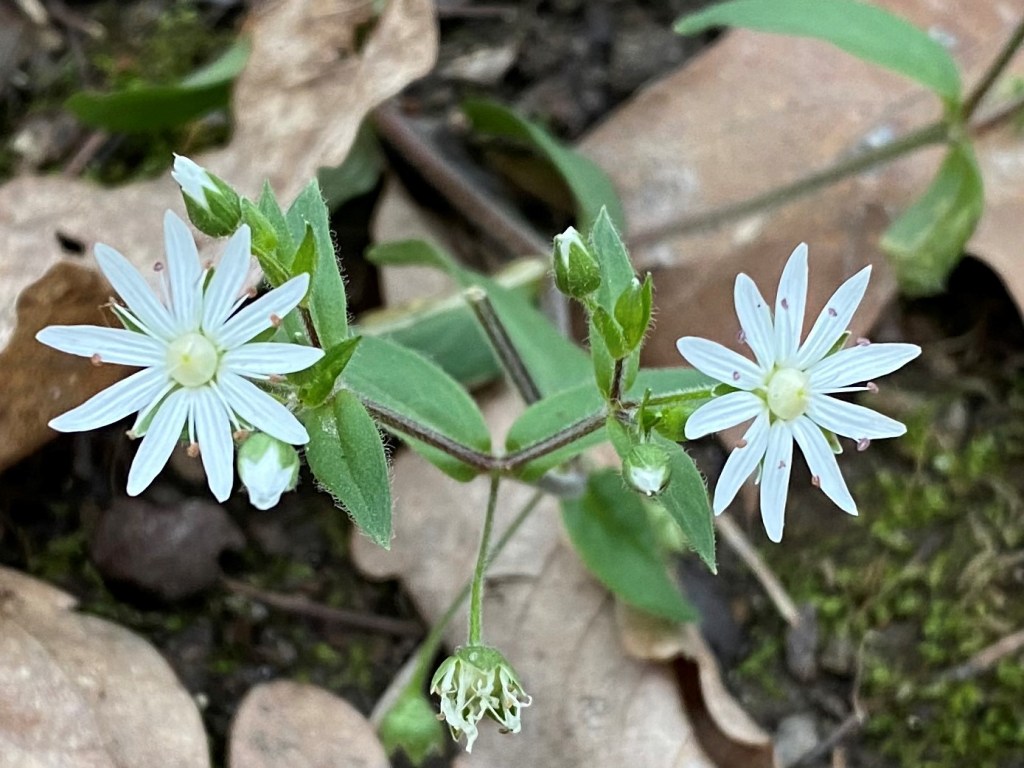
Starry chickweed – beautiful and edible

Perennial weeds like dandelions and plantain are harder to pull, and often need special measures to kill the roots. Chemical control need not be the first line of defense. If weeds are controlled when young, all it takes is a hoe or a hand-pull. In turf, it’s more important to establish healthy, thick grass to choke them out.

Perennial weeds can often be controlled by simply pouring vinegar or hot water in the crown. Other basic non-chemical methods for weed control include using a flame weeder, mulching heavily, cutting weeds off below ground level and keeping them cut as they resprout, and mowing to cut off seed heads. 

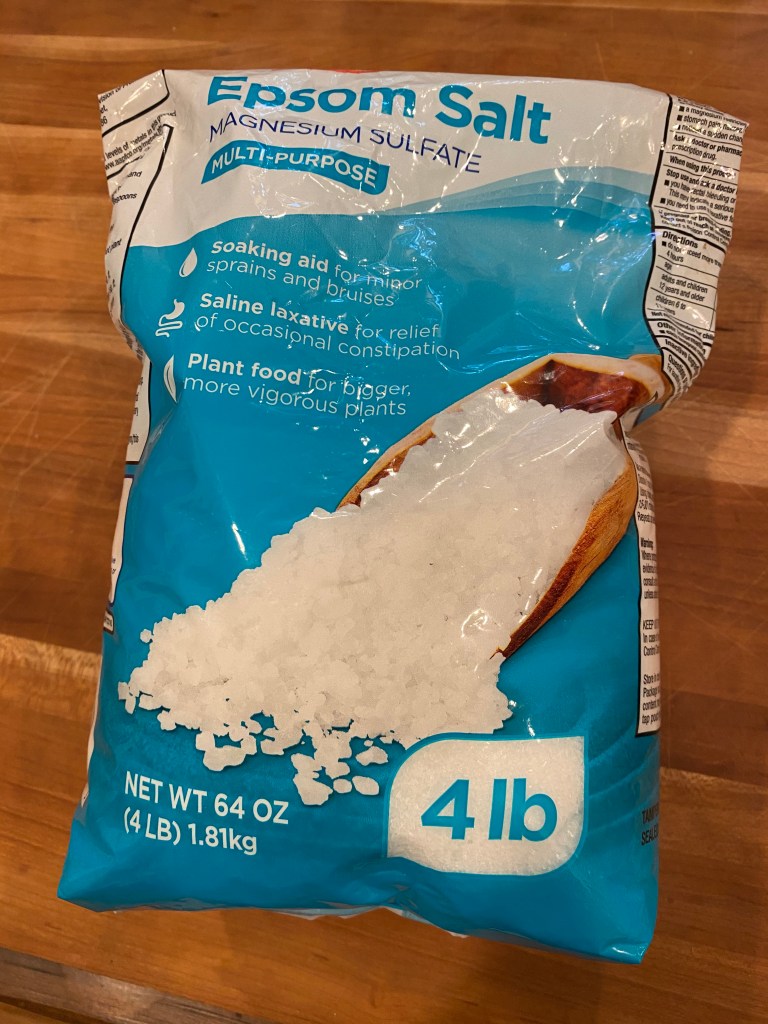
A great homemade weed killer is 2 cups of Epsom salts and ¼ cup of dish soap in a gallon of water. Spray in the crown. You may have to spray more than once, but you can take comfort in the fact that you are not poisoning the ecosystem.

Tonic salad with “weeds”

(doesn’t sound so appetizing but it is delicious)

Only harvest weeds from lawns or gardens that have not been sprayed.

2 cups torn romaine or other leaf lettuce (I like to add a few shreds of sorrel as well for a lemony burst)

1 cup chopped chard or kale

¼ cup diced green onions

¼ cup torn chickweed

¼ c. torn purslane

¼ c. torn dandelion leaves (use only the inner ones)

1 small clove garlic, minced finely

3 T. high-quality olive oil, divided

1 T. fresh lemon juice

¼ c. crumbled feta or bleu cheese

Salt and pepper to taste

Put the chopped kale or chard in a medium-sized bowl. Add 1 T. olive oil and the garlic. Massage with your hands until the amount of greens is reduced and the greens are dark green and soft. Add the lettuce, green onions and “weeds”. Toss lightly and dress with the remaining olive oil and lemon juice. Serve in wide bowls to show off the greens, top with the cheese and salt and pepper to taste.

Bean soup

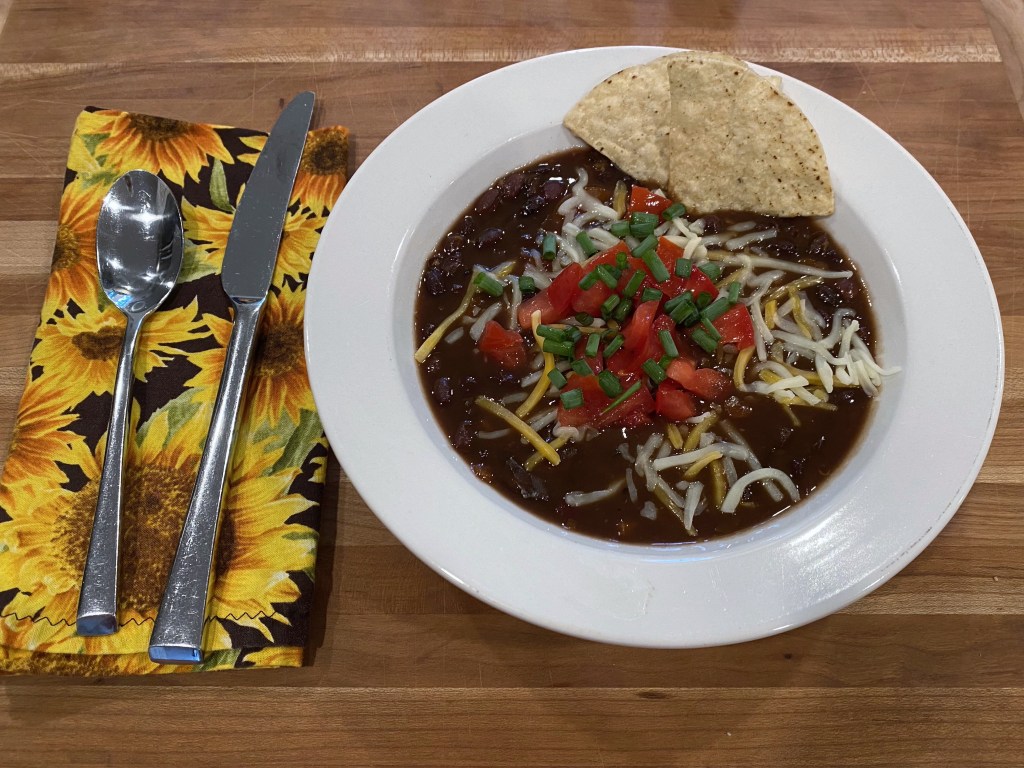
Bean soup made with adzuki beans

I always keep canned beans in my pantry. And, now that I have an instant pot, I’m gaining confidence in cooking them from scratch as well. Before the instant pot, my favorite thing to do was put on a pot of beans and promptly burn them since they have to cook so long. Lost a lot of good pots that way.

Another dirty little secret is that I have dribs and drabs of leftover vegetables, meats and grains in bags in the freezer. I cannot stand to waste food, so if there’s a little bit left, I’ll freeze it for use in soup later. Labeled of course.

Anything goes

The great thing about soup is that you can add simply anything to it and have unique flavors. Leftover bits of chicken or turkey with white beans and noodles make a great soup. Add some swiss chard or spinach, a can of chopped tomatoes and it turns into something different. As vegetables start coming in from the markets and our gardens, change up your soup accordingly. If hot soup isn’t appealing in the summer, remember that adding chiles will make you sweat, cooling you off. And, try bean soups cold!

Start with broth

The basic recipe for a soup is to start with good vegetable, chicken or beef broth. You can make an even richer soup with bone broth. Use store- bought if you don’t have time to make your own – you’ll still get a wonderful pot of soup (no guilt!). Saute some onion and garlic in a bit of broth or olive oil to get your flavor started. 

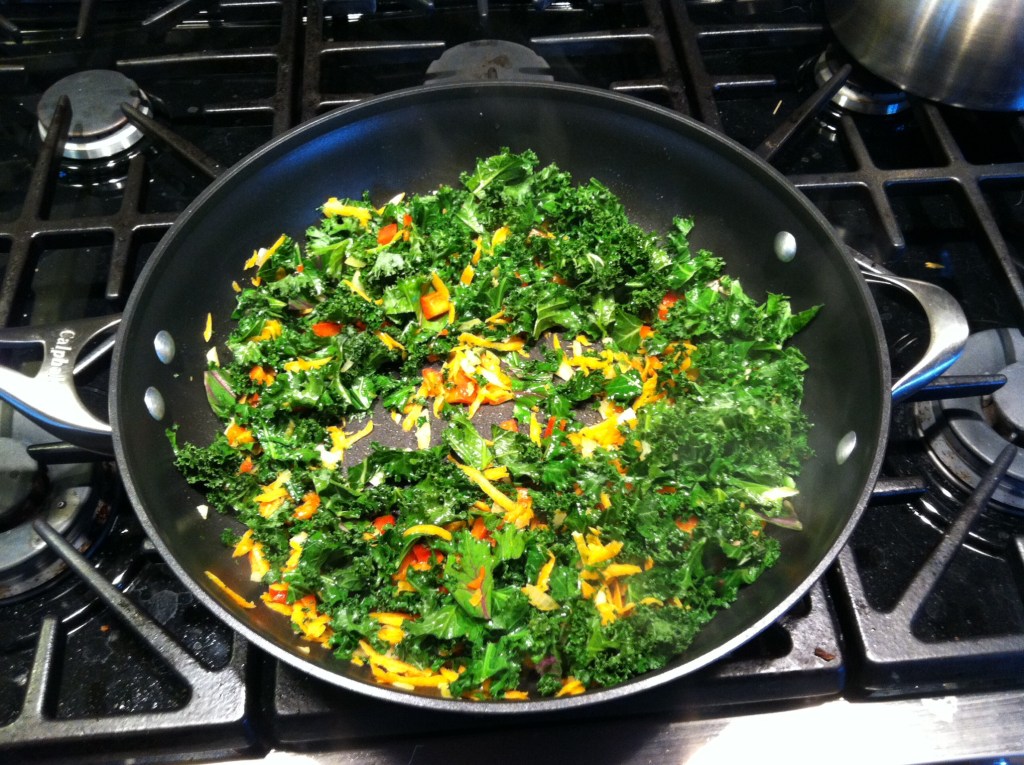
Sauteeing kale with carrots and peppers

Add protein and grain

Then add a protein like black beans, garbanzos, canellini or kidney beans. Use leftovers from a roasted chicken (again, store bought roasted chicken is good), leftover Thanksgiving turkey (you know you have some, somewhere in the freezer), tempeh or tofu. If you want to use cheese, add it at the very end. 

Next, add a cooked grain like brown or white rice, farro, quinoa, or a pasta such as egg noodles, farfalle, linguini or orzo. Whole wheat pastas which may not be as palatable for spaghetti are hearty and delicious in soup.

The best part – vegetables

Then comes the best part – the vegetables. Add whatever you have in the fridge or freezer – cabbage, corn, peppers, spinach, broccoli, carrots, kale, Swiss chard, cauliflower or zucchini. The vegetable combinations can vary depending on the flavor you want. 

Season according to the flavor you desire. For Mediterranean, use thyme, oregano, a pinch of sage and basil. For Mexican, cumin and chili powder give it a kick. For Italian, use oregano, basil and smoked paprika. 

Although you really don’t need a recipe to make a great bean soup, here’s a start on a Mexican bean soup: 

Recipe for Bean soup

Black bean soup

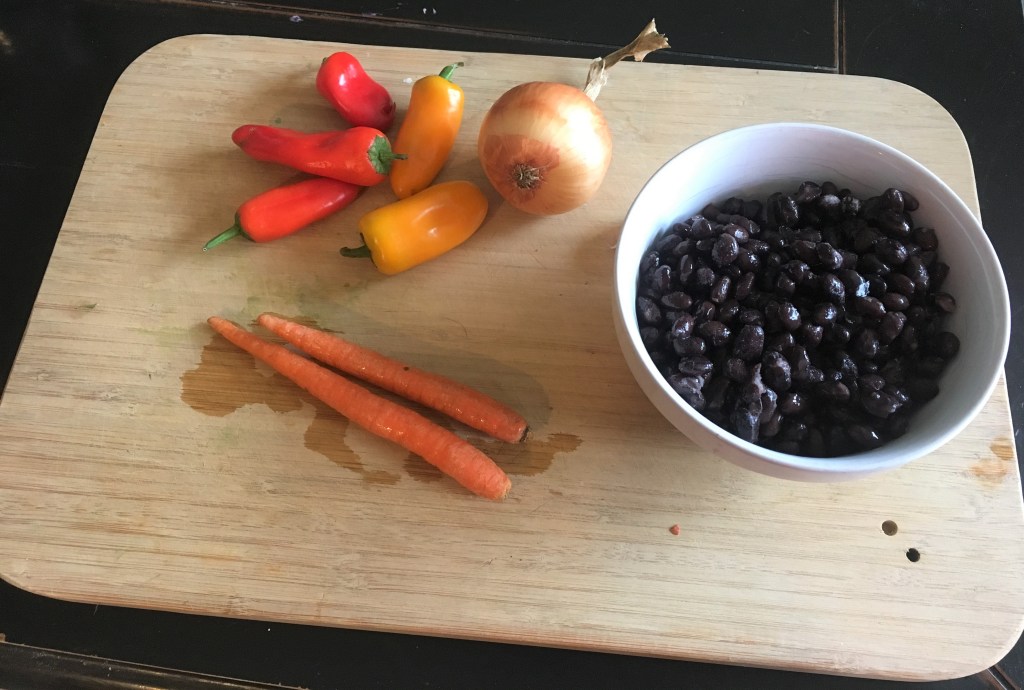
2 cups broth

1 large clove garlic, minced

½ spanish onion, chopped 

1-2 cups black beans, rinsed and drained if using canned

½ bag frozen corn

½ cup chopped sweet peppers

¼ chopped chili peppers

½ c. diced carrots

½ t. smoked or regular cumin

½ t. chili powder

Saute garlic and onion in two tablespoons of broth for about a minute. Add peppers, carrots and corn and saute for another minute. Add beans and seasonings and simmer for about 45 minutes. Salt and pepper to taste, and serve hot with a dollop of sour cream or plain yogurt and a splash of sriracha if you like more heat. 

Strawberry Shortcake

One of my fondest young adulthood memories is of strawberry shortcake. Or rather the woman who made it. Years ago my family gathered at my grandmother’s house to celebrate her 70th birthday. She had made strawberry shortcake for dessert after a traditional summer dinner of fried chicken and potato salad. When we all arrived that afternoon, my little sister was haunting the kitchen and asked “Nano – could we just have strawberry shortcake now?” 

My grandmother, who was a flapper, divorced a husband in the 30’s when it wasn’t fashionable to do so, and sailed to Africa on a steamship by herself, was nonplussed. She laughed heartily and said , “Of course we can!”. So we all sat down in the garden on a hot Texas afternoon and gorged on luscious strawberries and sweet whipped cream sandwiched between her lighter-than-air biscuits. And, yes, we still ate the chicken and potato salad for dinner. 

Strawberry shortcake to some means strawberries over angel food cake. But true shortcake is a type of flaky sweetened biscuit. They are split hot from the oven, piled with fresh sliced room-temperature strawberries and topped with icy whipped cream. Nirvana!

Make yourself some delicious memories this summer. 

Nano’s shortcake (or biscuits if you leave out the sugar)

The beauty of this recipe is that you can use any type of berry or fruit in season. Peaches, blackberries, blueberries or raspberries make delectable shortcake. 

2 c. sifted flour

1 T. baking powder

½ t. salt

¼ t. baking soda

2 T. sugar

6 T. butter 

1 c. buttermilk

Blend dry ingredients, cut in butter until it resembles coarse meal. Add buttermilk and mix lightly, just enough to incorporate the ingredients. Pat into a loose ball, turn onto a floured board and roll out to about ½” thick. Cut with a biscuit cutter and place on an ungreased cookie sheet. Bake at 450 for 15 minutes.

Let cool a few minutes, split with a fork and layer with sweetened fruit and top with whipped cream.

The solace of gardening

I know everyone is writing about how gardening soothes right now, especially in these trying times. But it’s true. There is nothing that calms the inner monkey quite like getting outdoors, planting seeds, and then nurturing them into food production. The sun on your face, the scents of earth and plants, the sounds of birds, bees and other creatures have a healing effect unlike anything else. 

I’ve always done it, but right now it seems more important and more effective than ever at being my Zen place. Not to mention making my family more resilient by growing our own food. 

I started my gardening as a manic doer, and it’s taken years to slow down. I’m a huge fan of the slow gardening movement – of leaving things alone when you don’t need to mess with them. It’s all about the soil.

Happily, the move toward regenerative agriculture and permaculture is taking this idea to heart on a larger scale. If you get a chance, check out One Straw Revolution by Masanobu Fukuoka. He is essentially the grandfather of permaculture with his philosophy that plants will thrive in their natural settings, without human intervention. 

It makes us lend a more critical eye to how our food is produced. If we do our best to protect and nurture our soil by adapting his methods of using nature’s cycles, we’ll have healthier gardens that are less susceptible to the vagaries of pests and diseases. Slow gardening, non-intervention at its best. 

And it’s all about the soil. Nurturing your soil will produce delicious results like these baby beets and turnips. With little care except planting the seeds.

Shredded spring salad

½ c. grated raw beets

½ c. grated or spiralized baby turnips

½ c. grated carrots

½ c. grated radishes

½ c. thinly sliced scallions

½ c. thinly sliced pak choi

2 c. mixed torn salad greens

Lemon dressing

1/4 c. fresh lemon juice

3/4 c. olive oil

2 garlic cloves, minced

1 t. dry mustard

1 T. chopped fresh herbs

1 t. salt or to taste

1/2 t. black pepper

Bok choi (pac choi) in the kitchen and garden

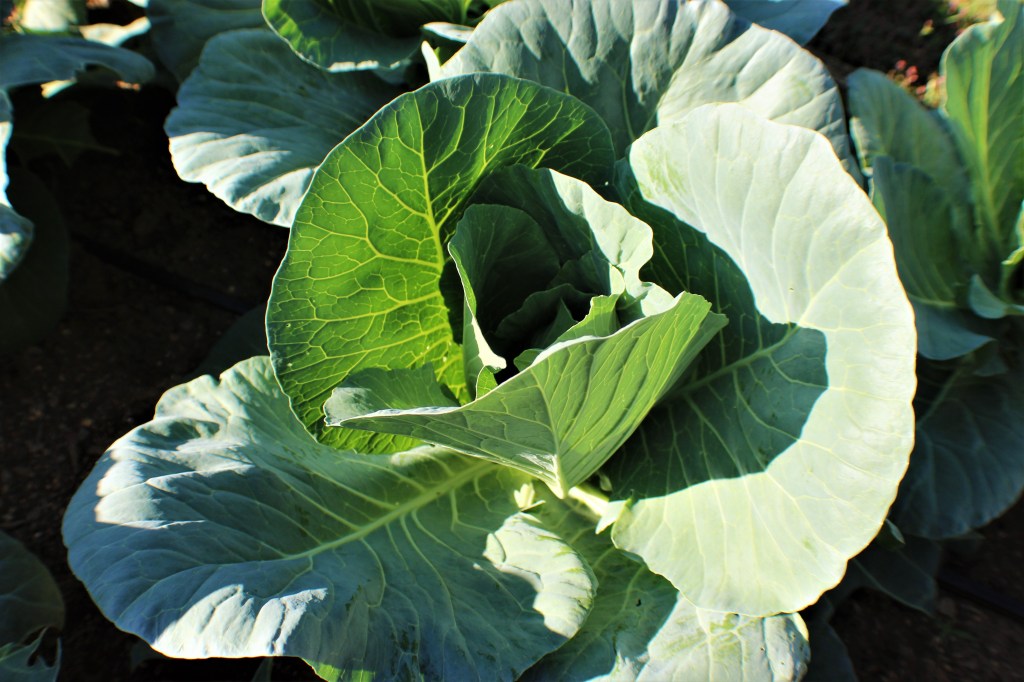
Bok choi or pac choi is my favorite of all the chinese cabbages. It’s tender and sweet and is sturdy enough to last for a couple of weeks in the fridge after harvesting. I love it fresh and sauteed or grilled, and it is full of the wonderful sulfur compounds that are so healthful. Just like the rest of the cabbage family. 

Grow transplants

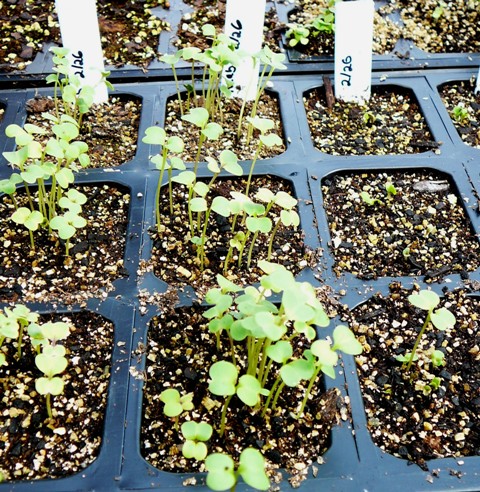
It is so easy to grow as long as you start early enough indoors. I haven’t seen many transplants available in stores so I always start my own around February first. These babies do not like to be transplanted into larger pots like tomatoes, so they should be grown in small pots that they will stay in until going out in the garden. I’ve had great luck growing pac choi in containers, and in fact prefer that since I can control cabbage worms easily.   

Bok choi in a container

Full sun, good soil

They grow best in full sun in rich organic soil that is well-drained. They should be planted out early – they have the capacity to withstand frost. They are moderate feeders so benefit from a top-dressing of compost or composted manure when planting. Mulch with organic mulch such as straw once they are growing.

And harvest young. I’ve had the best luck growing some of the “baby” varieties that are harvested when about six inches tall. They stay tender, and are early enough that they often avoid the cabbage worms.  

Cabbage moths are much more a problem on broccoli and regular cabbage, but occasionally they will be out early enough to attack pac choi. Bt (Bacillus thuringiensis), an organic bacterial pesticide that goes after pesky cabbage moth larvae, is easy to apply and safe to use.

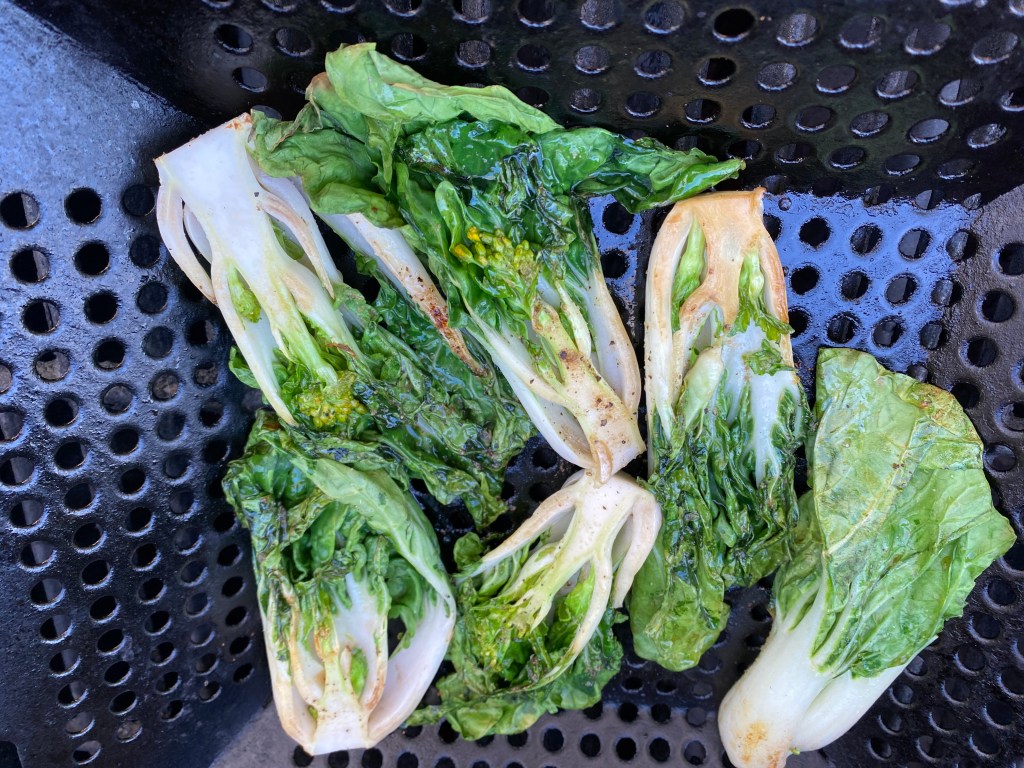
Grilled pac choi

Grilled pak choi

Harvest small heads whole and carefully cut off the root end, taking care not to cut into the heart which will cause the leaves to separate (which is also okay because they can be used in a salad).

Sprinkle with a fruity olive oil and lay gently on a grill rack or in a grill basket. Turn with tongs after about five minutes, grill 5 minutes more and remove to a platter.

Splash with balsamic vinegar or lemon juice, salt and pepper to taste and serve as a delicious side to whatever you are having as a main course.

You can change up the flavor a bit by using sesame oil instead of olive oil, and splashing with soy or ponzu sauce after they come off the grill.

Greens of summer

Italian Silver Rib chard

Greens are simple things. In a world of chaotic schedules, hurried meals, and gourmet foods, it’s pleasant to eat something as simple to prepare and wholesome as Swiss chard or kale. Besides, with the constant nattering about eating less fat and more vegetables, who can argue with getting a solid dose of cancer-fighting vitamins in something that tastes so good?

I wasn’t always a greens aficionado. When I was a child in the South, the preferred method of cooking collards and turnip greens was to boil them until they turned gray and then flavor them with bacon drippings. The last thing I wanted to put in my mouth was a pile of what looked to a ten year old like slimy gray-green glop.

It took a while to get past the specter of the sodden mass, but I’ve matured, at least according to rumor, and since I no longer have to eat greens, I’ve discovered how much I enjoy them. Sautéing or steaming them just until done makes a world of difference in how they look and taste. I toss kale and chard into almost everything I eat, just for the vitamin boost. 

Dual-purpose plants

Bright Lights chard

I’m also a huge fan of dual-purpose plants. Kale and Swiss chard leaves are as beautiful as any perennial flower and make wonderful accents for annual flowers as well. I was driving in a nearby neighborhood last summer, minding my own business, when in front of a typical suburban house was a sidewalk edged in a beautiful short hedge of rhubarb chard. Behind the chard, a single tomato plant occupied the front flower bed, surrounded with a little basil and some marigolds.

Beautiful additions to flower gardens

Winterbor kale

Dragon kale is a spectacular-looking plant with deep blue-green seersucker leaves, and scotch blue curled is a crinkled, beautiful dusty blue that is a perfect companion to pink and white flowers. Ruby chard has deep maroon leaves, and Bright Lights chard has stems in all shades of red, apricot, yellow, white and green. One of the most beautiful planters I’ve ever seen was a window box filled with chard and kale with sweet alyssum cascading over the edge. What more could you want from a flower garden?

Swiss Chard

There is no reason why the summer kitchen cannot always have greens. Once spinach and Chinese cabbage are finished in spring, and the heat of summer begins to weigh on the garden, it is time for the stalwart summer greens! Swiss chard is a humble vegetable, but one with an unbelievable array of culinary possibilities. Also called silverbeet or seakale beet, it is technically a beet (Beta vulgaris) that has been bred for its greens. It is simple to grow and monstrously productive. 

Mustard

Mustard greens will add piquancy to any salad or dish, with a zingy vinegary essence. The broad-leafed types are best for summer use, as they grow large and luxurious without getting stringy and tough. If allowed to go to seed, the mustard plant is useful in all forms. The seed stalks are tasty sautéed, and the seeds make the familiar tangy seasoning for hot dogs or pickles. 

Collards

Collards, another sizable green, are grown frequently in the South. And for good reason. They remain tender and tasty throughout the summer and are slow to bolt in spite of heat and drought. They have a more cabbage- like flavor than mustard greens, but a little taste of collards seasoned with garlic and complemented with prosciutto will make you wonder why you didn’t start growing collards years ago. 

Once you are hooked on greens, there is a wealth of other summer treats to try, from turnip greens to amaranth to Chinese kale to komatsuna Check out your local farmers market to try a few and plan to use them in your own garden next year. 

Cooking greens

Greens are delicious simply sautéed with garlic and olive oil. Toss with cooked pasta and top with fresh chopped tomatoes and a few gratings of parmesan and you have a delectable meal. Dark leafy greens pack an unbelievable vitamin wallop, to say nothing about their cancer-fighting phytochemicals. In addition to eating greens for themselves, try adding them to omelets, fresh or marinated salads, soups and savory breads.

 Growing tips

Fall mustard greens

Other than their great looks, another reason these basic vegetables appeal to me is that they’re carefree to grow. Sow seeds from early spring (even right on top of the snow) to fall. The plants grow without much attention – except thinning early on (which you can eat) and then harvesting. I like that in a plant. Starting them under a cold frame will give them a great head start and sowing more seeds in September and then putting a cold frame over them will assure you the freshest of greens into the Christmas season. 

All greens produce well if given ample nitrogen. Composted manure or manure tea is one of the best ways to do this because it is mild enough to be used every three or four weeks. Provide plenty of sun, moderately fertile soil and ample water. After the seeds germinate, be sure to thin adequately to give them plenty of room to spread. It may seem a waste to pull out so many tiny plants, but they are delicious additions to a salad. 

Harvest the outer leaves first, before they get too tough, or you can simply cut off a head of all the leaves at one time. Eventually, new leaves will be produced from the crown. 

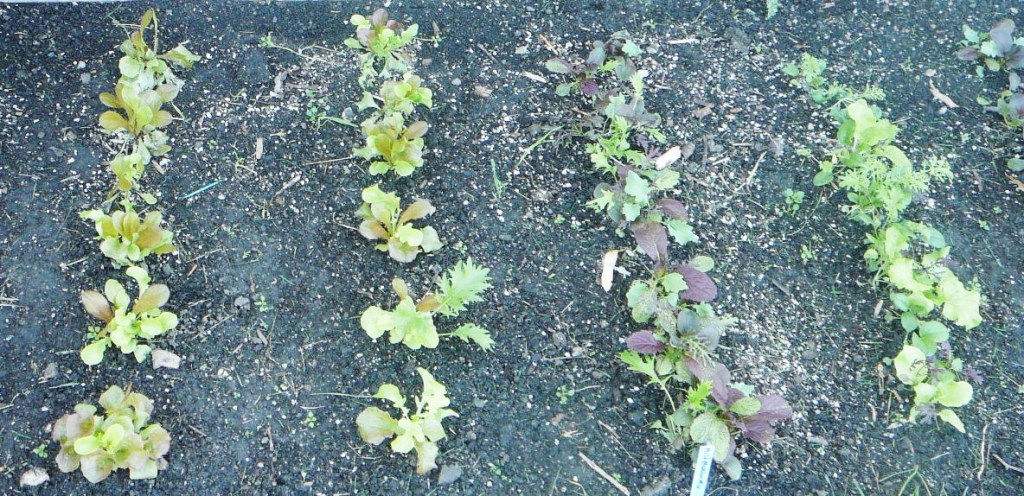
Red Russian kale seedlings

Although you can grow most greens from transplants started indoors, they germinate readily in cool soil outdoors as well. Also, you can cut many of them to ground level in late fall and leave the crowns under about four inches of straw mulch through the winter. They will start producing tiny leaves in very early spring. Thus you get the pleasure of the tender greens early in the season, while your new seedlings are getting off to a good start. 

Sauteed greens for two

Sauteed greens with tomatoes

5-6 large leaves of your choice of greens, chopped (remove stems if desired) 

1 large clove of garlic, minced

5-6 scallions, chopped

2 T. fruity olive oil

1 c. chopped tomatoes

1 T. balsamic vinegar

1 t. sugar

Heat olive oil and sauté garlic and scallions until soft, about five minutes. Add greens, tossing to coat in olive oil. Cover and let the greens steam about three minutes. 

Toss with tomatoes, eason with salt and pepper to taste and top with fresh grated Romano cheese. 

Pasta Alfredo with Swiss Chard

1 lb. Swiss chard (six-eight large leaves)

8 oz uncooked pasta such as penne or farfalle 

1 T. olive oil 

3 garlic cloves minced 

3/4 c. ricotta 

1/4 c. Parmesan cheese 

1/2 t. salt 

1/8 t. pepper 

Remove stems and chop chard. Set aside. Cook pasta and drain, reserving 3/4 cup cooking liquid. Sauté garlic 30 seconds in oil, add chard and sauté 3 minutes or until wilted. Combine cooking liquid, ricotta, 2 T. Parmesan and stir well. Combine with chard mixture and toss well. Top with remaining Parmesan. Serves 4. 

Blackberry jam

I collected blackberries along my walking trails late last summer and froze them for use later. Since they are getting ready to bloom this spring, I figured it is time to make jam. 

I do this frequently – collect or purchase fruits when they are ripe in summer and if I don’t have time to make jelly or jam, I will freeze it until I do have the time. It actually makes a wonderful winter project. Not to mention, lovely holiday gifts. 

Freeze summer fruits

Photo by S. Hermann & F. Richter from Pixabay 

It’s important when freezing fruit for jam that it be washed and prepared because you won’t be able to do it once it thaws since it will be very soft. If it is cut, peeled if necessary, and ready for cooking, all you have to do is toss it in the pot, prepare your jars and get busy.

Blackberry jam from wild berries has a flavor that is so much more satisfying than commercially made jam. And, making jam is fairly easy to do once you get past the stigma that it is labor intensive. All it really takes is a bit of patience. 

Pectin or not?

Blackberries have plenty of naturally occurring pectin (so do currants, raspberries and apricots) so you don’t have to add commercial pectin to make your jam jell. In general, jams and jellies made with commercial pectin are more foolproof, but they also require more sugar. 

To seed or not to seed

Wild blackberries can be somewhat seedy, so your jam will be more palatable if you remove some seeds. No, you don’t have to pick them out. If you cook down your berries until they are soft and then run through a food mill, you will remove about half the seeds. If you really want a seedless jam, you’ll need to push the pulp through cheesecloth and you will lose a good bit of pulp in the process. 

Blackberry Jam

8 cups blackberries

4 cups sugar

½ c. water

Place the berries in a large pot and cook over medium-low heat about 20 minutes until the berries are very soft. You can mash them up a bit to help them release their juice. 

Run the berries through a food mill. Measure your pulp, return to the kettle and add the same amount of sugar. Put a ceramic saucer in the freezer (I’ll explain in a minute). Stir and cook over medium heat until the jam thickens. To test for thickening, take a spoonful and drip it onto your frozen saucer. This cools the jam very quickly and you can tell how thick it will be when finished. When it doesn’t run when you tip the saucer, it’s ready. 

Take the jam off the heat, skim off any foam (I like to save this in a jar for my toast – tastes just as good as the jam, just not as pretty). Ladle into clean, sterilized jars leaving about half an inch of headroom. Seal with hot flats and bands and put in a boiling water bath for 10 minutes. Remove to a cutting board to cool. And get an immense amount of satisfaction as you hear the pings of your sealing jars. 

Spring Greens

With the spring coming on like crazy, I find myself constantly walking the garden to see shoots of edible things peeking through the mulch. I know it’s too early for asparagus, but the sorrel is beginning to show signs of life.

Leafy greens are earliest spring vegetables

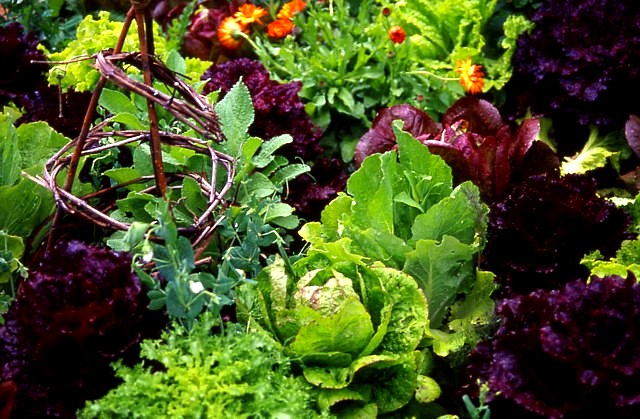
Usually the first shoots we see are leafy greens. Many of them actually have chemical substances (mostly sugars) that act as antifreeze so they are perfectly at home in the coldest weather. They are the best plants to bracket the growing season with since they are so cold tolerant. They also make great cold frame crops. 

Greens are simple things. In a world of chaotic schedules, hurried meals, and gourmet foods, it’s pleasant to eat something as simple to prepare and wholesome as Swiss chard or kale. Besides, with the constant nattering about eating less fat and more vegetables, who can argue with getting a solid dose of cancer-fighting vitamins in something that tastes so good?

Greens are easy to grow

Most are easy to grow, and only need moderately fertile well-drained soil and full to partial sun. I actually like to seed several types of greens in the fall so they will be up early and provide me with tasty meals when there’s not much else around that is so fresh. Some greens bolt quickly when the heat comes, so giving them a head start by planting in fall means I’ll have plenty of spinach, lettuce, mustard and Chinese cabbage in early spring.

Spinach in the cold frame

Spinach

Spinach is one of the first greens that comes to mind. Who doesn’t love spinach? You can start plants under a cold frame in fall, where they will start growing and then go into suspended animation for the winter. As the days lengthen, the small plants will take off. I actually have baby spinach for the table now.

Mustard greens

I always grow mustard greens. Red mustard is beautiful for ornament, and the frilly green mustards are absolutely delicious when steamed or sauteed with garlic. I let some go to seed at the end of spring and they provide new plants for fall harvest. Then I let the fall plants set seeds to provide the next spring’s crop. I have a steady supply and I don’t have to do a thing except thin or move them around where I want them. I like that in a plant.

Mustard greens in fall

Swiss chard and kale

Of course I also always grow Swiss chard and several types of kale. I leave the old stalks in the ground through the winter and about half the time they will sprout giving me very early greens. These stalks don’t usually last past May, but that gives me time to get new plants in the ground before they give out. And neither of these greens bolts in warm weather so I have greens all summer. 

Kale is a favorite

I get some pushback when I talk about kale these days – “it’s so passe!” as everyone says. But it will never get old with me. I love it in soups, stirfries, and my favorite, kale salad. But not your usual chopped raw kale. That often leaves people cold. But I’ve learned to massage it into a sweet, tender vegetable that doesn’t resemble the woody, chewy kind often found in kale salads. 

Massaging Kale

My favorite to use is dragon kale, also called laciniato, an Italian heirloom. I find it’s the sweetest. It may sound strange to think of massaging kale into a salad, but crushing it takes away the bitterness and toughness. Try it – I think you’ll be hooked. 

Massaged Kale Salad

One large bunch kale (laciniato preferred, but any kind will work)

1 t. salt

1 clove garlic, minced

1 T. olive oil

Juice of one half a lemon

Parmesan cheese to garnish

Remove the ribs from the kale. This can be done by grasping the end of the rib and stripping off the leaves. Discard the ribs. Roll the leaves into a “cigar” and slice into ribbons. 

In a large bowl, douse the kale with the olive oil, add the garlic and salt and begin to massage or crush the kale with your hands. This can only be done well with the hands, so get into it and enjoy it. Your hands will thank you for the olive oil massage. 

Once the kale is dark green and reduced considerably in bulk, squeeze the lemon juice over it. Adjust the salt, add pepper if you desire and garnish with plenty of fresh grated parmesan cheese. You will find this irresistible!