If you are a mushroom fan (believe it or not, some are not), this is a delectable, warming way to use just about any kind of mushrooms.
Vitamins galore
Packed with over a dozen minerals and vitamins, including copper, potassium, magnesium, zinc and B vitamins, mushrooms also contain antioxidants which help protect cells from damage and reduce chronic disease and inflammation. Also, mushrooms contain Vitamin D, the only produce that does, and you can increase that amount by setting your mushrooms on the windowsill for more sun exposure.
Immune system, depression
If you look up mushrooms and the immune system you’ll find all sorts of research showing how different types can boost your immune system, lower cholesterol, decrease anxiety and depression, improve sleep and clear brain fog. We’re not talking magic mushrooms here – just the culinary ones that are readily available.
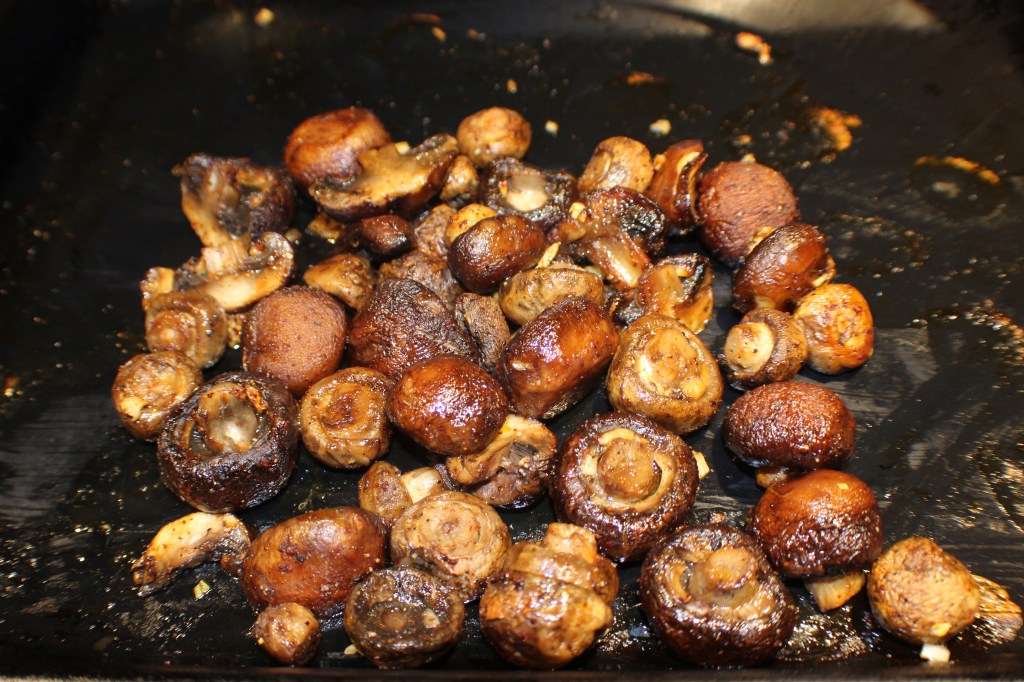
Roasted mushrooms lend an even deeper flavor
Mushroom varieties
The standard white mushroom is perfectly acceptable, but you can give the soup added flavor with portobellos, shiitakes, or any other wild mushrooms. The only one recipe doesn’t work well with is the puffball – they are simply too mushy when cooked this way. Serve with whole grain crusty bread and a fresh salad for a complete, easy meal.
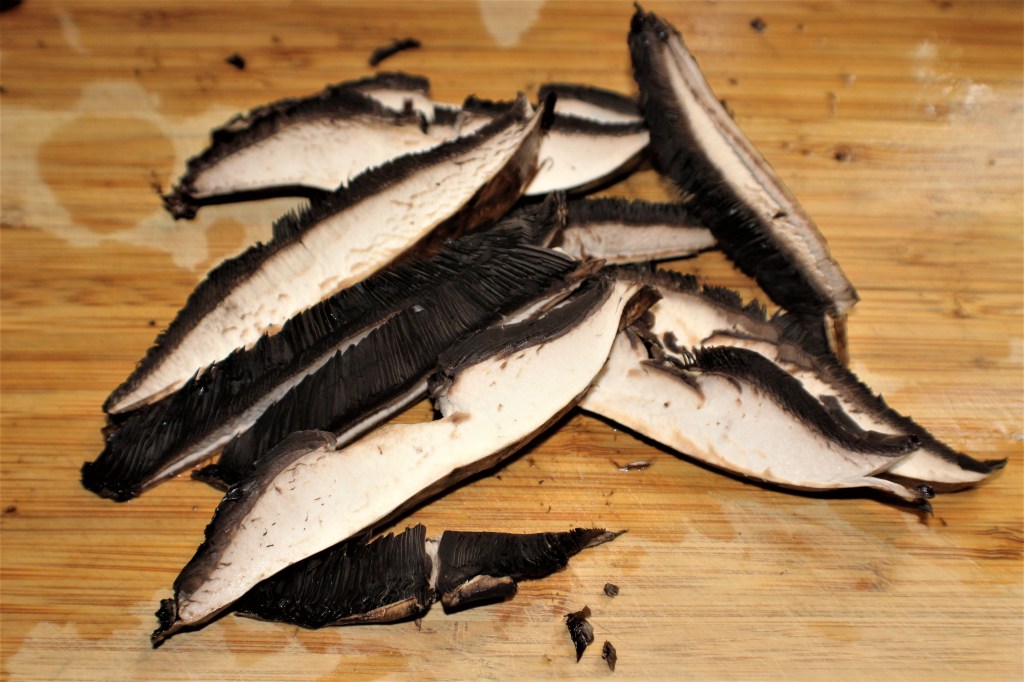
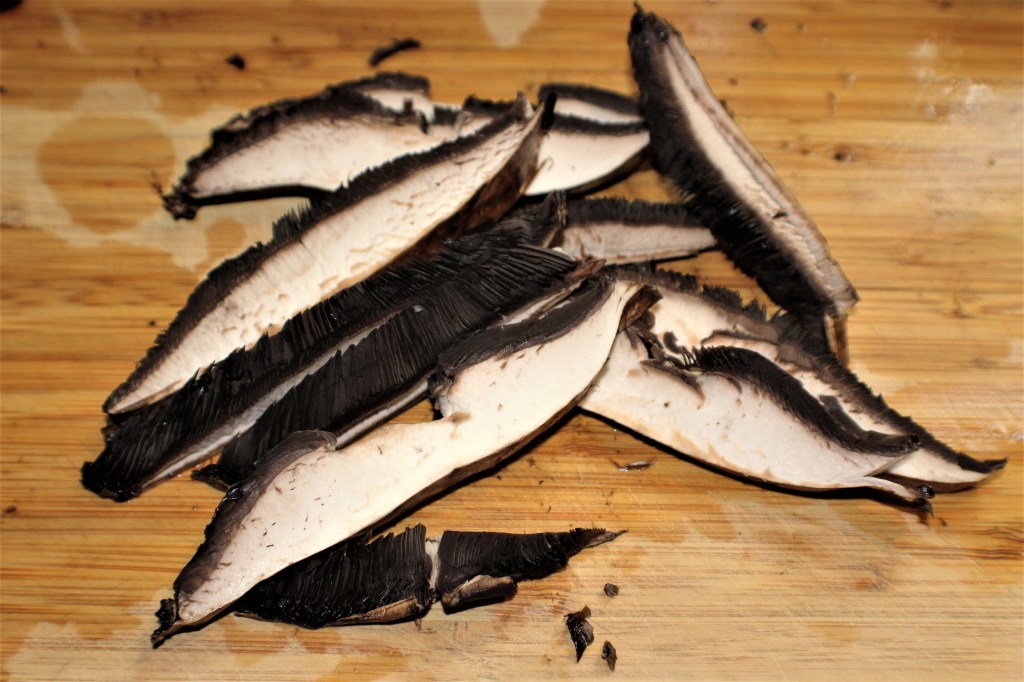
Sliced portobello mushrooms
Creamy Mushroom Soup
3 oz. mushrooms sliced ½ medium onion diced 1 clove garlic minced 2 T. butter 2 c. chicken stock ¼ c. white wine 1 medium russet diced ½ c. heavy cream Salt and pepper
Sauté mushrooms in 1 T. butter; set aside. Sauté onion and garlic in remaining butter until soft. Add stock, potatoes and wine and bring to a boil. Reduce heat and simmer until the potatoes are soft, 20-25 minutes. Add half the mushrooms to the pan and puree with a stick blender. Add remaining mushrooms and cream. Warm but don’t boil. Serves 2.
Vegan option:
Replace the chicken stock with vegetable stock. Replace the heavy cream with coconut milk. Saute in olive oil.
There’s something so cozy and wholesome about potato pancakes. They’re crispy on the outside, creamy on the inside and a wonderful palette awaiting a dollop of sour cream or applesauce.
Although I don’t have an ethnic tradition of latkes in my background, I’ve taken a traditional recipe from a Jewish friend of mine and adapted it to use whatever is coming in from the garden or left over in the fridge.
This is one of my favorite ways to use leftover mashed sweet and white potatoes around the holidays. The best part is that you can use your imagination and creativity to combine all sorts of vegetables and seasonings.
The basic recipe:
1 c. mashed or grated sweet potatoes 1 c. mashed white potatoes ½ small onion, finely chopped 1 clove garlic, finely chopped 1 egg ½ c. flour Salt and pepper to taste
Saute onion and garlic in a small amount of olive oil. Mix all ingredients in large bowl and drop by large spoonfuls into pan glazed with olive oil. Pat the cakes flat. Saute until browned; flip and brown on the other side. Alternatively you can place on parchment or a silpat on a cookie sheet and bake for about 15-20 minutes in a 350 degree oven. Repeat with the rest of batter.
Serve warm by themselves with a dollop of plain yogurt or sour cream and a dollop of applesauce or currant jelly or whatever other jelly you have on hand. Or serve cold over a fresh salad dressed with vinaigrette and sprinkle with goat cheese or feta.
Riffs on the recipe:
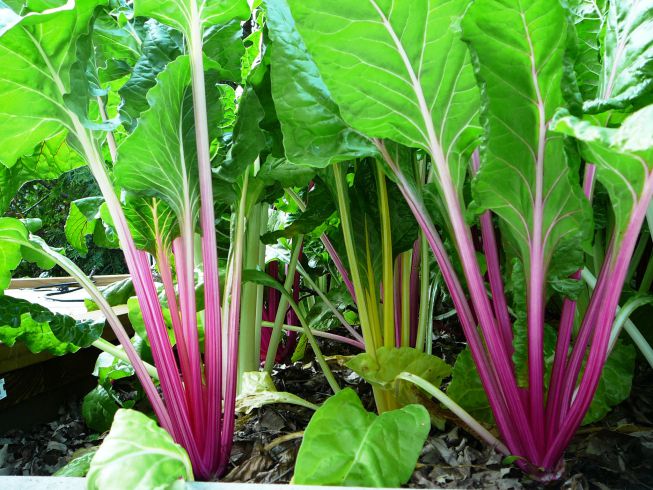
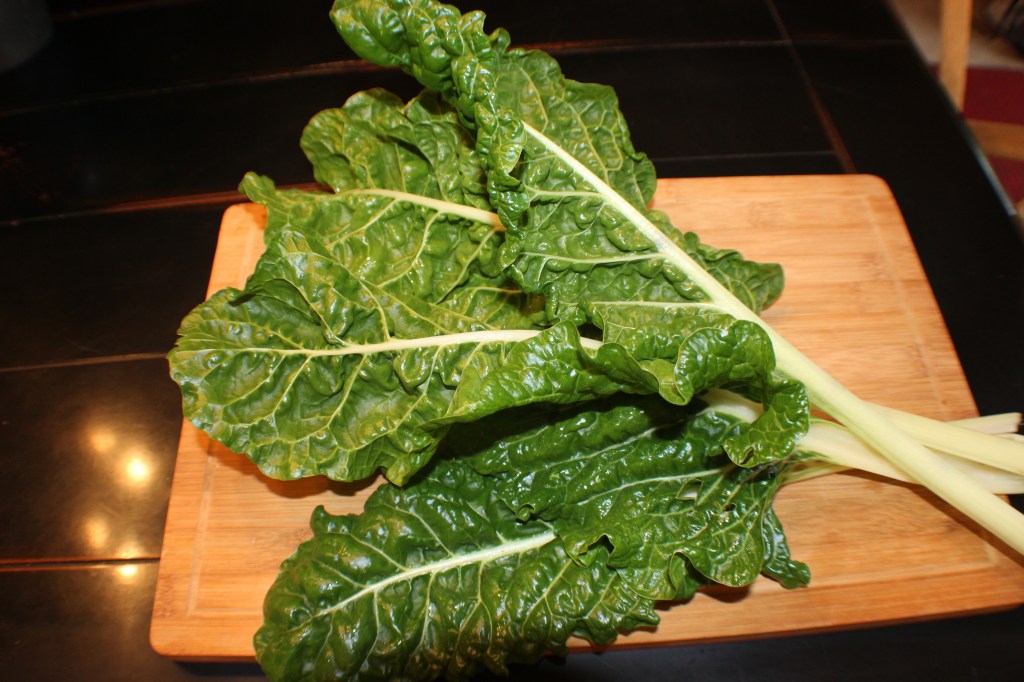
Swiss chard ready to chop
1 cup of any combination of grated raw beets, carrots, parsnips, finely chopped greens
You can also add cooked grains (quinoa, bulgur, oatmeal), mashed cooked beans (black, garbanzo, lentils). Just remember that the drier the mix, the more binder you may need such an additional egg.
Check the recipe tab for zucchini latkes and quinoa cakes
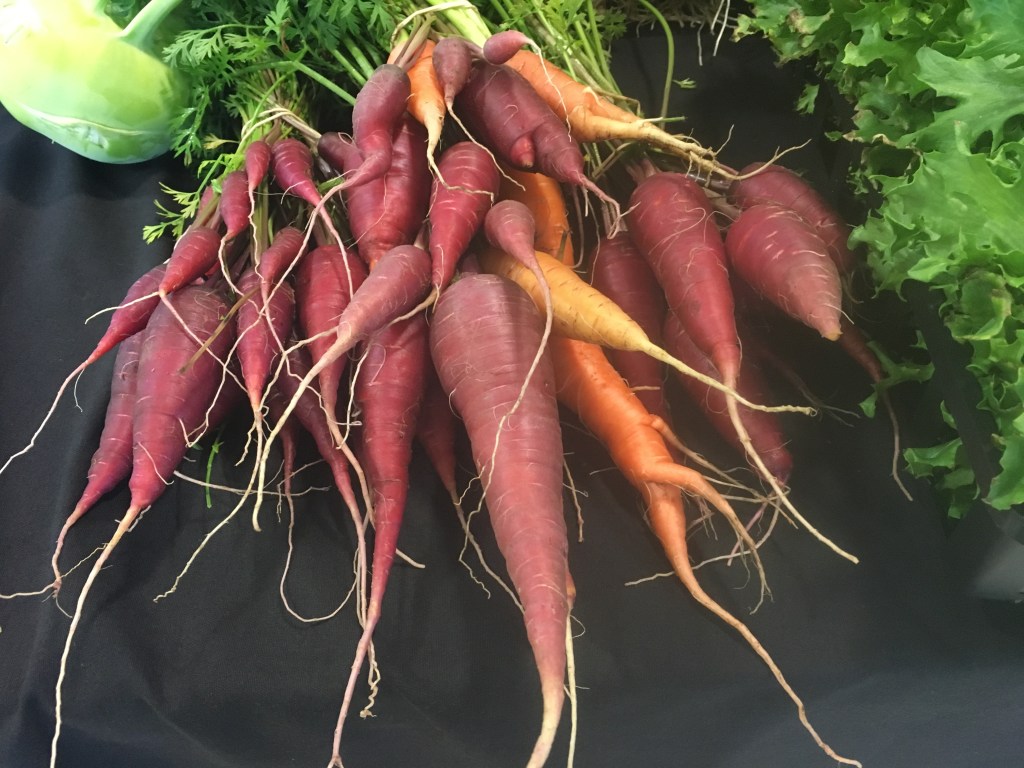
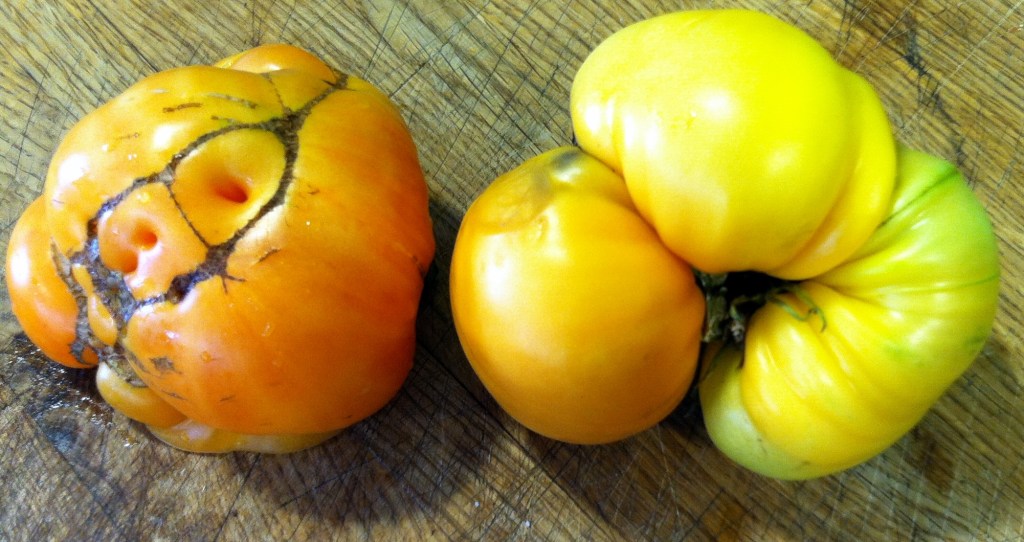
Let’s be honest – none of us is perfect. Including the vegetables we so carefully nurture in our gardens. But why shun the forked carrot, the split beet or the knobby tomato in favor of their more perfect counterparts? If a peach has a bruise, can’t we just cut it out and enjoy the rest of the peach?
Food waste is an international issue, and one of the best ways to help stop food waste is to shift our thinking to accepting imperfect vegetables and fruits in our own kitchens and at our tables.
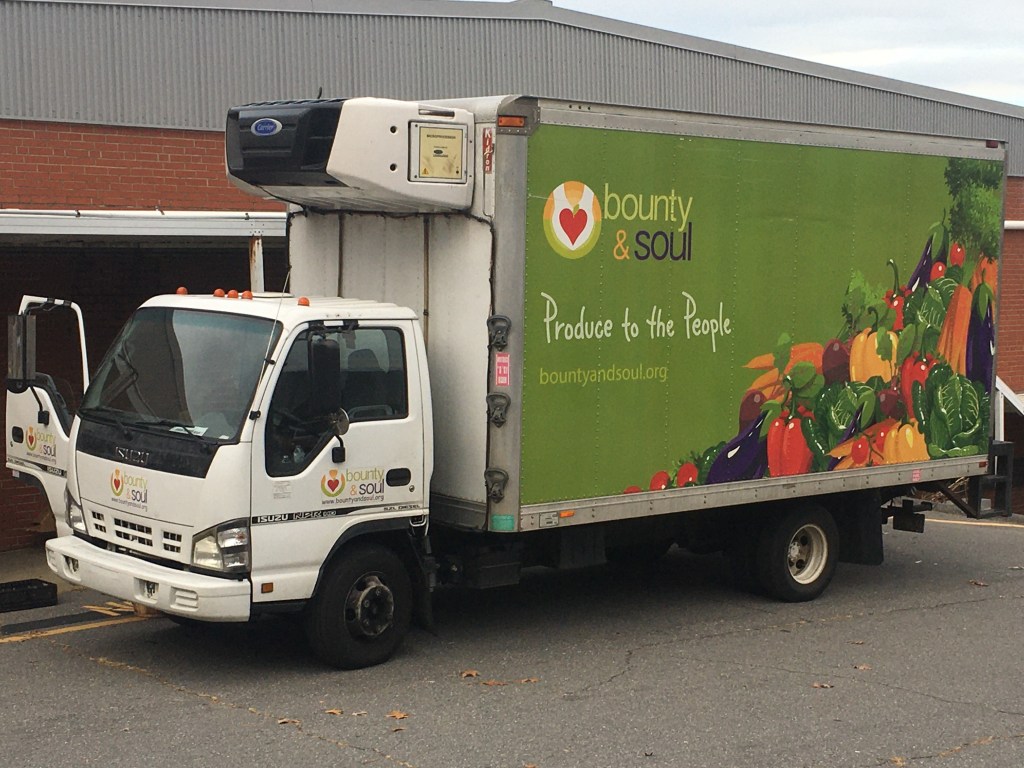
I’ve recently become acquainted with a wonderful organization called Bounty and Soul (https://bountyandsoul.org/), whose mission is to get food and nutrition and wellness education into everyone’s hands and to build community while doing it. I get to help out with cooking demonstrations and food distribution at their markets.
Bounty and Soul market
Every week I see wonderful smiles as people from all types of life walk away with not only free food, but information on nutrition bringing the food to their tables. Much of the food is donated by local farmers, markets and groceries, and the truth is that it’s not the picture perfect produce you see in the grocery store. It is all perfectly serviceable and delicious, just not perfect in appearance.
The French started a national campaign several years ago called “The Inglourious Fruit.” It was a public relations campaign to get French citizens to slow food waste by purchasing and eating those fruits and vegetables that are not perfect. These were discounted in grocery stores and markets, and the campaign was a huge success.
There is a new website from which you can order imperfect vegetables and fruit and have it delivered right to your door. Check out https://www.imperfectfoods.com/ for great information on food waste, not to mention access to wonderful produce. Their slogan is “Eat Ugly With Us”.
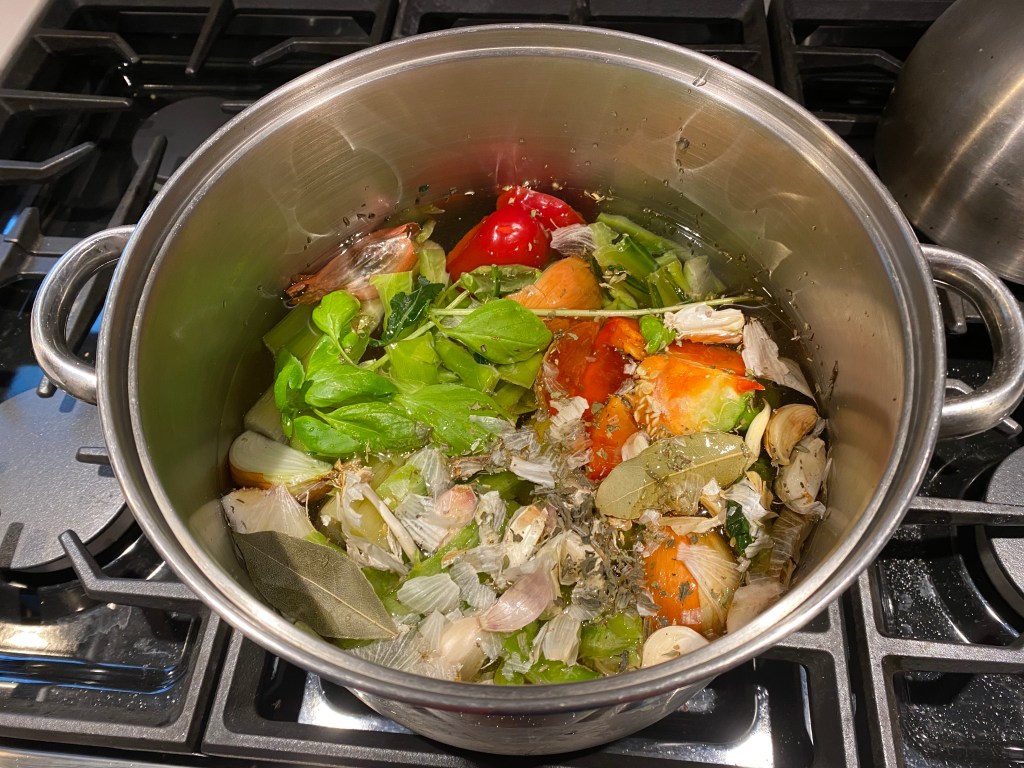
For my own resolution to reducing food waste, I’ve started keeping all my vegetable trimmings and am using them to make a delicious broth for soups. As I trim vegetables for a meal, I make sure to wash the leftovers well (getting all the dirt out of the onion top), and then throw them in a bag in the freezer. Once I have a bag full of not-so pretty beet greens, carrot tops, leek greens, parsley, mushrooms stems and cilantro stems, I put them in a slow cooker along with the remains of tomatoes and a few garlic cloves. I cover with plenty of water and let simmer twelve hours or so.
Once it’s done, I either strain the broth, squeezing out all the liquid I can, or I puree it (depending on what vegetables I’ve used). With a seasoning adjustment, this becomes the base for a delicious, nutritious soup. You can use it right away or freeze it for later.
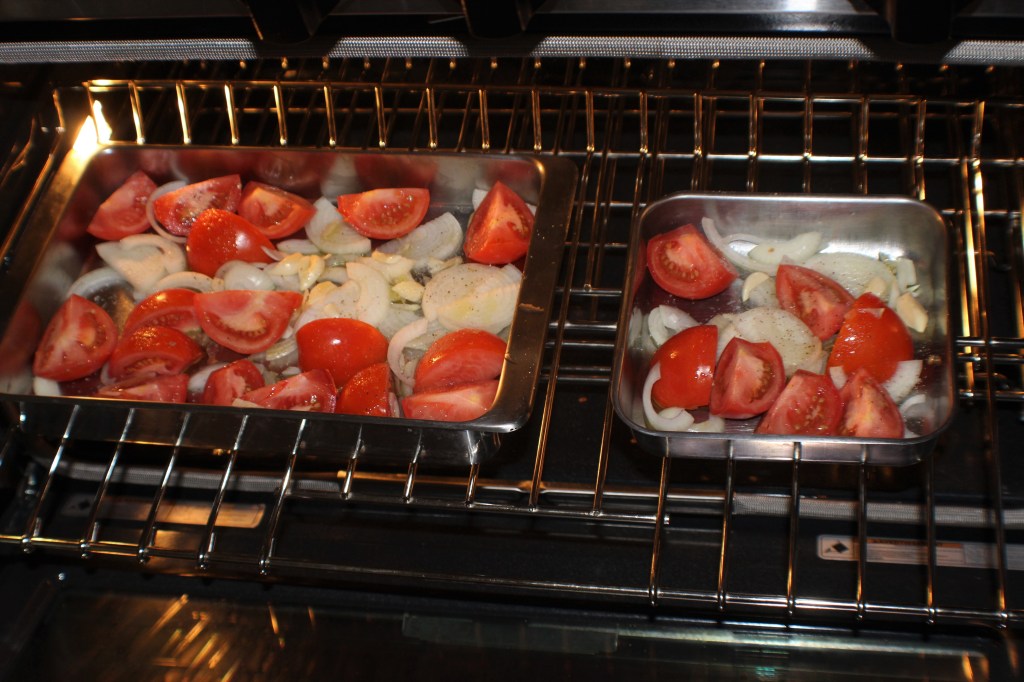
“Glut” sauce ready to roast
My other favorite way to save the uglies is to make a batch of “glut” where everything goes in to roast and then gets pureed for a pasta sauce or spaghetti sauce base. This is the perfect way to use all of those tomatoes toward the end of summer. You can add any other vegetables and herbs you have an abundance of. It will taste a little different each time, but that’s the fun! Because it is milled, you don’t have to core the tomatoes or peel anything. Simply make sure everything is washed well.
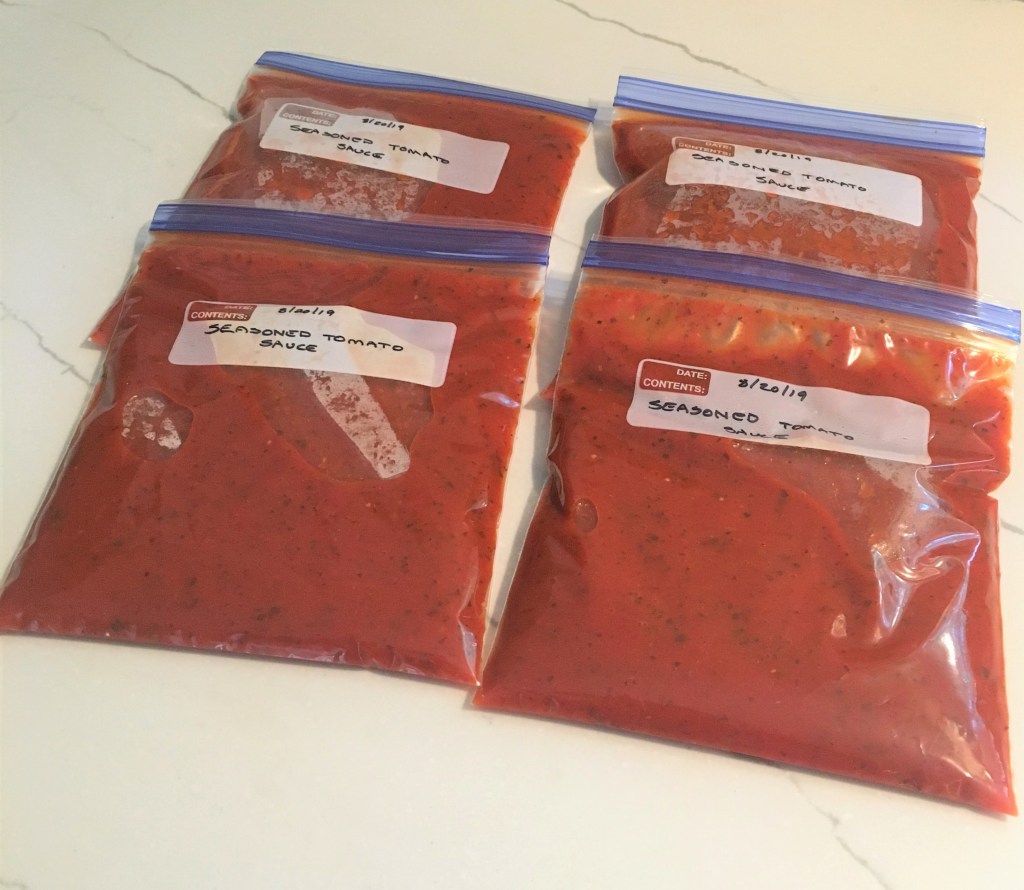
Sauce for the freezer
6 lbs. tomatoes, quartered (or for an eggplant-based sauce, substitute eggplants)
1 ½ c. coarsely chopped carrots, tops and all
1 ½ c. coarsely chopped celery
1 ½ c. coarsely chopped onion
9 gloves garlic, chopped
6 T balsamic vinegar
1 bay leaf
1 ½ T fresh thyme, oregano, basil, parsley
1 ½ t. salt
1 T. pepper
Roast 45 minutes or until vegetables are soft. Run through a food mill, bag and freeze. Makes 2 quarts. Use for pasta sauce, over fish or chicken, or use as a base for chili or minestrone.
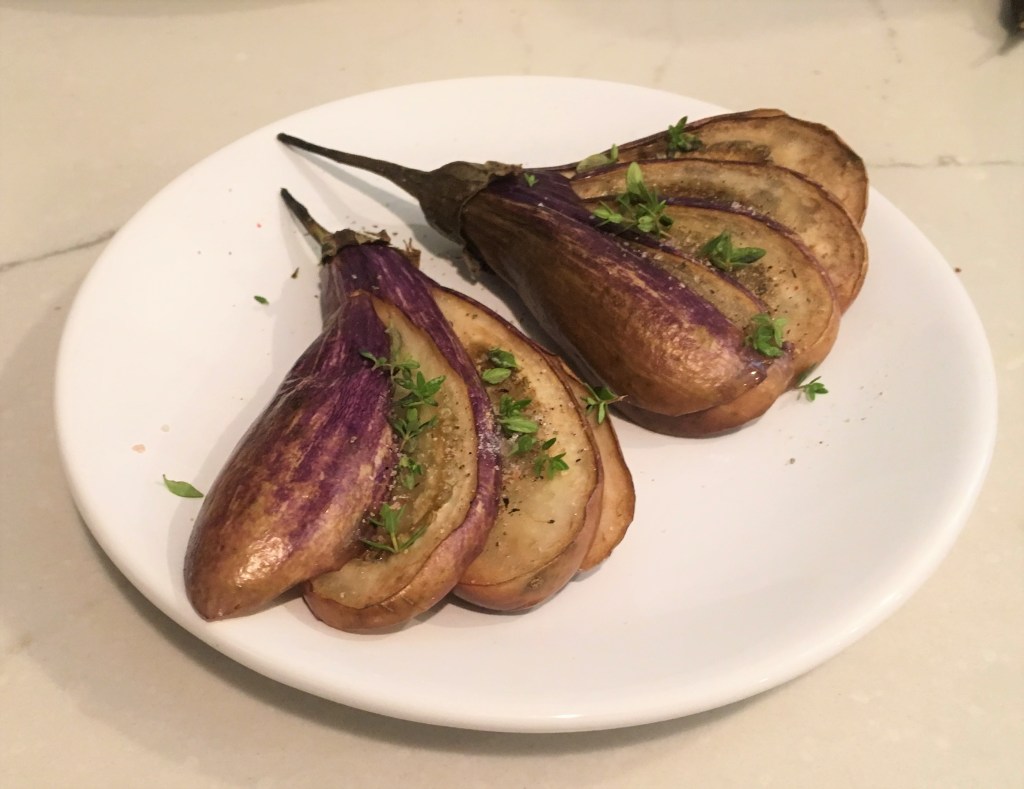
Nothing is happening in the garden today because of the cold. So, I get to cook – my favorite recreation. I love looking in the crisper to see just what’s there, and then pulling out vegetables like mushrooms, zucchini, broccoli, cauliflower, carrots, Brussels sprouts, asparagus and even one of the last eggplants of the season. I’m going to roast vegetables!
Roasting brings out the flavor
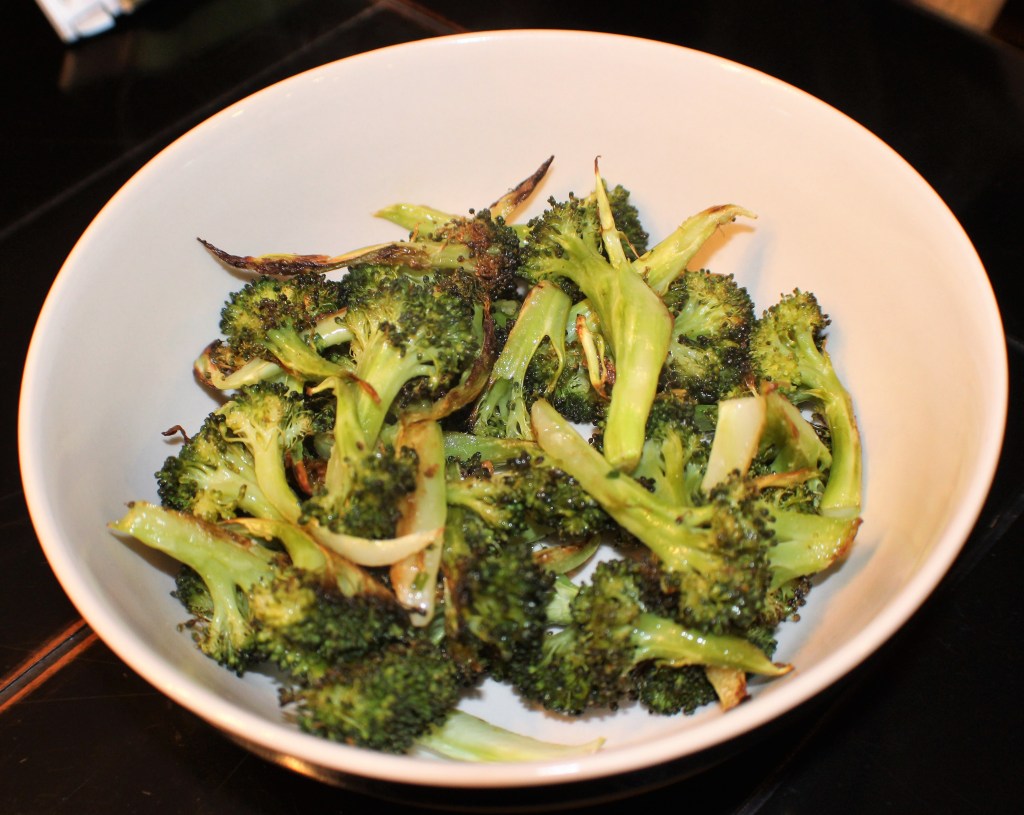
Roasting vegetables makes them sublime, giving them that rich “umami” flavor everyone is talking about. All you need are fresh-picked vegetables, good quality olive oil, salt, a sharp knife and a roasting pan. Depending on the vegetable, most will roast to caramelized goodness in about 30 minutes at 375 degrees. Drizzle them with olive oil first, roll around, and then salt when they come out of the oven. Then slice into chunks and add to rice, pasta or simply enjoy plain – a perfect side or main dish. A sprinkling of feta or Parmesan cheese and maybe a drizzle of sriracha sauce complete the dish.
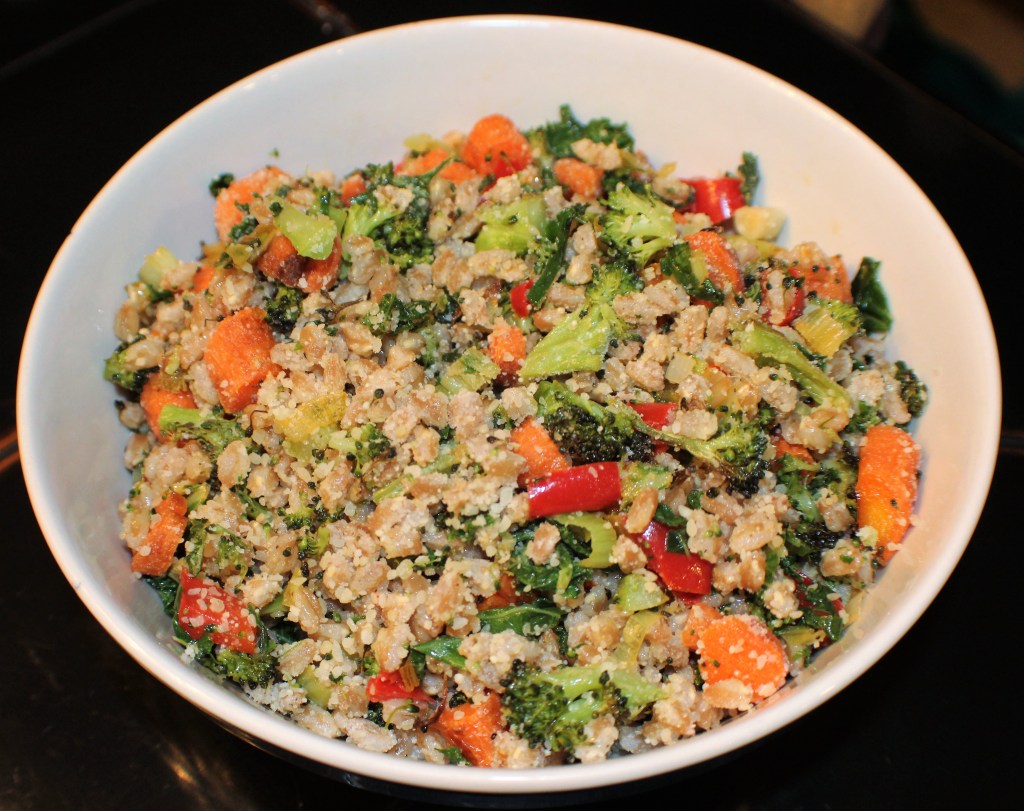
Roasted Broccoli and Carrots with Farro
1 c. broccoli florets
½ pkg. baby carrots
3 T. olive oil
1 clove garlic, minced
½ small onion, sliced
½ c. cooked farro, quinoa, rice, bulgur or millet (cook according to package instructions)
1 t. balsamic vinegar
¼ c. Parmesan cheese
1/4 c. toasted pecans, pepitas or sunflower seeds
Preheat oven to 375. In a sided roasting pan (broiler pan
works well), add the carrots and drizzle with 1 t. olive oil. Roast until a
fork inserts with ease, about 45 minutes. Remove from oven, salt generously and
put aside in a bowl. Add broccoli to pan, drizzle with 1 T. olive oil and roast
until crisp-tender, about 30 minutes. Salt and add to carrots.
Add the last tablespoon olive oil to a saute pan and saute
the onion and garlic until soft. Add the farro and heat through. Coarsely chop
the vegetables and return to the bowl. Add the farro mixture to the vegetables,
sprinkle with the balsamic vinegar and parmesan. Top with nuts or seeds and
serve warm or at room temperature.
The nip of frost in the air and the smell of wood smoke outdoors are sublime companions to the scents of cinnamon baked apples and nutmeg-laced butternut squash in the kitchen. This is the perfect time to raid the last of the farmers’ markets and pumpkin farms to pick up the end-of-season bargain squash in every hue and flavor. Load the car with pie pumpkins, buttercups, Turk’s turbans, blue hubbards and kubochas.
Storing squash and pumpkins
Winter squash and pumpkins can be stored for months in a cool basement if you wash them with soapy water and dry them well. Store on wire racks in a cold room. A basement that stays in the 50’s is just about the right temperature.
Pumpkins are king
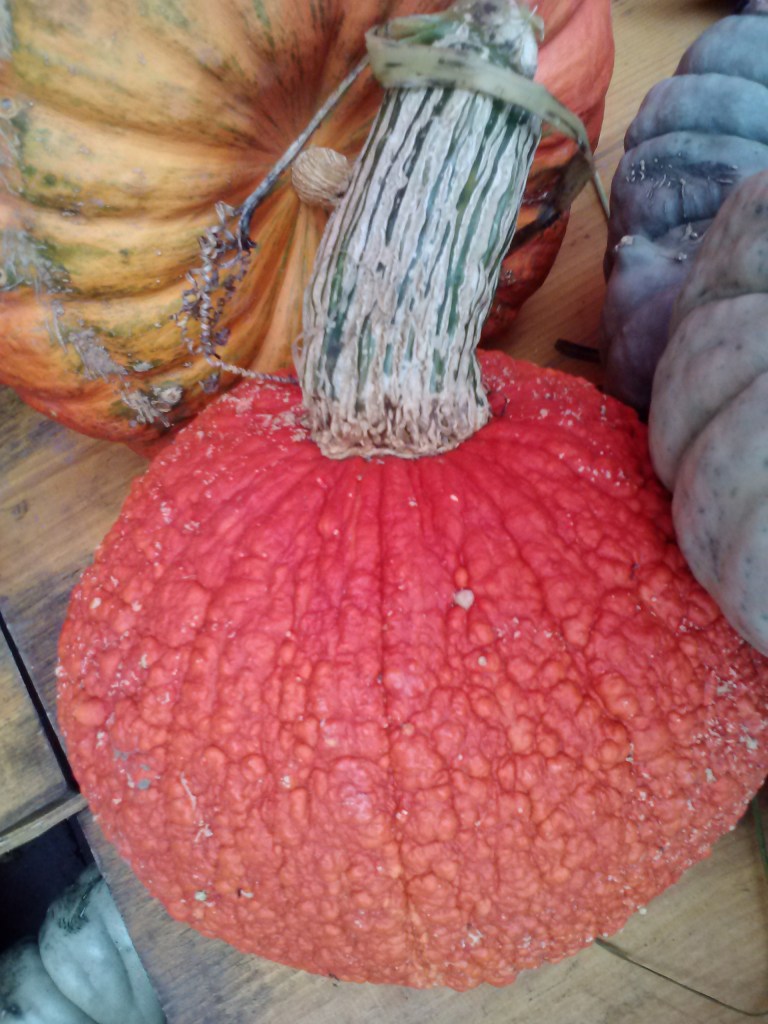
Red Pumpkin
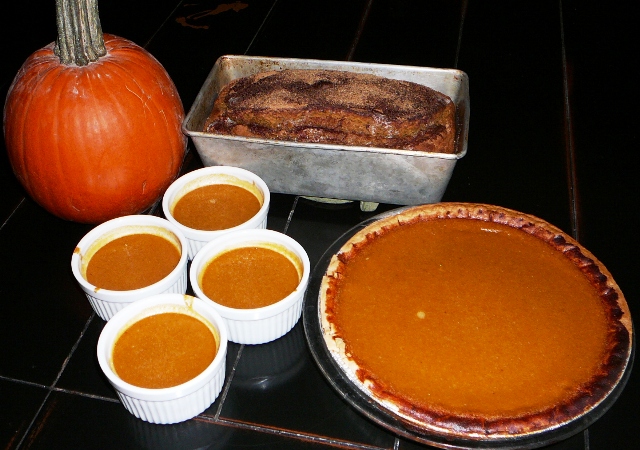
Pumpkins are the kings of winter squash. Pumpkin pie made from fresh pumpkin is unlike anything you’ve ever tasted, and pumpkin is also delicious when baked and mashed like potatoes. Look for small pie pumpkins, cheddar pumpkin, Cinderella pumpkin and pink or green pumpkins.
Easy to bake
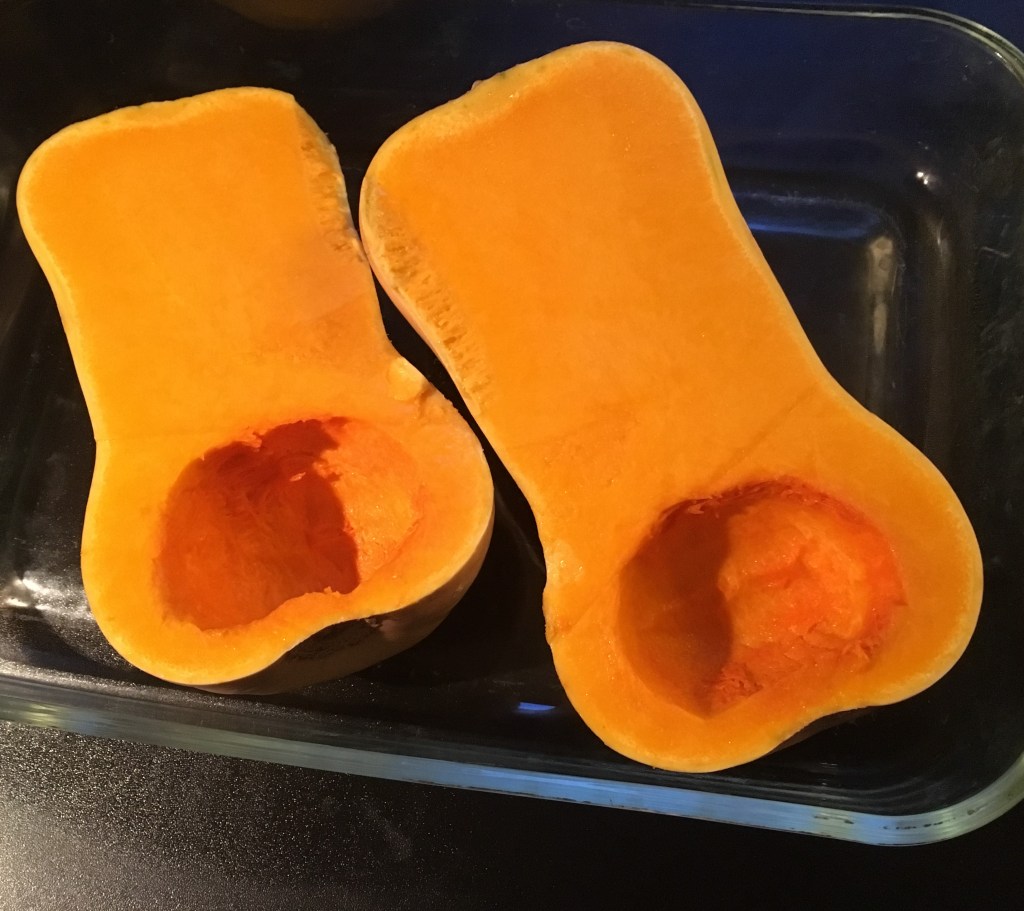
Butternut squash ready for baking
Although often daunting because of the size, all it takes to bake most winter squashes is to cut them in half and invert them on a rimmed cookie sheet. You can remove the seeds before baking, especially if you want to toast the seeds, or you can bake with the seeds intact and remove them after baking. They come out more easily this way.
Bake for an hour or so at 350 degrees, depending on the size of the squash. Serve with butter, brown sugar, maple syrup or stuffed with whatever sounds luscious. All winter squashed are cooked the same way, and can be interchanged in almost any recipe.
Freeze it
The cooked flesh freezes well, and if you measure it into freezer bags in one cup batches, it’s ready to pull out for use whenever the mood hits to make muffins or squash bread. Or soup!
Spaghetti squash
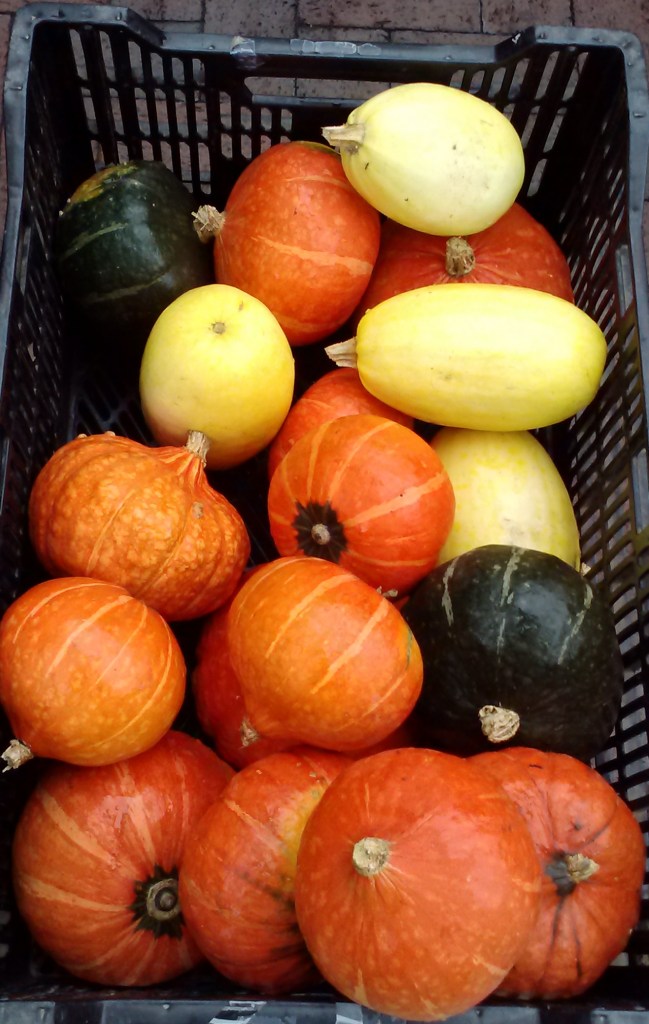
Spaghetti squash and pie pumpkins
Spaghetti squash is a little different in that when it is cooked, you can separate the flesh into strands that really do resemble spaghetti. The “spaghetti” is delicious with a little butter and parmesan or even spaghetti sauce. And it doesn’t have the high calories of pasta.
My favorite recipe of the season is squash or pumpkin soup, flavored in any number of ways.
Easy Squash Soup
small butternut squash, pumpkin or other winter squash
1 c. chopped onion
2 t. oil
5 c. chicken or vegetable broth
2 T. molasses
1 t. curry powder or 2 T. red curry paste
¾ t. salt
1/8 t. cayenne or more to taste
⅔ c. half and half or coconut milk
Sliced red sweet or chili peppers for garnish
Mix onions with oil and spread on pan around squash. Roast at 425 45 minutes or until tender. Scoop out pulp, measure about three cups, and add with rest of ingredients to heavy pot. Bring to boil and simmer 5 minutes. Puree in blender and return to pan. Add half and half or coconut milk and warm until heated.
Serve with a drizzle of Sriracha or coconut milk, sliced red chilis, crumbled crisp bacon if you have meat eaters in the house, or chopped parsley or cilantro if desired.
Do you love parsley? I don’t. I don’t mind it, just don’t love the flavor. It’s so “parsleyish”. But pick up almost any recipe and you’ll find it used as a final garnish. Recently a friend served parsley pesto over pasta for dinner. Mentally I was thinking it sounds as bad as raisin pie which is a total waste of good crust. It actually tasted okay, but pretty parsley-intense. Luckily the parsley flavor was mellowed by olive oil, cheese and nuts.
Healthful Addition to Meals
Still, garnishing is best in my book. I dutifully purchase a bunch at the grocery with which to garnish my dish. It only costs a buck, but I’ll use only about 10 leaves. So then I have this bunch of healthy, green goodness that gets rid of garlic breath, is chock full of vitamin C and K, helps regulate blood pressure and is a digestive aid. I can’t make myself just compost the rest so I need to find a way to use it that doesn’t swamp me with parsley flavor. And so I don’t have to run to the store every time I want some for garnish.
Freeze it
Parsley in my retro 70’s salad spinner
It can be frozen! It’s easy to do and when it comes out of the freezer, it tastes fresh, retains its beautiful green color and still gives you all the healthy benefits. Simply wash it, remove as many stems as you can (not necessary to remove them all), spin it dry in a salad spinner, bag and freeze.
Chopped, dried and ready to freeze
When you want to use it, simply remove the amount you want, chop it while frozen and voila. It thaws quickly so if you want to sprinkle it for a garnish do it while frozen or you won’t be able to separate it easily.
Parsley lasts for months in the freezer
Grow your own
Growing your own parsley assures you’ll always have it at your fingertips. Parsley stays green well into winter (almost evergreen in mild winters), and sprouts in very early spring. Find a spot in sun or partial shade, soak your seeds 24 hours and plant.
Parsley makes a beautiful border plant
Parsley is a biennial, meaning it grows a rosette of leaves the first year, sends up a flower stalk in the second year and dies after setting seeds. If you let the seeds ripen and fall, nature will start your new plants where they drop and you’ll always have parsley. You simply need to thin out the plants and organize (not nearly as impolite as dill, which scatters its seed all over everywhere).
Carrots and celery
You can use the same freezing method with celery and carrot leaves, but unfortunately, this method does not work with cilantro. Even though they are related, cilantro is more delicate and loses its flavor when frozen. I’m still experimenting though so I’ll keep you posted.
I took my friend’s recipe for parsley pesto and converted one of my favorites, broccoli pesto, by adding about one-third parsley. The recipe is below.
Broccoli-Parsley Pesto for two
1 c. broccoli flowers
½ c. parsley leaves
1 clove garlic
½ c. fresh basil leaves
½ t. salt
¼ t. pepper
¼ c. toasted walnuts, pecans or pine nuts
¼ c. olive oil
1-2 T. grated parmesan
½ lb. noodles of choice, cooked and drained
Pulse first seven ingredients in a food processor until chopped. Gradually add olive oil with the processor running. Process until smooth. Toss with hot cooked noodles and Parmesan cheese. Garnish with chopped parsley.
It’s your friendly leaf goblin, showing up as I do at this time every fall. The leaves are finally starting to fall, which means that wonderful activity, leaf pick-up, is here. Instead of looking at them as a nuisance, why not think of them as gold for the garden? I’m going to try to convince you to change leaf pick-up into “leaf recovery.”
Attitude change about beauty
It means a mind shift from wanting everything to look pristine to a less tidy appearance. Why is it that when we see leaves blanketing a bed instead of commercially shredded mulch, it looks messy to us? Both are organic matter, and the leaves are actually much more colorful than shredded bark.
Leaves = Nutrients
The leaves that turn lovely hues and then drop are nature’s source for replenishing the soil beneath trees and shrubs. A plant takes up massive amounts of nutrients through its roots as it grows to use in food production for its healthy leaves. When the plant sheds its leaves, those nutrients are released back into the soil as the leaves decay. These nutrients are waiting to be used by the plant next season to produce leaves, stems and fruits.
So, taking away the leaves simply takes away nutrients. We can add nutrients by fertilizing, of course, but for the most part, synthetic fertilizers do nothing for the soil, and certainly make a dent in the wallet.
Mulched tree circles make happy, healthy trees
What do I do with them?
So, can you simply leave them where they fall? And exactly how do you use these leaves that are so plentiful?
For the leaves covering your grass, think of the prairie’s cycle. Prairies don’t usually have trees, so there are few leaves. The organic matter from a prairie cycle comes from the grass itself. So, it is a good idea to clean up the leaves on your grass in order to keep the grass healthy and free from disease.
On the grass
Simply mow the grass and leaves together and blow it all in your landscape beds. This is not a hard job, but may take some creative driving or pushing to round them up into beds. If your mower is a mulcher, take out the mulching chute cover so you can blow and direct the leaves as you would into a bagger. If you don’t have that capacity, you can simply mow over them a couple of times and they will be ground finely enough to leave in place.
In the beds
Beautiful beech leaves making a winter blanket for the tree
As for landscape beds, take a walk in the woods and you will see blankets of leaves covering the ground beneath trees. This cycle of leaf fall and decay maintains the soil health and this, in turn, allows the trees to grow and remain healthy. We can easily duplicate that cycle by simply not taking the leaves away.
You can leave them whole where they fall and eventually they will begin to break down into the fine humus that is so good for plants. Or you can shred them with the mower and blow them into the beds. You will have ready mulch every year without the back-breaking work of adding wood mulch to your beds.
Make winter beds for pollinators
Keep in mind that native bees nest in the ground, and bumblebees burrow into leaf litter to spend the winter. Leaf litter also protects countless types of butterfly pupa such as black swallowtails and fritillaries.
Make a leaf pile for later use
Shredded leaves on my vegetable garden
I have a lot of leaves, so after I fill my beds, I scoop all the extra into a pile at the back of my property and let them sit there over winter. Next spring I can dig into the bottom of the pile for some of the most beautiful shredded mulch to go directly on my vegetable garden instead of straw.
After a couple of years, my leaf pile will be reduced by half and will be composted beautifully for use all over the landscape. The British have been doing this for years – they are famous for their leaf “mould” which they use in the garden and even in containers. Best of all, it’s free!
Garlic goes with anything! In fall, sauteeing a minced clove with sweetened kale, chard or Brussels sprouts makes the ordinary sublime. And that doesn’t even begin to describe what happens to the last of the tomatoes when garlic is introduced into luscious sauces. Home-grown garlic is wonderfully intense, unlike the garlic you find in the grocery store.
Plant garlic now
If you haven’t planted your garlic yet, it’s time to get it in the ground for next year. It’s important to plant early enough in fall to give the bulbs plenty of time to develop a sturdy root system yet not so early that they put out leaves in fall. If they get a good start, they will send out healthy foliage the following spring and you will be harvesting garlic in mid to late summer.
Garlic and terroir
Garlic is known for its affinity to the soil (called terroir), meaning that if you can purchase garlic bulbs from a local source, you will usually have larger cloves right away. Ordering it from another region of the country means it may take two or three years of repeated planting before you begin to get large bulbs.
If you don’t have a local source, garlic bulbs are available at most garden centers and nurseries. Supermarket garlic is often treated with a sprouting inhibitor, which takes a long time to wear off and can slow growth.
Hardneck and softneck garlic
Hardneck garlic
I’ve always had the best production from hard neck types of garlic and, although this type doesn’t keep quite as well as soft neck, the flavor is more intense. Hard neck garlic sends up a tall stalk in the middle of the leaves in early June. The stalks are topped with curly seed heads called scapes, which should be pinched out to allow the plants to put more energy back into the bulbs. The scapes are edible and can be used in any way you normally use garlic cloves. Soft neck garlic has no central stalk and will keep for six to nine months if properly cured.
Spanish Roja garlic, one of the tastiest
How to plant
It’s hard to give them up to the garden, but I save the biggest cloves from this year’s crop for planting next year’s garlic. Prepare the garden bed with a fresh covering of compost and dig a trench about two to three inches deep. Soybean meal is a good slow-release fertilizer that can be sprinkled in the trench (make sure it’s from non-GMO soybeans if you are growing organically). If you have rich soil, this is not necessary. Put the blunt end down, about three to four inches apart in rows about a foot apart. Water in well and cover with three to four inches of straw or leaf mulch to keep the weeds away and the ground moist. If your garlic sprouts in fall, don’t worry. It will go dormant and then start up again in spring.
I met a woman I didn’t know while walking in the woods yesterday. We each had a dog and were walking toward each other waving sticks up and down. When we met, we both burst out laughing. It wasn’t a cult ritual nor dousing for water. These were our spider sticks.
In the fall, when spiders are busy making plans for winter, they string their webs from tree to tree, without regard to where the paths are and who might be walking them. You seldom see the spiders, but occasionally I’ll find one hanging from my hat brim. I love what spiders are and what they do, but frankly, don’t like them on me. It’s irrational I know, but just can’t quite get past that silly fear.
My spider stick
So, we walk with spider sticks, waving them to catch the webs instead of letting them wrap themselves around our faces. Without a spider stick, you risk coming out of the woods looking like Frodo in the Hobbit when the giant spider wrapped him up in silk.
Spiders are amazing allies in the garden. They consume countless aphids, flying pests and even slugs that can wreak havoc on our plants. So protecting and tolerating them is definitely in our best interests. Their presence makes garden easier.
Garden Orb Spider (my friend)
Spider silk is one of the wonders of the world. It’s ethereally light and almost as strong as steel. It’s sticky (why it’s so hard to get off your face), and is used for transport, lodging and trapping prey. Most of the silks across the trail are the lines tossed into the wind to make a way for the spider to move through the trees without having to walk down a tree, across the path and up another tree. For fascinating details about the silk (and some creepy photos), check out Spider Silk: Evolution and 400 Million Years of Spinning, Waiting, Snagging, and Mating by Catherine Craig.
I’ve started timing my walks so that someone else has already been on that path. Hopefully, with their spider stick, they’ve cleaned out all the webs spun during the night. And yes, there is a spider that shoots silk just like Spiderman. It just doesn’t live around here (look out, Floridians).
Heirloom vegetables give us a sweet connection to the past, and many people believe that these vegetables have the closest flavor to our childhood memories of true vegetable taste. Heirlooms come from seed that has been handed down for generations. They get their start when a gardener hand-selects for a special trait.
Open Pollinated, Self Pollinated
Heirloom vegetables are open-pollinated, which means they’re pollinated by insects or wind without human intervention. As long as pollen is not shared between different varieties within the same species, then the seed will produce a plant that resembles the plant from which it came and remain true-to-type year after year.
If you decide that you want to save seed from heirloom plants, you need to understand whether the variety is self-pollinated or will cross-pollinate. Cross-pollination may mean that you end up with plants that don’t resemble the plant from which you saved seed and may not even be edible. This is particularly true with cucumbers, squash and melons.
Hybrid Seeds
Dwarf Grey snowpeas are heirloom peas
The “opposite” of an open-pollinated plant is a hybrid which is created by human intervention. Designated as an F1 hybrid, seeds are produced by seed companies by carefully controlling cross-pollination of two varieties with specific traits. It’s important to note that they often don’t “come true” from saved seed. In other words, the seeds you collect from a hybrid may produce plants that are like either parent that was used in the cross or some combination of traits. Some hybrids produce sterile seeds.
Save Seeds Now
Start making plans to save seeds now while the garden is still in full production. Peas, green beans, tomatoes, eggplant, peppers are all self-pollinating and fairly easy to save.
Tomatoes
For soft fruits, such as tomatoes, eggplant, and peppers (yes, they are botanically fruits), let the fruit ripen to almost overripe but not to the point of being rotten.
For tomatoes, scrape out the seedy pulp and discard the rest of the fruit (make bruschetta!). Put seeds and pulp in a covered jar with some water and let it sit a few days to ferment. Fermentation lets bacteria kill any seed borne diseases. Shake the jar a couple of times a day.
After a couple of days, the good seeds will have sunk to the bottom and the bad seeds and pulp will be floating. Pour off the water and pulp carefully, trying not to disturb the seeds on the bottom. Then dump the seeds into a fine strainer and rinse them well. Spread the damp seeds on a tray or screen to dry. If you dry on paper towels or newspaper, they will be hard to remove without damage.
Peppers and Eggplants
For peppers and eggplant, simply remove the seeds from the pulp and wash the seeds thoroughly. Spread the seeds to dry.
Sweet and chili peppers for seed saving
Beans and Peas
Heirloom beans
Beans and peas are most easily left on the vine to dry. When dry, break or split the pods to release the seeds. Spread them on a screen or tray to dry completely.
Storage
Keep your dry seeds dry
Once your seeds are dry, store in an airtight container to prevent reabsorbing moisture from the air. Label immediately. Keep seeds dry and cool and between 32° and 41°F. Canning jars or plastic containers make great storage containers, and you can add a silica-gel desiccant to keep them completely dry.
You must be logged in to post a comment.