Eating seasonal food is one of the simplest ways to feel more connected—to the land, to local farmers, and even to our own bodies.
When we eat what is naturally ripe at a given time of year, food tastes better. A summer tomato, warmed by the sun and eaten in July, bears little resemblance to a pale winter tomato shipped across continents. Strawberries in spring are sweet and fragrant; apples in autumn are crisp and complex. Seasonal eating restores flavor to its rightful place at the center of the plate.
To eat seasonally is not about restriction; it is about attention. It is a quiet practice of noticing what the earth offers in this moment and responding with gratitude.
Beyond taste, seasonal food often carries greater nutritional value. Produce harvested at peak ripeness retains more vitamins and antioxidants than food picked early for long-distance travel. Leafy greens in cooler months, berries in summer, squash in fall—each arrives just when our bodies seem to need them most. Hearty root vegetables and grains sustain us through winter; light cucumbers and melons hydrate us in the heat.
Finally, seasonal eating invites creativity. It asks us to adapt, to cook with what is abundant now rather than relying on the same ingredients year-round. This rhythm—anticipating asparagus in spring or savoring the first pumpkin of fall—creates a gentle sense of celebration woven into everyday life.
Long before we could order strawberries in January or asparagus in October, our bodies learned to listen to the land. And somewhere deep inside us, that memory still hums. Our bodies crave seasonal food because we are seasonal creatures.
To eat with the seasons is to accept that we are not separate from the turning of the earth, but shaped by it. And when we honor that turning—one bowl of soup, one handful of berries, one crisp apple at a time—we rediscover that the body already knows what it needs.
As we quietly anticipate the arrival of asparagus and snap peas, there are abundant greens at the grocery and farmers’ markets right now – they are the stalwart vegetables of the winter season. I make this dish at least twice a week.
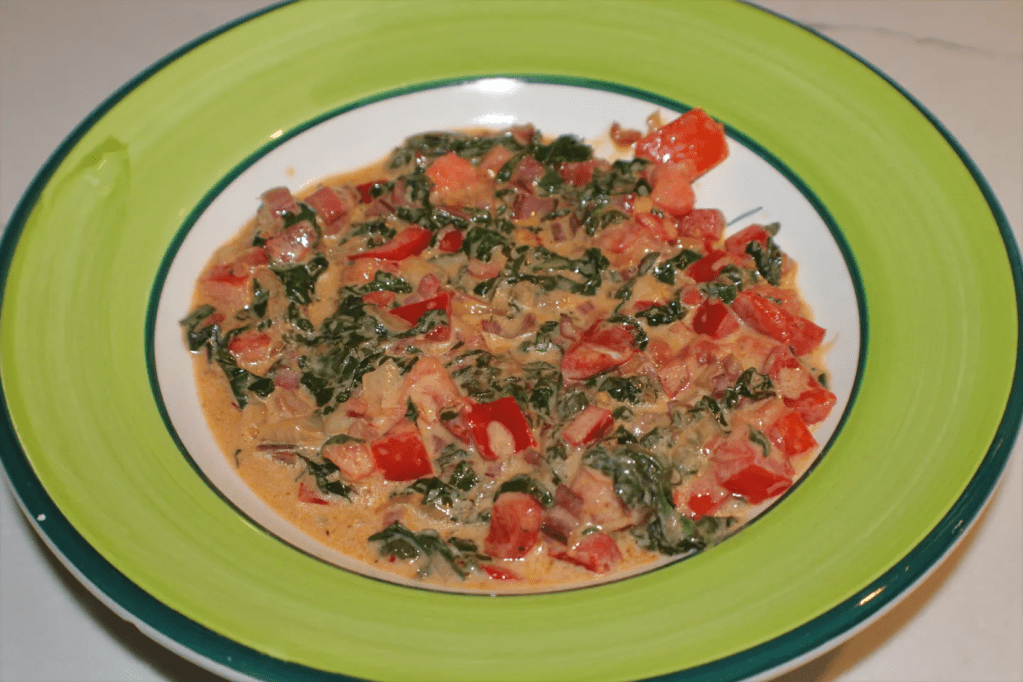
Sauced Greens
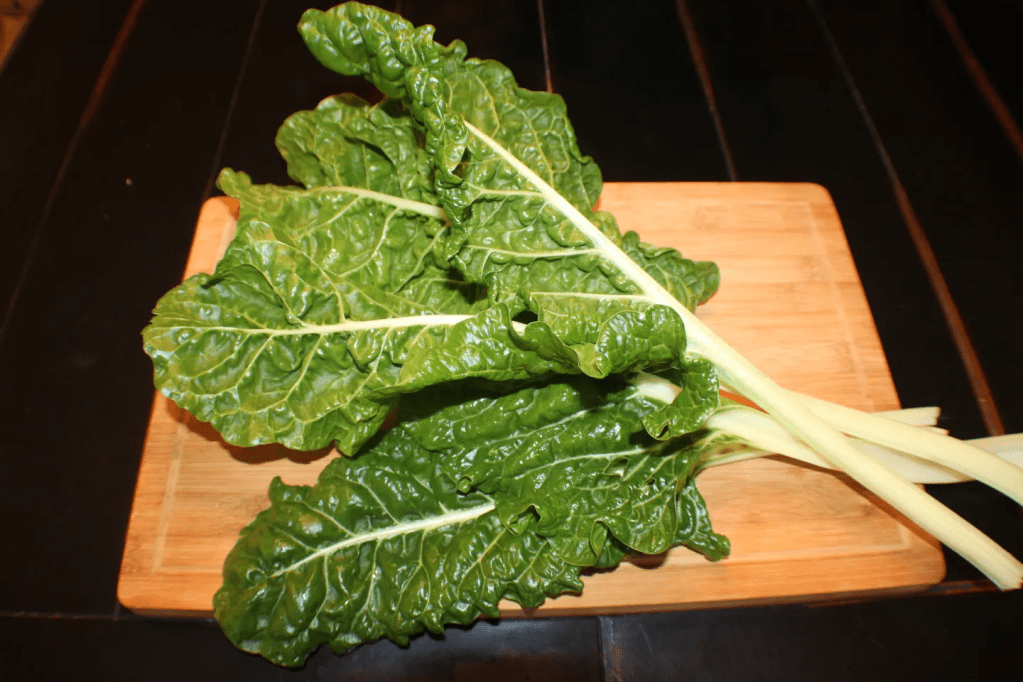
1 small bunch of greens – Swiss chard, kale, mustard, collards
1 clove garlic, minced
¼ c. onion, sliced
1 T. olive oil
1 T. balsamic vinegar
1 t. sugar
Salt and pepper to taste
½ c. chopped tomatoes
2 T. sour cream or plain yogurt
1 T. Sriracha sauce if desired
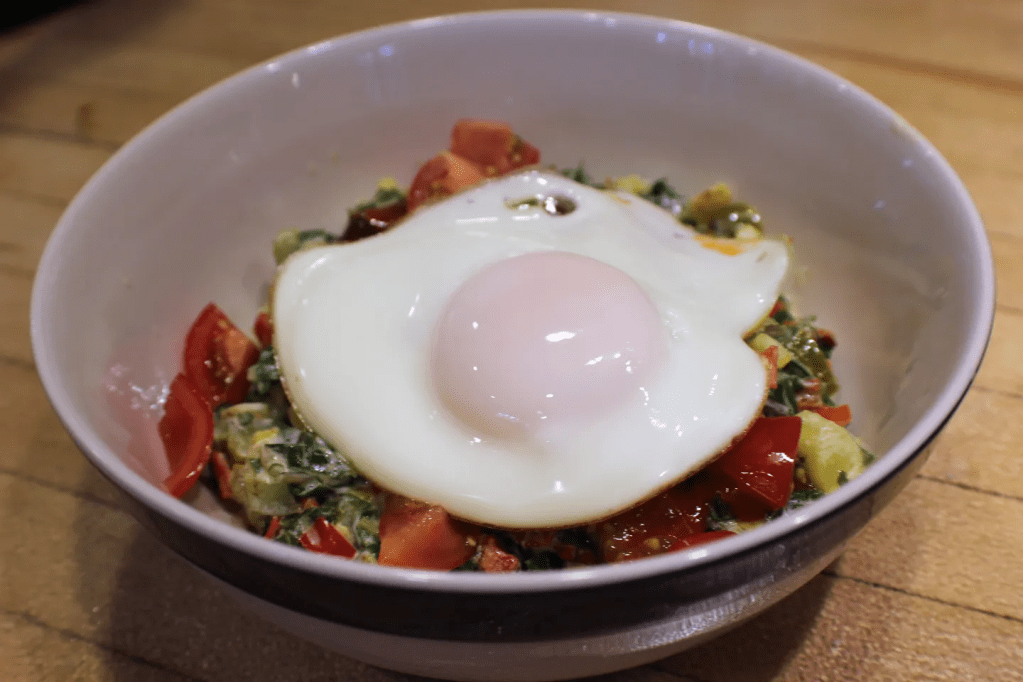
2 large eggs if desired
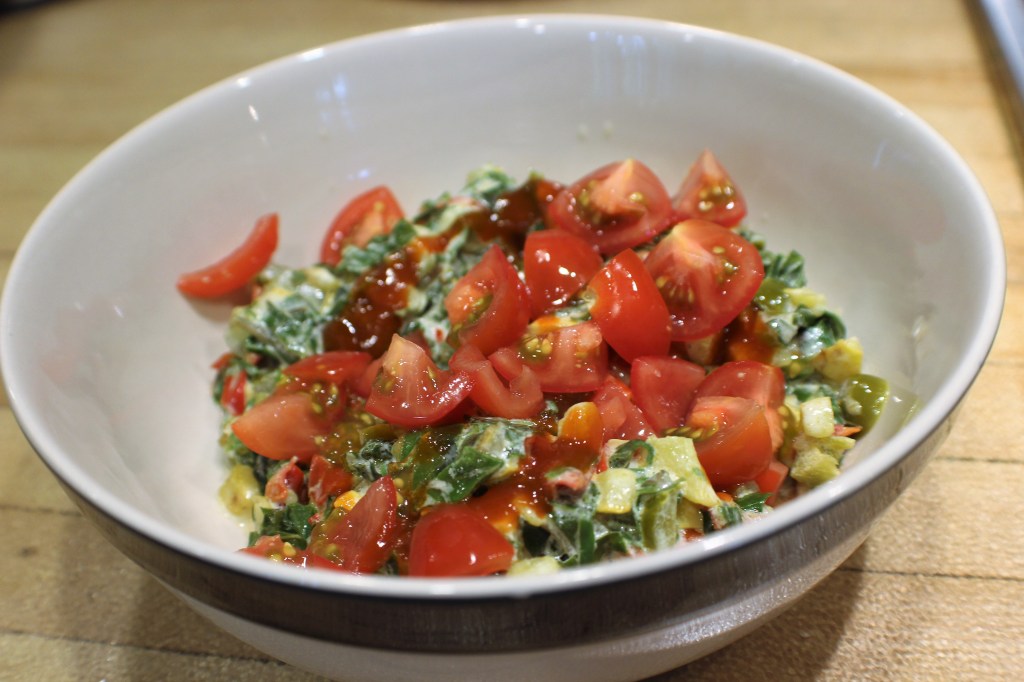
Rinse the greens liberally and remove tough stems. Stack the leaves and roll them into a “cigar” and slice thinly. Add garlic and onion to olive oil in a heavy pan and saute until tender. Fry eggs in a separate pan if you intend to use them. Add greens, vinegar and sugar and saute for about 5 minutes until greens are tender. Turn off the heat and stir in tomatoes and sour cream or yogurt. Salt and pepper to taste. Top with eggs and sriracha if desired.
With the world in such a stir today, the more I can simplify my life, the better I’ll feel. Grocery prices are soaring as are restaurant prices so I’ve made a promise to myself to grow some of my family’s produce. I don’t want to complicate my life by having to manage a large vegetable garden. But many vegetables are easy to grow and can even be grown in a pot on the porch.
One of the keys to success is to grow in season. Unless you have perfect conditions, it won’t be possible to grow spinach, snow peas or bok choi in the middle of a hot summer. They are spring and fall vegetables. But you can grow kale, Swiss chard and many other Asian greens all summer.
Swiss Chard
And planting every few weeks will keep the produce coming. Bush beans grow beautifully in a pot, and planting every two or three weeks will keep them producing all summer.
Afraid that tomatoes need a lot of care – trellising, spraying, etc? There are new varieties of smaller tomato plants with “potato” type leaves that are compact and inherently quite disease-resistant. You can pick a warm, just ripened tomato from a pot on your porch.
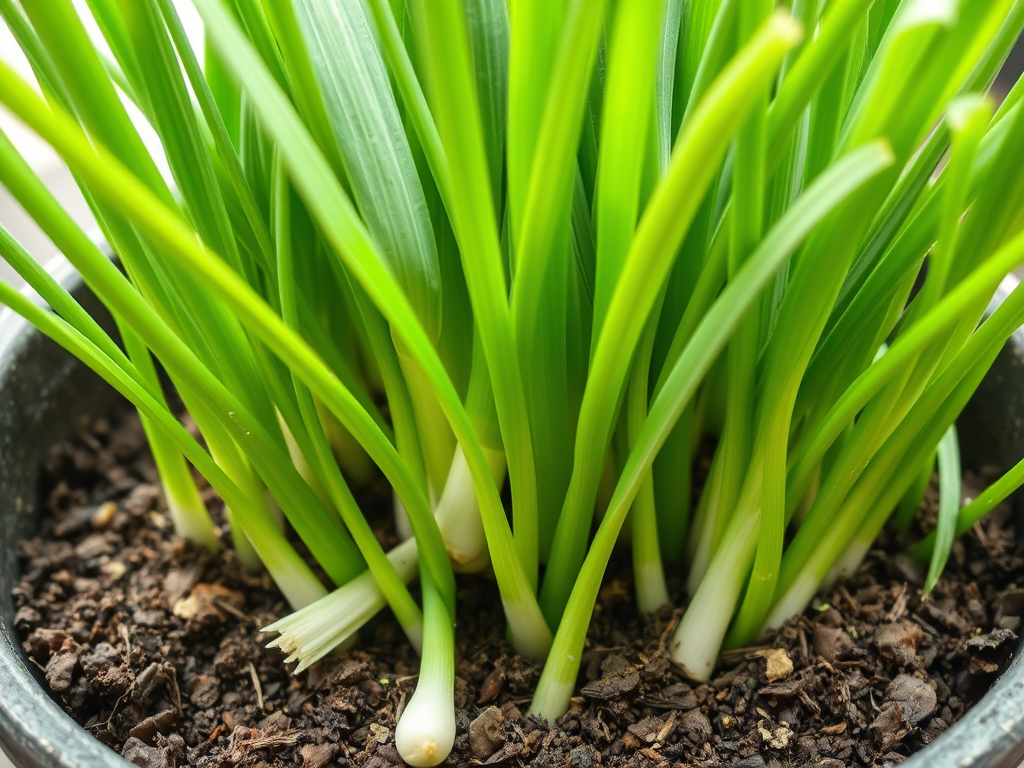
It seems every garden store has plenty of onion sets, and planting a few every two weeks will give you scallions all summer long. Plant them in a pot with radishes and you have an instant salad.
Scallions
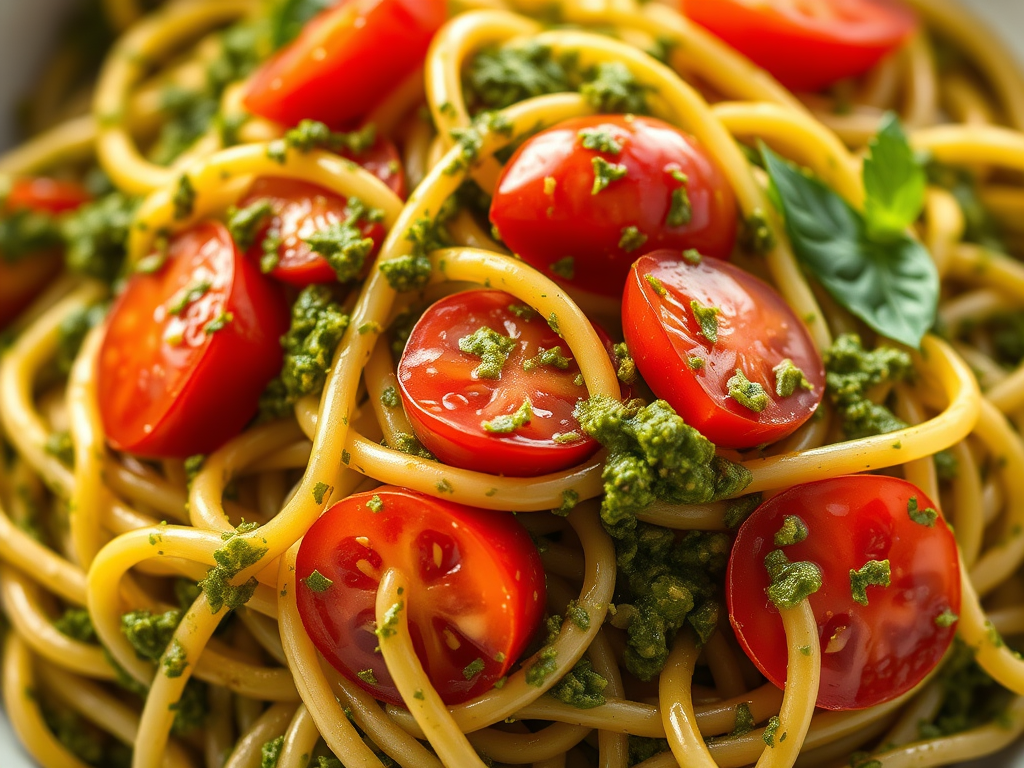
An herb garden of dill, arugula and cilantro will grow spectacularly in a pot. Add some basil and use them for pesto (what could be simpler and tastier than hot pasta tossed with pesto and fresh tomatoes?).
Classic Pesto
3 cloves garlic 2 c. fresh basil leaves ¼ c. nuts 1 ½ t. salt ¼ t. pepper ½ cup olive oil 3 oz. Parmesan
Combine all ingredients except oil and cheese in blender or processor. Add half the oil. Process while adding other half the oil. Stir in cheese as you serve.
Kale or Swiss Chard Pesto for the freezer
3 T. toasted pecans, walnuts or pine nuts (toasting gives them a fabulous flavor that raw nuts don’t have) 7 c. greens, stems removed ¼ chopped fresh basil 2 T. lemon juice ½ t. salt ¼ t. pepper 2 garlic cloves, minced (or substitute ½ cup chopped garlic scapes) 2 T. water 1 T. olive oil ¼ c. Parmesan cheese
Place ingredients through garlic in food processor – process until smooth. Slowly pour water and oil through chute with processor on until well blended. Add cheese when serving.
I’ll admit that as much as I love to cook, there are plenty of times when I’m just too exhausted to spend the energy to figure out what to cook, find a recipe and gather ingredients. But I have to eat.
I hope to provide simple recipes that avoid the tyranny of long lists of ingredients and extended prep times. Nothing is more discouraging than looking at a tasty recipe and realizing that it has 23 ingredients, many of which you’ll need to go out and buy. Five ingredients make a much less daunting proposal.
You may be an expert cook who is comfortable in the kitchen and can improvise on most recipes. But most of us are novices in some way, so my recipes are basic, with only a few ingredients. Then you can add whatever you have on hand.
Here are a few suggestions for quick meals that are as simple as possible.
–Saute whatever vegetables you have in the fridge (even lettuce) and toss into scrambled eggs with cottage cheese. My faves are shredded cabbage and leftover mashed potatoes.
–Toss chopped vegetables (tomatoes, broccoli, garlic, onions, carrots, zucchini…) with olive oil and roast in a 375 oven until tender and a bit caramelized. Season to taste (garlic powder, Italian seasoning, harissa, etc.). Add to hot pasta with parmesan.
–Open a can of black or pinto beans and add to a medium saucepan (with some of the bean liquid). Season to taste with garlic powder, onion powder, cumin, and heat gently. Mash the beans and spread on tortilla chips, sprinkle with grated cheese and broil until the cheese melts. Instant nachos with extra protein. Serve with salsa, chopped tomatoes, lettuce and whatever else sounds good.
–Green beans – as soon as you get home from the market, top and tail them and cook for 5 minutes in boiling salted water. Then, when you want to eat them for dinner, blister them with minced garlic by sauteeing them in a hot pan filmed with olive oil – only 5 minutes. Serve as a side or add to cooked rice for a main dish.
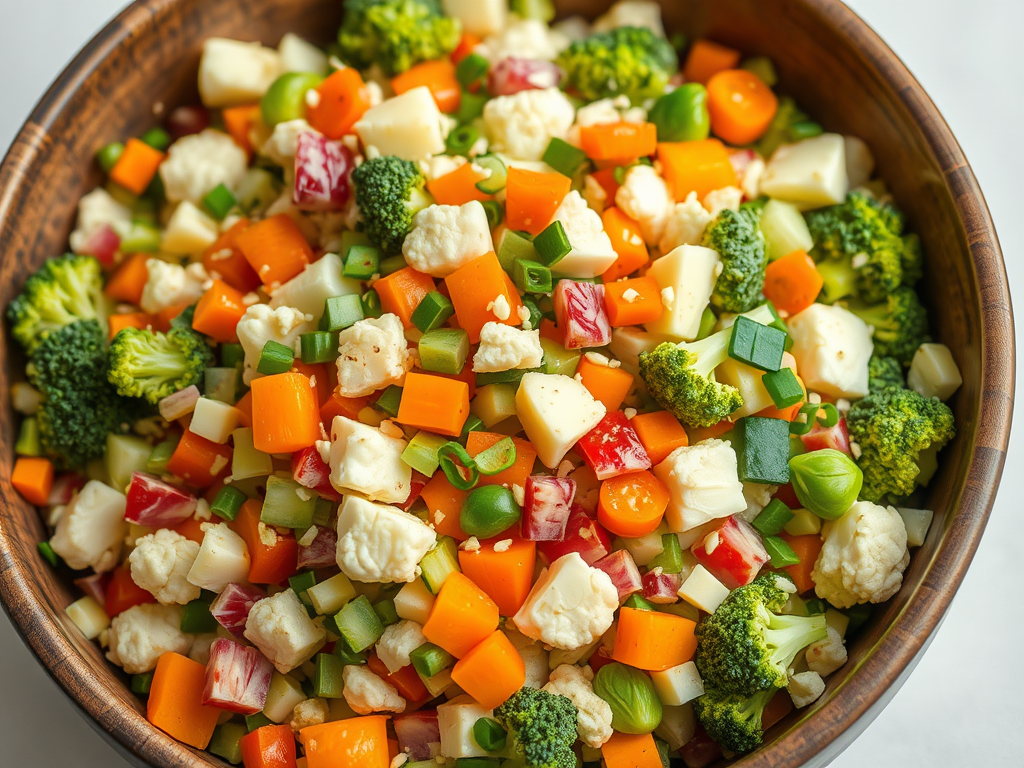
–Chopped salad – make a base of finely chopped vegetables – broccoli, cauliflower, brussels sprouts, sweet peppers, carrot – any vegetables that will hold up for a few days. Don’t dress until ready to eat. Add ephemeral vegetables like cucumbers and tomatoes at the last minute to keep them fresh.
–Cabbage – keeps a long time so keep one on hand and you have an instant salad by slicing it thinly and dressing it with a vinaigrette.
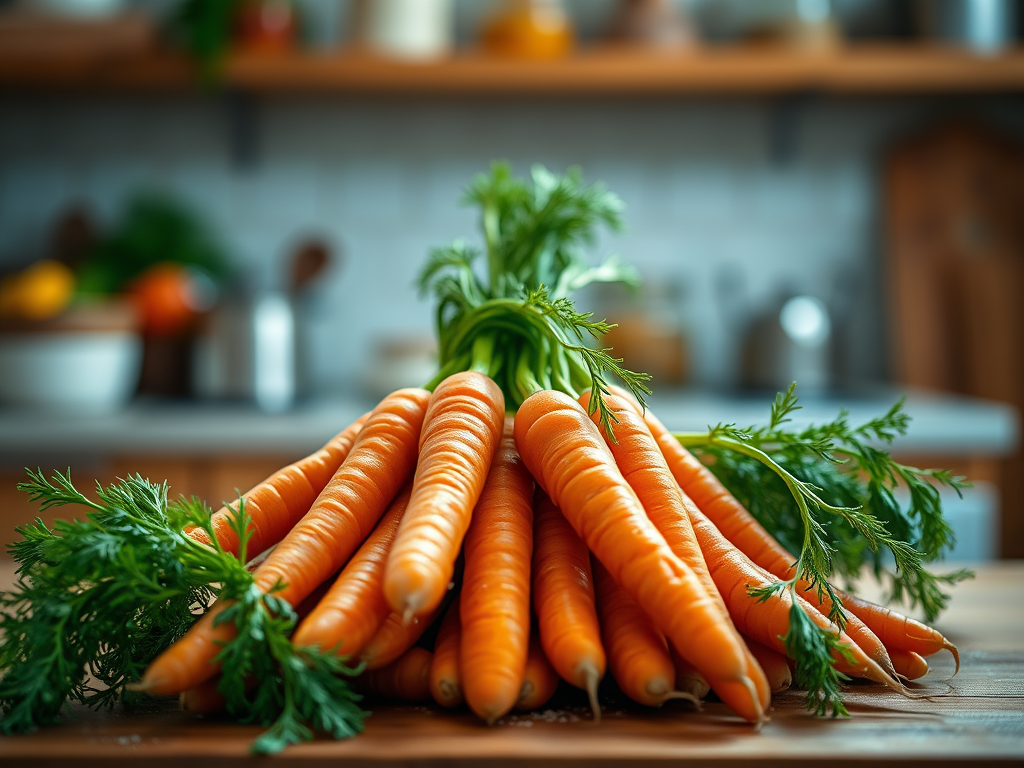
–Carrots – also keep a long time and are delicious for snacking or lightly steamed or roasted. Mix with cooked rice for a delicious side dish.
–Fast noodles – keep ramen on hand and cook according to the package (without the flavor packet). They take about 3 minutes. Add absolutely anything to them for an instant meal. Roasted vegetables, leftover protein of any kind, cheese, scrambled egg. You can dress them with miso, soy or hoisin sauce for an Asian take. Add shredded carrots, chopped celery and shredded bok choy.
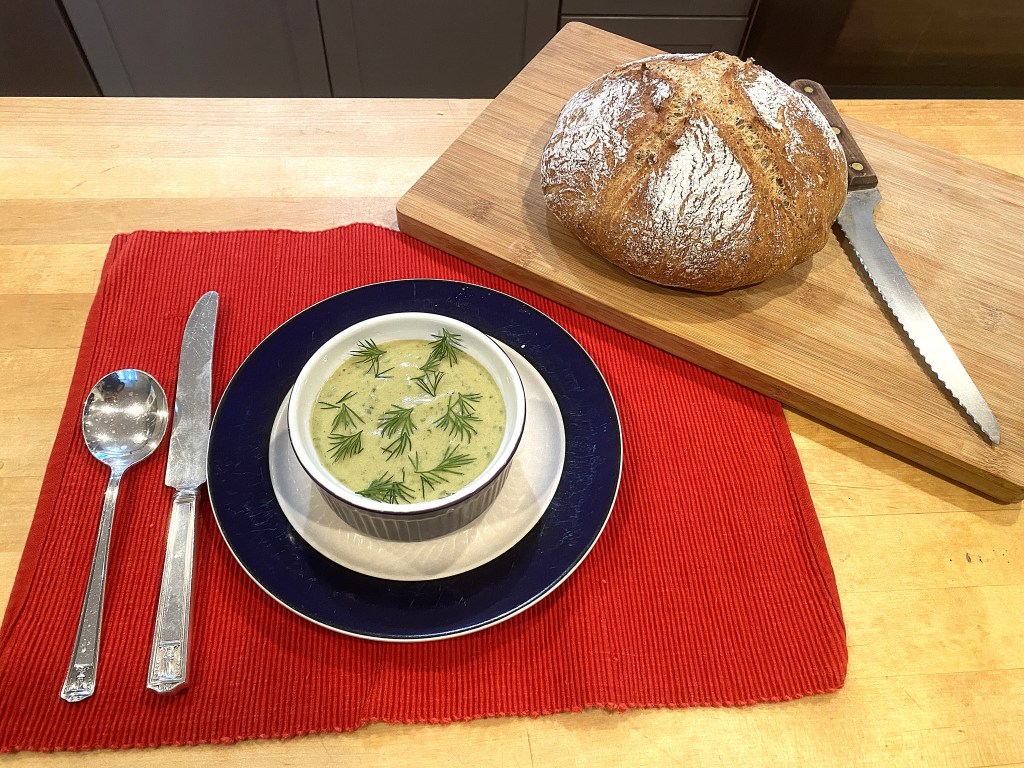
We know that fall is the traditional leek season, so I picked up a bunch at the farmers’ market this week and decided to make potato leek soup, one of my favorites. And for a riff on the traditional, I decided to give it a lemony freshness with sorrel. I realize sorrel is usually considered a spring vegetable/herb since it makes such an early appearance when we’re so hungry for fresh greens. But mine is spectacular right now. It was ravaged as usual in summer, but the new leaves are large and lush because of the fall coolness.
The idea wasn’t an original. I took inspiration from Marian Morash in The Victory Garden Cookbook, published in 1982. Remember the PBS show The Victory Garden with James Underwood Crockett? It was a Saturday morning staple, especially because Marian Morash always cooked something directly from the garden. That show and Organic Gardening Magazine still put me in a nostalgic haze. They helped make me who I am today.
When I couldn’t find a good recipe to use sorrel (other than my sorrel sauce for salmon), I looked to Marian’s cookbook for ideas. Here is her basic recipe, with a few tweaks of my own. I have reduced amounts to make soup for two.
Potato Leek Soup with Sorrel
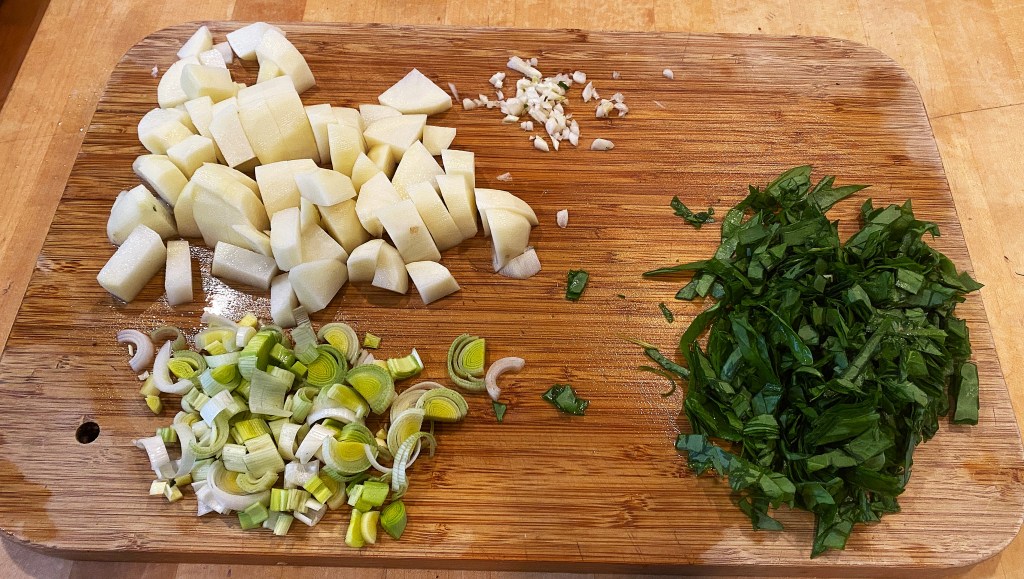
2 good-sized russet potatoes
about ten sorrel leaves
1 T. butter
½ c. chopped leeks (one or two, depending on size; white parts only)
2 cloves garlic, minced
2 c. chicken or vegetable broth
Lemon juice
Salt and pepper
½ c. evaporated milk or buttermilk
Peel and roughly chop the potatoes. Wash the sorrel and remove the ribs and stems. Chop. Melt the butter and saute the leeks and garlic over gentle heat until soft. Cook the potatoes and half of the sorrel in chicken broth until the potatoes are fork-tender (about 20 minutes). Add the leeks and garlic, and puree. Return to the pan and season to taste. Stir in the remaining sorrel and milk or buttermilk and heat gently. Serve either hot or chilled. My dill is going crazy so it’s a perfect garnish.
I was driving in a nearby neighborhood the other day, minding my own business, when an unusual sight caught my eye. In front of a typical suburban house was a sidewalk edged with a beautiful hedge of ruby chard.
There was no vegetable garden in sight. Behind the chard, a single tomato plant occupied the front flower bed, surrounded by a little basil and some marigolds. The chard was a beautiful accent to the house.
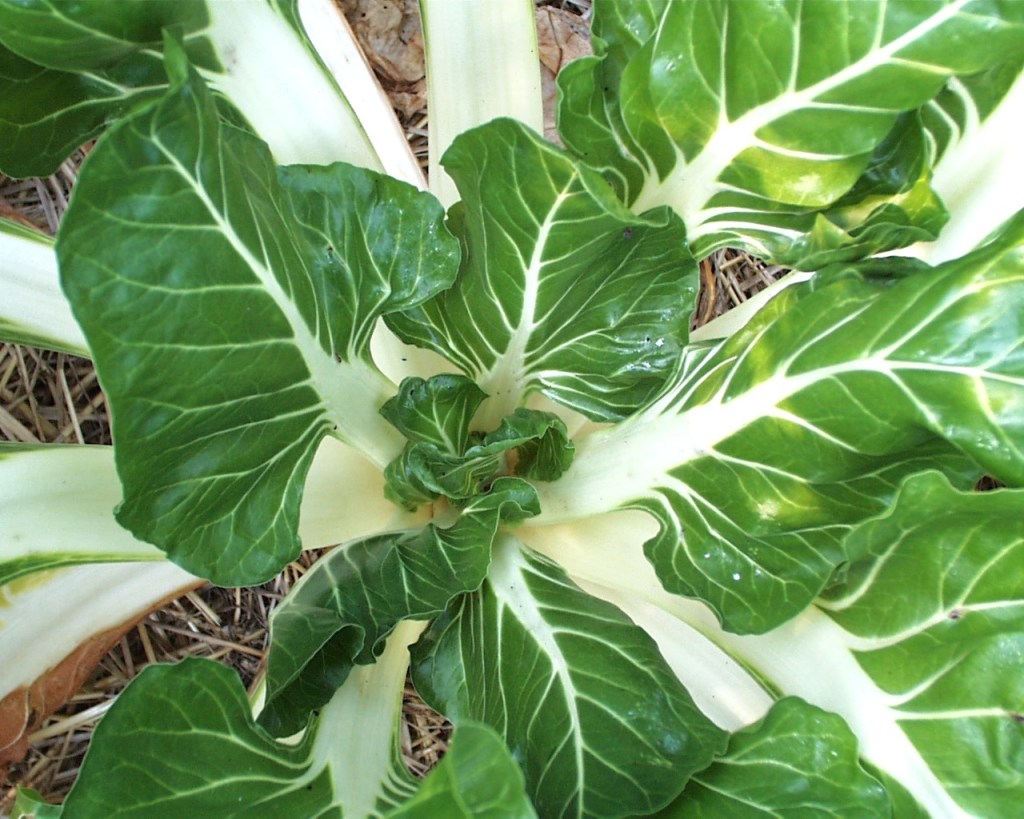
There is no reason why the summer kitchen cannot always be overflowing with greens. Once spinach and Chinese cabbage are finished in spring and the heat of summer begins to weigh on the garden, it’s time for the stalwart summer greens! Swiss chard is a humble vegetable, but one that has an unbelievable array of culinary possibilities. Also called silverbeet or seakale beet, it is technically a beet bred for its greens. It is simple to grow and monstrously productive.
Chard
I have grown all types of chard, including the remarkable multicolored varieties, but I tend to fall back on Fordhook Giant, a green type that is always reliable and prolific. It produces large, tender white stalks that are as tasty as the huge, deep green leaves.
Kale
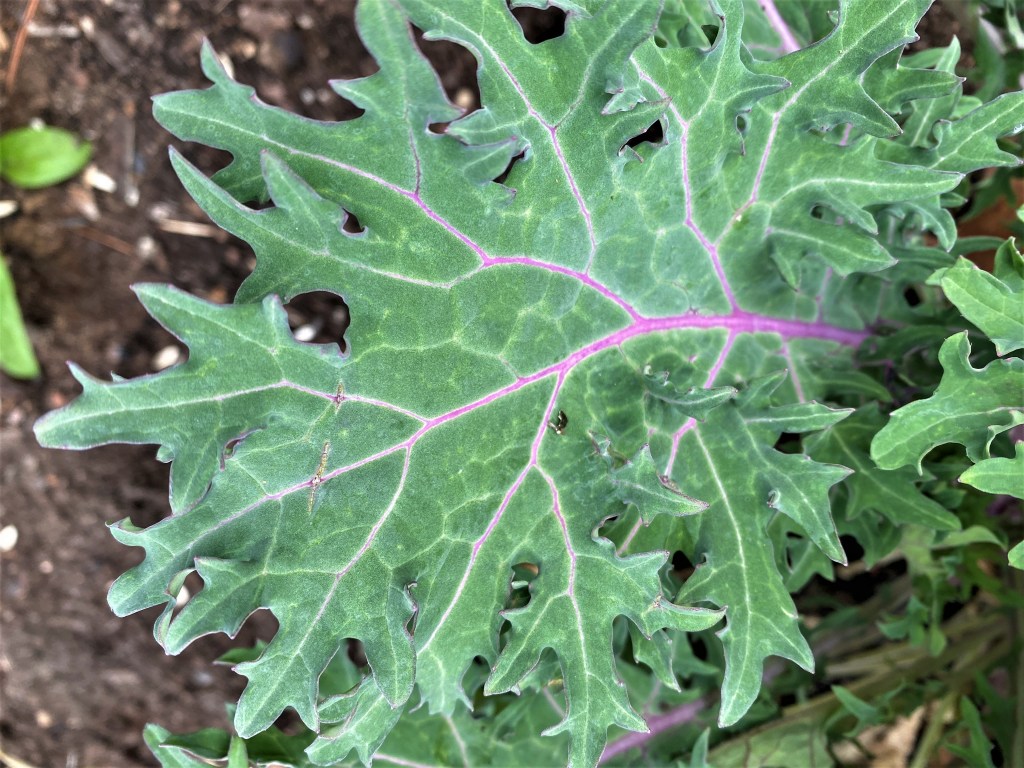
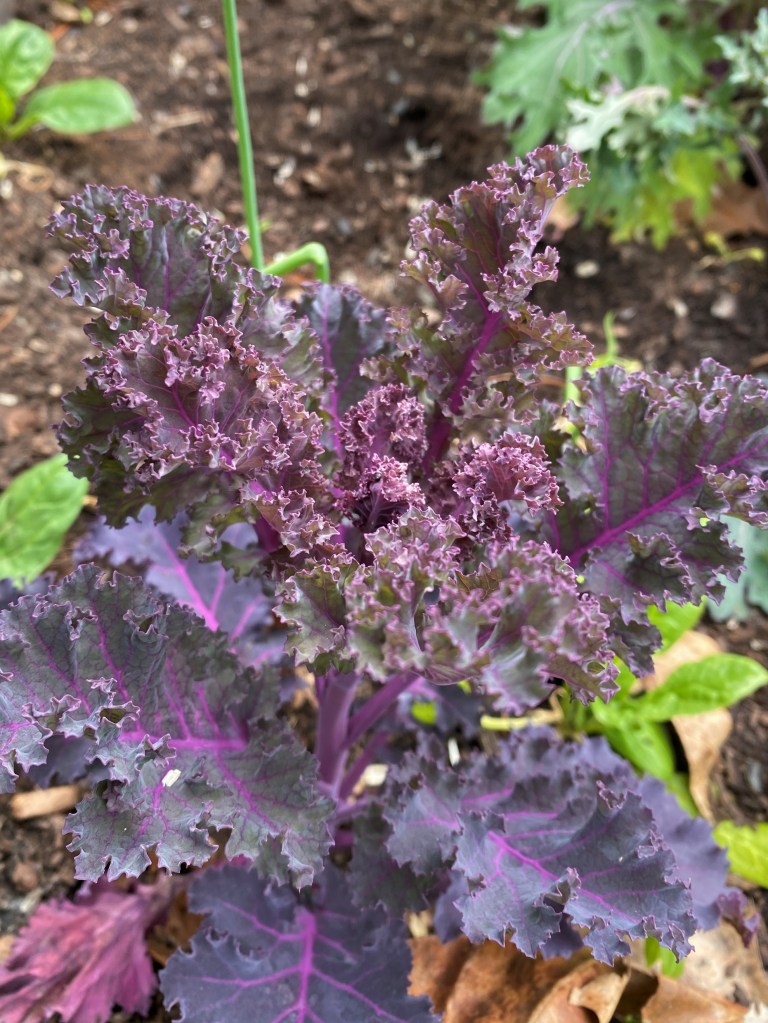
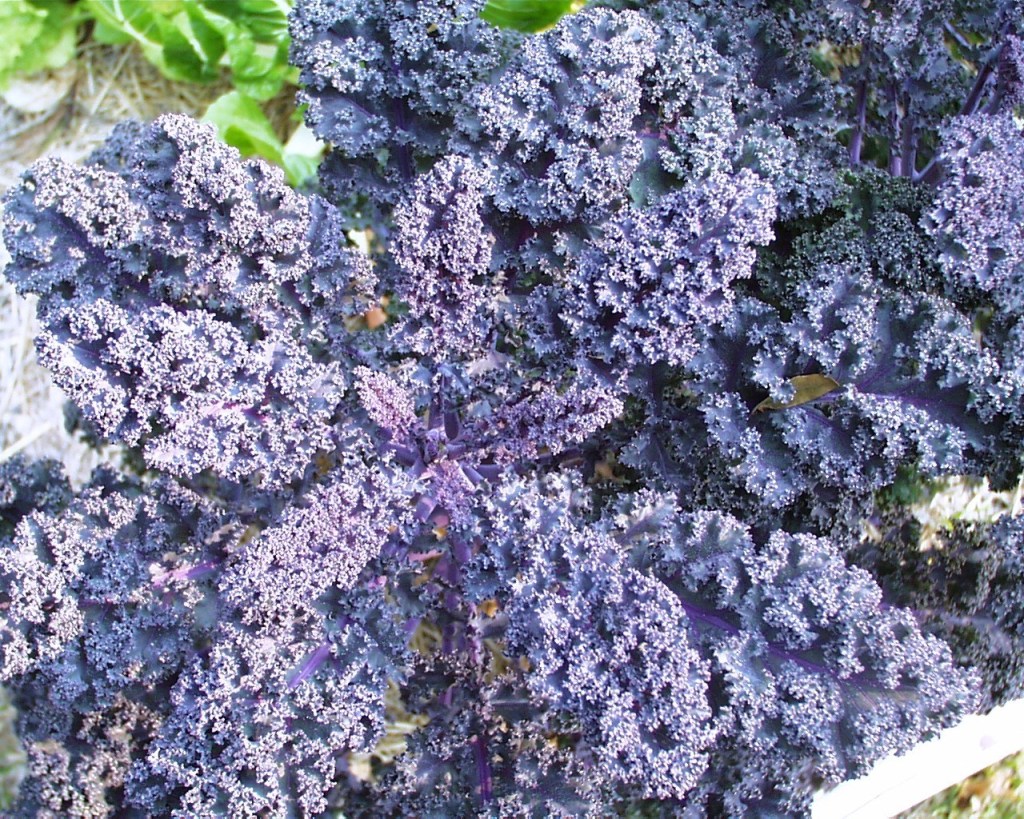
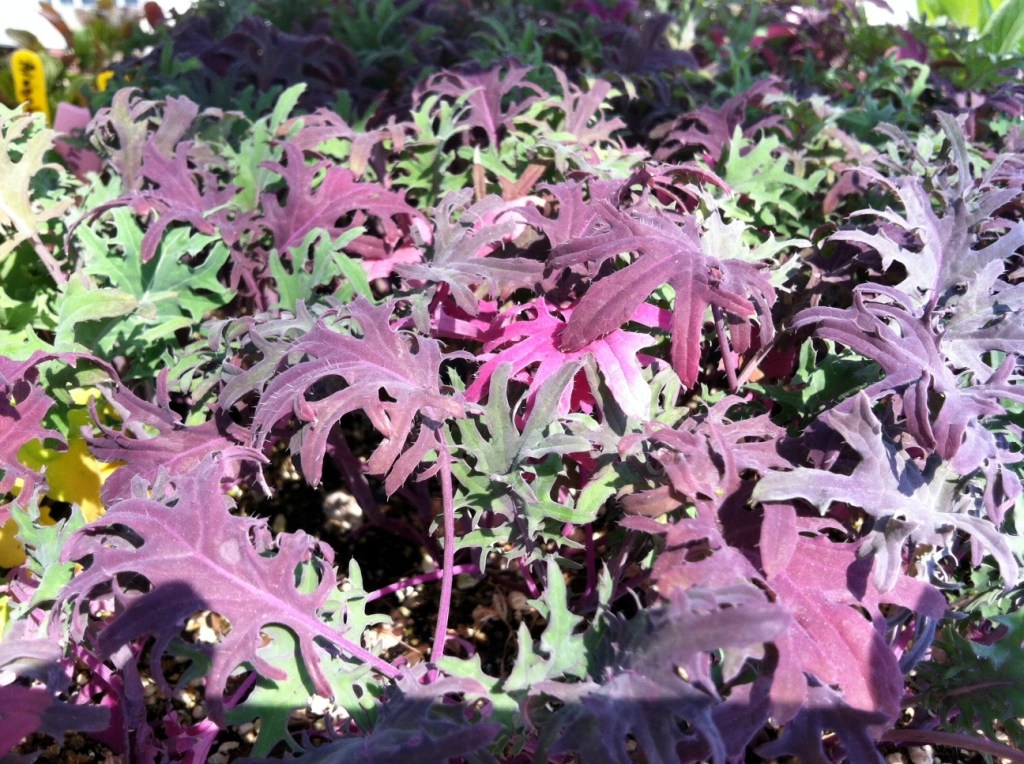
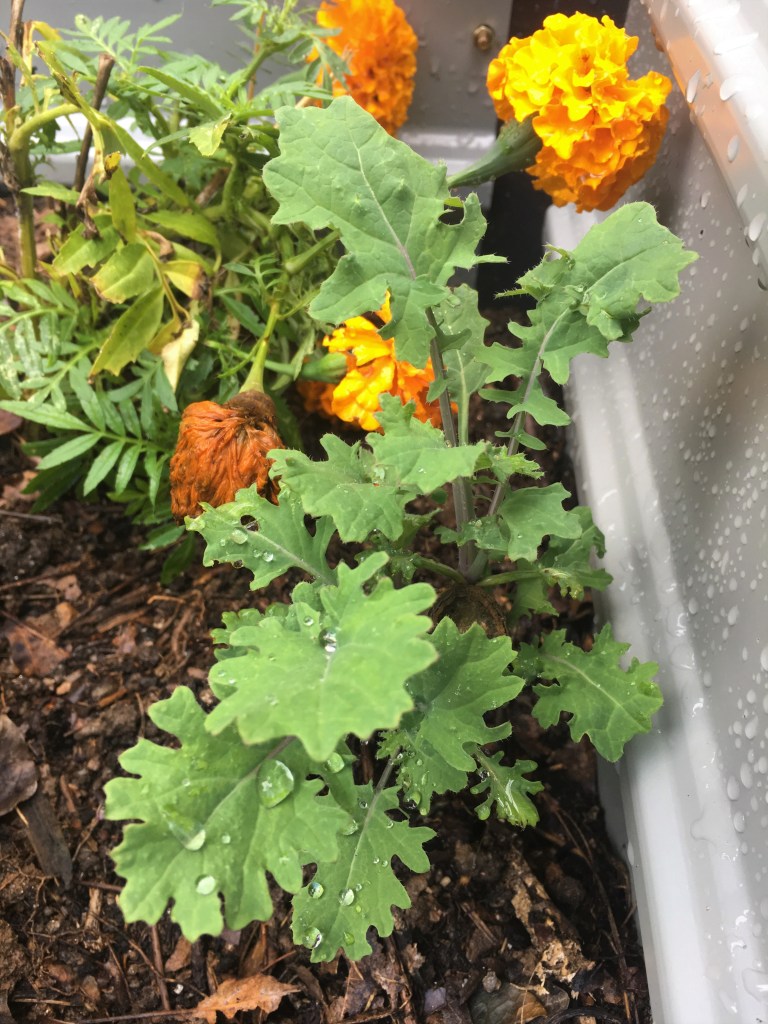
The word kale often brings to mind an image of the purple and lime green frilly balls of ornamental kale in fall containers or the plastic-like bushes used as garnishes on restaurant plates. But culinary kale is a different vegetable entirely. There is an infinite number of choices, from smooth to crinkly to ‘Red Russian’ that turns purple-red in cold weather. Compared to kale purchased in the grocery store, homegrown kale is considerably more tender and succulent as well as sweeter than the types grown commercially.
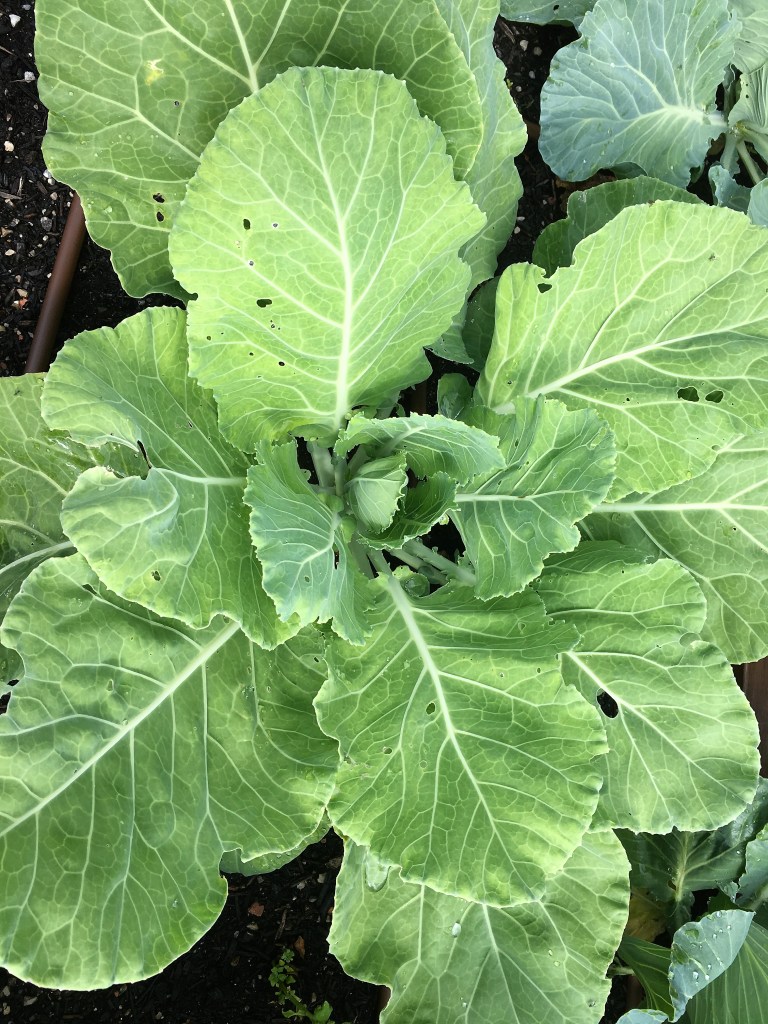
Kale is also remarkably easy to grow. It’s closely related to cabbage, and the leaves have a faint cabbage-like flavor. But long after spring cabbages have begun to turn fiery and tough in summer, kale keeps providing sweet, tender greens for the table. It produces well into fall, actually being sweetened by frost. It’s not unheard of to still be harvesting kale after Thanksgiving.
Mustard
Mustard greens will add piquancy to any salad or dish, with a zingy vinegary essence. The broad-leafed types are best for summer use, as they grow large and luxurious without getting stringy and tough. If allowed to go to seed, the mustard plant is useful in all forms. The seed stalks are tasty sautéed, and the seeds make the familiar tangy seasoning for hot dogs or pickles.
Collards
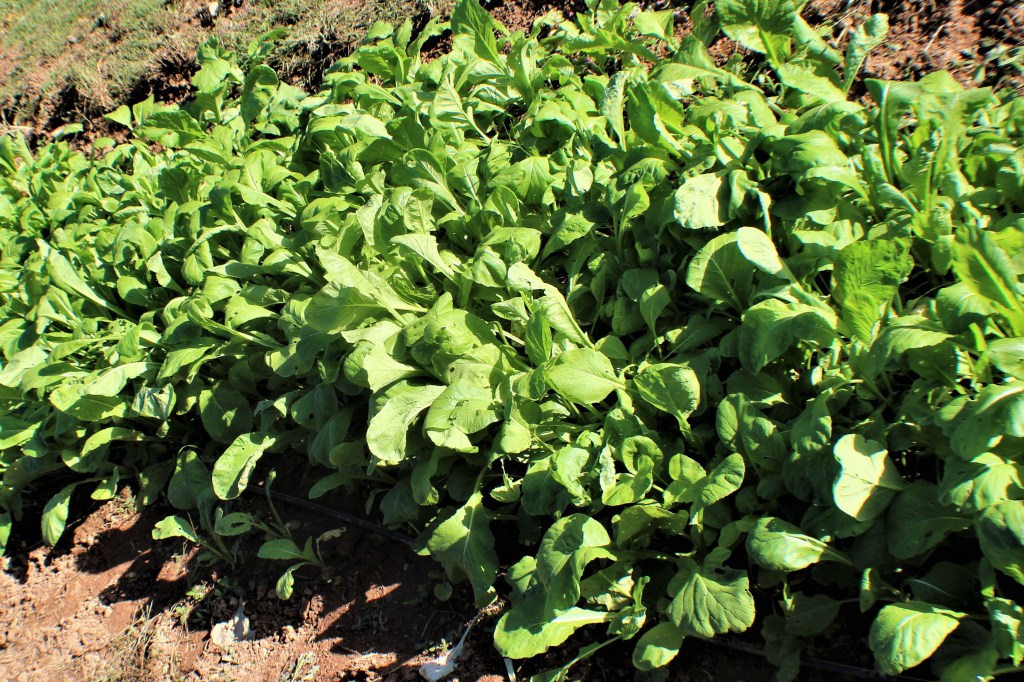
Collards, another sizable green, are grown frequently in the South – and for good reason. They remain tender and tasty throughout the summer and are slow to bolt in spite of heat and drought. They have a more cabbage-like flavor than mustard greens, but a little taste of collards seasoned with garlic and complemented with prosciutto will make you wonder why you didn’t start growing collards years ago.
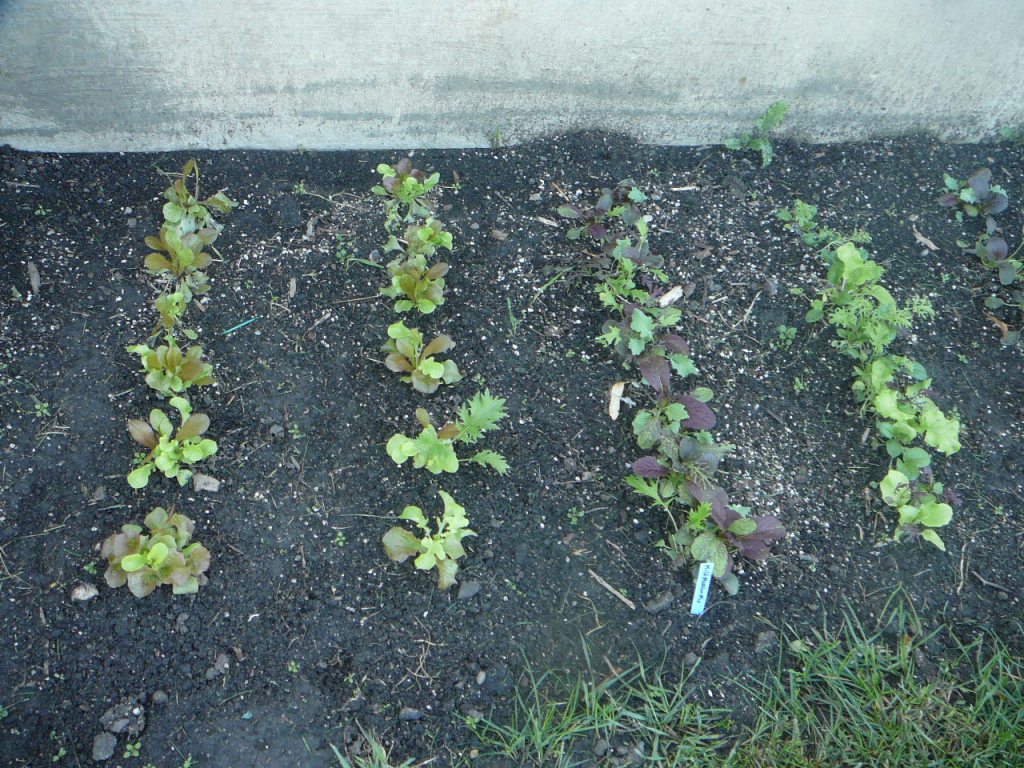
Once you are hooked on greens, there is a wealth of other summer treats to try, from amaranth to Chinese kale to komatsuna (also called spinach mustard) to mizuna. Asian greens of all types are becoming more popular and thus easier to find. Check out your local farmers market to try a few and plan to use them in your own garden next year!
Just how do I use these lovely greens?
Dark leafy greens pack an unbelievable vitamin wallop, to say nothing about their cancer-fighting phytochemicals. In addition to eating greens for themselves, try adding them to omelets, fresh or marinated salads, soups and savory breads.
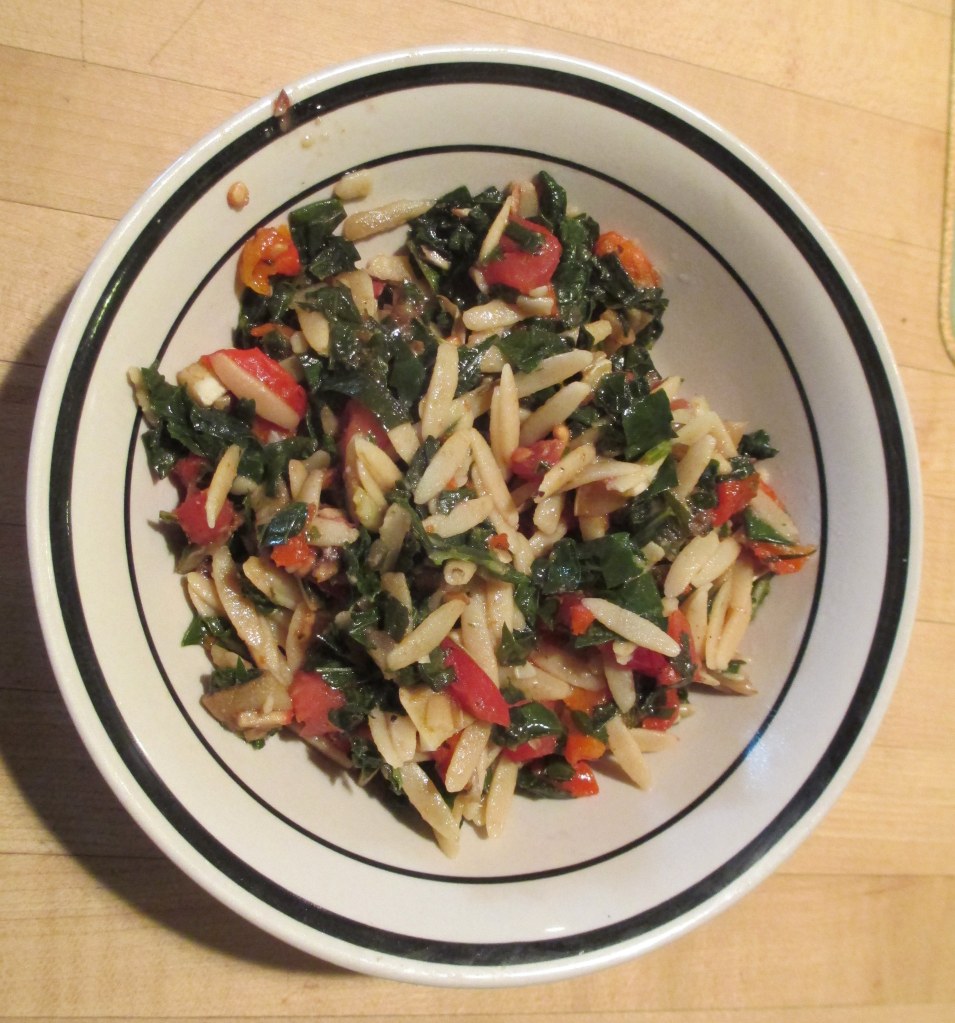
Sauteed greens with orzo
Pasta alfredo with Swiss chard
1 lb. Swiss chard
8 oz uncooked pasta such as penne or farfalle
1 T. olive oil
3 garlic cloves minced
3/4 c. ricotta
1/4 c. Parmesan cheese
1/2 t. salt
1/8 t. pepper
Remove stems and chop chard. Set aside. Cook pasta and drain, reserving 3/4 cup cooking liquid. Sauté garlic 30 seconds in oil, add chard and sauté 3 minutes or until wilted. Combine cooking liquid, ricotta, 2 T. Parmesan and stir well. Combine with chard mixture and toss well. Top with remaining Parmesan. Serves 4.
Greens are simple things. In a world of chaotic schedules, hurried meals and gourmet foods, it’s pleasant to contemplate eating something as simple and wholesome as chard or kale. Besides, with the constant nattering about eating less fat and more vegetables, who can argue with getting a solid dose of cancer-fighting vitamins in something that tastes so good?
I wasn’t always a greens aficionado. I hail from the South where the preferred method of cooking the common greens, collards and turnips, is to boil them until they turn gray and then flavor them with bacon drippings. As a child, the last thing I was willing to put in my mouth was a pile of slimy, gray-green glop. At least my mother always provided a bottle of hot sauce to liberally sprinkle on top to disguise the flavor ( I discovered long after I became an adult that she didn’t like the gray-green glop either.)
I suppose greens were literally cooked to death because we had the notion that vegetables should be soft to be palatable. The recent culinary trend of steaming or sauteing vegetables until just slightly crunchy is the best thing that has happened to greens, not only for taste but also for nutritional value.
I’ve matured, at least according to rumor, and since I no longer have to eat greens, I’ve discovered how much I enjoy them. It took a while to get past the specter of the sodden mass, but I’ve learned to cook them well, which makes a world of difference.
My favorite way of preparing greens is to gently sauté the tender, sweet inner leaves with onion, garlic, lots of pepper, fresh tomatoes and top it all with romano cheese. I also manage to get my family to eat greens of all sorts by putting them in things. I never make a soup or stew without chard or kale, and I add finely chopped turnip, beet or mustard greens to potato pancakes, rice pilaf, omelets and pasta.
One reason these basic, almost mundane, vegetables appeal to me is that they are carefree growers. You sow some seeds, sometimes right on the snow in early spring, and the plants grow. They take little care except thinning early on and then harvesting. I like that in a plant.
Some vegetables, like beets, turnips and mustard, give you delectable greens while the rest of the plant is busy developing other edible parts. With a little caution to not harvest too many greens at once, you can start using beet, turnip and mustard greens as soon as they are big enough to provide a bowlful.
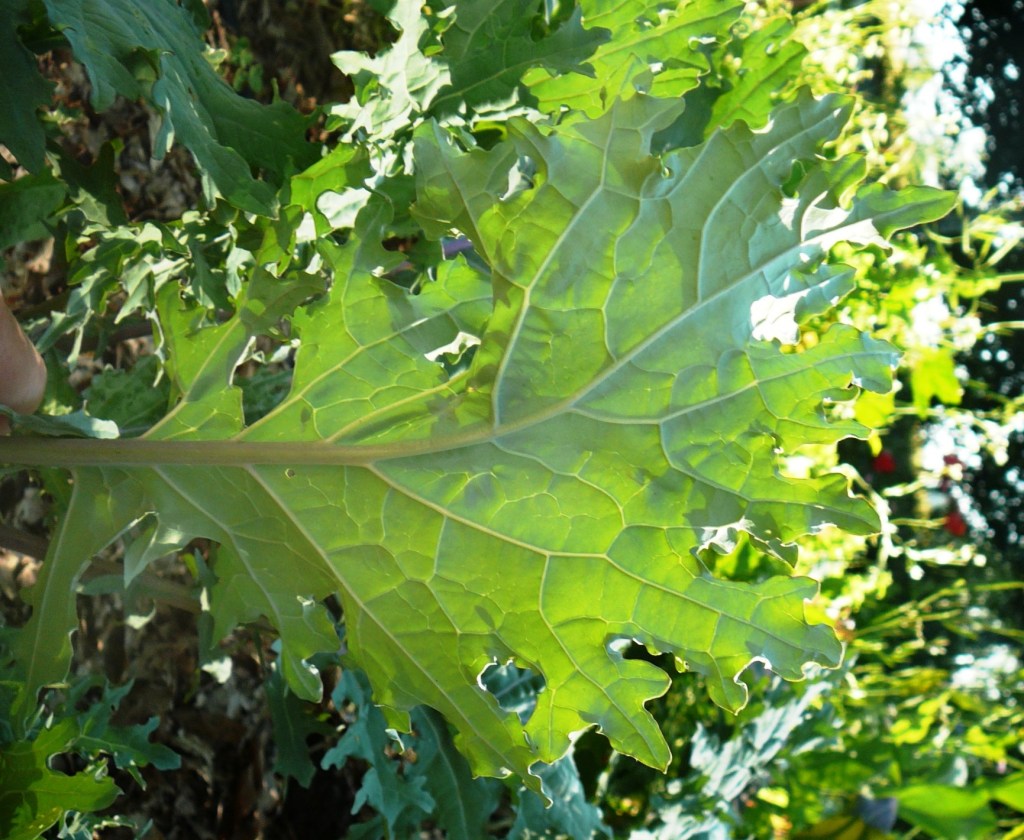
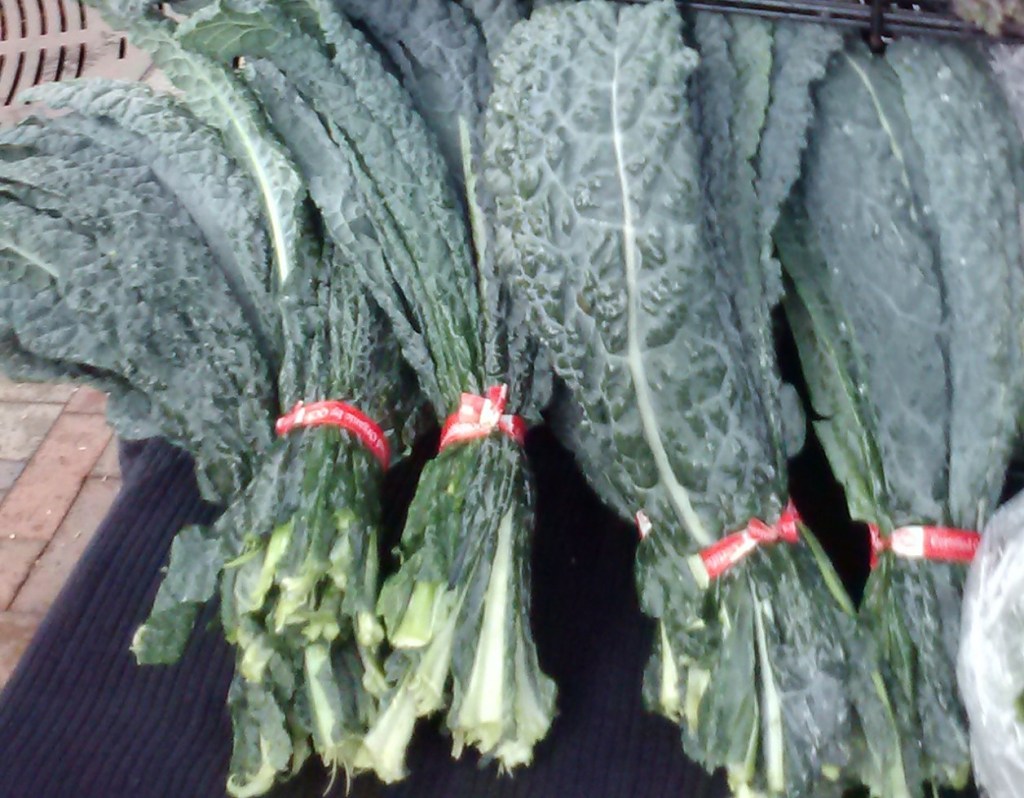
Late last summer I planted Italian kale, a variety called ‘Lacinato,’ which grows to about two and a half feet tall. Even after fall took most of the garden down, the plants were still standing stalwart in December, with their matte blue-green leaves offering themselves to be plucked to cook up “a mess of greens”.
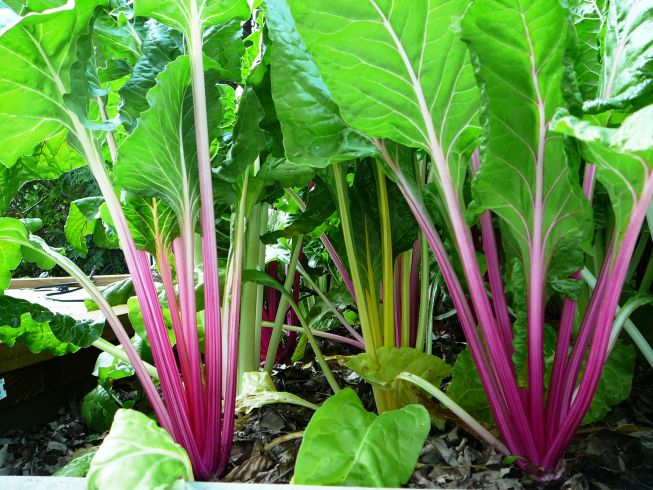
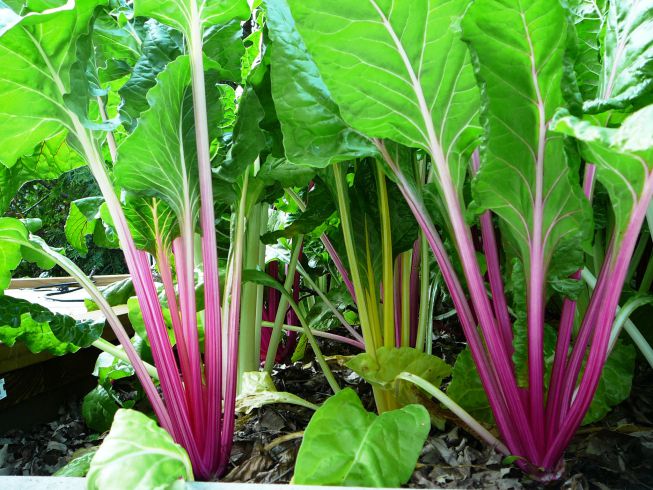
I’m a great fan of dual-purpose plants, and these kale plants were as beautiful as any of the perennials. This year I’m growing ‘Red Russian’ which has stems and veins that turn purple-red in cold weather and blue kale with dusty blue leaves. I’ve planted it with Bright Lights Swiss chard, which produces beautiful leaves on stems of purple, yellow, pink, red and white. What more could you want for color in the garden?
Saucy Greens for Two
1 small bunch of Swiss chard or other greens
1 clove garlic, minced
¼ c. onion, sliced
1 T. olive oil
1 T. balsamic vinegar
1 t. sugar
Salt and pepper to taste
½ c. chopped tomatoes
2 T. sour cream or plain yogurt
1 T. Sriracha sauce if desired
2 large eggs if desired
Rinse the greens liberally and remove tough stems. Stack the leaves and roll them into a “cigar” and slice thinly. Add garlic and onion to olive oil in a heavy pan and saute until tender. Fry eggs in a separate pan if you intend to use them. Add greens, vinegar and sugar and saute for about 5 minutes until greens are tender. Turn off the heat and stir in tomatoes and sour cream or yogurt. Salt and pepper to taste.
Doesn’t look so cold, but the temperature was 12 degrees
One of the hardest elements of love for gardening is how things seem to stop in the winter. Well, I’ve found a way to keep it going, without a greenhouse. I’m trying winter sowing this year. I’ve heard about it for years and this year, I’m bored enough to try it.
This is a phenomenon that has taken hold in the gardening world for those of us in colder winter climates. Basically, you sow seeds for the spring garden outside, in the cold and snow, but you do it in makeshift greenhouses or cloches.
It’s a simple concept, and although you can certainly sow some seeds of hardy perennials and vegetables directly into the garden with occasional success, this method gives more control and actually works fairly well according to everything I’ve read. So, I’m giving it a try.
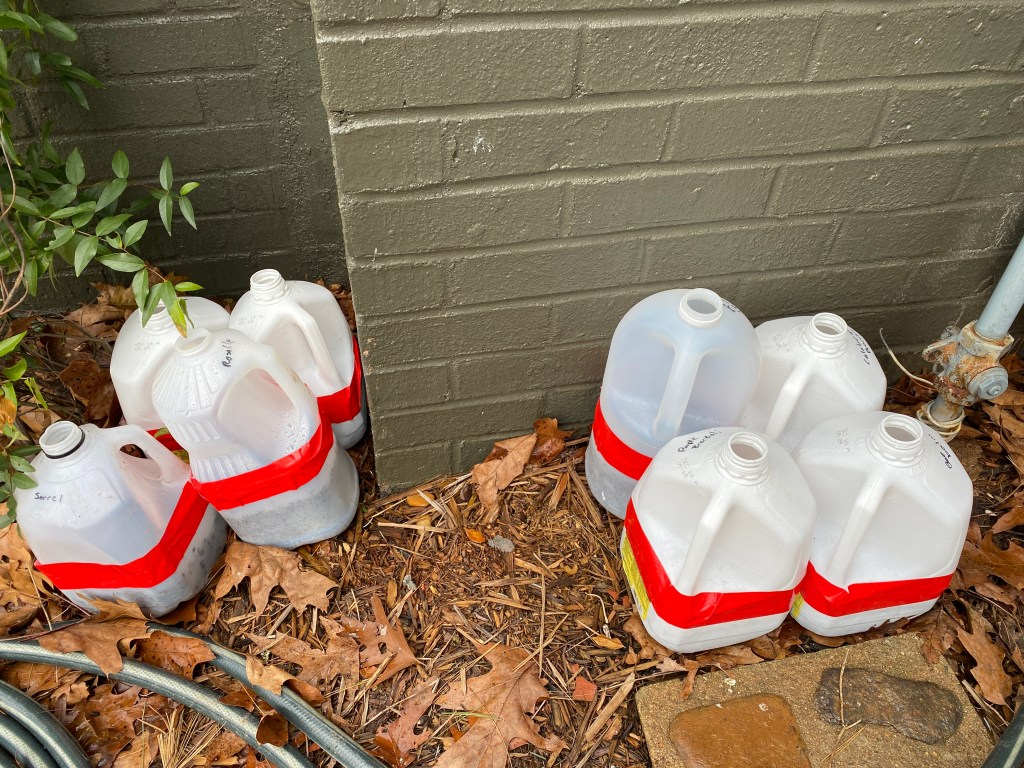
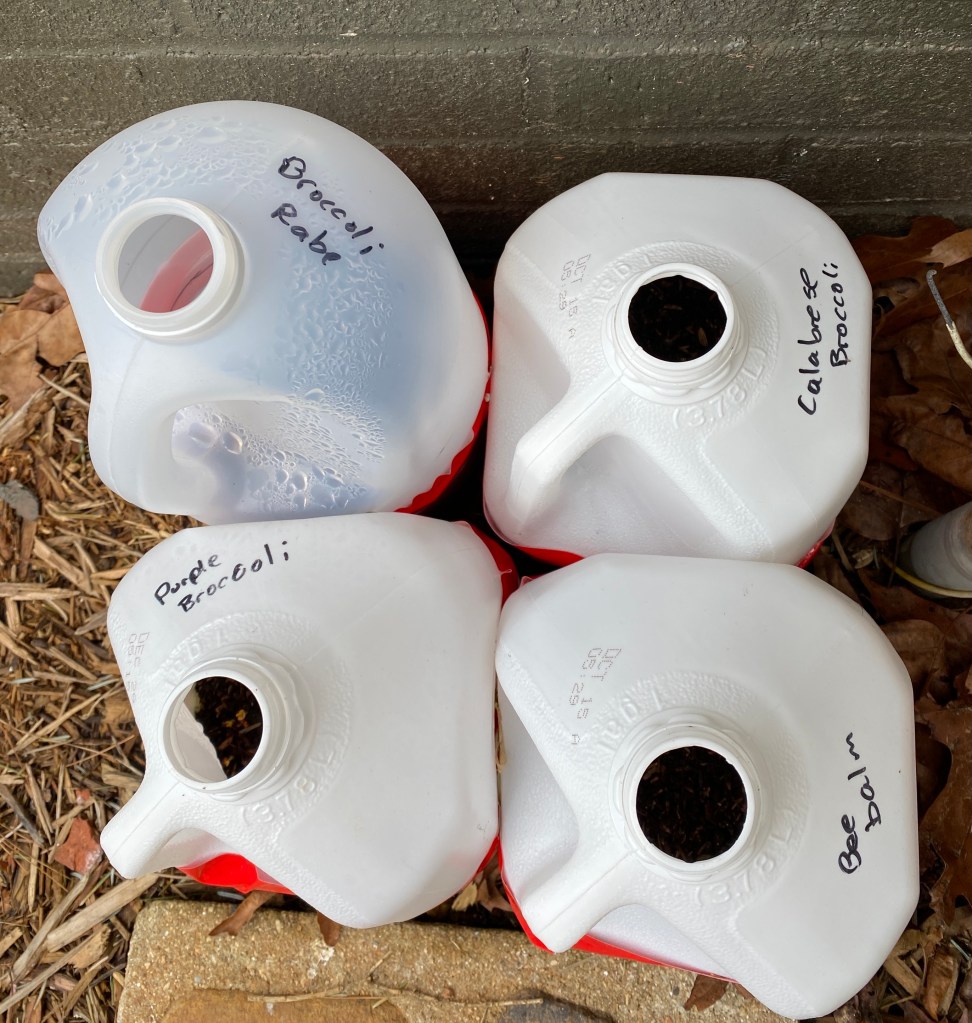
I sowed my seeds in their little milk-jug cloches just after the winter solstice, and after many days of frigid cold and off-and-on snows, I checked yesterday and some of my seeds are actually germinating.
This method is not for warm-season plants like tomatoes and peppers, but it supposedly works well for cool-season plants like broccoli and cabbage, not to mention cold-hardy flowers like cosmos, lupine and calendula. My broccoli rabe has already germinated. Putting them out in the fluctuating cold actually breaks the seed coats faster, and the constant moisture assures the germinating seeds will survive.
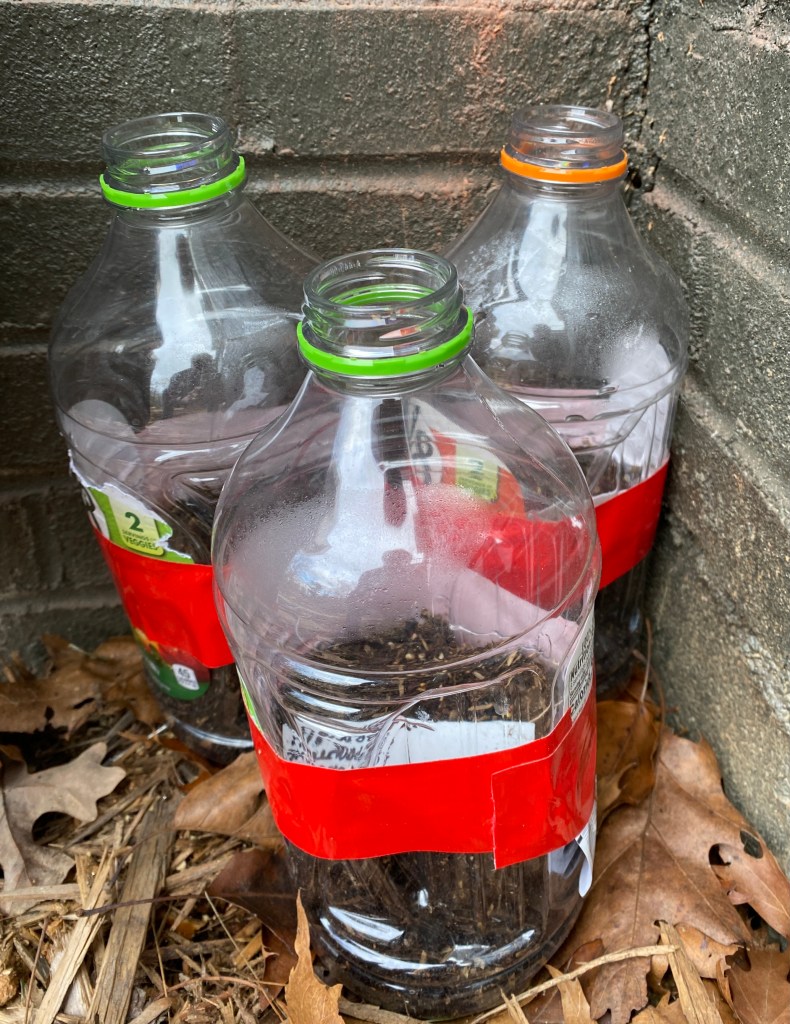
The method: basically, you cut plastic jugs in half (leaving a hinge), fill partially with damp potting soil and sow your seeds. You tape the jug shut, leaving the cap off to allow moisture in and out. Then you wait. Once the seedlings are up and the weather is leveling off, you transplant them into pots for growing on. Or directly into the garden.
I won’t go into all the details on how to do it here, but there are many good videos and tutorials on Youtube and the internet. I found a great video series on the Buncombe County (my county in North Carolina) extension site. There are several active Facebook groups also.
A recipe for winter time
And, here’s a recipe not necessarily connected with winter sowing, but our dinner last night, paired with roasted salmon. The kale and chard were from my cold frame!
Delicata squash stuffed with couscous and greens
Delicata squash with couscous
1 delicata squash, sliced in half and seeds removed
½ c. whole-wheat couscous
¾ c. stock
1 c. greens of choice (kale, spinach, chard), chopped
¼ c. sliced onion
1 clove garlic, minced
Parmesan cheese
Brush the squash with olive oil and roast face down at 375 for about 40 minutes.
Meanwhile, heat the stock to boiling. Add the couscous, turn off the heat and cover. Let sit for five minutes. After letting it sit, fluff it with a fork.
Saute the onion, garlic and greens in a splash of olive oil, about five minutes until wilted. Mix into the couscous and season with salt and pepper to taste.
Fill the squash cavities with the couscous mix. Sprinkle with parmesan or other cheese of choice and slide under the broiler until delicately browned.
Greens are simple things. In a world of chaotic schedules, hurried meals, and gourmet foods, it’s pleasant to eat something as simple to prepare and wholesome as Swiss chard or kale. Besides, with the constant nattering about eating less fat and more vegetables, who can argue with getting a solid dose of cancer-fighting vitamins in something that tastes so good?
I wasn’t always a greens aficionado. When I was a child in the South, the preferred method of cooking collards and turnip greens was to boil them until they turned gray and then flavor them with bacon drippings. The last thing I wanted to put in my mouth was a pile of what looked to a ten year old like slimy gray-green glop.
It took a while to get past the specter of the sodden mass, but I’ve matured, at least according to rumor, and since I no longer have to eat greens, I’ve discovered how much I enjoy them. Sautéing or steaming them just until done makes a world of difference in how they look and taste. I toss kale and chard into almost everything I eat, just for the vitamin boost.
Dual-purpose plants
Bright Lights chard
I’m also a huge fan of dual-purpose plants. Kale and Swiss chard leaves are as beautiful as any perennial flower and make wonderful accents for annual flowers as well. I was driving in a nearby neighborhood last summer, minding my own business, when in front of a typical suburban house was a sidewalk edged in a beautiful short hedge of rhubarb chard. Behind the chard, a single tomato plant occupied the front flower bed, surrounded with a little basil and some marigolds.
Beautiful additions to flower gardens
Winterbor kale
Dragon kale is a spectacular-looking plant with deep blue-green seersucker leaves, and scotch blue curled is a crinkled, beautiful dusty blue that is a perfect companion to pink and white flowers. Ruby chard has deep maroon leaves, and Bright Lights chard has stems in all shades of red, apricot, yellow, white and green. One of the most beautiful planters I’ve ever seen was a window box filled with chard and kale with sweet alyssum cascading over the edge. What more could you want from a flower garden?
Swiss Chard
There is no reason why the summer kitchen cannot always have greens. Once spinach and Chinese cabbage are finished in spring, and the heat of summer begins to weigh on the garden, it is time for the stalwart summer greens! Swiss chard is a humble vegetable, but one with an unbelievable array of culinary possibilities. Also called silverbeet or seakale beet, it is technically a beet (Beta vulgaris) that has been bred for its greens. It is simple to grow and monstrously productive.
Mustard
Mustard greens will add piquancy to any salad or dish, with a zingy vinegary essence. The broad-leafed types are best for summer use, as they grow large and luxurious without getting stringy and tough. If allowed to go to seed, the mustard plant is useful in all forms. The seed stalks are tasty sautéed, and the seeds make the familiar tangy seasoning for hot dogs or pickles.
Collards
Collards, another sizable green, are grown frequently in the South. And for good reason. They remain tender and tasty throughout the summer and are slow to bolt in spite of heat and drought. They have a more cabbage- like flavor than mustard greens, but a little taste of collards seasoned with garlic and complemented with prosciutto will make you wonder why you didn’t start growing collards years ago.
Once you are hooked on greens, there is a wealth of other summer treats to try, from turnip greens to amaranth to Chinese kale to komatsuna Check out your local farmers market to try a few and plan to use them in your own garden next year.
Cooking greens
Greens are delicious simply sautéed with garlic and olive oil. Toss with cooked pasta and top with fresh chopped tomatoes and a few gratings of parmesan and you have a delectable meal. Dark leafy greens pack an unbelievable vitamin wallop, to say nothing about their cancer-fighting phytochemicals. In addition to eating greens for themselves, try adding them to omelets, fresh or marinated salads, soups and savory breads.
Growing tips
Fall mustard greens
Other than their great looks, another reason these basic vegetables appeal to me is that they’re carefree to grow. Sow seeds from early spring (even right on top of the snow) to fall. The plants grow without much attention – except thinning early on (which you can eat) and then harvesting. I like that in a plant. Starting them under a cold frame will give them a great head start and sowing more seeds in September and then putting a cold frame over them will assure you the freshest of greens into the Christmas season.
All greens produce well if given ample nitrogen. Composted manure or manure tea is one of the best ways to do this because it is mild enough to be used every three or four weeks. Provide plenty of sun, moderately fertile soil and ample water. After the seeds germinate, be sure to thin adequately to give them plenty of room to spread. It may seem a waste to pull out so many tiny plants, but they are delicious additions to a salad.
Harvest the outer leaves first, before they get too tough, or you can simply cut off a head of all the leaves at one time. Eventually, new leaves will be produced from the crown.
Red Russian kale seedlings
Although you can grow most greens from transplants started indoors, they germinate readily in cool soil outdoors as well. Also, you can cut many of them to ground level in late fall and leave the crowns under about four inches of straw mulch through the winter. They will start producing tiny leaves in very early spring. Thus you get the pleasure of the tender greens early in the season, while your new seedlings are getting off to a good start.
Sauteed greens for two
Sauteed greens with tomatoes
5-6 large leaves of your choice of greens, chopped (remove stems if desired)
1 large clove of garlic, minced
5-6 scallions, chopped
2 T. fruity olive oil
1 c. chopped tomatoes
1 T. balsamic vinegar
1 t. sugar
Heat olive oil and sauté garlic and scallions until soft, about five minutes. Add greens, tossing to coat in olive oil. Cover and let the greens steam about three minutes.
Toss with tomatoes, eason with salt and pepper to taste and top with fresh grated Romano cheese.
Pasta Alfredo with Swiss Chard
1 lb. Swiss chard (six-eight large leaves)
8 oz uncooked pasta such as penne or farfalle
1 T. olive oil
3 garlic cloves minced
3/4 c. ricotta
1/4 c. Parmesan cheese
1/2 t. salt
1/8 t. pepper
Remove stems and chop chard. Set aside. Cook pasta and drain, reserving 3/4 cup cooking liquid. Sauté garlic 30 seconds in oil, add chard and sauté 3 minutes or until wilted. Combine cooking liquid, ricotta, 2 T. Parmesan and stir well. Combine with chard mixture and toss well. Top with remaining Parmesan. Serves 4.
With the spring coming on like crazy, I find myself constantly walking the garden to see shoots of edible things peeking through the mulch. I know it’s too early for asparagus, but the sorrel is beginning to show signs of life.
Leafy greens are earliest spring vegetables
Usually the first shoots we see are leafy greens. Many of them actually have chemical substances (mostly sugars) that act as antifreeze so they are perfectly at home in the coldest weather. They are the best plants to bracket the growing season with since they are so cold tolerant. They also make great cold frame crops.
Greens are simple things. In a world of chaotic schedules, hurried meals, and gourmet foods, it’s pleasant to eat something as simple to prepare and wholesome as Swiss chard or kale. Besides, with the constant nattering about eating less fat and more vegetables, who can argue with getting a solid dose of cancer-fighting vitamins in something that tastes so good?
Greens are easy to grow
Most are easy to grow, and only need moderately fertile well-drained soil and full to partial sun. I actually like to seed several types of greens in the fall so they will be up early and provide me with tasty meals when there’s not much else around that is so fresh. Some greens bolt quickly when the heat comes, so giving them a head start by planting in fall means I’ll have plenty of spinach, lettuce, mustard and Chinese cabbage in early spring.
Spinach in the cold frame
Spinach
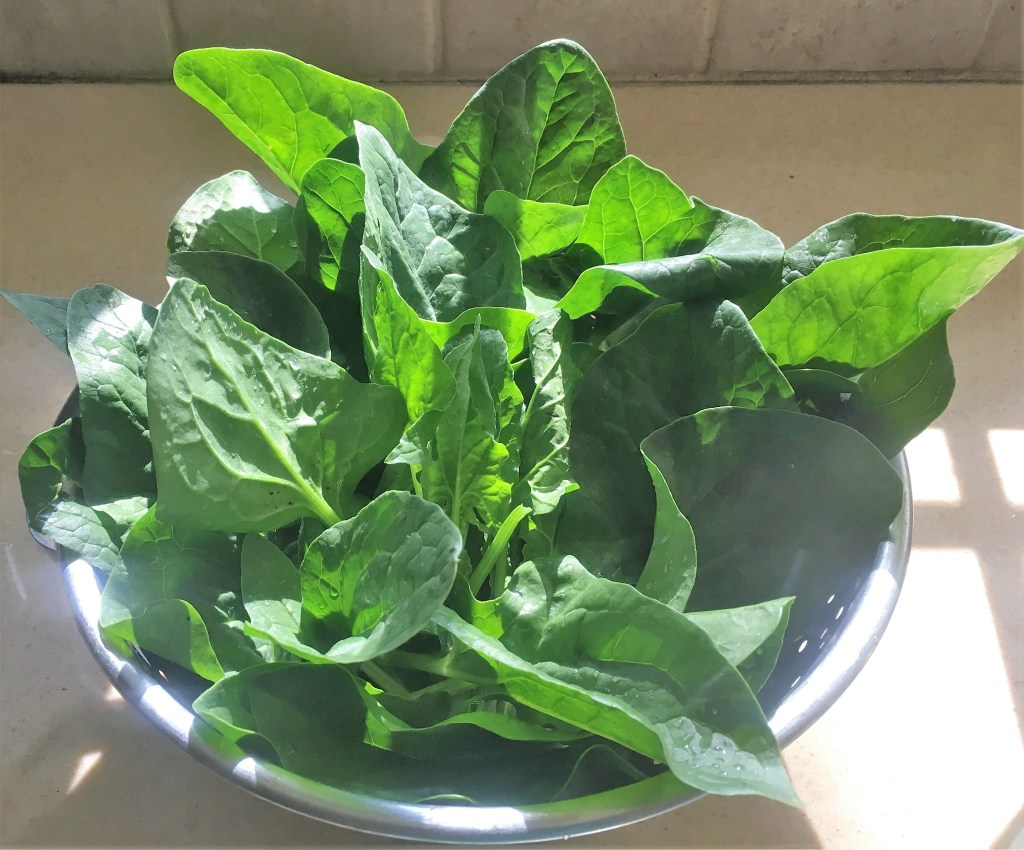
Spinach is one of the first greens that comes to mind. Who doesn’t love spinach? You can start plants under a cold frame in fall, where they will start growing and then go into suspended animation for the winter. As the days lengthen, the small plants will take off. I actually have baby spinach for the table now.
Mustard greens
I always grow mustard greens. Red mustard is beautiful for ornament, and the frilly green mustards are absolutely delicious when steamed or sauteed with garlic. I let some go to seed at the end of spring and they provide new plants for fall harvest. Then I let the fall plants set seeds to provide the next spring’s crop. I have a steady supply and I don’t have to do a thing except thin or move them around where I want them. I like that in a plant.
Mustard greens in fall
Swiss chard and kale
Of course I also always grow Swiss chard and several types of kale. I leave the old stalks in the ground through the winter and about half the time they will sprout giving me very early greens. These stalks don’t usually last past May, but that gives me time to get new plants in the ground before they give out. And neither of these greens bolts in warm weather so I have greens all summer.
Kale is a favorite
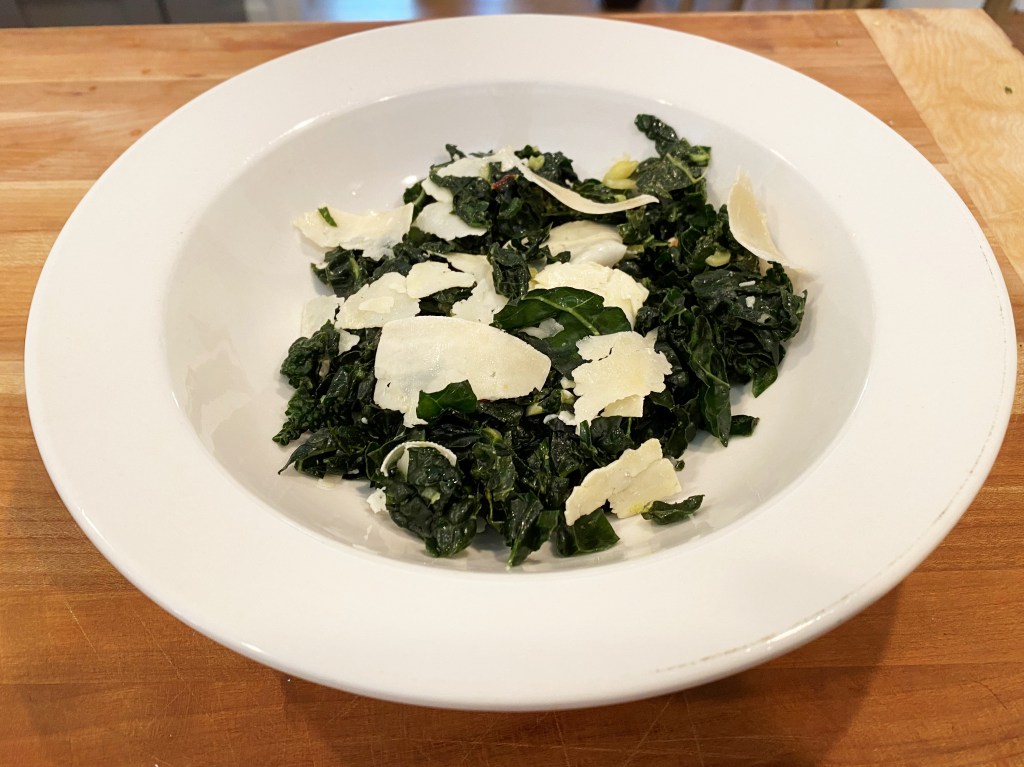
I get some pushback when I talk about kale these days – “it’s so passe!” as everyone says. But it will never get old with me. I love it in soups, stirfries, and my favorite, kale salad. But not your usual chopped raw kale. That often leaves people cold. But I’ve learned to massage it into a sweet, tender vegetable that doesn’t resemble the woody, chewy kind often found in kale salads.
Massaging Kale
My favorite to use is dragon kale, also called laciniato, an Italian heirloom. I find it’s the sweetest. It may sound strange to think of massaging kale into a salad, but crushing it takes away the bitterness and toughness. Try it – I think you’ll be hooked.
Massaged Kale Salad
One large bunch kale (laciniato preferred, but any kind will work)
1 t. salt
1 clove garlic, minced
1 T. olive oil
Juice of one half a lemon
Parmesan cheese to garnish
Remove the ribs from the kale. This can be done by grasping the end of the rib and stripping off the leaves. Discard the ribs. Roll the leaves into a “cigar” and slice into ribbons.
In a large bowl, douse the kale with the olive oil, add the garlic and salt and begin to massage or crush the kale with your hands. This can only be done well with the hands, so get into it and enjoy it. Your hands will thank you for the olive oil massage.
Once the kale is dark green and reduced considerably in bulk, squeeze the lemon juice over it. Adjust the salt, add pepper if you desire and garnish with plenty of fresh grated parmesan cheese. You will find this irresistible!
I don’t do resolutions. But I do love the idea of a fresh start for some things in my life. So, here is my resolve for all of us. Just start.
I’ve been reading so many gardeners’ and cooks’ resolutions that my head is spinning. But the one thing that seems a common thread through all of these is the desire for simplicity.
I’ve touted this for years, that simple gardening and simple cooking will bring us back to the garden and kitchen in a restful, pleasant way. And if it becomes meaningful or artistic, all the better. But mostly, we just need to start. Start small, start easy and most of all, don’t pressure yourself to create a masterpiece.
Gardening
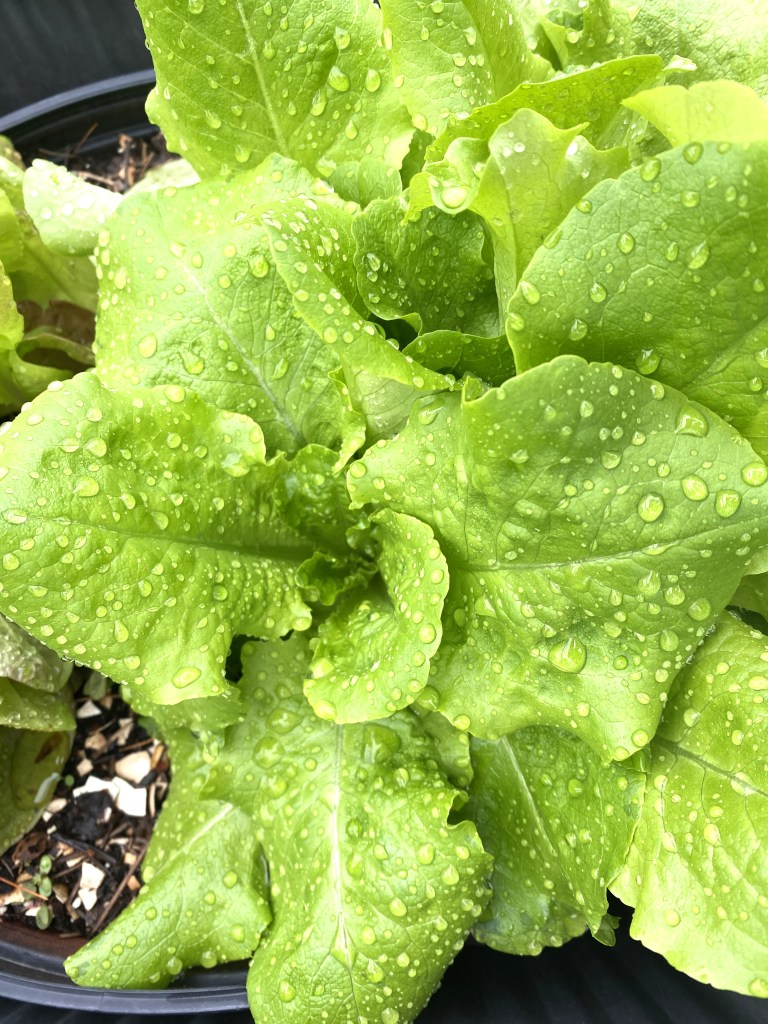
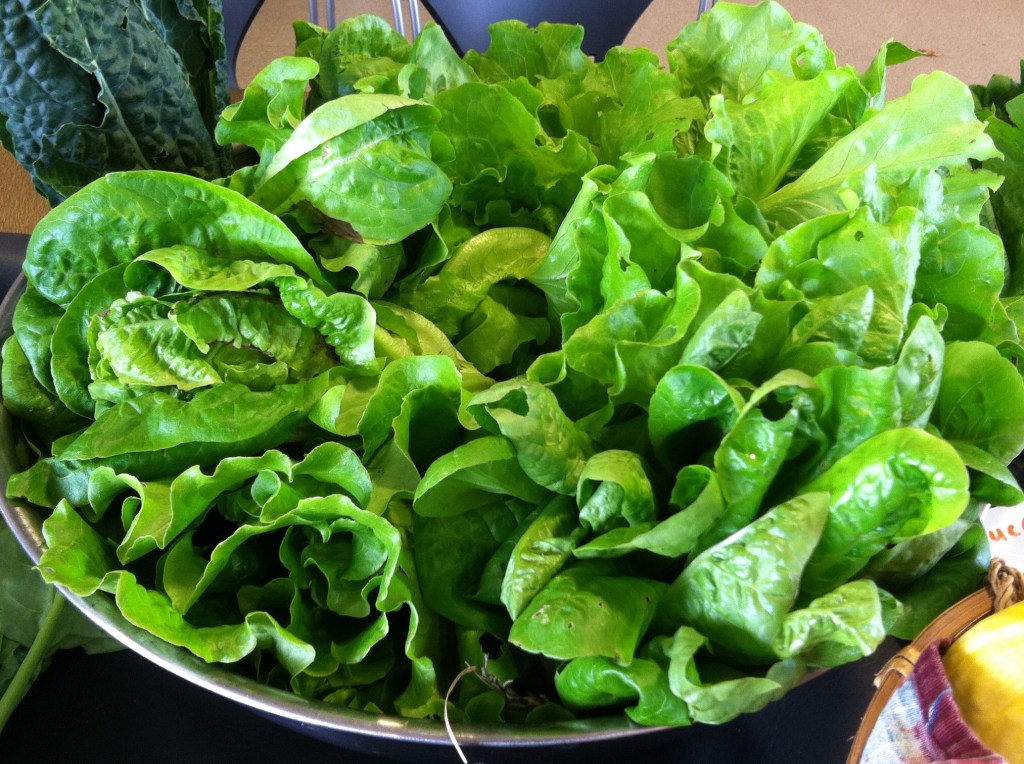
For gardening, perhaps it means getting two pots, filling them with soil and planting lettuce. When the lettuce is done, plant carrots. Or a pepper or a tomato. If you are successful (meaning you get something on the table, even a simple salad), then ask yourself if you want to go further with your garden.
Bowl full of Batavia lettuce
Cooking
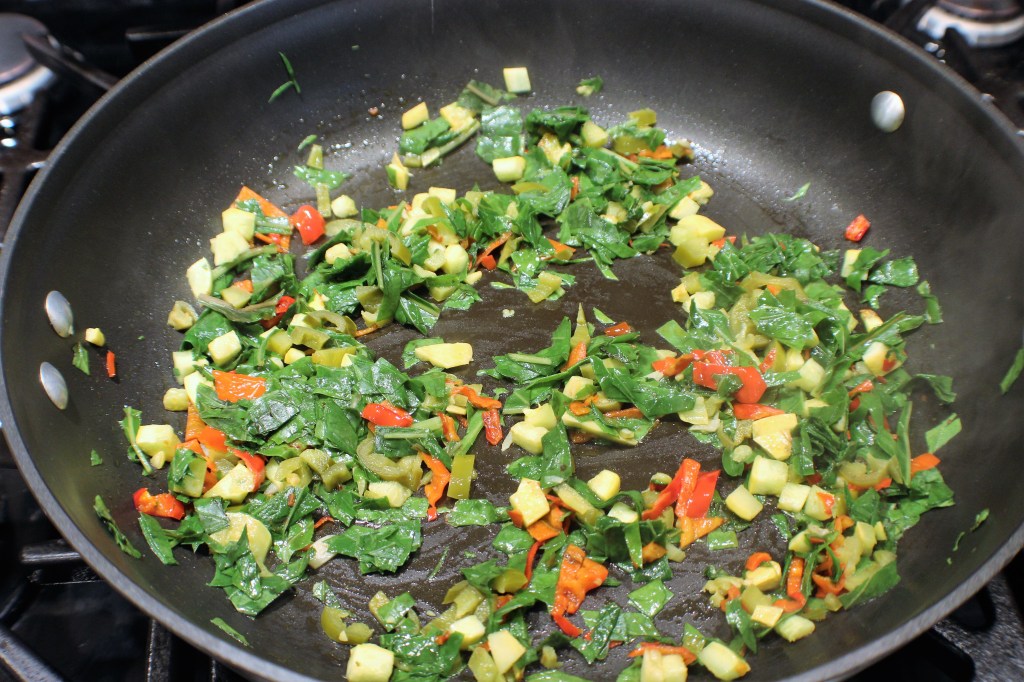
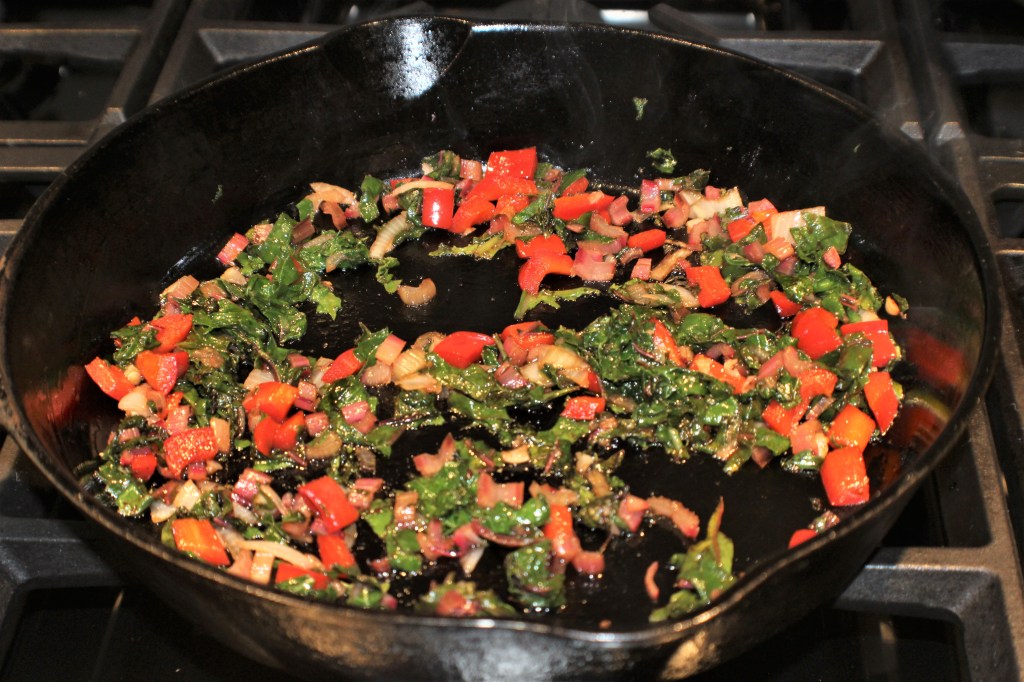
For cooking, try this: Chop a sweet pepper, a sweet onion and a small zucchini or a couple of leaves of chard. Saute them in olive oil until tender, season to your liking, and serve over cooked rice or pasta. Simple! And delicious. Cooking doesn’t have to be hard. And, you can always embellish as your heart leads you.
Sauteed peppers and greens
For a bigger challenge:
Saucy Greens
1 small bunch of Swiss chard or other greens
1 clove garlic, minced
¼ c. onion, sliced
1 T. olive oil
1 T. balsamic vinegar
1 t. Sugar
Salt and pepper to taste
½ c. chopped tomatoes
2 T. sour cream or plain yogurt
1 T. sriracha sauce if desired
2 large eggs if desired
Rinse the greens liberally and remove tough stems. Stack the leaves and roll them into a “cigar” and slice thinly. Add garlic and onion to olive oil in heavy pan and saute until tender. Fry eggs in separate pan if you intend to use them. Add greens, vinegar and sugar and saute about 5 minutes until greens are tender. Turn off the heat and stir in tomatoes and sour cream or yogurt. Salt and pepper to taste.
Most of all, have a wonderful 2020 and don’t be afraid to play!











 Kate's Garden Kitchen
You must be logged in to post a comment.